
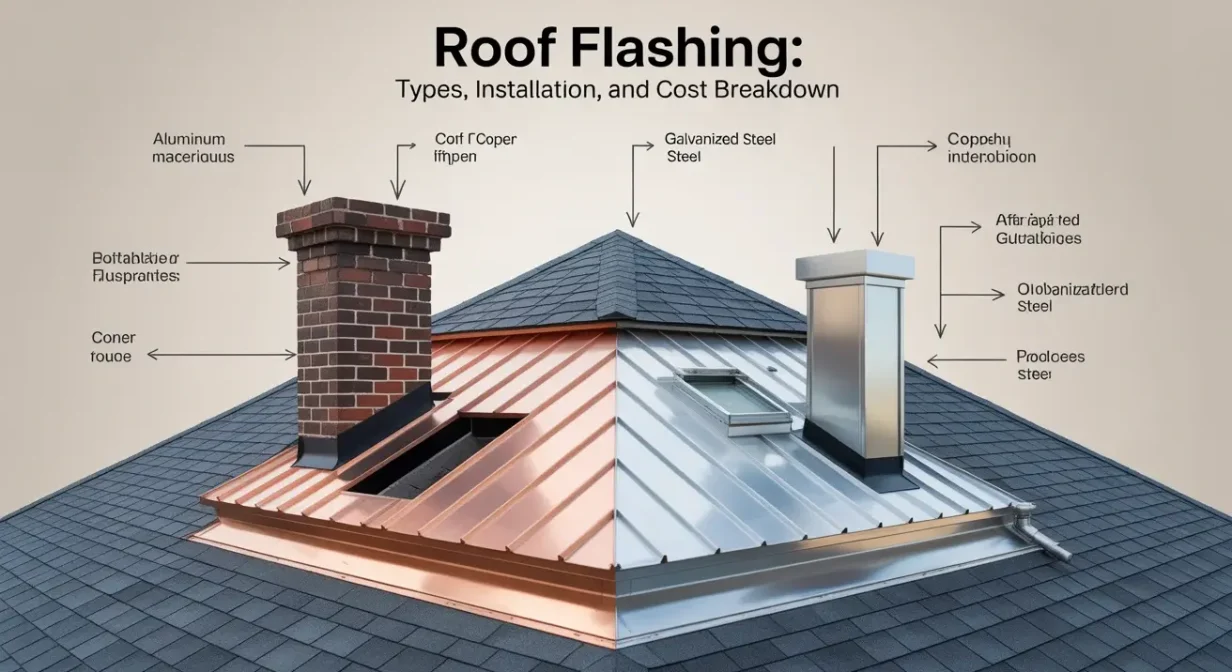
Roof flashing protects your home from water damage at the most vulnerable points on your roof. Without proper flashing, water can seep into your home and cause thousands of dollars in damage. This guide covers everything you need to know about roof flashing to keep your home safe and dry, including how it works with other protective systems like ice and water shield.
What Is Roof Flashing?
Roof flashing is thin metal material installed at roof joints and transitions. It directs water away from areas where different roof sections meet. Think of flashing as your roof’s rain gear – it channels water to gutters instead of letting it leak into your home.
Flashing works by creating a waterproof barrier at roof penetrations. Common locations include chimneys, vents, skylights, and where walls meet the roof. Without flashing, these areas would let water enter your home every time it rains.
Professional roofers install flashing during roof construction or replacement. The material overlaps with shingles to create a continuous water barrier. Proper installation requires specific techniques for each type of roof feature and must integrate well with the underlying roof decking system.
Most flashing lasts 20-30 years with proper maintenance. However, severe weather and poor installation can reduce this lifespan significantly.
Types of Roof Flashing
Step Flashing
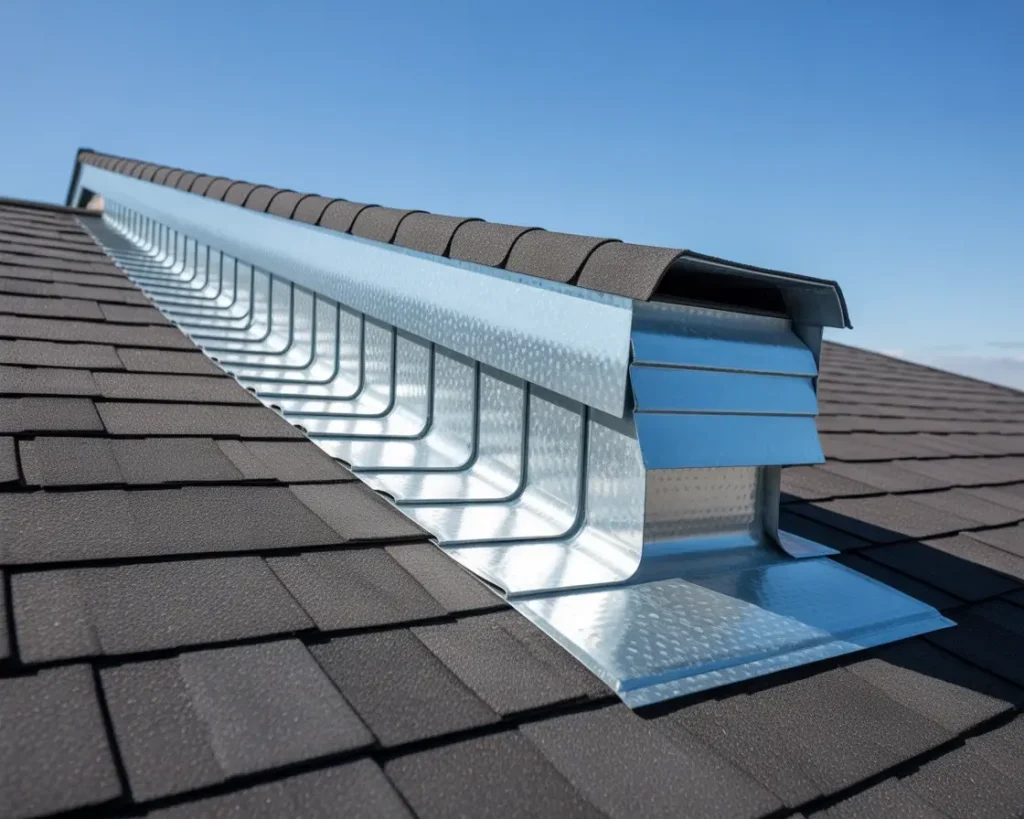
Step flashing protects areas where walls meet sloped roofs. It consists of small metal rectangles installed in a step pattern. Each piece overlaps the one below it to direct water downward.
This type works best for dormers and sidewalls. Professional roofers weave step flashing between shingles and wall materials. The overlapping design prevents water from backing up under the roofing material.
Step flashing typically measures 5 inches by 7 inches per piece. Installation requires precise placement to maintain water flow. Poor installation can cause water to pool and leak into your home.
Most step flashing uses aluminum or galvanized steel materials. These metals resist corrosion and provide long-lasting protection.
Continuous Flashing (Apron Flashing)
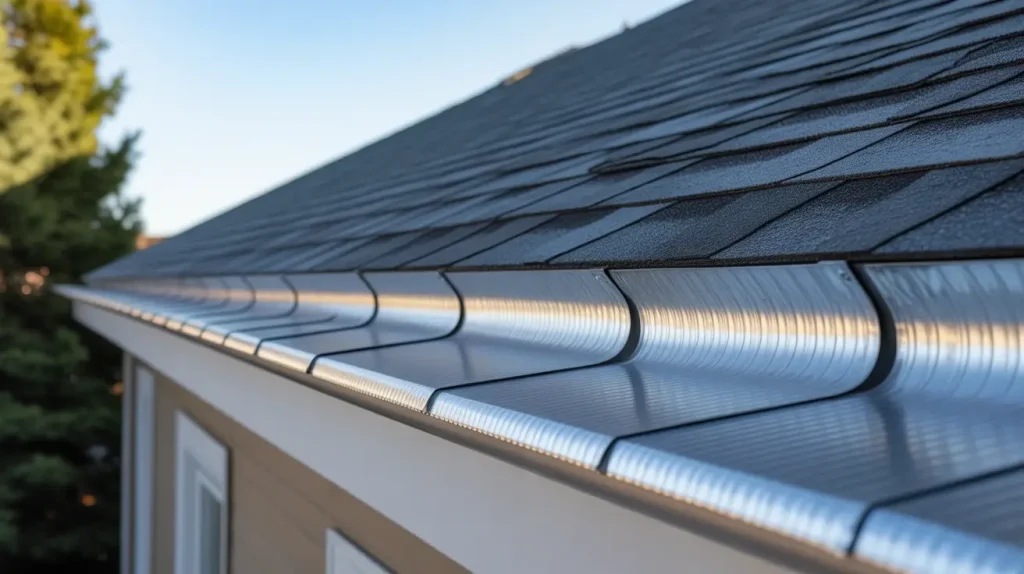
Continuous flashing is a single long piece of metal that covers horizontal joints. It extends from the wall down over the shingles below. This design creates an unbroken water barrier along the entire joint.
Apron flashing works well for long horizontal connections. It’s commonly used where additions meet existing roofs. The single-piece design eliminates gaps that could let water through.
Installation involves securing the top edge to the wall and letting the bottom overlap shingles. Proper overlap prevents water from getting behind the flashing. Most installations use at least 4 inches of overlap.
Weather can cause continuous flashing to expand and contract. This movement can create gaps over time that need regular inspection.
Valley Flashing
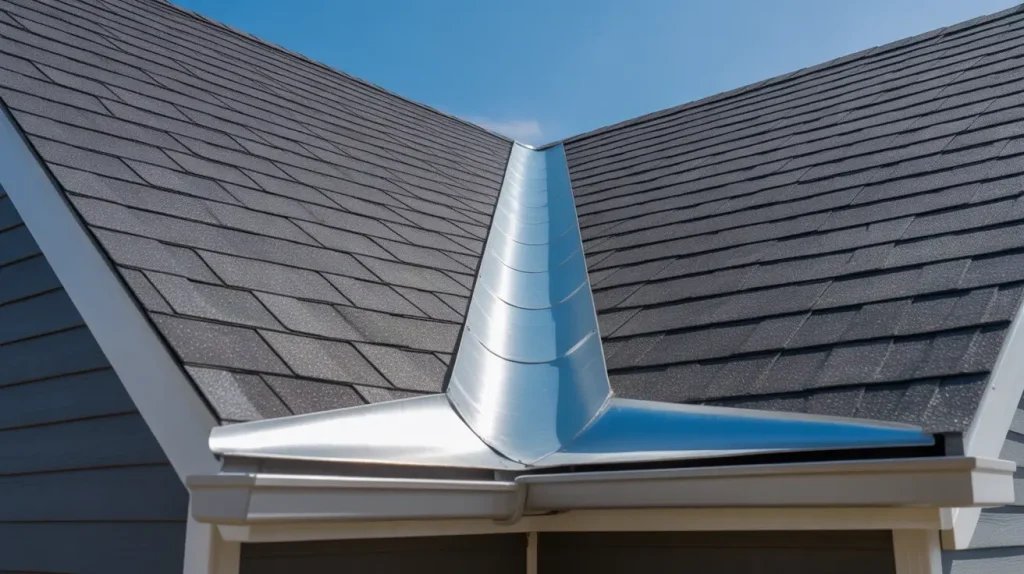
Valley flashing protects the areas where two roof slopes meet. These valleys naturally collect large amounts of water runoff. Without proper flashing, valleys become major leak sources that can lead to hail damage roof repair needs.
There are two main types of valley flashing: open and closed. Open valleys have visible metal flashing between shingles. Closed valleys hide the flashing completely under overlapping shingles.
Professional installation requires precise cutting and fitting. The flashing must extend well under shingles on both sides. Most codes require at least 6 inches of coverage under roofing material.
Valley flashing handles more water than other types. It needs regular cleaning to prevent debris buildup that could cause water backup.
Chimney Flashing
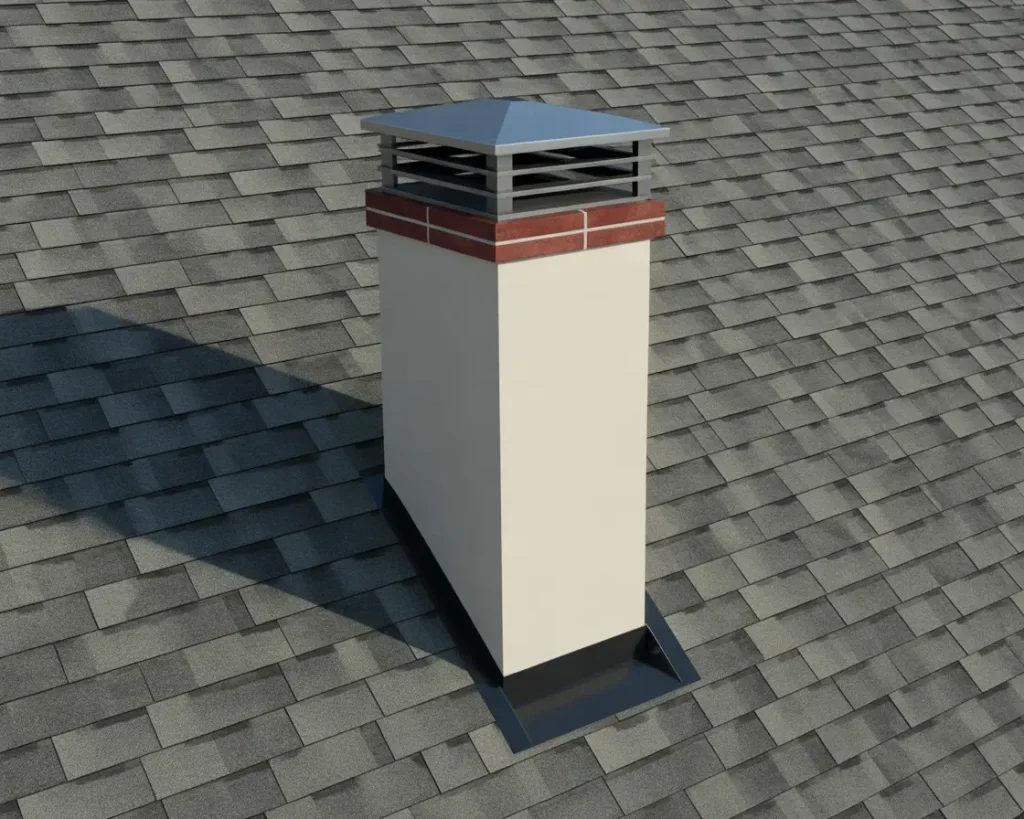
Chimney flashing uses multiple pieces to create complete water protection. Base flashing covers the bottom connection between chimney and roof. Counter flashing covers the top edges of base flashing.
Step flashing protects the sides of chimneys on sloped roofs. Each piece steps up the chimney wall with the roof slope. The top of the chimney uses specialized flashing around the cap area.
Chimney flashing installation requires cutting into mortar joints. Counter flashing embeds into these joints and covers base flashing edges. This two-layer system provides maximum water protection.
Regular maintenance includes checking for loose mortar and damaged flashing. Chimney flashing repairs often require professional expertise due to the complex installation.
Roof Flashing Materials Comparison
|
Material |
Cost per Linear Foot |
Lifespan |
Pros |
Cons |
|---|---|---|---|---|
|
Aluminum |
$3-$5 |
20-30 years |
Lightweight, rust-resistant, easy to work with |
Can corrode with certain metals, may dent |
|
Galvanized Steel |
$4-$7 |
15-25 years |
Strong, affordable, readily available |
Eventually rusts, heavier than aluminum |
|
Copper |
$8-$12 |
50+ years |
Extremely durable, develops protective patina |
Expensive, requires skilled installation |
|
Lead-Coated Copper |
$10-$15 |
50+ years |
Superior durability, excellent malleability |
Very expensive, requires expert handling |
|
Rubber/EPDM |
$2-$4 |
10-20 years |
Flexible, easy installation, good for flat roofs |
Shorter lifespan, UV degradation |
Note: Rubber materials work particularly well for flat roof deck applications where flexibility is crucial.
Installation Process and Techniques
Tools and Materials Needed
Proper flashing installation requires specific tools and materials. Essential tools include metal snips, hammer, measuring tape, and chalk line. You’ll also need roofing cement, appropriate nails, and safety equipment.
Materials vary by flashing type and roof design. Most installations need the flashing material, roofing cement, and matching nails. Use aluminum nails with aluminum flashing to prevent corrosion.
Safety equipment is crucial for roof work. This includes non-slip shoes, harnesses, and proper ladder setup. Many homeowners choose professional installation due to safety concerns.
Weather conditions affect installation success. Avoid installing flashing during rain, snow, or high winds. Ideal conditions include dry weather and moderate temperatures.
Step-by-Step Installation Guide
Preparation Phase Remove old flashing carefully to avoid damaging surrounding materials. Clean the installation area thoroughly and inspect for any damage. Replace damaged shingles or roof sheathing before installing new flashing. Check if you need to replace roof decking due to water damage.
Measurement and Cutting Measure the installation area precisely and mark cutting lines on flashing material. Use proper metal snips to cut flashing pieces. File sharp edges smooth to prevent injury and improve appearance.
Installation Process Start installation at the lowest point and work upward. Apply roofing cement to the installation area before placing flashing. Position flashing pieces with proper overlap – typically 2-4 inches depending on the application.
Securing and Sealing Nail flashing in place using appropriate fasteners. Avoid overdriving nails which can create holes. Apply additional roofing cement over nail heads and joints for extra water protection.
Professional Installation vs DIY
|
Aspect |
Professional Installation |
DIY Installation |
|---|---|---|
|
Cost |
$15-$25 per linear foot installed |
$3-$12 per linear foot materials only |
|
Quality |
Expert techniques, proper tools |
Variable quality, learning curve |
|
Time |
1-2 days for most jobs |
3-5 days for beginners |
|
Warranty |
Usually 5-10 year guarantee |
No warranty coverage |
|
Safety |
Professional safety equipment |
Higher injury risk |
Professional installation provides better long-term results for most homeowners. Roofers have experience with different roof types and challenging installations. They also carry insurance and provide warranties on their work.
DIY installation can save money on labor costs. However, mistakes can lead to expensive water damage repairs. Consider your skill level and comfort with heights before attempting DIY installation.
Complex installations like chimney flashing almost always require professional expertise. Simple repairs might be suitable for experienced DIY enthusiasts with proper safety equipment and knowledge of best roof decking materials.
Common Roof Flashing Problems
Signs of Damaged Flashing
Water stains on interior walls or ceilings indicate possible flashing failure. These stains often appear near chimneys, skylights, or wall connections. Dark or discolored areas suggest ongoing water penetration.
Visible rust or corrosion on metal flashing signals deterioration. Check for holes, cracks, or separated joints in the flashing material. Loose or missing pieces leave your roof vulnerable to water damage.
Damaged caulk or sealant around flashing edges allows water entry. Look for cracked, peeling, or missing sealant materials. These areas need immediate attention to prevent water damage and potential black algae on roof problems.
Ice dams can damage flashing during winter months. Repeated freeze-thaw cycles stress flashing materials and connections. Inspect flashing each spring for winter damage, especially if you have waterproof deck roof installations.
Prevention and Maintenance Tips
Regular inspection prevents small problems from becoming major repairs. Check flashing twice yearly – spring and fall are ideal times. Look for loose pieces, damaged sealant, and debris buildup.
Keep gutters clean to prevent water backup against flashing. Clogged gutters can cause water to pool and find entry points. Clean gutters also reduce ice dam formation in winter.
Trim tree branches away from roof areas with flashing. Branches can damage flashing during storms or high winds. Falling leaves can also clog drainage areas around flashing.
Apply fresh sealant as needed to maintain water barriers. Use high-quality roofing sealant designed for your climate. Replace damaged or missing sealant promptly to prevent water entry.
Cost Analysis and Budgeting
Material Costs Breakdown
|
Flashing Type |
Material Cost |
Labor Cost |
Total Per Linear Foot |
|---|---|---|---|
|
Step Flashing |
$3-$7 |
$12-$18 |
$15-$25 |
|
Valley Flashing |
$4-$8 |
$15-$20 |
$19-$28 |
|
Chimney Flashing |
$5-$12 |
$20-$30 |
$25-$42 |
|
Skylight Flashing |
$6-$15 |
$25-$35 |
$31-$50 |
|
Continuous Flashing |
$3-$6 |
$10-$15 |
$13-$21 |
Factors Affecting Total Cost
Roof accessibility impacts installation costs significantly. Easy access from the ground reduces labor time and safety equipment needs. Complex roof designs with multiple levels increase installation difficulty and cost.
Geographic location affects both material and labor costs. Areas with higher living costs typically have higher installation prices. Remote locations may have additional material delivery charges.
Timing influences project costs throughout the year. Peak roofing season (spring and summer) often brings higher prices. Off-season installation can provide cost savings but may have weather limitations.
Extent of damage affects total repair costs. Simple flashing replacement costs less than addressing water damage to underlying structures. Early repair prevents more expensive structural repairs later, including potential cost to replace roof decking if water damage spreads.
When to Replace vs Repair
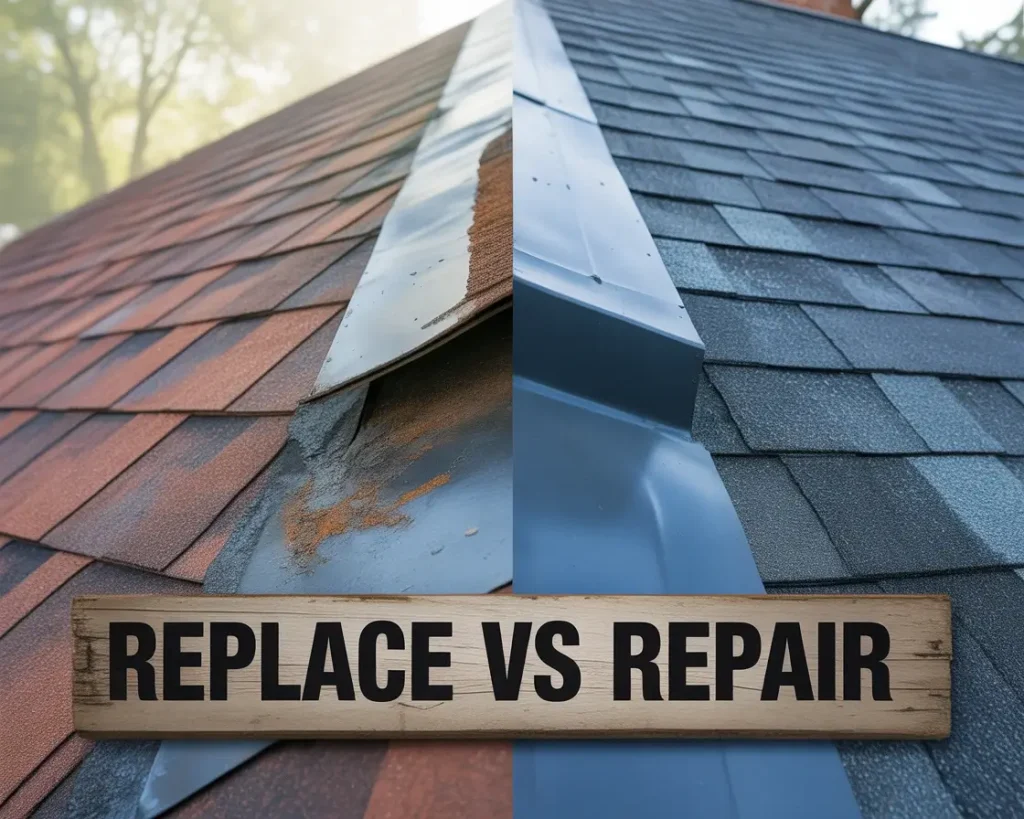
Minor damage like small holes or loose sealant often needs simple repairs. These repairs typically cost $100-$300 and extend flashing life significantly. Regular maintenance repairs prevent major problems.
Extensive corrosion or multiple failure points usually require complete replacement. Replacement provides better long-term value than repeated repairs. Consider replacement when repairs exceed 50% of replacement cost.
Age is an important factor in repair vs replacement decisions. Flashing over 20 years old may benefit more from replacement than repair. Newer flashing with isolated damage usually responds well to targeted repairs.
Overall roof condition influences flashing decisions. If you’re planning roof replacement within 5 years, temporary flashing repairs might be most economical. New roofs should receive new flashing for optimal protection. Understanding what does roof replacement include helps you budget for complete protection. Many homeowners choose to finance a new roof when extensive repairs are needed.
Choosing the Right Contractor
Questions to Ask Potential Contractors
Ask about specific experience with your type of flashing problem. Experienced contractors can provide detailed solutions and realistic timelines. They should explain the repair process in terms you understand.
Request references from recent similar projects. Contact these references to ask about work quality and contractor reliability. Good contractors welcome reference checks and provide contact information readily.
Verify proper licensing and insurance coverage. Licensed contractors meet local standards and regulations. Insurance protects you from liability if accidents occur during installation.
Get detailed written estimates from multiple contractors. Compare materials, labor costs, and project timelines. Be wary of estimates significantly higher or lower than others.
Red Flags to Avoid
Avoid contractors who solicit door-to-door after storms. Legitimate contractors rarely need to seek customers this way. Storm chasers often provide poor quality work and disappear quickly.
Be cautious of contractors demanding full payment upfront. Most reputable contractors require only small deposits to begin work. Full advance payment creates risk if the contractor fails to complete work.
Avoid contractors without local addresses or phone numbers. Local contractors have established reputations in the community. Out-of-area contractors may be difficult to contact for warranty issues.
Skip contractors who cannot provide proof of insurance. Uninsured contractors create liability risks for homeowners. Always verify insurance coverage before allowing work to begin.
Conclusion
Roof flashing protects your home’s most vulnerable areas from water damage. Understanding different flashing types helps you identify problems early and communicate effectively with contractors. Regular inspection and maintenance extend flashing life and prevent expensive repairs.
Professional installation provides the best long-term results for most homeowners. While DIY installation can save money, the complexity and safety risks often make professional installation worthwhile. Quality installation and materials provide decades of reliable protection, especially when combined with proper roof deck protection.
Don’t ignore signs of flashing problems – early repair prevents expensive water damage. Contact qualified contractors for inspection if you notice water stains, visible damage, or other warning signs. Proper flashing maintenance is one of the best investments in your home’s protection.
Ready to protect your home with professional flashing installation? Contact local roofing contractors for detailed estimates and timeline information.
