

Are those mysterious black streaks running down your roof making your home look old and neglected? You’re not alone. Black algae on roof surfaces affects countless homeowners, especially in humid regions, turning even newer homes into eyesores. This stubborn organism called Gloeocapsa magma isn’t just an aesthetic problem, it feeds on your shingles and can potentially shorten your roof’s lifespan.
While black algae on roof shingles won’t cause immediate damage, knowing how to properly identify, treat, and prevent these unsightly streaks can save you money and maintain your home’s curb appeal. Let me show you exactly what causes those black streaks and how to get rid of them for good.
Key Takeaways
- Black streaks on roofs are caused by Gloeocapsa magma algae, not dirt or mold
- The algae feeds on limestone fillers in asphalt shingles
- North-facing roof sections are most susceptible to algae growth
- A 1:1 mixture of water and bleach effectively treats black algae
- Never use pressure washing as it damages roof shingles
- Zinc or copper strips near the roof ridge help prevent algae regrowth
- Consider algae-resistant shingles during your next roof replacement
What Are Black Streaks on Roof?

Those dark, unsightly streaks running down your roof aren’t just dirt buildup or random stains. They’re actually living organisms a type of blue-green algae called Gloeocapsa magma. Black algae on roof starts as small spots that gradually spread into prominent black streaks, making even newer roofs look aged and neglected.
The streaks appear more obvious on light-colored roofing materials but can affect shingles of any color. While not immediately harmful to your roof’s structure, these black marks significantly reduce your home’s curb appeal. Early identification and treatment prevent more extensive coverage that becomes harder to remove over time.
What Causes Black Algae on Roofs?
The main culprit behind those black roof streaks is Gloeocapsa magma, a cyanobacteria that thrives in warm, humid environments. These algae develop a dark protective pigmentation to shield themselves from UV rays, which creates the characteristic black appearance. The spores travel through air currents, explaining why entire neighborhoods often show similar streaking patterns.
North-facing sections of your roof sheathing are particularly vulnerable because they receive less direct sunlight and stay damp longer. The algae feed on limestone fillers commonly used in asphalt shingles, giving them plenty of nutrients to grow and multiply. As roofing materials age and become more porous, they retain more moisture, creating ideal conditions for algae to establish colonies.
Several environmental factors influence algae growth patterns:
- Humidity levels in your region
- Shade from overhanging trees
- Climate conditions (coastal areas are especially prone)
- Age and porosity of roofing materials
- Rainfall patterns and moisture retention
Impact black algae on roof Roof and Home
While primarily an aesthetic issue, black algae on roof can potentially affect your roof’s performance and longevity through several mechanisms:
|
Impact |
How it Affects Your Roof |
|---|---|
|
Heat absorption |
Dark algae increases heat absorption, raising attic temperatures and reducing energy efficiency |
|
Material degradation |
Prolonged dampness can compromise waterproofing integrity of aging shingles |
|
Limestone consumption |
Algae feed on limestone fillers in asphalt shingles, potentially affecting material stability |
|
Property value |
Significant streaking can reduce curb appeal and potentially lower property value |
|
Spread to other areas |
Without treatment, algae can spread across larger roof sections and to neighboring homes |
For older roof decking or historic homes with wood shingles, biological growth presents more immediate concerns as these organic materials can experience significant degradation from persistent moisture.
How to Treat Black Algae on Roofs
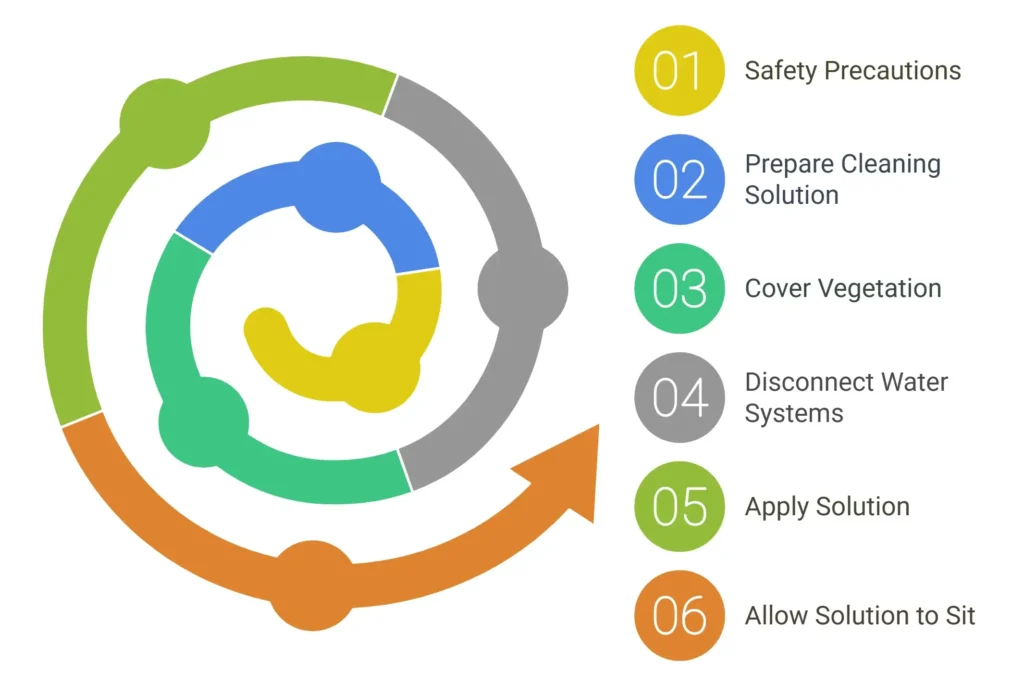
Safety First
Working on a roof is dangerous, regardless of how simple the task seems. Falls from heights are among the most common household injuries. If you lack proper training, equipment (secure ladders, harnesses, non-slip footwear), or feel uncomfortable working at heights, hire qualified professionals.
Professional roofers have safety training, equipment, and experience to work at heights safely. They understand proper ladder placement, weight distribution techniques, and how to navigate different roofing materials without causing damage. When hiring professionals, verify their credentials, insurance coverage, and experience with similar cleaning projects.
If you do have roof experience and proper safety equipment, take these additional precautions:
DIY Cleaning Solution
The most effective and accessible method for removing black algae on roof uses a carefully formulated mixture of bleach and water. This solution kills the algae while minimizing potential damage to your roof decking materials.
What you’ll need:
Preparation steps:
- Cover all vegetation surrounding your home with plastic sheeting or tarps
- Disconnect rain barrels or water collection systems
- Mix equal parts water and household bleach (1:1 ratio)
- Transfer the solution to a garden sprayer with plastic components
Application Method
The proper application technique preserves your roof deck protection while effectively removing algae:
- Thoroughly spray the affected areas with the bleach solution
- Allow the solution to remain on the surface for approximately 20 minutes
- Use a garden hose with normal water pressure to rinse from top to bottom
- For stubborn growth, apply a second treatment following the same procedure
- After cleaning, thoroughly water all surrounding vegetation to dilute any bleach runoff
Important: Never use pressure washing or vigorous scrubbing on roof shingles. These mechanical cleaning methods can dislodge protective granules, leading to premature aging and potentially voiding manufacturer warranties. The bleach solution works through chemical action rather than mechanical force, preserving your roof sheathing integrity.
Prevention Strategies

Since complete eradication is difficult once algae establish colonies, prevention is crucial:
Install Metal Strips
Installing zinc or copper strips near the roof ridge creates a natural biocide effect. When rainwater flows over these metals, it carries small amounts of metal ions down the roof surface, creating an environment hostile to algae growth. This passive system provides continuous protection with minimal maintenance.
Regular Maintenance
Consider Algae-Resistant Shingles
During your next roof replacement, consider algae-resistant shingles that contain copper granules. These specialized roofing products slowly release algaecidal compounds when exposed to rain. While they typically cost more upfront, the long-term savings on cleaning and extended aesthetic appeal often justify the investment, especially in humid regions.
When to Call Professionals

For extensive algae problems or if DIY cleaning isn’t feasible, professional roof cleaning services offer several advantages:
When selecting a roof cleaning service, verify their specific experience with algae removal rather than general pressure washing. Request information about cleaning solutions, application methods, and any guarantees regarding results or potential damage. Reputable services provide references and carry appropriate insurance coverage.
While professional services cost more than DIY cleaning, the improved results and reduced risk of damage to your roof decking often justify the investment, particularly for valuable homes or complex roofing systems.
Taking Care of Your Entire Roof
Your roof represents one of the most significant protective elements of your home’s structure. While cleaning black streaks, use the opportunity to conduct a thorough inspection of your entire roofing system. Look for warning signs that might indicate more serious issues requiring professional attention:
For older roofs displaying multiple signs of wear or damage, a professional assessment can determine whether repairs or complete roof replacement is more economical long-term. Modern roofing materials offer improved durability, enhanced energy efficiency, and better resistance to environmental factors including algae growth.
Beyond reactive maintenance, establish a regular schedule for professional roof inspections—typically recommended annually or after significant weather events. Maintaining adequate attic ventilation reduces moisture accumulation beneath the roof deck, which can contribute to premature aging and create conditions favorable for various types of biological growth.
Conclusion
Black algae on roof represent a common maintenance challenge affecting both aesthetic appeal and potentially long-term performance. Understanding that these streaks result from Gloeocapsa magma cyanobacteria rather than simple dirt accumulation is essential for selecting appropriate treatment approaches.
Effective management involves careful cleaning procedures, preventative measures, and regular monitoring. The recommended bleach solution provides effective removal while minimizing potential damage when properly applied. Safety considerations should always take precedence, with professional services recommended for those without proper equipment or experience.
By understanding the biological nature of black roof streaks and implementing appropriate maintenance practices, you can maintain your roof’s appearance, potentially extend its useful life, and preserve your property’s curb appeal for years to come. Regular roof care that addresses algae growth alongside other maintenance needs represents a wise investment in one of your home’s most valuable protective systems.
Is black algae on my roof dangerous to my health?
No, it’s primarily an aesthetic issue. While unsightly, Gloeocapsa magma algae poses no health risks to humans but can affect your home’s appearance.
Will cleaning black algae damage my roof shingles?
Not if done properly. Avoid pressure washing. Use a 1:1 bleach/water solution, spray gently, let sit for 20 minutes, then rinse with normal water pressure.
How often should I clean black algae from my roof?
Every 1-3 years in humid regions without preventative measures. Homes with zinc/copper strips may extend this to 3-5 years. Inspect annually.
Can I prevent black algae from growing on my roof?
Yes. Install zinc/copper strips near the roof ridge, trim overhanging branches for more sunlight, keep roof debris-free, and consider algae-resistant shingles.
