
Contractor’s Bottom Line
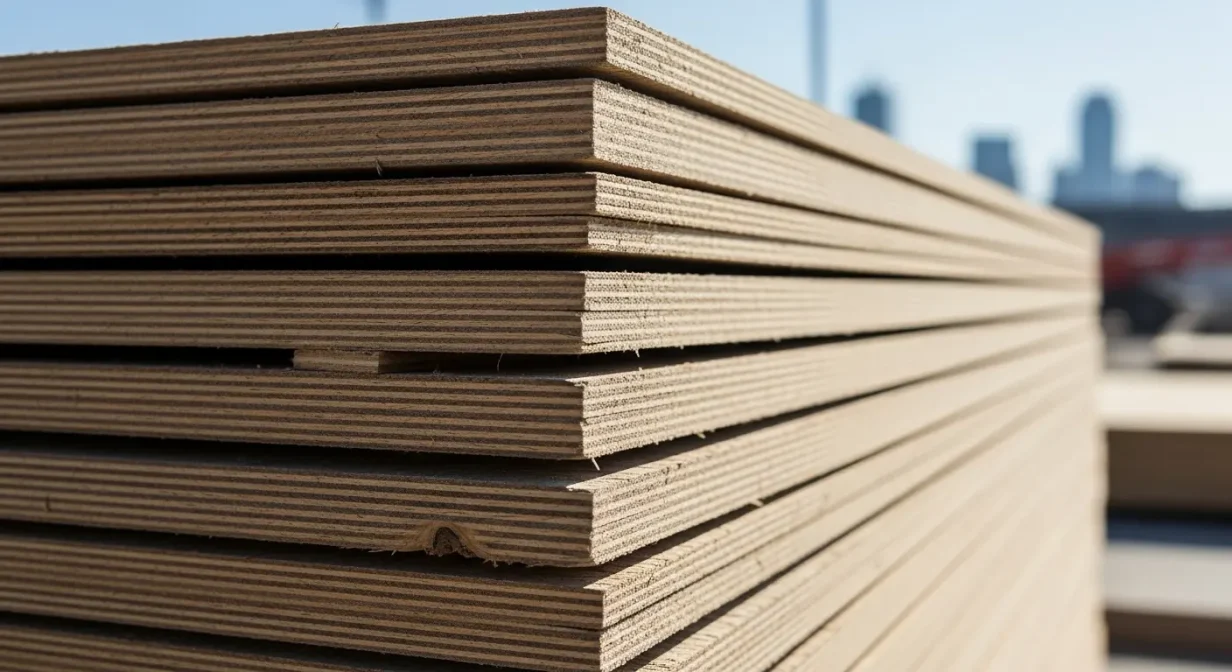
The best roof decking materials provide a rigid nailing base while resisting moisture absorption and structural degradation over time. While OSB dominates the market due to lower cost, oriented strand board is highly susceptible to edge swelling when exposed to rain during construction. Evaluate the long-term moisture exposure risks of the build environment and specify plywood or engineered panels where prolonged wetness is likely.
Key Takeaways
- CDX plywood provides higher structural rigidity and better fastener retention than standard OSB in high-wind zones.
- IRC R803.2.1 mandates specific thickness and span ratings that must be verified during the Dallas County permit process.
- Advantech and other high-performance resins offer superior protection against the 100-degree humidity shifts common in North Texas.
Choosing the right substrate is the most critical decision in any roofing project across the DFW Metroplex. I have seen countless homeowners focus solely on the color of their architectural shingles while ignoring the deteriorating wood beneath them. The roof deck is the structural foundation that must support heavy snow loads or, more commonly in Texas, the intense uplift of spring supercell storms. FIELD NOTE: Last month, a Dallas homeowner in Lakewood called me after a cheap roof replacement resulted in $12,000 in interior damages.
The previous contractor had installed thin 3/8-inch OSB over 24-inch rafters, which is a direct violation of IRC R803.2.1 and led to severe sagging and shingle cracking. We had to strip the entire roof down to the rafters to bring the home back to National Roofing Contractors Association (NRCA) standards. Understanding the differences between CDX plywood, Oriented Strand Board (OSB), and specialty products like Advantech is essential for long-term performance. Each material interacts differently with the extreme heat and humidity cycles we face in North Texas.
By following International Code Council (ICC) guidelines and ASTM International standards, you can ensure your investment lasts through the next decade of Texas weather.
Structural Properties of OSB vs. CDX Plywood
Oriented Strand Board (OSB) is manufactured using waterproof heat-cured adhesives and rectangularly shaped wood strands arranged in cross-oriented layers. This process, governed by ASTM D3043, creates a dense, uniform panel that lacks the knots or voids sometimes found in plywood. In the Dallas-Fort Worth area, OSB is the most common choice for new construction due to its consistency and price point. CDX Plywood is constructed from thin layers of wood veneer glued together in alternating grain directions.
The ‘CD’ refers to the grade of the veneers, while the ‘X’ signifies the use of external glue designed to withstand temporary moisture exposure. While more expensive, plywood typically dries out faster than OSB if a leak occurs, which can be a lifesaver during the rainy spring seasons in North Texas. Engineered boards like Advantech represent the top tier of roof decking materials available in the current 2026 market. These products use advanced resins that provide significantly higher moisture resistance and fastener pull-through strength compared to standard commodity panels.
For high-end residential projects in neighborhoods like Highland Park, these materials offer the best defense against thermal expansion and contraction.
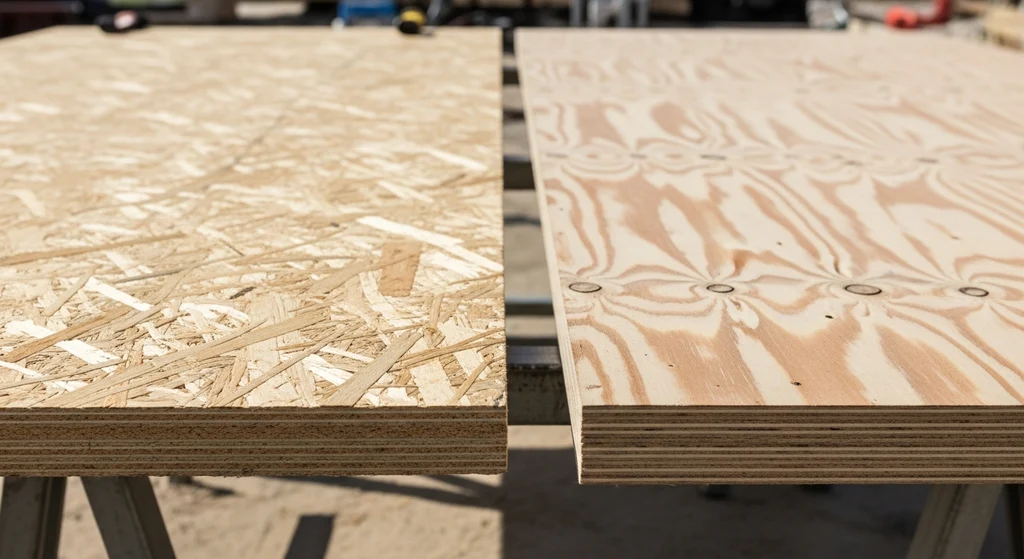
| Material Standards | |
|---|---|
| OSB Standard | ASTM D3043 / APA Rated |
| Plywood Standard | ASTM D1761 / PS 1-19 |
Dallas Building Codes and IRC R803.2.1 Compliance
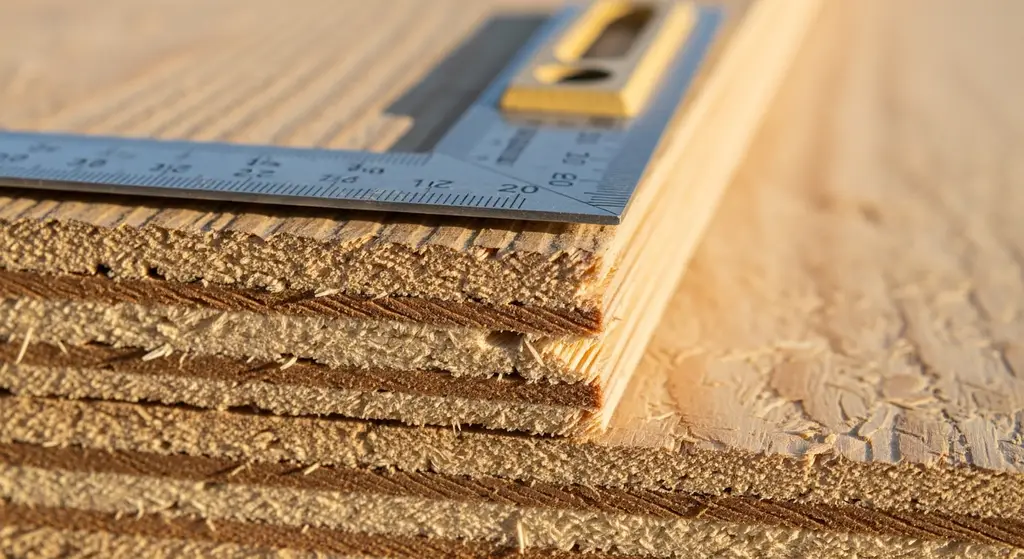
The International Residential Code (IRC) 2021, which is the current standard adopted by most Dallas-Fort Worth municipalities as of 2026, has strict requirements for roof sheathing. IRC R803.2.1 specifies that wood structural panels must be bonded with exterior glue and meet minimum thickness requirements based on rafter spacing. For the standard 24-inch on-center rafter spacing found in many North Texas homes, a minimum of 15/32-inch thickness is required. Beyond thickness, the IRC R905 section outlines how the decking must interface with underlayment and shingles.
In Dallas, the high wind speeds from seasonal storms require specific nailing patterns, often 6 inches on center along the edges and 12 inches in the field. Failure to follow these fastening schedules can lead to roof deck uplift, which the Federal Emergency Management Agency (FEMA) identifies as a primary cause of structural failure during high-wind events. Local Dallas amendments may also require radiant barriers to be integrated into the decking to meet Energy Star efficiency goals. These panels have a reflective foil laminated to the underside, which can reduce attic temperatures by up to 30 degrees during a 100-degree Texas summer.
When we specify these materials, we must ensure they still meet the structural requirements of ASTM D3043.
Field Note from Experience
During an inspection in Plano, I found a contractor using 7/16-inch sheathing on a 24-inch rafter span. This code violation could have cost the homeowner $8,500 in structural repairs if the roof had buckled under the weight of a new architectural shingle layer. We intervened and forced a re-decking to meet IRC 2021 standards before the final inspection.
Technical Comparison: OSB vs. Plywood vs. Advantech
When evaluating the best roof decking materials, we look at three primary metrics: moisture resistance, fastener retention, and cost. OSB is excellent for budget-conscious projects but can suffer from ‘edge swell’ if exposed to prolonged moisture. CDX plywood offers better overall stiffness and is less prone to the permanent deformation that can occur with cheaper composites in high-humidity environments. Fastener retention is critical for maintaining the wind rating of your asphalt shingles.
While all three materials are approved by the National Roofing Contractors Association (NRCA), plywood and Advantech generally provide higher screw-withdrawal resistance. This is a vital consideration for homes in the DFW Metroplex that are frequently exposed to 70+ mph wind gusts during the spring storm season.
| Feature | OSB (Standard) | CDX Plywood | Advantech (Premium) |
|---|---|---|---|
| Moisture Resistance | Moderate | High | Extreme |
| Edge Swell Risk | High | Low | Minimal |
| Avg. Dallas Cost/Sheet | $18 – $24 | $32 – $45 | $55 – $70 |
| Fastener Retention | Good | Excellent | Superior |
Dallas-Fort Worth Roof Decking Costs
In the Dallas-Fort Worth Metroplex, expect to pay between $95 and $150 per sheet for a professional ‘tear-off and replace’ decking service, which includes labor, disposal, and materials. These are current 2026 Dallas market prices; costs can be 15-20% higher in remote North Texas areas due to delivery surcharges. For a standard 2,500-square-foot roof, a full deck replacement with OSB typically ranges from $4,500 to $6,500, while CDX plywood will push that range to $7,500 to $9,500. Labor rates in Dallas County are currently influenced by high demand following the annual hail season.
Most reputable contractors will charge a premium for steep-slope installations (anything over a 6:12 pitch) because of the increased safety requirements mandated by the Occupational Safety and Health Administration (OSHA). It is important to note that these prices usually include the removal of one layer of existing shingles, but multiple layers will incur additional disposal fees. Seasonal price variations are a reality in Texas. Prices typically peak in the spring (March-May) immediately following major hail events and tend to stabilize in the late fall (October-November).
If you are planning a proactive replacement, scheduling during the ‘off-season’ can sometimes save you 10-15% on labor costs, though material prices remain tied to global timber indices.
Dallas Market Pricing
In Dallas-Fort Worth, expect to pay $95-$150 per sheet for installed decking. These are current 2026 Dallas market prices; costs vary by region and can be 15-25% higher in remote Texas areas. Peak pricing occurs spring (March-May) storm season.
What Contractors Hide: Decking Shortcuts to Avoid
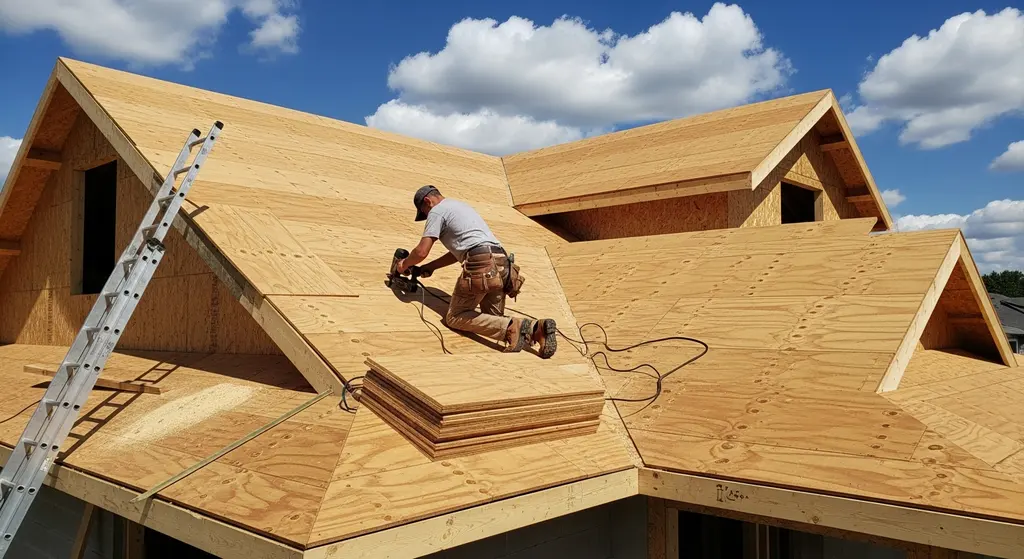
One of the most common corner-cutting tactics I see in the DFW Metroplex is ‘overlaying’ rather than replacing. Some contractors will suggest installing new OSB directly over old, rotted wood to save on labor and disposal fees. This is a major red flag; it hides structural rot and prevents the new fasteners from properly gripping the rafters, which can lead to catastrophic failure during a Texas windstorm. Another hidden truth involves material markups.
While a 25-40% markup on materials is standard for overhead and profit, some contractors will charge you for 5/8-inch CDX plywood but actually install 7/16-inch OSB. Always ask to see the APA (Engineered Wood Association) stamp on the panels before they are installed to verify the grade and thickness. Warranty loopholes are also a significant concern. Many shingle manufacturers, such as GAF or CertainTeed, will void your wind warranty if the shingles are installed over an ‘unstable’ or non-compliant substrate.
If your contractor skips the H-clips or uses the wrong nailing pattern, you might find yourself without coverage when a claim arises for hail or wind damage.
Refusal to provide a permit
Consequence: No municipal inspection to verify code compliance, leading to potential future sale issues.
Quotes significantly lower than market average
Consequence: Likely using undersized 3/8-inch panels or skipping required ice and water shields.
What Contractors Hide
Reusing old flashing and drip edge
The Reality: Contractors do this to save $500 in materials, but it often leads to perimeter rot within 3 years.
Skipping H-clips on OSB joints
The Reality: H-clips are required by code for certain spans to prevent edge buckling, but are often ‘forgotten’ to speed up labor.
External Authoritative Resources
These industry-standard references support the information in this guide:
Building Codes
Frequently Asked Questions
Is OSB or Plywood better for Dallas homes?
Plywood is generally superior for the Dallas climate because it handles humidity shifts better than OSB, though OSB is a code-compliant, cost-effective alternative per NRCA standards.
What is the minimum thickness for roof decking in Texas?
Per IRC R803.2.1, the minimum thickness for most residential roofs with 24-inch rafter spacing is 15/32-inch to ensure structural stability.
Do I need to replace my decking when getting a new roof?
Only if there is visible rot, delamination, or if the current material does not meet the ASTM D3043 structural standards required for your new shingle weight.
Does insurance cover roof decking replacement?
Insurance typically covers decking only if it was damaged by a covered peril like a fallen tree; however, ‘Ordinance or Law’ coverage may pay for code-required thickness upgrades.
What are H-clips and are they required?
H-clips are small metal spacers used between sheets of decking to allow for thermal expansion; they are often required by IRC codes for thinner panels on wide spans.
Can I use radiant barrier decking in Dallas?
Yes, radiant barrier decking is highly recommended in the DFW Metroplex to reduce attic heat, provided it meets the structural requirements of ASTM D3043.
Final Thoughts
Investing in the best roof decking materials is the only way to ensure your home survives the volatile North Texas climate. Whether you choose the cost-effective OSB or the premium moisture resistance of CDX plywood, compliance with IRC R803.2.1 and NRCA standards is non-negotiable. Don’t let a contractor talk you into shortcuts that could void your warranty or compromise your home’s structural integrity during a storm. FIELD NOTE: I recently helped a family in North Dallas whose insurance claim was denied because their roof collapsed under a light snow load.
The investigation found that a previous contractor had used interior-grade particle board instead of ASTM-rated exterior sheathing. This $5,000 ‘savings’ ended up costing them over $40,000 in total reconstruction costs. Always insist on seeing the material stamps and the municipal permit before work begins.
