
Contractor’s Bottom Line
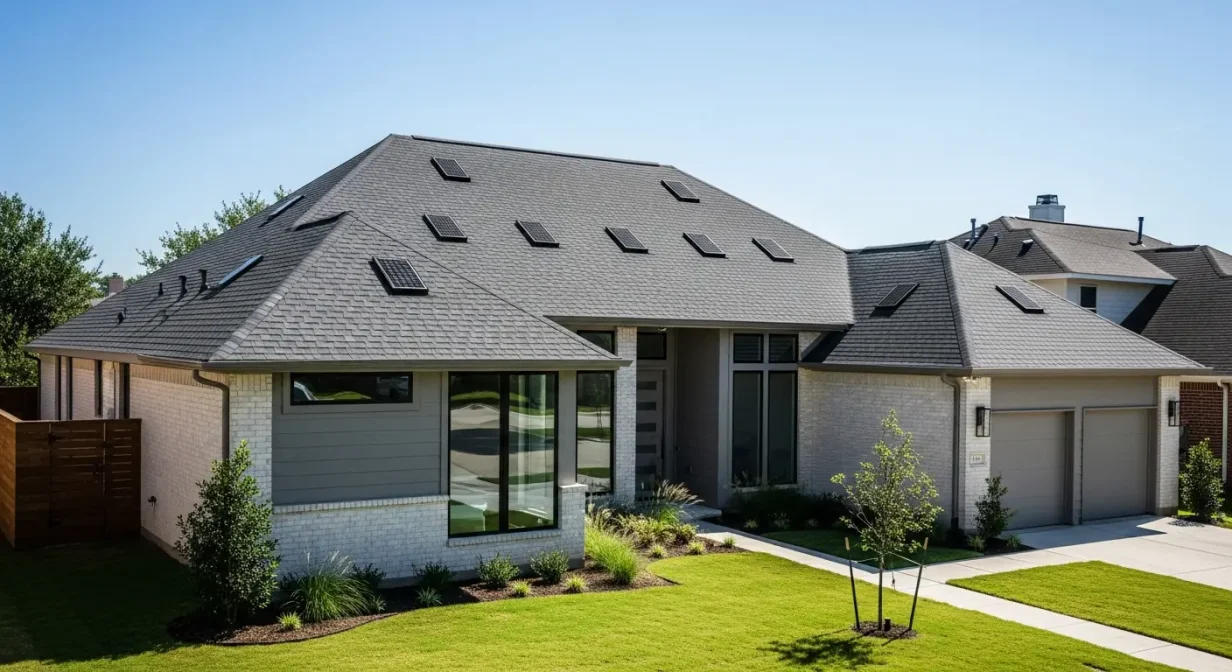
Solar powered roof ventilation reduces attic temperatures by exhausting hot air without increasing household electrical consumption. IRC R806.1 requires balanced intake and exhaust ventilation, meaning solar fans must be paired with adequate soffit vents to avoid pulling conditioned air from the living space. Calculate the required net free area based on your attic square footage before installing a solar exhaust unit.
Key Takeaways
- Solar vents can move up to 1,500 CFMs, significantly exceeding the passive airflow requirements of IRC R806.1.
- Professional installation in Dallas-Fort Worth typically ranges from $600 to $1,200 depending on roof pitch and shingle type.
- Units must be paired with adequate intake ventilation, such as soffit vents, to prevent pulling conditioned air from the living space.
- Federal Energy Star tax credits can offset up to 30% of the total project cost for qualified equipment.
As a consultant in the DFW Metroplex, I have seen attic temperatures reach a staggering 160°F during our brutal July heat cycles. This extreme thermal loading doesn’t just make your air conditioner work harder; it actively degrades your asphalt shingles and synthetic underlayment. Solar powered roof ventilation offers a modern, sustainable way to purge this heat without increasing your monthly electric bill. FIELD NOTE #1: Last summer, a Dallas homeowner in the M-Streets called me after their AC couldn’t keep the house below 80°F.
We found their attic was trapped at 155°F because of poor passive ventilation, causing the roof deck to bake. After installing two solar-powered fans, the attic temp dropped to 110°F, and their electric bill decreased by $45 the following month. Understanding the technical specifications of these units is critical before you commit to an upgrade. From International Code Council (ICC) standards to specific ASTM International testing for wind resistance, the details matter for longevity.
In this guide, we will break down the costs, code requirements, and performance expectations for North Texas homeowners.
Energy Performance and Attic Thermal Dynamics
Solar powered ventilation operates on the principle of active airflow, measured in Cubic Feet per Minute (CFM). Unlike passive ridge vents, these units utilize a photovoltaic panel to power a DC motor, which aggressively pulls hot air out of the attic space. This is particularly vital for Dallas homes with complex rooflines where natural convection is often obstructed. We measure the effectiveness of these units by their ability to achieve a complete attic air exchange every 10 to 15 minutes.
This performance is often certified by Energy Star, ensuring the motor and panel efficiency meet federal sustainability guidelines. By reducing the temperature of the roof deck, you also protect the structural integrity of your CDX plywood or OSB sheathing from thermal expansion damage. Properly sized units can reduce the ‘heat soak’ effect that keeps Dallas homes warm long after the sun goes down. When the attic remains cool, the R-value of your ceiling insulation remains more effective, as it is not fighting a massive temperature gradient.
This synergy between ventilation and insulation is the key to achieving a truly high-performance roofing system.
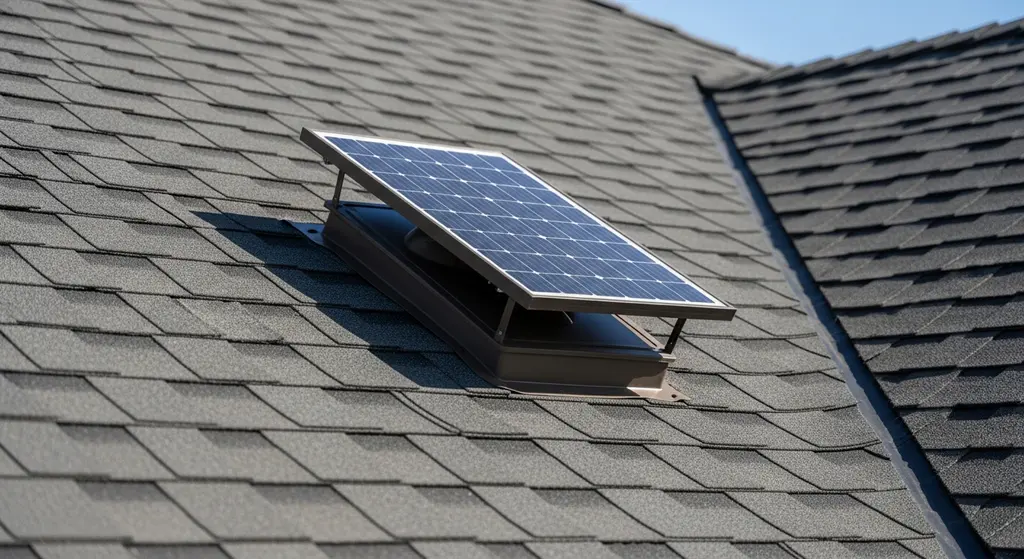
| Performance Specifications | |
|---|---|
| Average Airflow | 1,000 – 1,500 CFM |
| Solar Panel Wattage | 20W – 40W Monocrystalline |
| Thermal Switch | Activates at 80°F / Shuts off at 65°F |
IRC Code Compliance and Ventilation Ratios
The International Residential Code (IRC), specifically section IRC R806.1, mandates that attics must be ventilated to prevent moisture accumulation and heat buildup. In Dallas, we typically follow the 1:150 rule, requiring one square foot of net free ventilating area for every 150 square feet of attic floor space. Solar fans help meet this requirement more efficiently than static vents. However, IRC R806.2 requires that the ventilation be balanced between the high and low points of the roof.
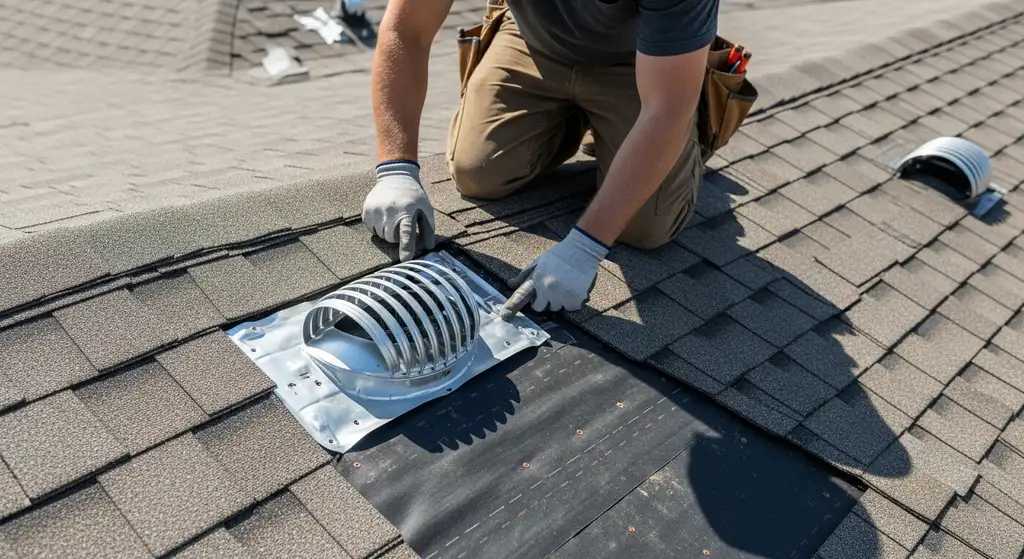
If you install a powerful solar fan without sufficient soffit intake, the unit may create a negative pressure environment. This can lead to ‘back-drafting,’ where the fan pulls cooled air from your home through recessed lights or ceiling cracks, increasing your energy costs. Building inspectors in the DFW Metroplex are increasingly looking for proper flashing integration during solar vent retrofits. Per IRC R905, any roof penetration must be flashed to prevent water intrusion.
We always specify heavy-duty galvanized steel or aluminum flashing that meets ASTM D4869 standards for underlayment compatibility to ensure a leak-free installation.
Field Note from Experience
During a code compliance inspection in Frisco, I discovered a solar fan that was installed without any intake vents. The fan was so powerful it was pulling air through the fireplace flue, bringing soot into the living room. We had to install 10 new soffit vents to balance the system, costing the homeowner an extra $800.
Cost Breakdown for Dallas-Fort Worth Installations
In the Dallas-Fort Worth market, the cost for a high-quality solar powered roof vent installation generally ranges from $600 to $1,200 per unit. This price includes the unit itself, which typically costs between $350 and $600, and the professional labor required for a watertight installation. High-pitched roofs or those with premium tiles may see labor surcharges. Labor rates in North Texas are currently influenced by the high demand for skilled trades during the spring storm season.
Contractors often charge a premium for small retrofit jobs compared to including the vent during a full roof replacement. For a standard 2,000-square-foot home in Dallas, you likely need two units to achieve optimal airflow, bringing the total project cost to approximately $1,500 to $2,200. Prices in the DFW Metroplex are roughly 15% higher than in rural parts of West Texas due to higher insurance requirements and permit fees in cities like Plano or Southlake. However, the abundance of suppliers in the metro area keeps material markups competitive.
We recommend getting quotes in the late fall or winter to avoid the ‘storm season’ price hikes common in March and April.
Dallas Market Pricing
In Dallas-Fort Worth, expect to pay $600-$1,200 per unit. These are current 2026 Dallas market prices; costs vary by region and can be 15-25% higher in remote Texas areas. Peak pricing occurs spring (March-May) storm season.
| Component | Estimated Cost (Dallas) |
|---|---|
| Solar Vent Unit (Energy Star) | $350 – $550 |
| Professional Labor | $250 – $450 |
| Permit & Inspection | $50 – $150 |
| Total Per Unit | $650 – $1,150 |
Professional Installation Procedure
A proper installation begins with identifying the optimal location on the south-facing slope of the roof to maximize solar exposure. We use a reciprocating saw to cut a precise hole through the asphalt shingles and OSB decking, ensuring the hole matches the manufacturer’s diameter specifications. Safety is paramount, and all crews must follow Occupational Safety and Health Administration (OSHA) fall protection guidelines. Once the hole is cut, we apply a bead of high-grade roofing sealant around the underside of the vent flashing.
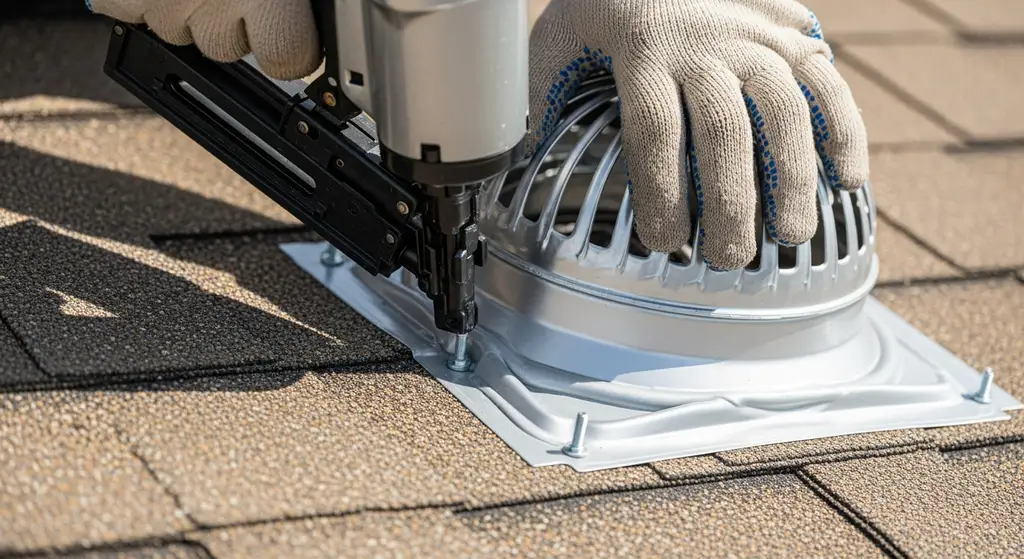
The vent is then tucked under the upper course of shingles to ensure a ‘shingle-style’ water shed. This integration is critical to prevent water from backing up under the unit during the heavy downpours common in North Texas. We secure the unit using G-90 galvanized fasteners per ASTM D1761 standards. Finally, we verify that the thermal switch and solar panel are functioning.
In Dallas, we often recommend units with an optional AC adapter for nighttime operation, though the pure solar models are the most popular for energy savings. The final step is a thorough inspection of the attic-side intake vents to ensure the airflow path is clear of insulation or debris.
External Authoritative Resources
These industry-standard references support the information in this guide:
Building Codes
International Residential Code (IRC 2021)
Official building code for residential construction
ICC Code Adoption Map
Find which IRC version your state uses
Energy & Efficiency
Frequently Asked Questions
Do solar roof vents work on cloudy days?
Most modern solar vents use monocrystalline panels that can still operate at reduced capacity during overcast conditions. However, peak performance occurs during direct sunlight, which aligns perfectly with when your attic is at its hottest.
Will a solar vent leak during a North Texas hail storm?
High-quality units are tested for impact resistance. When installed according to NRCA standards with proper flashing, they are as leak-resistant as any other roof penetration, such as plumbing stacks or chimneys.
How many solar vents do I need for my roof?
Generally, one solar fan is sufficient for every 1,000 to 1,200 square feet of attic space. A typical Dallas home usually requires two units to ensure complete air exchange and compliance with IRC R806.1.
Can I install a solar vent myself?
While possible for a skilled DIYer, it involves cutting through your roof’s structural decking and shingles. I recommend professional installation to maintain your shingle warranty and ensure compliance with ASTM D4869 flashing standards.
What is the lifespan of a solar powered vent?
The solar panels and DC motors are typically rated for 10 to 15 years. Many manufacturers, like GAF or Solar Star, offer warranties that match the lifespan of standard architectural shingles.
Do solar vents make noise?
Quality solar vents are designed with brushless DC motors that are virtually silent. From inside the home, you should not hear any vibration or humming if the unit is installed correctly on the roof deck.
Final Thoughts
In the demanding climate of Dallas-Fort Worth, solar powered roof ventilation is no longer a luxury—it is a practical necessity for protecting your home’s infrastructure. By actively removing heat and moisture, these units extend the life of your asphalt shingles and reduce the strain on your HVAC system. Remember to prioritize a balanced system with adequate intake to stay compliant with IRC 2021 standards. FIELD NOTE #3: I recently helped a family in North Dallas who had their roof replaced three times in 15 years due to ‘cooked’ shingles.
We installed three solar fans during their most recent replacement, and the roof is now currently in 2026 performing flawlessly with no signs of thermal degradation. Don’t let the Texas sun destroy your investment; invest in active ventilation and enjoy the long-term energy savings. Contact a qualified NRCA member to discuss your specific attic needs today.
