
Contractor’s Bottom Line
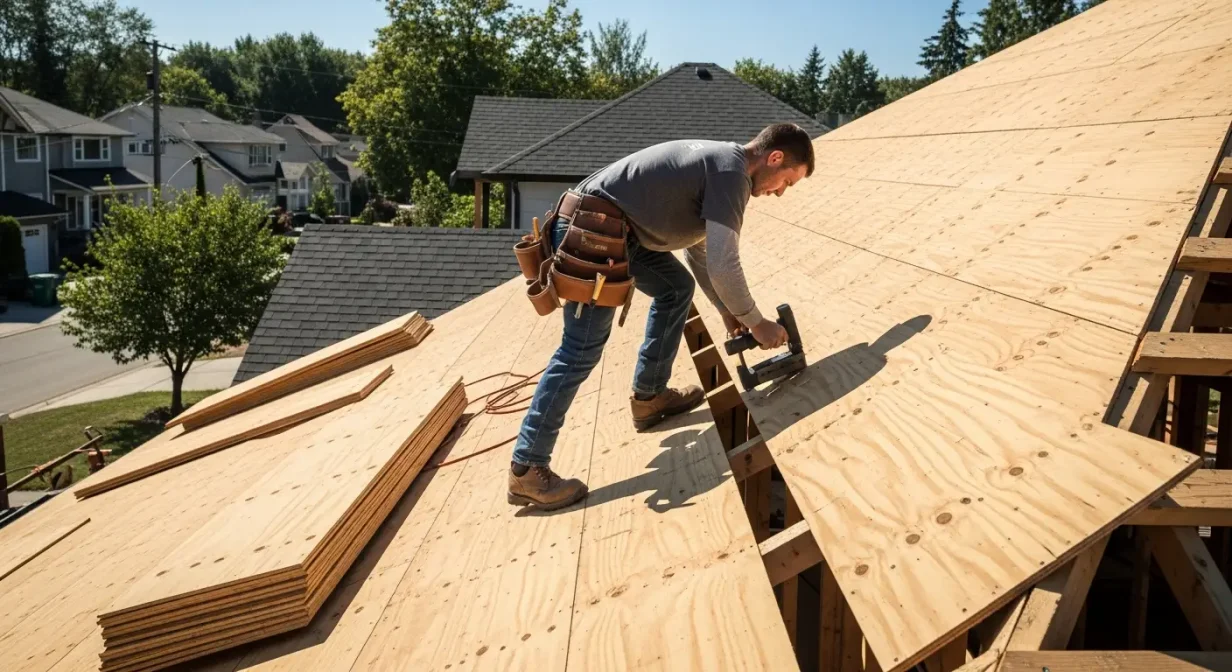
A proper roof decking layout staggers the vertical joints across the roof framing to distribute structural loads evenly. IRC R803.2.1 implicitly requires this by limiting the distance between unsupported joints, which is achieved through a standard four-foot stagger pattern. Start the first row of panels at the eave line and measure carefully to ensure the second row breaks directly over a truss.
Key Takeaways
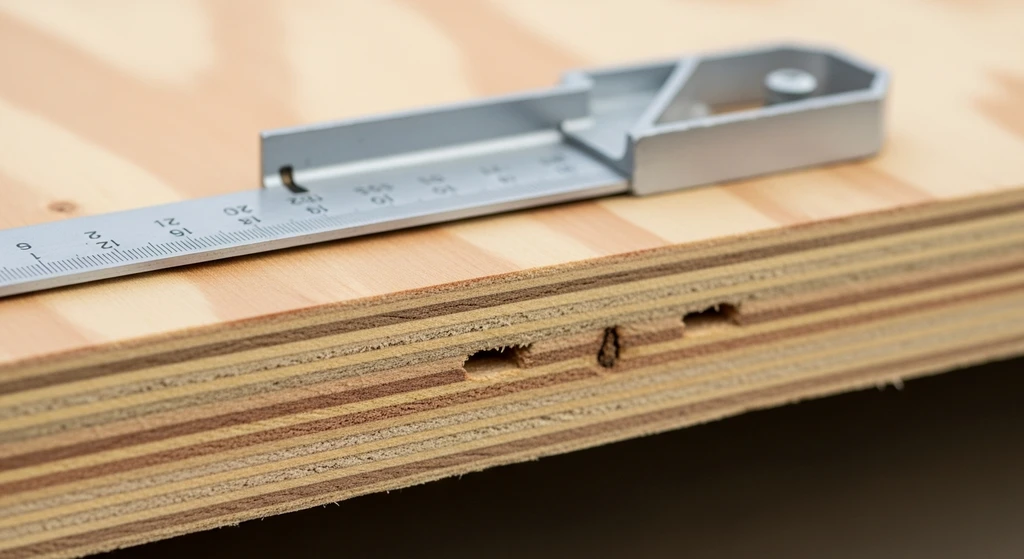
- Always maintain a 1/8-inch gap between panels to accommodate thermal expansion per ASTM D3043 standards.
- Ensure all vertical joints are staggered by at least two rafter spacings to meet IRC R803.2.1 structural requirements.
- Use 8d common nails spaced 6 inches on center at edges and 12 inches in the field to prevent wind uplift in North Texas.
- Specify APA-rated CDX plywood or Advantech for superior moisture resistance compared to standard oriented strand board.
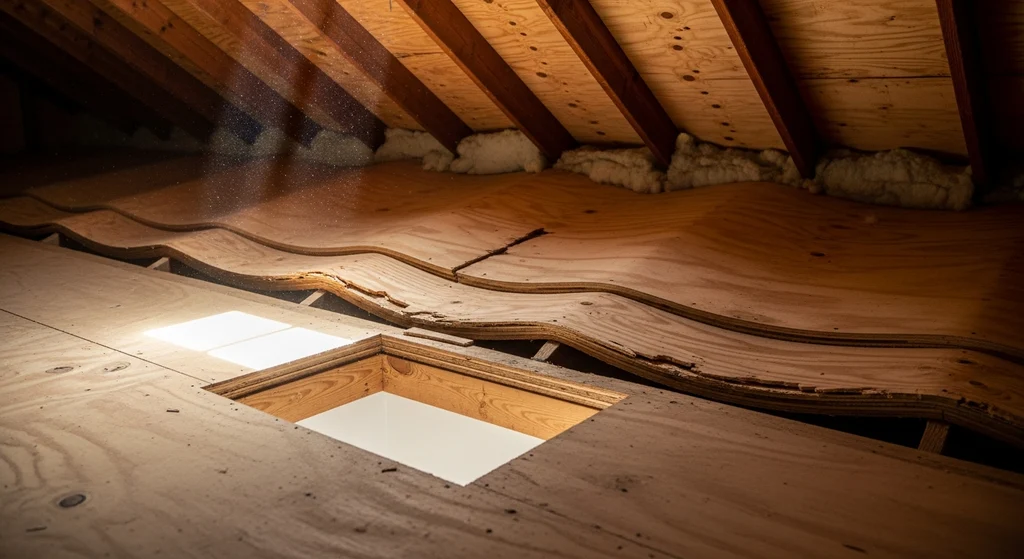
In my eight years as a consultant in the DFW Metroplex, I have seen more roof failures caused by poor decking layout than by the shingles themselves. The layout is not just about covering a hole; it is about creating a structural diaphragm that can withstand the extreme thermal cycles of North Texas. Most contractors rush this phase, leading to wavy rooflines and premature shingle failure. FIELD NOTE #1: Last month, a Dallas homeowner called me after their new roof began buckling just three months after installation.
During my inspection in Highland Park, I found the contractor had jammed the CDX plywood sheets tight against each other without the required 1/8-inch gap. The resulting $14,000 repair could have been avoided by following basic ASTM D3043 spacing guidelines. Understanding the technical requirements of IRC 2021 and the National Roofing Contractors Association (NRCA) is vital for any homeowner. A correct layout involves precise staggering, specific fastening patterns, and material selection that matches the local climate.
This guide breaks down the professional standards we use to ensure a roof lasts for decades, not just until the next storm season.
IRC R803.2.1 and North Texas Code Compliance
The International Residential Code (IRC) provides the legal framework for all residential roof decking layout in Dallas County. Specifically, IRC R803.2.1 requires that wood structural panels be installed according to the manufacturer’s instructions and APA standards. In our region, this typically means using 15/32-inch or 19/32-inch thick panels depending on the rafter spacing and expected snow or wind loads. Failure to comply with IRC R905 regarding underlayment and decking integration can void your manufacturer warranty with brands like GAF or CertainTeed.
I always insist on an inspection before the synthetic underlayment is applied to verify the nailing pattern and panel thickness. Proper compliance ensures the roof can handle the 100+ mph wind gusts we frequently experience during the spring hail season in North Texas.
| Code Quick-Reference | |
|---|---|
| Minimum Thickness | 15/32-inch per IRC R803.2.1 |
| Fastener Type | 8d common nails (ASTM D1761) |
| Expansion Gap | 1/8-inch at all edges |
Step-by-Step Decking Layout Procedure
A professional layout begins at the eave and works upward toward the ridge, ensuring the first course is perfectly square with the rafters. We use a chalk line to mark the rafter centers, which ensures that every vertical joint lands directly on a structural member. Each panel must span at least three rafters to provide the necessary lateral bracing for the home’s frame. Staggering is the most critical part of the process to avoid ‘hinge lines’ that can cause the roof to sag over time.
I require my crews to offset the vertical joints by at least 48 inches in each subsequent row. This creates a brick-like pattern that distributes loads evenly across the entire roof surface, meeting the high standards set by the National Roofing Contractors Association (NRCA).
Field Note from Experience
On a project in Frisco, I discovered a crew skipping the staggering process, lining up every joint on a single rafter. This creates a massive weak point that can split the rafter under heavy wind loads. I stopped the job and forced a re-decking, which saved the homeowner from a potential structural collapse that would have cost over $25,000 to remediate.
Fastening Patterns and ASTM D1761 Standards
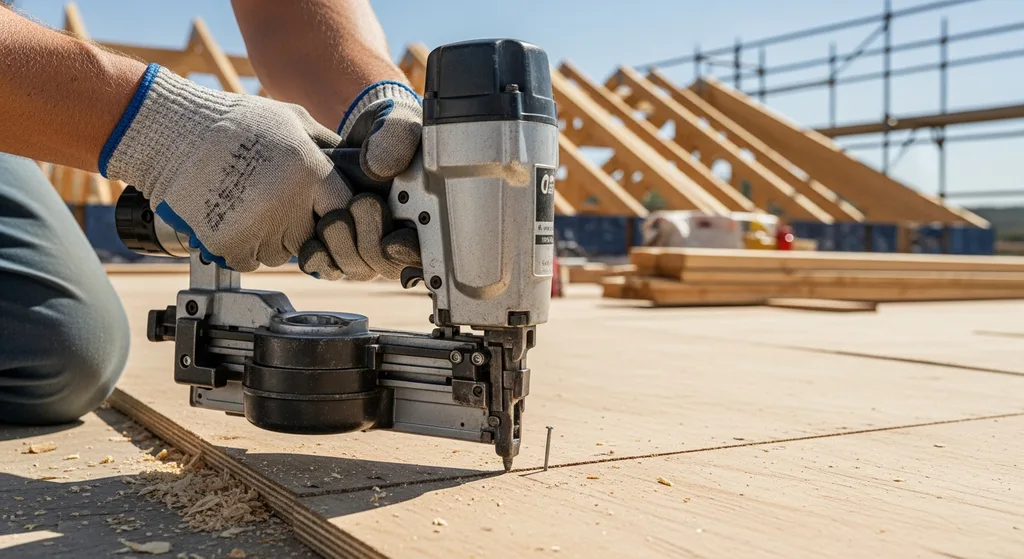
The strength of your roof decking layout is only as good as the fasteners holding it down. We specify 8d common nails that meet ASTM D1761 standards for mechanical fasteners in wood. In the Dallas-Fort Worth area, the standard ‘6 and 12’ pattern is mandatory: nails are spaced every 6 inches along the supported edges and every 12 inches in the field (the middle of the panel). Over-driving nails is a common error that many Dallas contractors make when using pneumatic nailers.
If the nail head breaks the top ply of the CDX plywood, the holding power is reduced by up to 50%. We calibrate our air compressors daily to ensure the nail heads sit flush with the surface, providing maximum wind uplift resistance as recommended by the International Code Council (ICC).
| Location | Spacing (Inches) | Fastener Type |
|---|---|---|
| Panel Edges | 6″ O.C. | 8d Common |
| Intermediate Supports | 12″ O.C. | 8d Common |
| Gable Ends | 4″ O.C. | 8d Common (High Wind) |
What Contractors Hide: Decking Shortcuts
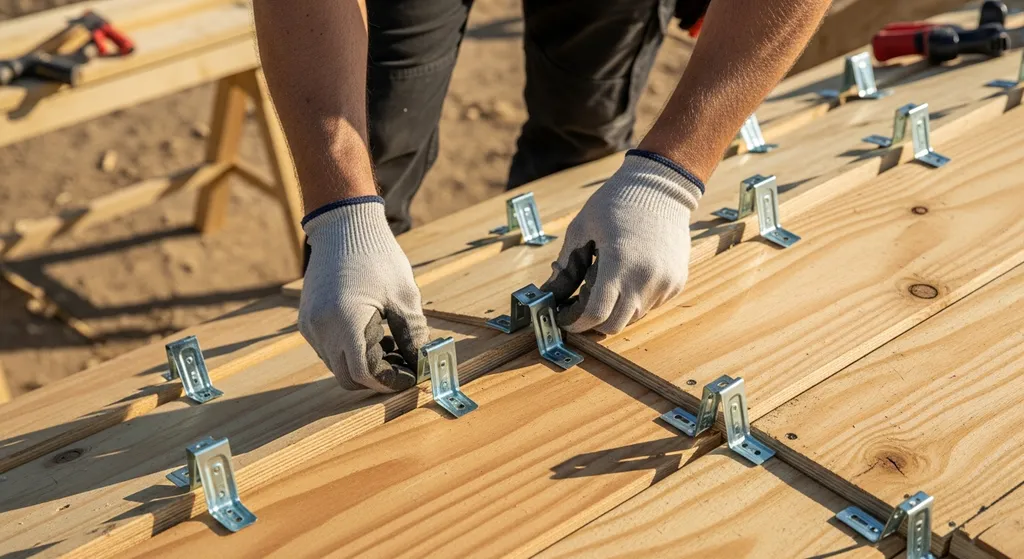
One of the most frequent shortcuts I see in the DFW Metroplex is the reuse of damaged or water-logged decking. Contractors often try to hide ‘delaminated’ plywood under new synthetic underlayment to save on material costs. Delamination occurs when the glue between plywood layers fails, usually due to long-term leaks or poor ventilation, and it completely destroys the structural integrity of the layout. Another red flag is the omission of H-clips on long spans.
These small metal clips are vital for supporting the edges of panels between rafters. Without them, the edges can flex and rub against each other, leading to ‘telegraphing’ where you can see the outlines of the plywood sheets through your beautiful architectural shingles. This is purely an aesthetic issue at first, but it eventually leads to shingle cracking.
Dallas Market Pricing
In Dallas-Fort Worth, expect to pay $85-$120 per sheet for plywood replacement including labor. These are current 2026 Dallas market prices; costs vary by region and can be 15-25% higher in remote Texas areas. Peak pricing occurs during the spring (March-May) storm season due to high demand.
Reusing old decking
Consequence: Voids shingle warranty and risks structural failure.
Skipping H-clips
Consequence: Causes visible ridges and ‘wavy’ roof appearance.
Incorrect nail spacing
Consequence: Decking can blow off during high-wind Texas storms.
What Contractors Hide
Using scrap pieces
The Reality: Contractors use small scraps to fill gaps, which lack the 3-rafter span required for strength.
External Authoritative Resources
These industry-standard references support the information in this guide:
Building Codes
International Residential Code (IRC 2021)
Official building code for residential construction
ICC Code Adoption Map
Find which IRC version your state uses
Industry Standards
NRCA Roofing Manual
National Roofing Contractors Association best practices
ASTM International Standards
Material testing standards (ASTM D3043, D1761)
Manufacturer Resources
Frequently Asked Questions
Can I use OSB instead of plywood for my roof layout?
Yes, APA-rated Oriented Strand Board (OSB) is code-compliant under IRC R803.2.1 and is widely used in Dallas. However, I prefer CDX plywood for its superior moisture handling in the humid North Texas climate. (ASTM D3043)
How many nails should be in a single sheet of roof decking?
A standard 4×8 sheet requires approximately 33 nails when using the standard 6/12 spacing pattern. This ensures the panel meets ICC wind uplift requirements for the DFW Metroplex.
Do I need to replace my decking if it has minor water stains?
Minor staining is usually fine, but if the wood is soft or delaminating, it must be replaced. NRCA standards dictate that the substrate must be ‘solid and secure’ before shingle application.
What is the purpose of H-clips in a decking layout?
H-clips provide structural support to the edges of the panels between rafters. They also automatically create the 1/8-inch expansion gap required by ASTM standards to prevent buckling.
Is a permit required for re-decking a house in Dallas?
Yes, most cities in the DFW Metroplex require a building permit for replacing more than a few sheets of decking. This ensures a city inspector can verify compliance with IRC 2021 codes.
Why is my roof decking wavy after a hot Dallas summer?
Wavy decking is almost always caused by a lack of expansion gaps between panels. When the wood heats up and expands without a gap, it buckles upward, creating a permanent wave.
Final Thoughts
The integrity of your roof depends entirely on the layout of the decking beneath the shingles. By adhering to IRC R803.2.1 and ensuring proper staggering and spacing, you protect your home from the volatile North Texas climate. Don’t let a contractor rush this foundational step; the cost of doing it right is a fraction of the cost of a structural failure. FIELD NOTE #3: I once worked with a family in Plano whose insurance claim for wind damage was denied because the adjuster found the decking was never properly nailed to the rafters.
The ‘installation error’ exclusion in their policy cost them $18,000 out of pocket. Always insist on a mid-process inspection to verify that your roof decking layout meets professional standards. Contact a qualified consultant if you have any doubts about your contractor’s methods.
