

Contractor’s Bottom Line
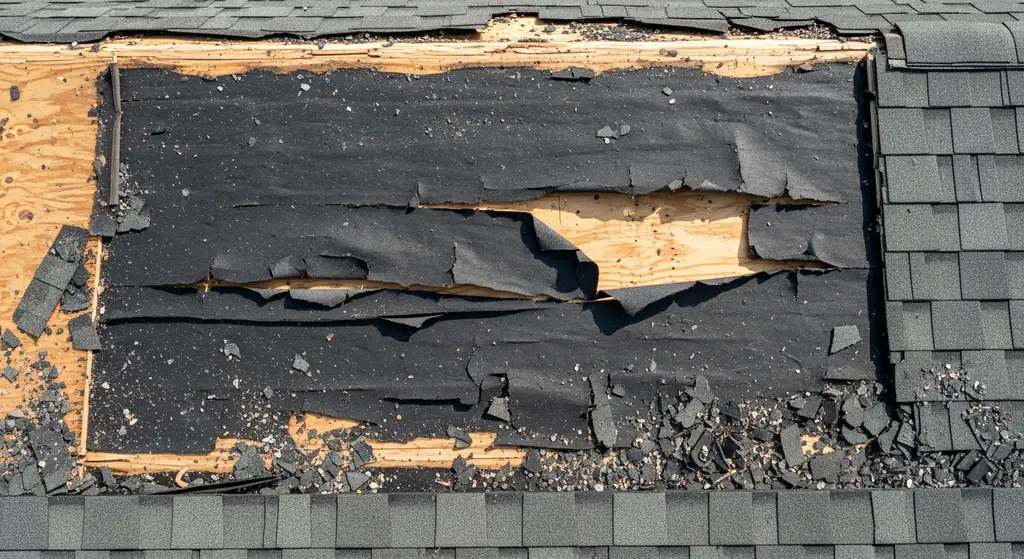
A roof decking leak indicates that water has breached the primary roofing materials and saturated the structural wood base. Persistent moisture trapped against the sheathing will inevitably cause rot, attract wood-destroying insects, and compromise the fastener holding power. Remove the wet materials immediately, identify the exact penetration point in the roofing above, and dry the framing before replacing the panels.
Key Takeaways
- Soft spots or visible sagging often indicate that the structural integrity of the CDX plywood or oriented strand board (OSB) is compromised per ASTM D3043 standards.
- The International Residential Code (IRC) R905 requires specific underlayment installation to prevent decking leaks from reaching the building interior.
- In North Texas, attic temperatures exceeding 140°F can cause felt underlayment (ASTM D226) to become brittle, leading to leak points at the roof decking seams.
Dealing with a roof decking leak requires more than just a quick patch; it demands a thorough understanding of how moisture interacts with your home’s structural shell. In the Dallas-Fort Worth area, our unique combination of spring hailstorms and blistering summer heat puts immense stress on asphalt shingles and the underlying oriented strand board (OSB). When the decking fails, it can lead to mold growth, compromised R-values in your insulation, and even electrical hazards within the attic space. FIELD NOTE #1: Last month, a Dallas homeowner in the Lakewood neighborhood called me after a minor ceiling stain resulted in $4,800 in structural repairs.
They had ignored a small leak for two seasons, which allowed moisture to rot three sheets of CDX plywood and the surrounding rafters. By the time we arrived, the National Roofing Contractors Association (NRCA) standards for a simple repair were no longer applicable, and we had to perform a partial deck replacement to meet IRC 2021 safety requirements. Understanding the warning signs early can save you thousands of dollars in secondary damage. This guide leverages my experience as a Dallas consultant to help you navigate the technical specifications of ASTM International standards and local building codes.
We will examine how to diagnose these issues before they become catastrophic failures that require a full roof replacement.
Identifying Early Warning Signs of Decking Failure
The most common indicator of a roof decking leak is localized sagging between the rafters, which suggests the wood has lost its structural load-bearing capacity. You may also notice dark water stains on the underside of the decking when inspecting the attic, often concentrated around penetrations like vents or chimneys. In the DFW Metroplex, high humidity can also cause OSB to swell at the edges, creating a ‘picture framing’ effect visible through your architectural shingles. If you see granules accumulating in your gutters or ‘cupping’ shingles, these are secondary symptoms that the decking beneath is no longer providing a flat, stable surface.
According to the International Code Council (ICC), any decking that shows signs of delamination or fungal growth must be evaluated for replacement. Ignoring these signs often leads to the failure of fasteners, as nails lose their withdrawal resistance in rotted wood, violating ASTM D1761 standards.

| Critical Symptoms | |
|---|---|
| Visual Sagging | Indicates loss of structural integrity per ASTM D3043 |
| Rusty Fasteners | Signs of high moisture levels and potential nail pull-through |
| Adhesive Failure | Delamination of plywood layers or OSB strands |
Professional Inspection Techniques for North Texas Homes
A proper inspection begins in the attic using a high-output LED light to scan for ‘tracking’—the path water takes from a leak point to the ceiling. We utilize moisture meters to determine if the wood moisture content (WMC) exceeds 19%, the threshold where wood-decaying fungi begin to thrive. In Dallas, we pay special attention to the North-facing slopes, which dry slower and are more prone to persistent moisture issues. On the rooftop, we look for ‘shingle bridging’ and check the integrity of the synthetic underlayment.
The NRCA recommends checking all flashing points, as 90% of decking leaks originate at valleys or wall transitions where ASTM D4869 underlayment may have been improperly lapped. If the shingles are GAF Timberline HDZ or similar architectural styles, we check for proper nailing patterns to ensure the decking is still holding the fasteners securely.

Warped Decking
Typical Cost: $150 per sheet
Prevention: Proper attic ventilation
Insurance Coverage: Likely covered if caused by storm
Code Reference: IRC R803.2.1
Field Note from Experience
During an inspection in Plano, I found a leak that appeared minor from the outside, but my moisture meter showed 35% WMC in the OSB. The previous contractor had skipped the ice and water shield in the valleys, a clear violation of IRC R905. The resulting rot cost the homeowner $12,000 because it had spread to the structural fascia and rafter tails.
Common Root Causes of Decking Leaks in Dallas
The primary culprit for decking failure in the DFW Metroplex is often improper ventilation, which leads to heat-induced condensation on the underside of the deck. When the attic cannot breathe, moisture trapped between the insulation and the decking causes the wood to rot from the inside out. Additionally, the extreme temperature swings in North Texas cause metal flashing to expand and contract, eventually breaking the seal of the asphalt cement. Another major factor is the use of sub-standard underlayment.
While IRC 2021 allows for basic felt, many Dallas builders historically used thin 15lb felt (ASTM D226 Type I) which degrades rapidly in our climate. When shingles are damaged by hail, this brittle underlayment fails immediately, allowing water to saturate the OSB. High-quality synthetic underlayment or a dedicated ice and water shield is necessary to provide the secondary barrier required by modern standards.
What Contractors Hide
Reusing old flashing
The Reality: Contractors often reuse rusted flashing to save $500, leading to leaks within 2 years.
Over-nailing shingles
The Reality: Pneumatic tools set too high can pierce the decking, creating thousands of micro-leak points.
Repairing vs. Replacing Your Roof Decking
Deciding whether to patch a small area or replace the entire deck depends on the extent of the ‘delamination.’ If the damage is limited to a single sheet of CDX plywood and the surrounding wood is dry and structural, a localized repair is feasible. However, if more than 25% of the decking shows signs of softening or mold, the NRCA generally recommends a full deck replacement to ensure the new shingles have a consistent nailing surface. In Dallas, we must also consider the ‘ordinance and law’ coverage in your insurance policy. If your home was built under older codes, current IRC R905 requirements might mandate that the entire deck be brought up to modern thickness standards (15/32 inch) during a repair.
This is especially common in older neighborhoods like Highland Park or M-Streets, where 3/8-inch decking was once standard but is no longer code-compliant for modern shingle loads.
Dallas Market Pricing
In Dallas-Fort Worth, expect to pay $100-$165 per 4×8 sheet for decking replacement. These are current 2026 Dallas market prices; costs vary by region and can be 15-25% higher in remote Texas areas. Peak pricing occurs spring (March-May) storm season.
| Condition | Recommended Action | Estimated Cost (Dallas) |
|---|---|---|
| Surface Mold Only | Clean & Ventilate | $500 – $1,200 |
| 1-2 Rotted Sheets | Localized Replacement | $800 – $1,500 |
| Widespread Sagging | Full Deck Replacement | $3,500 – $8,000+ |
Strategies to Prevent Future Decking Leaks
Prevention starts with the specification of high-performance materials like Advantech or CCX-grade plywood, which offer superior moisture resistance compared to standard OSB. Ensuring your attic has a balanced ventilation system—matching intake air from soffits with exhaust air from ridge vents—is the single most effective way to protect your decking from North Texas humidity. We also recommend the installation of a self-adhering polymer-modified bitumen sheet (ice and water shield) in all critical transition areas. Regular maintenance is equally vital.
Homeowners should perform a visual check after every major DFW hailstorm to look for impact marks that could have breached the shingle layer. Clogged gutters are another frequent cause of decking rot at the eaves; when water backs up, it seeps under the shingle starter course and saturates the edge of the decking, a problem easily solved by installing D-style drip edges as specified by ASTM D4477.

Free Roof Offers
Consequence: Often involves skipping decking repairs to cover the deductible, which is insurance fraud in Texas.
External Authoritative Resources
These industry-standard references support the information in this guide:
Building Codes
Frequently Asked Questions
Can I just nail new shingles over wet decking?
No. Nailing into wet or rotted decking violates IRC R905.1, as the fasteners will not have the required pull-out resistance, leading to shingle blow-offs during North Texas wind events.
What is the best decking material for Dallas heat?
CDX plywood is generally superior to standard OSB in high-heat environments because its cross-laminated structure handles thermal expansion more effectively, meeting ASTM D3043 performance ratings.
Does insurance cover roof decking leaks?
Insurance typically covers decking replacement if the damage resulted from a ‘sudden and accidental’ event like a hailstorm, but they may deny claims caused by long-term maintenance neglect.
How do I know if my decking is thick enough?
Standard residential code IRC R803.2.1 requires a minimum of 7/16-inch for OSB or 15/32-inch for plywood on rafters spaced 24 inches on center.
Should I use H-clips during a decking repair?
Yes, the ICC requires H-clips at the mid-span of decking sheets to allow for expansion and prevent the edges from rubbing, which can cause squeaking and premature wear.
Is mold on the decking always a sign of a leak?
Not necessarily; surface mold can be caused by poor attic ventilation. However, if the wood is soft to the touch, it indicates a structural failure from an active leak.
Final Thoughts
Addressing a roof decking leak requires a proactive approach that balances immediate repairs with long-term prevention. By understanding the interaction between Dallas’s extreme climate and the structural requirements of the International Residential Code (IRC), you can ensure your home remains safe and dry. Always prioritize high-quality materials like CDX plywood and synthetic underlayment to protect your investment from the inevitable Texas storm season. FIELD NOTE #3: I recently assisted a family in North Dallas who were victims of a ‘storm chaser’ scam.
The contractor had promised to ‘waive the deductible’ by reusing rotted decking and skipping the ASTM D226 underlayment. Six months later, the first major rain caused a total ceiling collapse in their kitchen. We had to redo the entire job, which cost them $15,000 out of pocket because their insurance wouldn’t pay for a second claim on the same roof. Don’t cut corners on your decking—it is the foundation of your entire roofing system.
