
Contractor’s Bottom Line
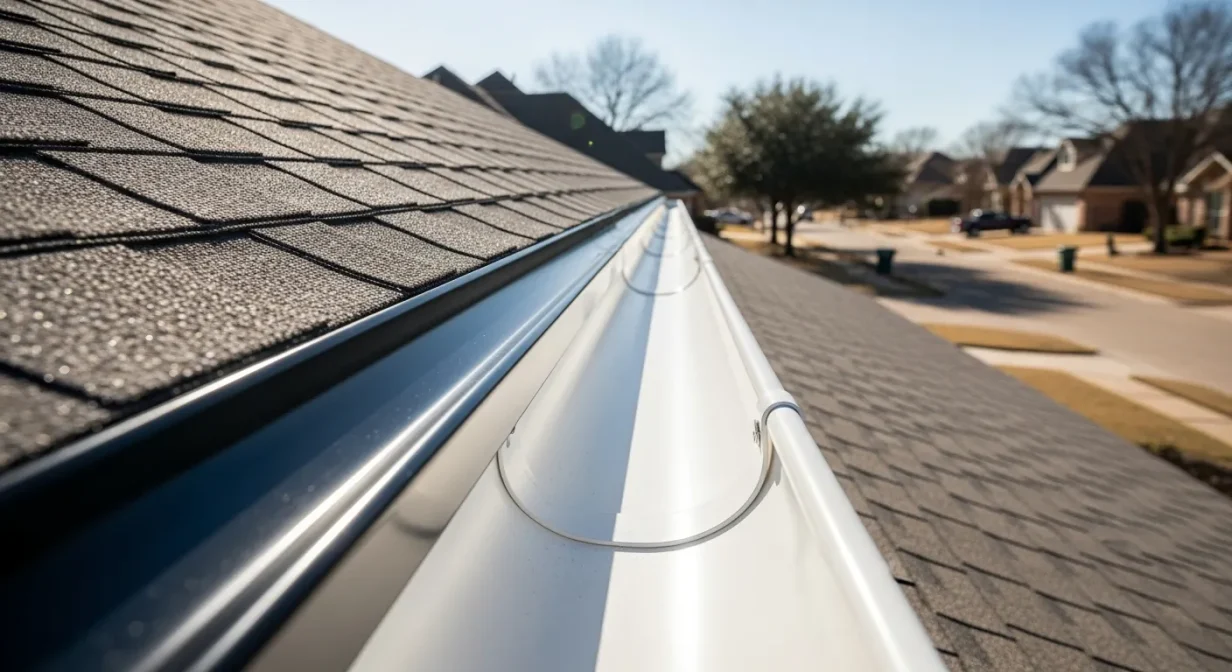
Drip edge on a roof is a non-corrosive metal flashing installed at the eaves and rakes to direct water away from the wood decking. IRC R905.2.8.5 mandates drip edges extend at least 1/4 inch below the roof sheathing and into the gutter to prevent fascia rot. Install the underlayment over the eave drip edge, but under the rake drip edge, to create a proper shingling water barrier.
Key Takeaways
- IRC R905.2.8.5 mandates drip edge for all asphalt shingle roofs to protect the roof deck and fascia.
- NRCA recommends a minimum 2-inch overlap at joints to ensure continuous water shedding and prevent capillary action.
- In Dallas, use G-90 galvanized steel or 0.032-inch aluminum to withstand extreme thermal expansion and hail impact.
I have spent over eight years inspecting roofs across the DFW Metroplex, and I can tell you that a missing drip edge is the leading cause of preventable deck rot. FIELD NOTE: Last month, a Dallas homeowner in Lakewood called me after a minor leak turned into a $12,000 fascia and soffit replacement because the original contractor skipped the drip edge to save $400. This small metal profile is the only thing standing between your roof’s edge and the destructive force of North Texas rain. The International Code Council (ICC) has made drip edge mandatory in recent code cycles because it effectively manages water surface tension.
Without it, water wicks back under the shingles and saturates the oriented strand board (OSB) or CDX plywood decking. This saturation leads to mold growth and structural failure that is often excluded from standard insurance policies if the roof wasn’t built to code. Understanding the technical specifications of drip edge on roof applications is essential for any property owner in North Texas. We will explore the specific IRC 2021 requirements and the ASTM International standards that govern material quality.
By the end of this guide, you will know exactly how to verify if your contractor is following the best practices recommended by the National Roofing Contractors Association (NRCA).
IRC 2021 Drip Edge Requirements for North Texas
The International Residential Code (IRC) section R905.2.8.5 explicitly requires the installation of a drip edge on all asphalt shingle roof systems. In Dallas and surrounding municipalities, this code is strictly enforced during mid-roof and final inspections. The code specifies that the drip edge must be applied directly to the deck at the eaves and over the underlayment at the rakes. Furthermore, the IRC 2021 requires that the drip edge extend at least 1/4 inch below the roof sheathing and extend back onto the roof deck a minimum of 2 inches.
This ensures that water is successfully diverted into the gutter system rather than wicking into the fascia board. I have seen many Dallas County inspectors fail roofs because the drip edge lacked the required 2-inch deck flange, which is common with cheaper, non-compliant materials. Adhering to these standards is not just about passing an inspection; it is about maintaining your home’s structural integrity. The Federal Emergency Management Agency (FEMA) also highlights drip edge as a critical component for wind uplift resistance during severe weather.
In the DFW Metroplex, where wind speeds can reach significant levels during spring storms, a properly fastened drip edge prevents the first course of shingles from being lifted and torn away.

| IRC Code Quick Reference | |
|---|---|
| Code Section | IRC R905.2.8.5 |
| Minimum Overlap | 2 Inches |
| Eave Placement | Under Underlayment |
| Rake Placement | Over Underlayment |
Field Note from Experience
During a code compliance inspection in Plano, I discovered a contractor had installed the drip edge over the underlayment at the eaves. This violation of IRC R905.2.8.5 meant water was getting trapped between the metal and the felt, causing the bottom edge of the OSB to swell. The homeowner had to pay $1,500 to have the bottom row of shingles and underlayment pulled up and corrected.
Material Specifications and ASTM Standards
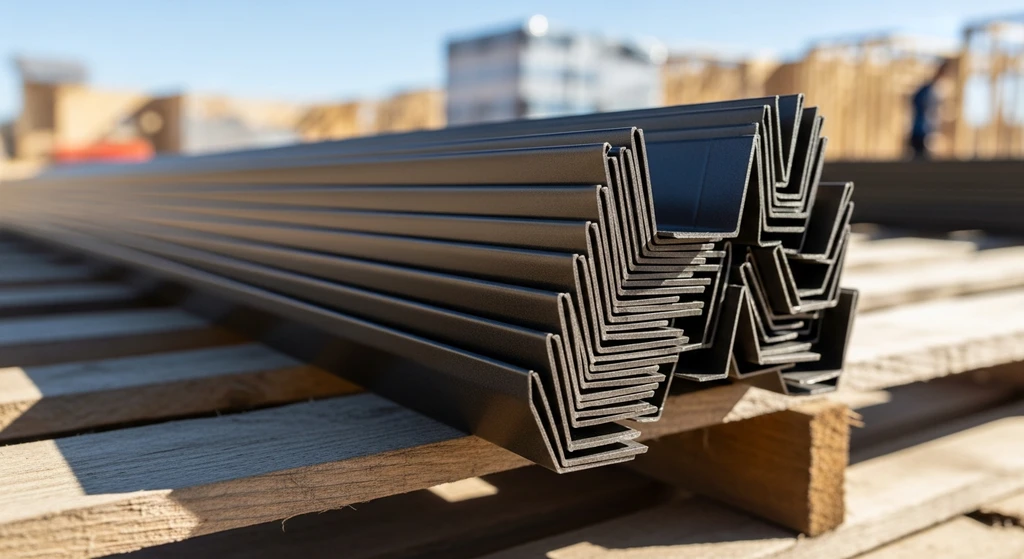
Not all drip edge materials are created equal, especially when facing the 100-degree summers of North Texas. ASTM A653 governs the standards for G-90 galvanized steel, which is my preferred material for Dallas homes due to its superior rigidity and corrosion resistance. While aluminum is common, it can often be too thin to withstand the impact of large hail, which is a frequent occurrence in the DFW Metroplex. When specifying materials, I always look for a minimum thickness of 0.019 inches for steel or 0.032 inches for aluminum.
Materials meeting ASTM D1761 for mechanical fasteners ensure that the nails used to secure the drip edge won’t corrode prematurely. I recommend using hot-dipped galvanized nails to prevent the galvanic reaction that occurs when dissimilar metals meet, which can lead to rapid deterioration of the flashing. For high-end residential projects in neighborhoods like Highland Park, we often specify heavy-gauge K-style or T-style drip edges. These profiles provide a more architectural finish while offering superior water management compared to basic L-style flashing.
Regardless of the profile, ensuring the material is Energy Star rated for reflective properties can also help reduce heat transfer at the roof’s perimeter, protecting your attic insulation from localized thermal bridging.
| Material Type | ASTM Standard | Recommended Gauge | Dallas Climate Performance |
|---|---|---|---|
| G-90 Galvanized Steel | ASTM A653 | 26 Gauge | Excellent – High Hail Resistance |
| Aluminum | ASTM B209 | 0.032 Inch | Good – Corrosion Proof |
| Copper | ASTM B370 | 16 Ounce | Superior – Longest Lifespan |
What Contractors Hide
Using thin 0.015-inch ‘economy’ drip edge.
The Reality: This material buckles under Texas heat and offers zero protection against hail impact.
Reusing old drip edge during a reroof.
The Reality: Nail holes from the previous installation create leak points and violate IRC code for new roof systems.
Professional Drip Edge Installation Sequence
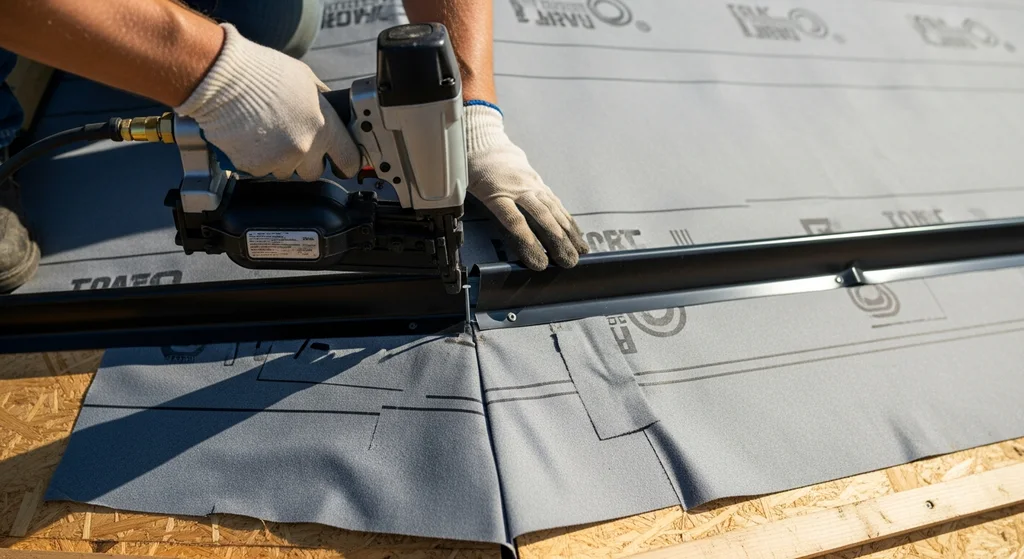
The sequence of installation is critical for ensuring the drip edge works in harmony with your synthetic underlayment and shingles. At the eaves, the drip edge must be installed directly onto the roof deck before the underlayment is laid down. This allows any water that gets past the shingles to run over the underlayment and then over the metal drip edge into the gutter. At the rakes (the sloped sides of the roof), the order is reversed: the underlayment goes down first, and the drip edge is installed over it.
This prevents wind-driven rain from blowing under the edge of the underlayment. We follow NRCA recommendations by fastening the drip edge every 12 inches on center using roofing nails that penetrate at least 3/4 inch into the wood sheathing. In the DFW Metroplex, we also integrate an ice and water shield (ASTM D1970) over the eave drip edge for added protection against gutter backups. This ‘sandwich’ technique ensures that even if a gutter fills with debris or ice, water cannot back up into the fascia or soffit.
This level of detail is what separates a professional installation from a cut-rate ‘storm chaser’ job that will fail within a few seasons.
Dallas Market Pricing
In Dallas-Fort Worth, expect to pay $2.50-$4.50 per linear foot for professional drip edge installation. These are current 2026 Dallas market prices; costs can be 15-25% higher in remote North Texas areas due to mobilization fees. Prices often peak from March to May during the spring storm season.
Gaps at the corners where drip edges meet.
Consequence: Water will pour directly onto the corner of your fascia, causing localized rot within 24 months.
Nailing only every 24-36 inches.
Consequence: The metal will ‘oil can’ or buckle in the Dallas sun, creating an uneven roof line and entry points for pests.
External Authoritative Resources
These industry-standard references support the information in this guide:
Building Codes
Frequently Asked Questions
Is drip edge required by code in Dallas?
Yes, the IRC 2021, which is adopted by most DFW municipalities, requires drip edge on all asphalt shingle roofs per section R905.2.8.5.
What is the best material for drip edge in Texas?
G-90 galvanized steel (ASTM A653) is the best choice for the Dallas climate because it resists thermal expansion and hail damage better than thin aluminum.
Can I reuse my old drip edge when getting a new roof?
No, NRCA standards and local building codes generally require new flashing with a new roof to ensure a watertight seal and proper fastener integrity.
Should drip edge go over or under the underlayment?
It goes under the underlayment at the eaves and over the underlayment at the rakes to properly manage water flow and wind-driven rain.
How much does it cost to add drip edge to an existing roof?
In Dallas, retrofitting drip edge costs $5.00-$8.00 per linear foot because it requires carefully lifting the existing shingles without damaging them.
Does drip edge help with pests?
Yes, a properly installed drip edge with a hemmed edge closes the ‘gap’ between the deck and fascia, preventing wasps, squirrels, and rodents from entering your attic.
Final Thoughts
Installing a drip edge on your roof is one of the most cost-effective ways to protect your home from the volatile North Texas climate. By adhering to IRC 2021 standards and utilizing high-quality materials like G-90 galvanized steel, you ensure that your roofing system can withstand the dual threats of extreme heat and torrential rain. FIELD NOTE: I recently assisted a family in North Dallas whose insurance claim for ‘interior water damage’ was denied because the adjuster found the leak originated from a lack of drip edge—a known code violation. Don’t let a small detail become a massive financial burden.
Always insist on a professional installation that meets or exceeds NRCA guidelines to keep your home safe and your warranty valid. If you are planning a roof replacement currently in 2026, make drip edge a priority in your contract negotiations. It is the foundation of a resilient roof and the key to avoiding the structural rot that plagues so many older homes in the DFW Metroplex.
