
Contractor’s Bottom Line
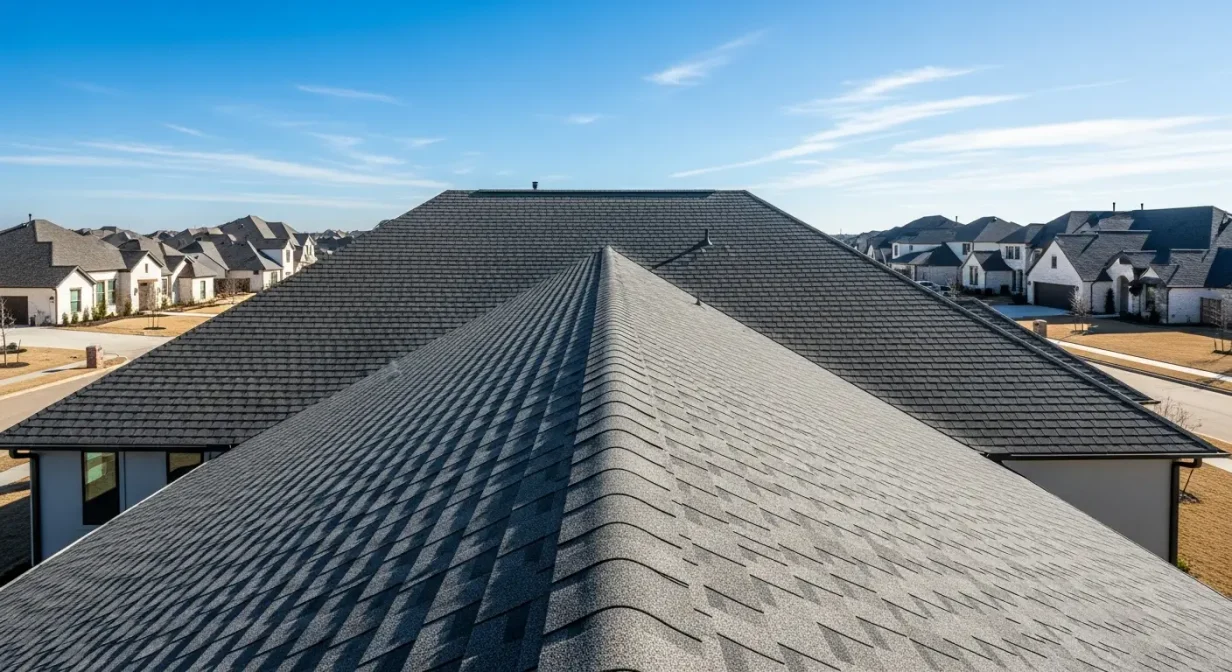
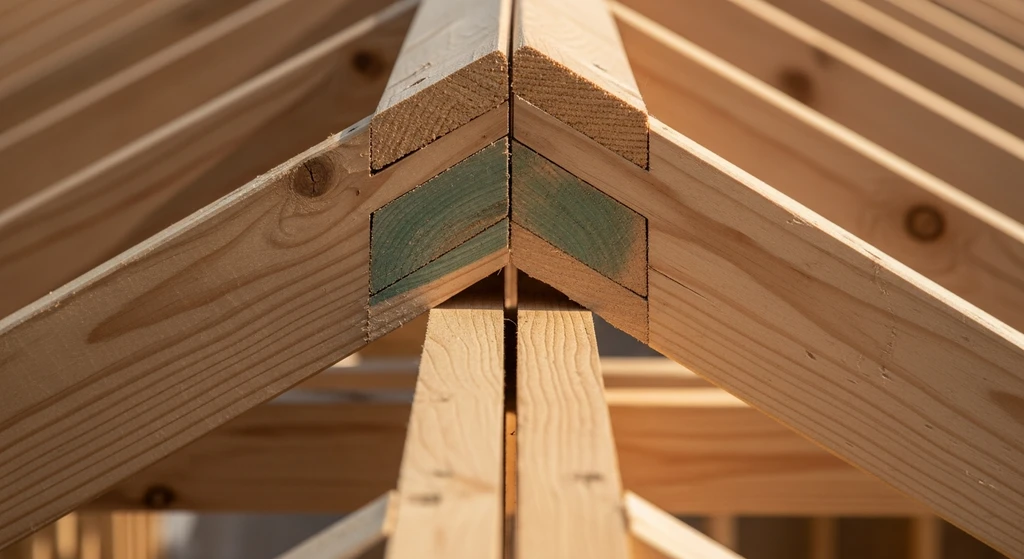
The roof ridge is the horizontal peak line where two sloping roof planes intersect at the top of the structure. This intersection must be covered with a specialized ridge cap shingle and is often utilized as an exhaust vent point per IRC R806.3 requirements. Ensure ridge cap shingles are overlapped and sealed with roof cement to prevent wind-driven rain from entering the attic space.
Key Takeaways
- IRC R806.1 requires 1 square foot of net free ventilating area for every 150 square feet of attic floor space.
- Ridge cap shingles must be fastened with 1.75-inch or 2-inch galvanized nails to penetrate the roof deck per ASTM D1761.
- The North Texas climate requires UV-resistant synthetic underlayment meeting ASTM D4869 standards at the ridge peak.
- A 20-30 degree reduction in attic temperature is common when switching from static pods to a continuous ridge vent system.
The roof ridge represents the literal peak of your home’s protection system. In my 8+ years as a consultant in the Dallas-Fort Worth area, I have seen more premature roof failures caused by improper ridge details than almost any other installation error. Whether it is poor ventilation or inadequate fastening, the ridge is where the Texas sun and wind do the most damage. FIELD NOTE: Last month, a Dallas homeowner in the M-Streets called me after their two-year-old roof began leaking during a spring thunderstorm.
I discovered the previous contractor had installed ridge cap shingles using standard 1.25-inch nails, which failed to reach the CDX plywood decking. This simple oversight led to $6,500 in interior water damage that insurance initially denied due to ‘workmanship exclusion.’ Understanding the mechanics of the roof ridge is essential for any property owner in North Texas. This guide breaks down the technical specifications and building codes required to ensure your roof peak survives the next decade of extreme weather cycles. We will look at everything from the International Code Council (ICC) requirements to the specific materials that withstand 110-degree Dallas summers.
Professional Ridge Vent and Cap Installation Process
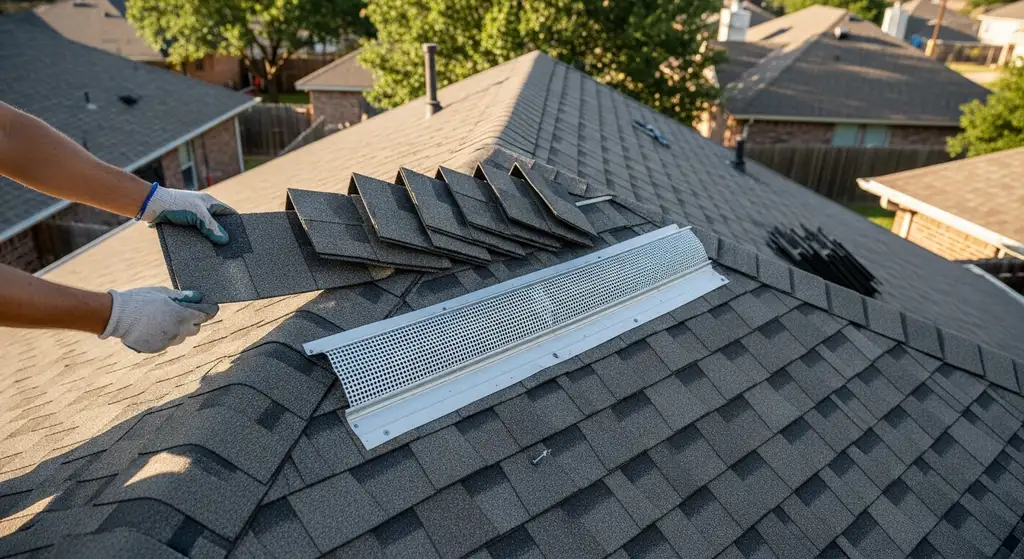
The first step in a high-performance ridge installation is the precise cutting of the ridge slot. We ensure the cut stops at least 12 inches from any gable end or chimney to maintain structural integrity and prevent weather infiltration. The slot should be approximately 2 inches wide, providing the necessary exhaust path for hot attic air as recommended by the National Roofing Contractors Association (NRCA). Once the slot is cleared, we install a continuous ridge vent, such as the GAF Cobra or Owens Corning VentSure.
These products must be centered over the slot and fastened according to manufacturer specifications to ensure they don’t shift during high-wind events. We always check that the baffles are clear of any stray underlayment or debris that could restrict the Net Free Ventilating Area (NFVA). Finally, we install the ridge cap shingles, typically using a high-profile product like GAF Timbertex or CertainTeed Mountain Ridge. These are hand-nailed using two nails per shingle, placed about an inch from the edge and just below the sealant strip.
In the DFW Metroplex, we specifically look for shingles with a UL 2218 Class 4 rating to provide maximum protection against the frequent hail cycles we experience.
Field Note from Experience
On a project in Plano, I discovered a crew using ‘3-tab’ shingles cut into pieces for ridge caps on a high-profile architectural roof. Not only did it look terrible, but the 3-tab pieces lacked the thickness to resist the 70mph winds common in North Texas, leading to a total ridge failure within six months.
IRC Building Codes for Roof Ridges and Ventilation
The International Residential Code (IRC) 2021, which is the standard for most Dallas County municipalities, is very specific about attic ventilation. IRC R806.1 requires that the attic space be ventilated with a balanced system of intake and exhaust. Without a functional roof ridge vent, your attic can reach temperatures exceeding 150 degrees, which ‘cooks’ the asphalt shingles from the underside and drastically reduces their lifespan. Furthermore, IRC R905.2.8.2 specifies the requirements for roof covers at the ridge.
It dictates that valley linings and ridge caps must be installed in a manner that ensures water-shedding capabilities. In North Texas, we also pay close attention to IRC R301.2, which covers wind speeds. Because Dallas is in a high-wind region, ridge caps must be fastened more securely than in sheltered geographic zones. ASTM D1970 is another critical standard we reference for ridge details, specifically regarding self-adhering polymer-modified bitumen sheet materials.
While not always required by code for the entire ridge, using an ice and water shield at the ridge peak provides an extra layer of protection against wind-driven rain. This is a common ‘upgrade’ that I recommend for all residential projects in the DFW area.
| Critical Ridge Codes | |
|---|---|
| Ventilation Ratio | 1:150 (IRC R806.1) |
| Fastener Penetration | Min. 3/4 inch into deck (IRC R905.2.5) |
| Underlayment | ASTM D226 Type II or D4869 |
Top 3 Ridge Failures in North Texas Homes
The most frequent error I see during inspections is the ‘Short Nail Syndrome.’ Contractors often use the same 1.25-inch nails for the ridge caps that they used for the field shingles. However, because the ridge cap sits on top of the ridge vent and multiple layers of shingles, a longer 1.75-inch or 2-inch nail is required to reach the actual roof deck. If the nail only grabs the plastic vent, the first high wind will blow the caps right off. Another major issue is the lack of a balanced ventilation system.
I often find Dallas homes where the ridge vent was installed, but the soffit vents (intake) were painted over or blocked by insulation. This creates a ‘vacuum’ effect that can actually pull rain or snow into the attic through the ridge vent. Ventilation must be a two-way street to work effectively per ICC standards. Finally, improper shingle alignment at the ridge can lead to ‘dead spots’ where water pools.
We see this often on complex rooflines in neighborhoods like Lakewood or Highland Park. If the ridge cap isn’t centered perfectly, water can find its way under the shingles at the peak, leading to rot in the ridge board itself. This is a structural repair that can easily cost $5,000 or more if left unchecked.
Inadequate Nail Length
Typical Cost: $1,200 – $2,500
Prevention: Use 2-inch galvanized nails for ridge caps
Insurance Coverage: Often denied as workmanship error
Code Reference: IRC R905.2.5
Blocked Intake Vents
Typical Cost: $800 – $1,500
Prevention: Install baffles at soffits
Insurance Coverage: Not covered (maintenance issue)
Code Reference: IRC R806.2
Field Note from Experience
During an inspection in North Dallas, I found a ridge vent that had been installed directly over a solid ridge board with no slot cut at all. The homeowner’s AC bills were $600 a month because the attic was essentially a furnace. We had to remove the ridge caps, cut the slot, and reinstall everything, which cost them $2,200 for a mistake the original roofer made.
External Authoritative Resources
These industry-standard references support the information in this guide:
Building Codes
International Residential Code (IRC 2021)
Official building code for residential construction
ICC Code Adoption Map
Find which IRC version your state uses
Industry Standards
NRCA Roofing Manual
National Roofing Contractors Association best practices
ASTM International Standards
Material testing standards (ASTM D3043, D1761)
Manufacturer Resources
Frequently Asked Questions
Does a ridge vent leak during heavy rain?
If installed correctly with an internal weather filter and external baffles, a ridge vent will not leak. Most issues occur when the intake ventilation is blocked, creating a pressure imbalance that pulls moisture in.
Can I mix ridge vents with other vent types?
No, the NRCA recommends against mixing ventilation types. Combining a ridge vent with a powered fan or static ‘turtle’ vents can disrupt the airflow, often causing the ridge vent to act as an intake rather than an exhaust.
How long do ridge cap shingles last?
Standard ridge caps last 15-20 years, but high-profile Class 4 shingles can last 30+ years. Because they are at the peak, they take the brunt of UV radiation and wind, often wearing out before the rest of the roof.
Is a ridge vent required by code in Dallas?
While a ‘ridge’ vent specifically isn’t required, IRC R806.1 mandates a specific amount of attic ventilation. A ridge vent is simply the most efficient way to meet that code in the Texas climate.
What is the cost of adding a ridge vent to an existing roof?
In the Dallas-Fort Worth area, retrofitting a ridge vent typically costs $15 to $22 per linear foot, including the cost of cutting the slot and installing new ridge cap shingles.
What shingles are best for ridge caps in Texas?
I recommend SBS-modified asphalt shingles like GAF Timbertex. The rubberized polymers allow the shingle to bend over the ridge without cracking, which is vital during our 40-degree daily temperature swings.
Final Thoughts
The roof ridge is far more than just the top of your house; it is the engine of your home’s thermal management and its first line of defense against the North Texas elements. By adhering to IRC 2021 standards and utilizing high-quality materials like Class 4 ridge caps and continuous baffles, you protect both your structural decking and your long-term energy costs. FIELD NOTE: I recently worked with a family in Richardson who saw their summer electric bill drop by 22% just by upgrading to a properly sized ridge vent system. It is one of the few roofing components that actually pays for itself over time.
Don’t let a contractor cut corners at the peak—ensure they are using the right nails, the right vent, and the right shingles for our unique Dallas climate.
