
Contractor’s Bottom Line
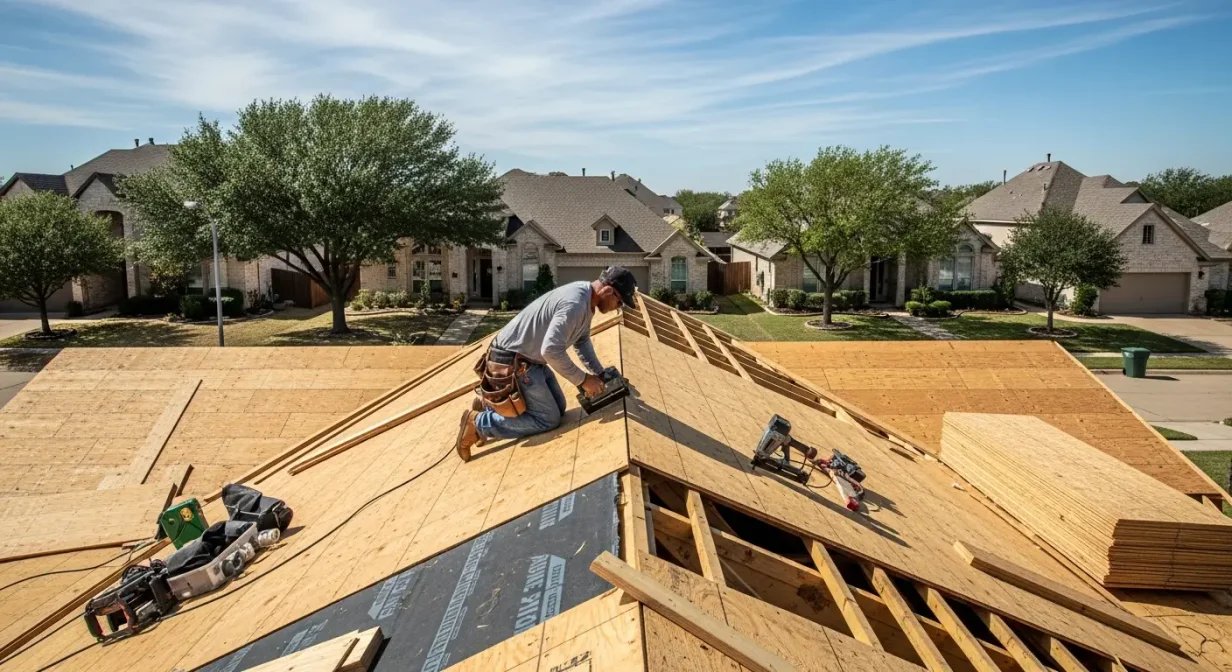
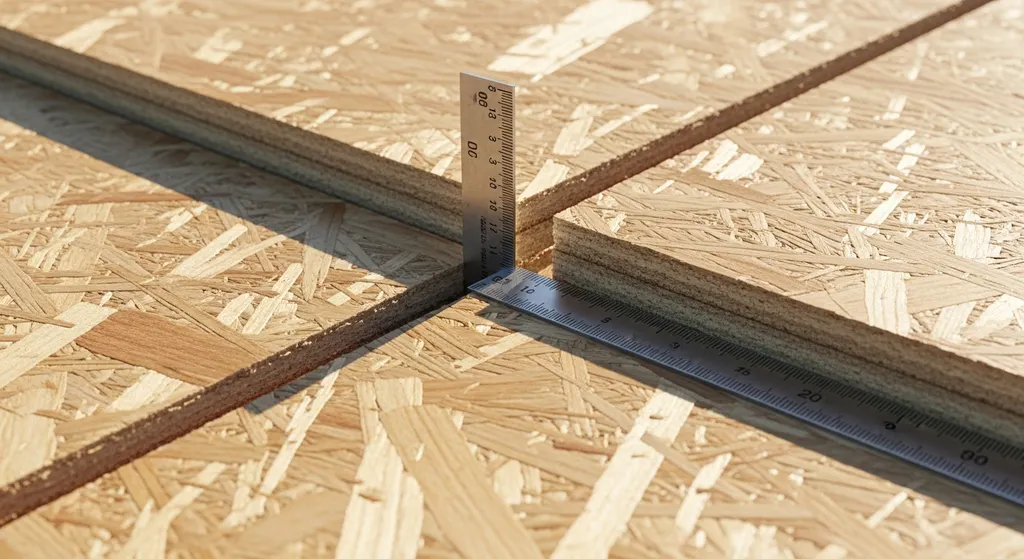
Proper roof decking gaps are essential to accommodate natural thermal expansion without causing the panels to buckle or ridge. The IRC and panel manufacturers require a 1/8-inch gap at all panel end joints, while edge joints should be tightly butted. Use manufactured panel edge guides or scrap wood pieces to ensure consistent spacing during the roof installation process.
Key Takeaways
- IRC R803.2.1 requires specific thickness and supports, while manufacturers mandate a 1/8-inch gap for expansion.
- Excessive gaps over 1/4-inch can void warranties for GAF Timberline HDZ or CertainTeed Landmark shingles.
- In Dallas, thermal expansion from extreme heat cycles is the leading cause of decking buckling if gaps are absent.
- ASTM D3043 standards ensure that your CDX plywood or OSB can handle the structural loads of North Texas storm seasons.
As a consultant in the DFW Metroplex, I often see homeowners confused when they spot gaps between their roof sheathing panels during a reroof. These gaps are not necessarily a sign of poor workmanship; in fact, they are often a requirement of the International Code Council (ICC). Without proper spacing, the wood panels have no room to expand as they absorb moisture and heat, leading to significant structural distortions. Last month, a Dallas homeowner in the M Streets called me after their new architectural shingles began to ripple across the roof plane.
I discovered the previous crew had butted the OSB panels too tight, ignoring the 1/8-inch gap requirement, which caused the wood to buckle in the 105°F Texas heat. This simple oversight resulted in a $14,000 partial deck replacement that insurance refused to cover because it was an installation error. Understanding the difference between a functional expansion gap and a structural failure is critical for maintaining your home’s integrity. We will look at how ASTM International standards and the International Residential Code (IRC) dictate the way your roof should be assembled to survive the harsh North Texas environment.
Why Roof Decking Gaps Exist
Roof decking materials like oriented strand board (OSB) and CDX plywood are hygroscopic, meaning they expand and contract based on moisture content and temperature. ASTM D3043 testing confirms that wood panels require breathing room to maintain structural stability under load. In the Dallas-Fort Worth area, where humidity and heat fluctuate wildly, these gaps act as a pressure relief valve for your entire roof system. If a contractor installs panels flush against one another, the inevitable expansion forces the edges upward, creating a ‘peak’ at the seams.
This phenomenon, known as buckling, creates uneven surfaces that stress the asphalt shingles and can even pull fasteners out of the rafters. The National Roofing Contractors Association (NRCA) emphasizes that these gaps are the first line of defense against deck-related roof failures.
IRC 2021 and Local Dallas Code Requirements
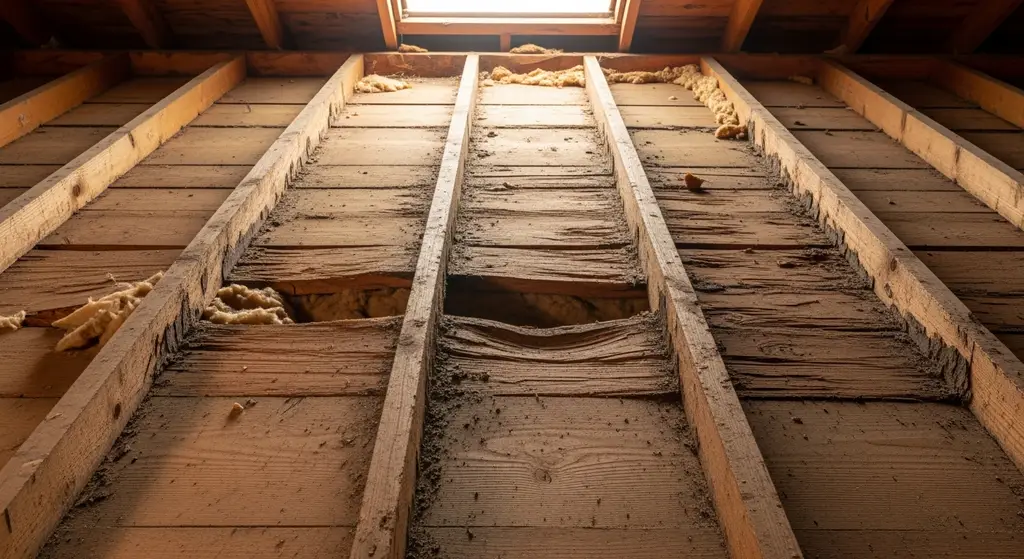
The International Residential Code, specifically IRC R803.2.1, dictates the minimum thickness and allowable spans for roof sheathing. While the code focus is on structural capacity, it works in tandem with manufacturer specifications like those from Georgia-Pacific or LP Building Solutions. Most manufacturers require a 1/8-inch gap at all end and edge joints to maintain warranty coverage and structural integrity. In Dallas, building inspectors look for these gaps during the mid-process inspection of a reroof or new construction project.
Failure to provide adequate spacing can lead to a failed inspection and a requirement to re-cut the seams with a circular saw. This ensures that the roof meets the wind uplift requirements established by the International Code Council (ICC) for the North Texas region.
Identifying Dangerous Gaps vs. Normal Spacing
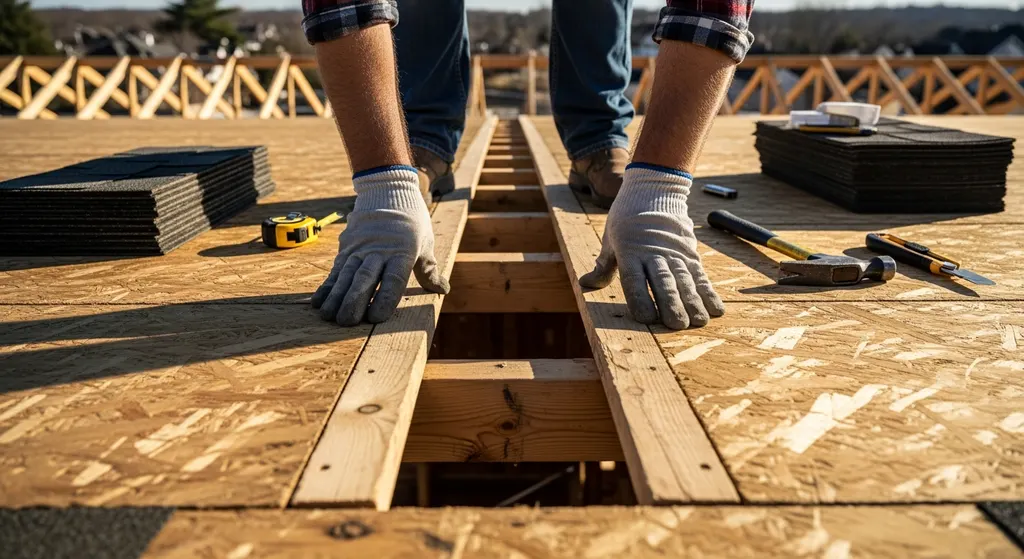
While a 1/8-inch gap is healthy, gaps exceeding 3/8-inch are a major red flag for homeowners in the DFW Metroplex. Large gaps often indicate that the decking has slipped from its fasteners or that the rafters have shifted. You might notice ‘dips’ in your roofline or areas where the architectural shingles seem to be sinking into the house. During an inspection in Plano, I found gaps wider than 3/4-inch where the CDX plywood had pulled away from the rafters entirely.
The homeowner was seeing moisture stains on their ceiling because the synthetic underlayment had lost its support and torn under the weight of accumulated rainwater. We had to replace 12 sheets of decking at $125 per sheet to bring the home back to modern safety standards.
Visible daylight through attic seams
Consequence: Indicates gaps exceeding 1/2 inch, risking underlayment failure.
Shingle granules pooling in ‘valleys’ over seams
Consequence: Signs of decking sagging that will lead to leaks.
The Cost of Ignoring Decking Gaps
Ignoring improper decking gaps in Texas is a recipe for financial disaster. When panels buckle, they create sharp edges that can slice through felt underlayment or even modern synthetic underlayment meeting ASTM D226 standards. This allows water to bypass your primary drainage layer and rot the underlying rafters, which are far more expensive to replace than the decking itself. In Dallas-Fort Worth, expect to pay $95-$145 per sheet for decking replacement as part of a larger project.
These are current 2026 Dallas market prices; costs vary by region and can be 15-25% higher in remote Texas areas. Peak pricing occurs during the spring storm season from March to May when contractor demand is highest. If you wait until a leak occurs, the interior remediation costs can easily triple the total project price.
Dallas Market Pricing
In Dallas-Fort Worth, expect to pay $95-$145 per sheet. These are current 2026 Dallas market prices; costs vary by region and can be 15-25% higher in remote Texas areas. Peak pricing occurs spring (March-May) storm season.
Field Note from Experience
I recently inspected a home in Richardson where the homeowner ignored ‘minor’ buckling for three years. By the time we opened the roof, the lack of gaps had caused the OSB to expand and crush the H-clips, leading to $8,500 in structural rafter repairs that could have been avoided with a $500 maintenance fix earlier.
Ensuring Proper Installation with H-Clips
The most effective way to prevent improper gaps is the use of H-clips, which are small metal spacers that fit between the edges of the decking panels. These clips automatically ensure the 1/8-inch spacing required by the National Roofing Contractors Association (NRCA). They also provide edge support, which allows for thinner sheathing to meet the same structural loads as thicker boards without clips. For premium protection in the North Texas climate, I often specify Advantech or similar high-performance OSB.
These materials have higher resin content and are more resistant to the moisture-induced swelling that typically closes up expansion gaps. When combined with a high-quality ice and water shield at the eaves and valleys, your roof deck becomes a fortress against the extreme weather common in the DFW Metroplex.
External Authoritative Resources
These industry-standard references support the information in this guide:
Building Codes
Frequently Asked Questions
Is it normal to see light through my roof decking?
Small amounts of light at the seams can be normal if they represent the 1/8-inch expansion gap required by the NRCA. However, if the gaps are wide enough to see the sky clearly, your underlayment may be compromised.
Will insurance pay for roof decking replacement due to gaps?
Insurance typically only covers decking if it was damaged by a covered peril like a fallen tree or hail. Gaps caused by poor installation or thermal expansion are usually considered maintenance issues.
What is the maximum allowable gap for roof decking?
Most manufacturers and the APA – The Engineered Wood Association specify a 1/8-inch gap. Anything exceeding 1/4-inch generally requires an additional support block or panel replacement per IRC R803.2.1.
Do I need to replace my whole roof if the gaps are too small?
Not necessarily. A skilled roofer can sometimes use a circular saw to ‘kerf’ or cut expansion joints into the existing decking without a full tear-off, saving thousands in labor.
Why does Dallas heat affect roof gaps so much?
Texas heat can raise attic temperatures to 150°F, causing rapid expansion of wood fibers. Without the 1/8-inch gap, this expansion has nowhere to go but up, leading to buckling.
What are H-clips and are they required in Dallas?
H-clips are metal fasteners (ASTM D1761) that maintain spacing. While not always strictly required by the IRC if decking is thick enough, they are highly recommended by the NRCA for all DFW roofs.
Final Thoughts
Managing roof decking gaps is a balancing act between structural rigidity and the natural movement of wood. In the Dallas-Fort Worth area, ignoring the 1/8-inch expansion gap required by IRC R803.2.1 leads to buckled shingles and premature roof failure. Conversely, gaps that are too wide invite moisture and structural instability, especially during our intense spring storm seasons. I recently helped a family in North Texas whose roof was red-tagged by a city inspector for improper decking spacing.
By providing documentation from the National Roofing Contractors Association (NRCA) regarding thermal expansion, we coordinated a fix that saved the roof without a full tear-off. Always ensure your contractor is checking for these gaps before the underlayment goes down to avoid costly repairs in the future.
