
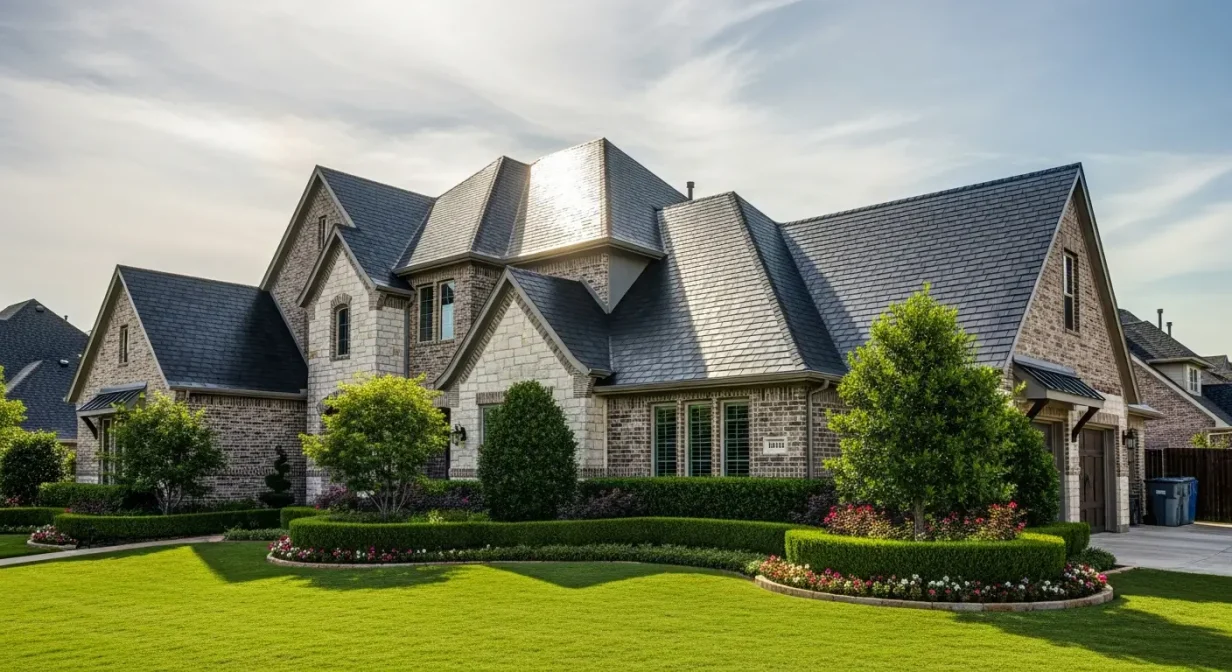
Contractor’s Bottom Line
Impact resistant shingles are manufactured with modified polymer formulas and reinforced mats to withstand the kinetic energy of hail strikes. Products achieving a Class 4 impact rating can endure 2-inch diameter steel balls dropped from 20 feet without cracking. Verify the specific classification on the product wrapper, as this rating is often required for insurance premium discounts.
Key Takeaways
- UL 2218 Class 4 is the gold standard for impact resistance, tested by dropping a 2-inch steel ball from 20 feet.
- Most North Texas insurance carriers offer significant premium credits for shingles meeting ASTM D3161 wind ratings and Class 4 impact standards.
- Impact resistant shingles utilize polymer-modified asphalt (SBS) which prevents the mat from cracking during extreme DFW temperature swings.
- Standard IRC 2021 building codes in Dallas County require specific fastening patterns to maintain wind warranties during storm season.
Living in North Texas means your roof is constantly under siege from volatile weather patterns. I have spent over eight years inspecting roofs across the DFW Metroplex, and the difference between standard asphalt shingles and impact resistant (IR) technology is staggering. When a spring storm rolls through, standard shingles often suffer granular loss and fractured mats that lead to immediate leaks. FIELD NOTE #1: Last spring, a Dallas homeowner in the M Streets called me after a localized hail event.
Their neighbor had recently installed GAF Timberline AS II shingles, while they had standard 3-tab shingles. The neighbor’s roof suffered zero functional damage, while my client faced a $22,000 full replacement claim because their shingles were literally shredded by 1.5-inch hail. This experience highlights why the National Roofing Contractors Association (NRCA) emphasizes material selection based on regional climate stressors. Understanding the technical specifications of these materials is crucial for making an informed investment.
We will explore how these shingles are manufactured, the specific ASTM International standards they must meet, and how they interact with your insurance policy in the Texas market.
The Science of SBS Modified Bitumen Shingles
Impact resistant shingles differ from standard architectural shingles primarily through the addition of Styrene-Butadiene-Styrene (SBS), a synthetic rubber modifier. This polymer is blended with the asphalt to create a ‘rubberized’ shingle that can deform and recover its shape when struck. Standard shingles are more rigid and brittle, making them prone to ‘bruising’ where the reinforcement mat shatters upon impact. The manufacturing process involves saturating a fiberglass mat with this modified bitumen, which significantly increases the shingle’s tensile strength and flexibility.
According to ASTM D3462, these shingles must maintain specific physical properties, but SBS-modified versions far exceed the minimums for tear resistance. This flexibility is also vital for the Dallas climate, where roof surface temperatures can swing 60 degrees in a single afternoon.
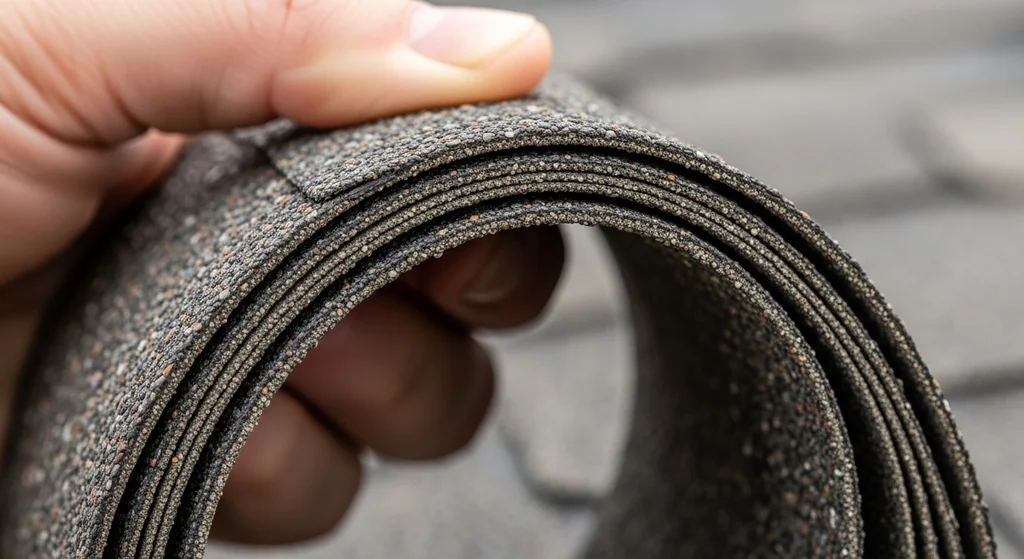
| IR Shingle Components | |
|---|---|
| Base Mat | |
| Modifier | |
| Granules | |
Understanding UL 2218 and ASTM Testing
To be marketed as ‘impact resistant’ in Texas, shingles must pass the UL 2218 ‘Standard for Impact Resistance of Prepared Roof Covering Materials.’ This test categorizes shingles into four classes, with Class 4 being the highest. During testing, a 2-inch steel ball is dropped twice in the same spot from a height of 20 feet; the shingle passes only if the back of the mat shows no signs of cracking or tearing. Furthermore, these shingles are often tested against ASTM D3161 for wind resistance. In the DFW Metroplex, where straight-line winds can exceed 90 mph, having a Class F wind rating (110 mph) is essential.
The International Code Council (ICC) incorporates these standards into the International Residential Code (IRC) to ensure that roofing systems in high-wind regions like Texas provide adequate protection.

| Rating Class | Steel Ball Size | Drop Height | Performance Level |
|---|---|---|---|
| Class 1 | 1.25 inch | 12 feet | Minimum Protection |
| Class 2 | 1.50 inch | 15 feet | Moderate Protection |
| Class 3 | 1.75 inch | 17 feet | High Protection |
| Class 4 | 2.00 inch | 20 feet | Maximum Protection |
Performance in the North Texas Heat and Hail
Dallas poses a unique challenge for roofing materials due to the combination of extreme UV exposure and sudden thermal shocks. Impact resistant shingles excel here because the SBS polymers prevent the asphalt from becoming brittle over time. Standard shingles lose their oils and harden, but IR shingles remain pliable, which is critical for maintaining their impact rating ten years into their lifespan. During an inspection in Plano, I noted that homes with IR shingles also showed significantly less granular loss after summer heatwaves.
The modified asphalt creates a better bond with the ceramic granules, which protects the underlying bitumen from UV degradation. This is why the National Roofing Contractors Association (NRCA) often recommends higher-tier materials for regions in ‘Hail Alley’ to reduce the frequency of catastrophic failures.
Field Note from Experience
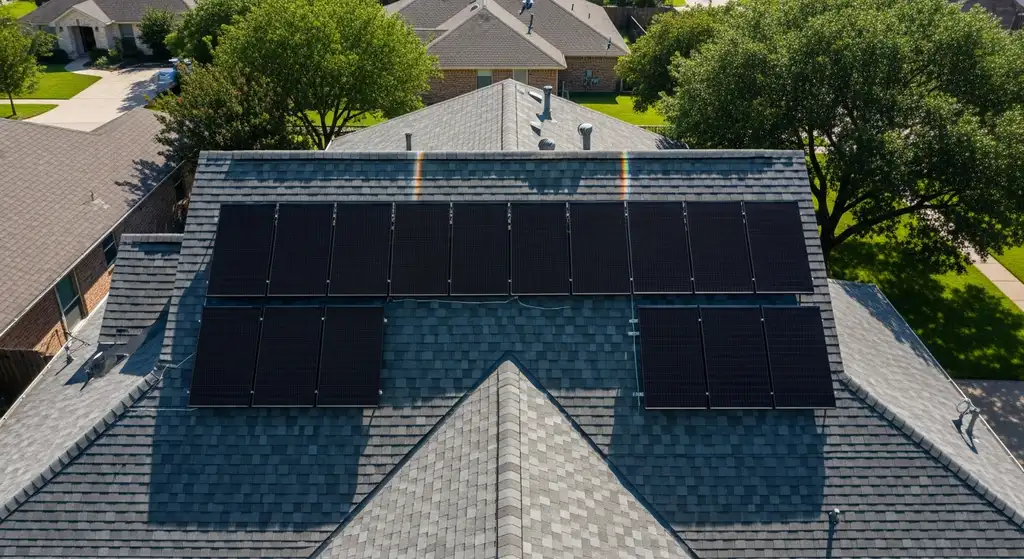
In a Frisco neighborhood after a 2026 storm, I inspected a street where half the homes had upgraded to CertainTeed Landmark IR. The IR roofs had zero functional damage, while the standard roofs required emergency tarping due to ‘star-cracks’ from hail. The homeowners with IR shingles saved their $5,000 deductibles entirely.
Texas Insurance Laws and IR Shingle Credits
The Texas Department of Insurance (TDI) encourages the use of impact resistant materials to reduce overall claim volume. Most major carriers in Texas, including State Farm and Allstate, offer a ‘Hazardous Weather’ or ‘Roofing Material’ credit. To qualify, you must provide a signed ‘Proof of Installation’ form certifying that the shingles meet UL 2218 Class 4 standards. Be aware of ‘Cosmetic Damage Waivers’ in your policy.
Some insurers may try to exclude coverage if the hail only causes aesthetic damage (dents) without causing a leak. However, with IR shingles, the goal is to prevent functional damage entirely. It is also vital to remember that under Texas House Bill 2102, contractors are prohibited from ‘waiving’ your deductible; the savings from IR shingles come from the premium discount, not from illegal rebate schemes.
Cosmetic Damage Exclusions
Consequence: The insurer may refuse to pay for a replacement if the shingles are dented but not leaking.
Uncertified Installers
Consequence: Failure to provide the specific UL 2218 certificate will void your insurance premium discount.
Dallas Pricing: Is the IR Upgrade Worth It?
In the current 2026 Dallas market, the cost for a standard architectural shingle roof averages $3.75 to $4.50 per square foot. Upgrading to an impact resistant shingle typically adds $0.75 to $1.50 per square foot to the total project cost. For a standard 3,000-square-foot roof in Dallas, this represents an additional investment of approximately $2,250 to $4,500. However, the long-term financial picture is favorable.
When you factor in a 25% annual premium discount on a $4,000 homeowner insurance policy, you save $1,000 per year. In this scenario, the upgrade pays for itself in less than four years. Furthermore, many Dallas-area municipalities are considering local amendments to the IRC 2021 that may eventually mandate these materials in high-risk zones, potentially increasing your home’s resale value now.
Dallas Market Pricing
In Dallas-Fort Worth, expect to pay $4.50-$6.25 per square foot for Class 4 shingles. These are current 2026 Dallas market prices; costs vary by region and can be 15-25% higher in remote Texas areas. Peak pricing occurs during the spring (March-May) storm season.
What Contractors Hide About IR Installations
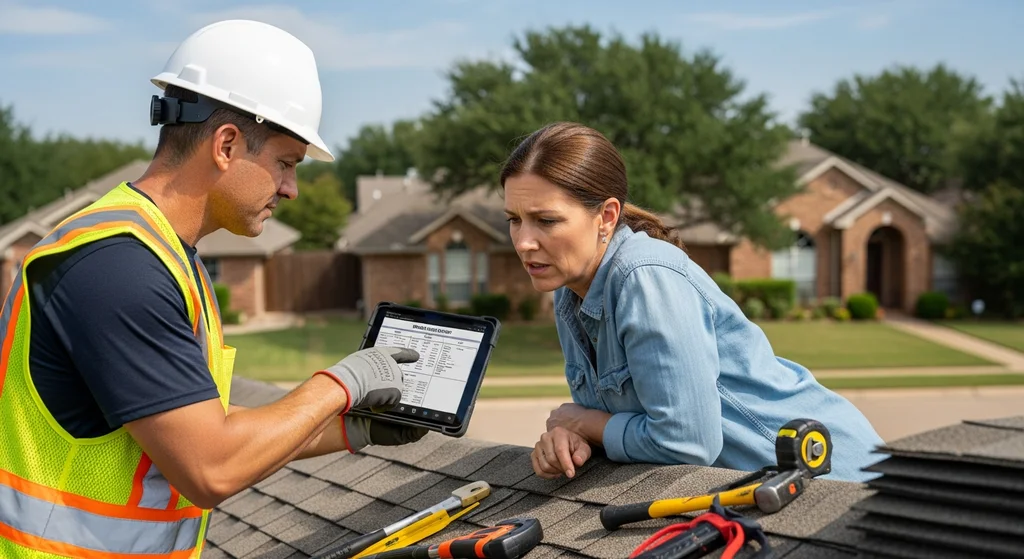
Not all ‘impact resistant’ shingles are created equal, and some contractors may try to substitute lower-tier products while charging Class 4 prices. Always verify the shingles have the UL 2218 Class 4 stamp on the underside of the wrapper. Additionally, some installers skip the necessary high-wind nailing pattern required by IRC R905.2.4.1, which can void your wind warranty even if the shingle itself is impact resistant. Another common tactic is reusing old flashing or synthetic underlayment to increase profit margins.
For an IR system to be effective, it must be a complete system. This includes using a high-quality underlayment meeting ASTM D226 Type II standards and new Drip Edge. If a contractor offers a ‘free upgrade’ to IR shingles, they are likely cutting corners on labor or using ‘seconds’—materials that failed manufacturer quality control but are sold at a discount.
What Contractors Hide
Reusing old flashing
The Reality: Reused flashing is the #1 cause of leaks in new IR roofs, regardless of shingle quality.
Skipping the 6-nail pattern
The Reality: Contractors save time but leave your roof vulnerable to 130 mph winds, voiding the manufacturer’s warranty.
Field Note from Experience
I recently inspected a ‘discount’ IR roof in Las Colinas. The contractor had charged for UL 2218 shingles but actually installed standard architectural shingles and faked the insurance certificate. The homeowner found out only after a minor hail storm caused $12,000 in damage that should have been prevented. Always ask to see the material delivery tickets.
External Authoritative Resources
These industry-standard references support the information in this guide:
Building Codes
Frequently Asked Questions
Are impact resistant shingles hail-proof?
No shingle is entirely hail-proof, but UL 2218 Class 4 shingles are designed to withstand 2-inch hail without functional failure. They significantly reduce the likelihood of leaks compared to standard shingles.
How do I know if my shingles are Class 4?
The bundles will be clearly labeled with the UL 2218 Class 4 certification. You can also verify the product on the manufacturer’s website or the ICC-ES evaluation reports.
Does Dallas building code require IR shingles?
Currently, the IRC 2021 as adopted in Dallas does not mandate IR shingles, but it does require materials to meet specific wind resistance standards like ASTM D3161.
Will IR shingles look different on my roof?
Most impact resistant shingles look identical to standard architectural shingles. The difference is in the polymer-modified asphalt chemistry, not the outward appearance.
Do IR shingles last longer than standard shingles?
Yes, because the SBS modifiers resist UV degradation and thermal cracking, IR shingles typically maintain their integrity for 5-10 years longer than standard asphalt options in Texas.
Can I get a discount if I only replace part of my roof?
Most Texas insurance carriers require the entire roof surface to be covered with Class 4 materials to qualify for the premium discount.
Final Thoughts
Investing in impact resistant shingles is the most effective way for Dallas homeowners to defend their property against the inevitable North Texas storm season. By choosing a UL 2218 Class 4 rated product, you aren’t just buying a roof; you are securing a long-term insurance discount and peace of mind. The technical advantages of SBS-modified bitumen ensure your home remains protected even when the weather turns extreme. FIELD NOTE #3: I always tell my clients in neighborhoods like Lake Highlands or Preston Hollow that a roof is a ‘system,’ not just a shingle.
Ensure your contractor uses synthetic underlayment meeting ASTM D4869 and proper ventilation to maximize the life of your IR shingles. Don’t let a ‘storm chaser’ talk you into a cheap solution that will fail in the next DFW hail cycle. Demand quality, verify the specs, and protect your investment for 2026 and beyond.
