
Contractor’s Bottom Line
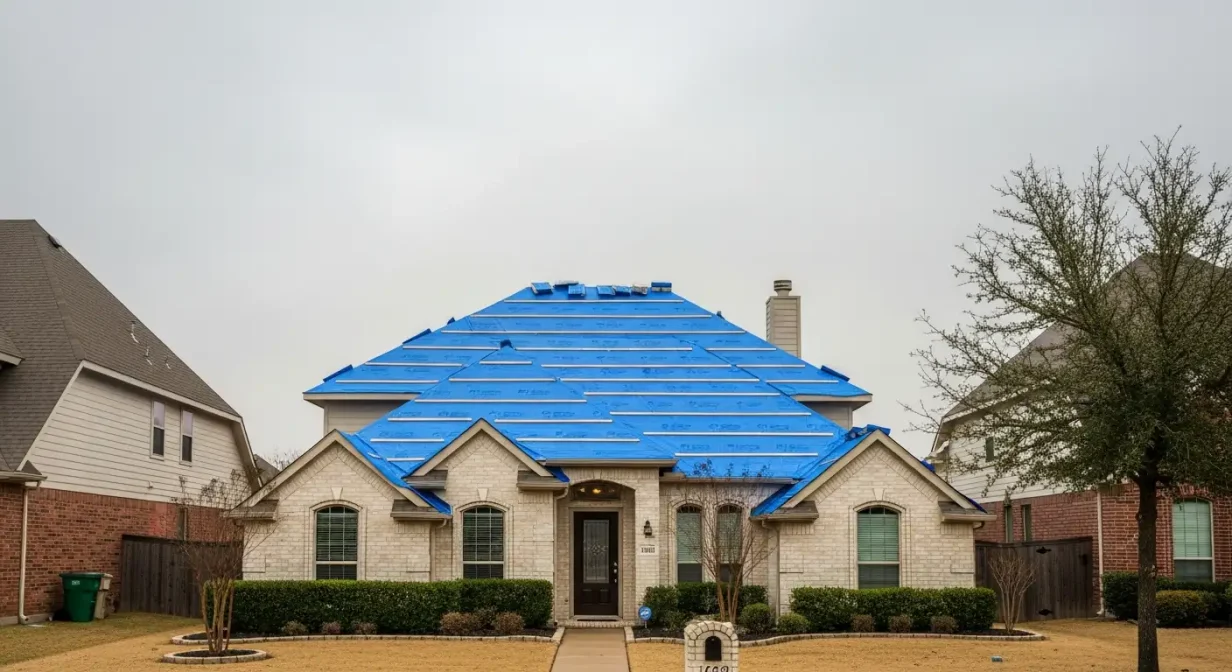
An emergency roof tarp provides a temporary waterproof barrier to prevent further interior damage when a roof is compromised by sudden trauma. Proper installation requires wrapping the tarp over the ridge and securing the edges with 2×4 lumber boards and roof nails to prevent wind uplift. Apply the tarping immediately after the damage occurs to mitigate secondary water intrusion while waiting for permanent repairs.
Key Takeaways
- Texas insurance policies require immediate action to mitigate further damage under the ‘Duties After Loss’ provision.
- A professional emergency tarp should utilize ASTM D226 or ASTM D4869 rated materials for maximum water shedding.
- IRC 2021 standards in Dallas County require that temporary repairs do not compromise the structural integrity of the CDX plywood decking.
- In the DFW Metroplex, expect to pay a premium for emergency response during the peak spring hail season (March through May).
Living in North Texas means dealing with volatile weather that can compromise your roof’s integrity in minutes. When a hail storm or high-wind event strips your asphalt shingles or architectural shingles, you have a very narrow window to prevent catastrophic interior damage. An emergency roof tarp is more than just a temporary cover; it is a critical structural intervention that protects your home’s framing and insulation from the relentless Texas humidity and rain. I’ve seen firsthand how a small leak can turn into a total loss.
Last month, a Dallas homeowner in Lake Highlands called me after a spring storm; they waited just 48 hours to tarp a small section of damaged 3-tab shingles, and the resulting moisture infiltration caused over $12,000 in ceiling and drywall damage. The Federal Emergency Management Agency (FEMA) and the National Roofing Contractors Association (NRCA) both emphasize that immediate temporary protection is the most cost-effective way to preserve a building’s value after a disaster. This guide will walk you through the technical requirements for a professional tarp installation that meets both building codes and insurance standards. We will look at specific materials like synthetic underlayment and reinforced polyethylene, as well as the fastener specifications required by ASTM D1761.
Whether you are DIYing a temporary fix or hiring a Dallas-based professional, understanding these standards is vital for your home’s recovery.
Professional Emergency Tarping Protocol
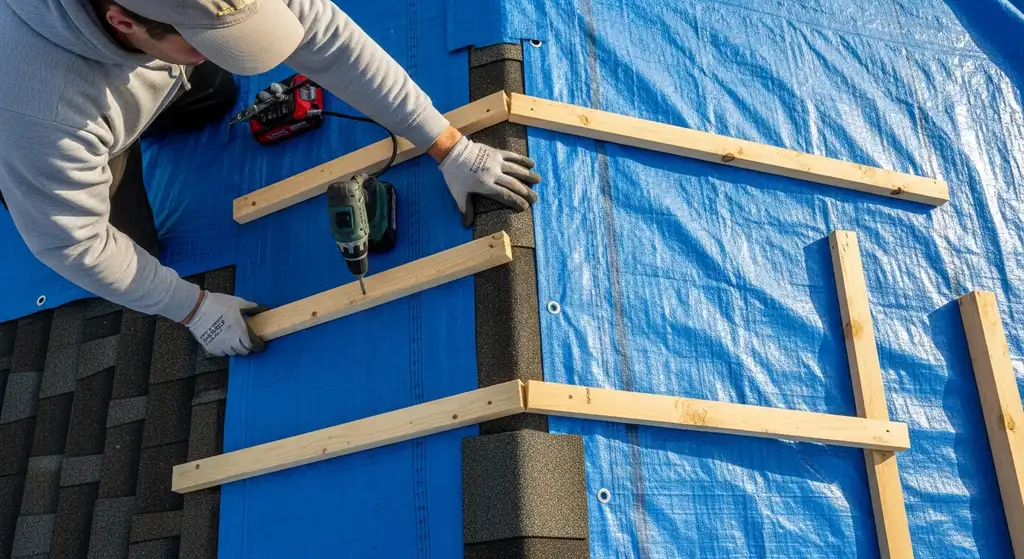
A professional tarp installation begins with a thorough damage assessment of the roof deck, checking for punctures in the OSB (oriented strand board) or CDX plywood. The National Roofing Contractors Association (NRCA) suggests that tarps should extend over the ridge of the roof to prevent water from running underneath the top edge. In the DFW Metroplex, wind uplift is a major concern, so tarps must be secured with 1×2 or 2×4 wood furring strips fastened through the tarp into the rafters using screws that meet ASTM D1761 standards. Safety is paramount, and any professional work must comply with Occupational Safety and Health Administration (OSHA) fall protection standards.
For steep-slope roofs common in Dallas neighborhoods like Preston Hollow, this involves roof anchors and harnesses. The tarp itself should ideally be a heavy-duty reinforced polyethylene or a high-grade synthetic underlayment that can withstand UV exposure for up to 90 days while you wait for a permanent insurance settlement and material delivery.
Dallas Market Pricing
In Dallas-Fort Worth, expect to pay $450-$1,200 for a professional emergency tarp service. These are current 2026 Dallas market prices; costs vary by roof pitch and can be 25% higher during peak spring storm season (March-May) due to extreme demand.
Field Note from Experience
During a post-storm inspection in Plano, I found a tarp that had been simply weighted down with bricks. A 40-mph gust blew the bricks off, one of which went through a skylight, causing an additional $4,500 in damage that the insurance company refused to cover because the ‘temporary repair’ was not performed to industry standards.
Navigating Insurance Claims and Mitigation
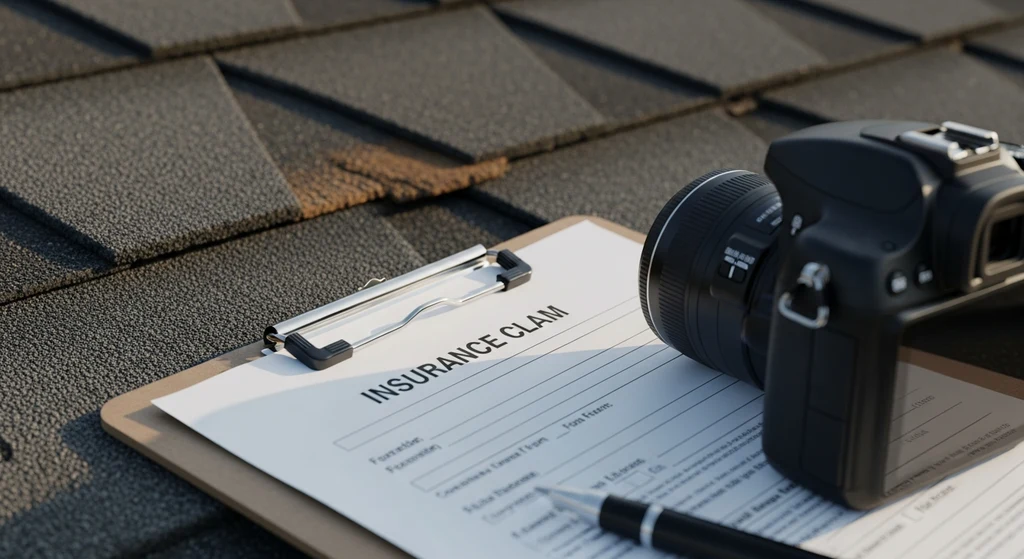
Most Texas homeowners’ insurance policies contain a ‘Duties After Loss’ section which explicitly requires you to protect the property from further damage. An emergency roof tarp is the primary method for fulfilling this obligation. Under the Texas Insurance Code and the Prompt Pay Law, insurance carriers are generally required to reimburse the reasonable cost of these temporary repairs as part of the overall claim. It is essential to document the damage with photos before the tarp is installed to prove the ‘proximate cause’ of the loss was the storm event.
When working with adjusters in Dallas, providing a detailed invoice that specifies the materials used—such as ASTM D226 felt underlayment or ice and water shield for valley protection—can expedite the reimbursement process. Be aware that some policies have ‘Ordinance or Law’ coverage, which may pay for the extra cost of bringing your roof up to current IRC 2021 codes during the final replacement. Always keep the receipts for the tarping materials and labor, as these are typically ‘above and beyond’ your deductible limits in many RCV (Replacement Cost Value) policies.
Contractors who offer ‘free’ tarps in exchange for signing a full roof replacement contract.
Consequence: You may be legally bound to a high-priced contractor before your insurance claim is even approved.
Tarping without taking ‘before’ photos of the shingle damage.
Consequence: The insurance adjuster may deny the claim, citing a lack of evidence that the damage was caused by a covered peril.
The Danger of Delayed Tarping
Moisture damage in the North Texas climate progresses rapidly due to high humidity and heat. Within 24 to 48 hours of a roof breach, water trapped in the attic space can lead to the growth of mold and mildew on the paper facing of fiberglass insulation. If the roof decking—whether it is Advantech or standard OSB—remains saturated, it can begin to swell and lose its structural shear strength, eventually requiring a full deck replacement rather than just a simple shingle repair. By day five of exposure, water typically migrates down the interior wall cavities, potentially affecting electrical systems and causing wood rot in the wall studs.
This is why the International Code Council (ICC) emphasizes weather-tightness in the IRC R905 section. A properly installed tarp stops this clock. By using a tarp that meets ASTM D4869 standards, you ensure that the water is shed away from these vulnerable internal components, preserving the home’s structural integrity until a permanent crew can install new architectural shingles.
| Moisture Damage Timeline | |
|---|---|
| 0-24 Hours | Saturation of insulation; ceiling staining begins. |
| 48-72 Hours | Mold spores begin to colonize on organic materials. |
| 1 Week+ | Structural degradation of OSB/Plywood decking. |
What Contractors Hide About Emergency Repairs
In the wake of a Dallas hailstorm, ‘storm chasers’ often flood neighborhoods offering quick tarping services. One thing many contractors hide is the massive markup on tarping materials; a $50 tarp from a local big-box store might be billed to your insurance for $500 or more. While some markup for labor and overhead is expected, excessive ’emergency’ fees can sometimes exhaust your policy limits for temporary repairs, leaving you with less money for the actual roof replacement. Another common tactic is using staples instead of cap nails or furring strips.
Staples easily pull through the plastic in high winds, rendering the tarp useless within days. Professionals should use fasteners that conform to ASTM D1761 to ensure they hold in the roof sheathing. Furthermore, some contractors will reuse old, sun-damaged tarps from previous jobs, which lack the UV resistance required by ASTM standards to survive the intense Texas sun. Always verify that the materials being used are new and rated for exterior exposure.
What Contractors Hide
Using sandbags to hold down tarps.
The Reality: Sandbags shift in wind and trap moisture against the shingles, often causing more rot than they prevent.
Billing for ‘Heavy Duty’ tarps while using thin 3-mil poly.
The Reality: Thin plastic tears at fastener points in 20mph winds; demand at least 10-mil reinforced polyethylene.
External Authoritative Resources
These industry-standard references support the information in this guide:
Building Codes
Frequently Asked Questions
How long can an emergency tarp stay on my roof?
A high-quality synthetic underlayment or reinforced tarp can last 30 to 90 days. However, the NRCA recommends permanent repairs be made as soon as possible to avoid UV degradation of the temporary material.
Will insurance pay for a professional tarp installation?
Yes, most policies cover ‘reasonable costs’ for temporary repairs under the mitigation clause. Ensure your contractor provides an itemized invoice referencing IRC R905 compliance for your adjuster.
Can I install a roof tarp myself?
While possible, it is extremely dangerous. OSHA reports that falls are the leading cause of death in construction; hiring a professional with proper safety gear is highly recommended for steep-slope Dallas homes.
What is the best material for an emergency roof tarp?
Reinforced polyethylene (10-mil or higher) or a synthetic underlayment meeting ASTM D4869 standards provides the best balance of water resistance and durability against North Texas winds.
Does tarping a roof cause more damage?
If installed correctly with wood furring strips and appropriate fasteners (ASTM D1761), the damage is minimal compared to the water damage it prevents. Avoid using staples, which tear easily.
What should I do if my tarp starts leaking?
Contact your contractor immediately for a warranty repair. If you DIYed the tarp, you must add a second layer or adjust the furring strips to ensure water is shedding correctly over the ridge.
Final Thoughts
Securing an emergency roof tarp is the most critical step you can take after a storm to protect your Dallas home. By adhering to IRC 2021 standards and using high-quality materials like reinforced poly or synthetic underlayment, you satisfy your insurance obligations and prevent a manageable roof repair from turning into a full-scale interior renovation. Remember to prioritize safety and documentation throughout the process. I’ve assisted hundreds of DFW families through the stress of storm recovery.
My final piece of advice: don’t let a ‘storm chaser’ pressure you into a contract just to get a tarp on your roof. A reputable Dallas contractor will provide emergency mitigation as a standalone service, allowing you the time to make an informed decision on your permanent roof replacement. Stay safe, act fast, and keep your documentation organized for a smooth 2026 claim process.
