
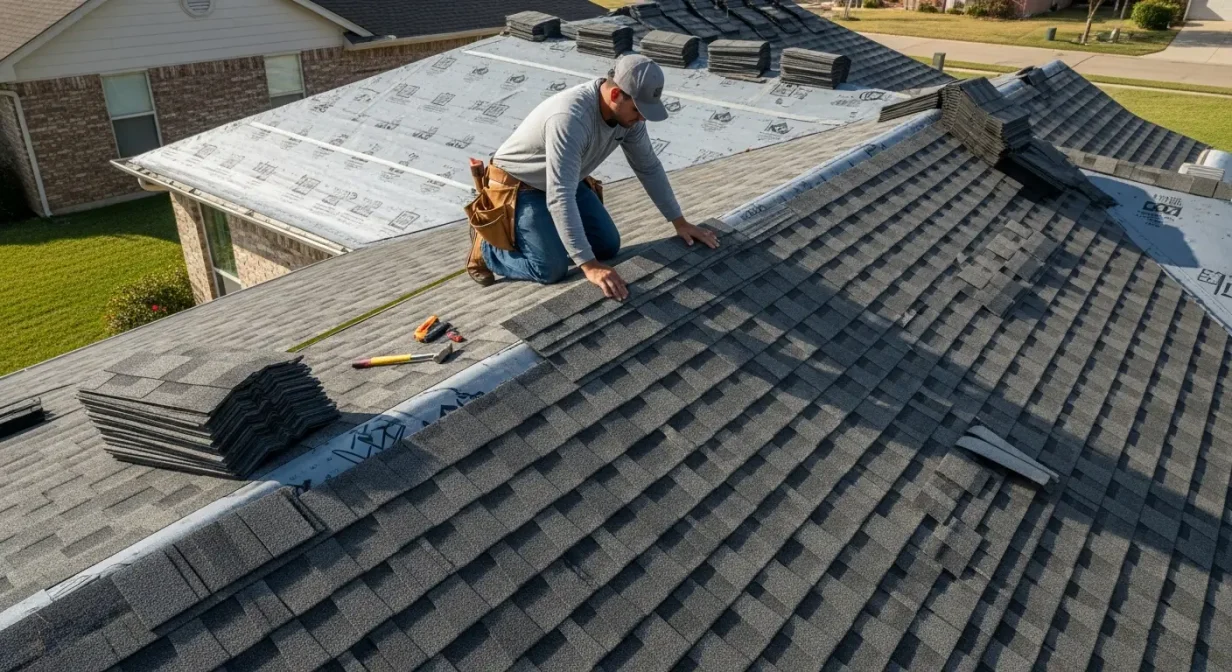
Contractor’s Bottom Line
Fiberglass shingles are asphalt roofing products that use a woven glass mat as their structural base instead of organic felt paper. The glass mat makes the shingle lighter, more fire-resistant, and less prone to warping, though it can become brittle in extreme cold. Ensure proper attic ventilation to dissipate roof heat, which extends the flexible life of the fiberglass asphalt compound.
Key Takeaways
- Fiberglass shingles offer a Class A fire rating, which is critical for high-density Dallas neighborhoods and meets International Building Code requirements.
- Material performance in Texas is governed by ASTM D3161 for wind resistance and ASTM D3462 for overall physical properties.
- The National Roofing Contractors Association (NRCA) recommends fiberglass mats over organic mats for better dimensional stability in extreme heat cycles.
In my eight years consulting across the DFW Metroplex, I have seen fiberglass shingles evolve into the most reliable residential roofing solution available. These modern asphalt shingles utilize a glass fiber reinforcing mat that provides exceptional strength and fire resistance compared to older organic alternatives. Choosing the right specification is vital for longevity in our volatile climate. FIELD NOTE #1: I recently inspected a property in the M Streets neighborhood of Dallas where the homeowner had installed low-grade shingles just five years prior.
The lack of a high-quality fiberglass mat led to massive thermal cracking during a 108-degree July week, resulting in a $18,000 premature replacement. We upgraded them to a GAF Timberline HDZ system with proper ventilation to prevent a repeat failure. Understanding the technical nuances of these materials allows you to make an informed decision for your home. We will explore the specific ASTM standards and IRC codes that dictate a successful installation in North Texas.
Anatomy of Modern Fiberglass Shingles
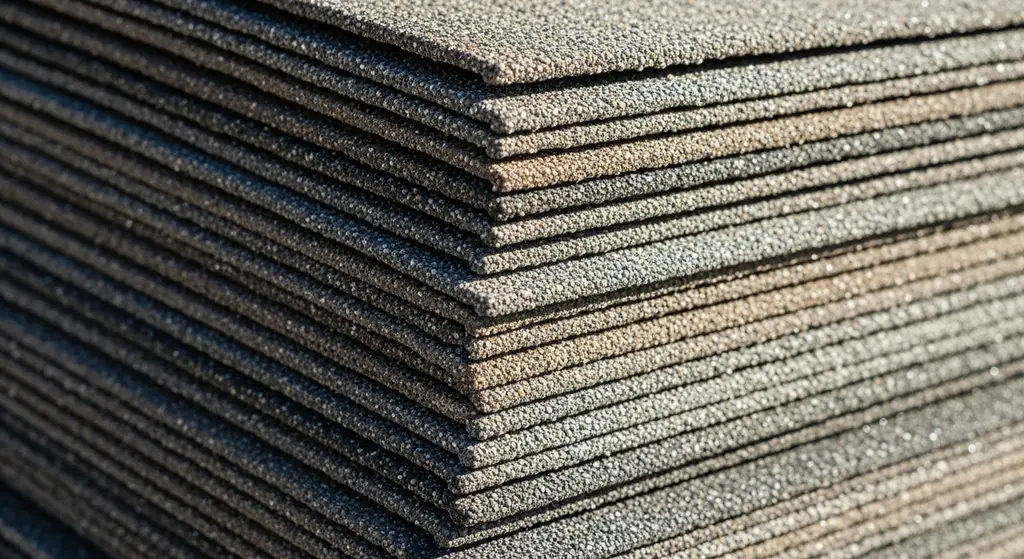
The core of a fiberglass shingle is the glass fiber mat, which is coated with a specially formulated asphalt to provide waterproofing. This mat is significantly thinner and lighter than organic felt mats, yet it offers superior tear resistance and a higher fire rating. Manufacturers like Owens Corning and CertainTeed use advanced resins to bond these fibers together for maximum durability. Top-layer granules are not just for aesthetics; they protect the asphalt from ultraviolet (UV) degradation and provide the impact resistance required in North Texas.
These granules must be ceramic-fired to ensure color retention and long-term adhesion to the asphalt substrate. High-quality architectural shingles often feature multiple layers of this composition to create a dimensional appearance and increased wind uplift resistance.
| Material Specifications | |
|---|---|
| Base Mat | Non-woven glass fiber |
| Waterproofing | Weathering-grade asphalt |
| Fire Rating | UL 790 Class A |
Performance in the Dallas-Fort Worth Climate
Dallas weather presents a unique challenge for roofing materials due to extreme temperature swings and high UV indices. Fiberglass shingles are preferred here because they do not absorb moisture or rot like organic shingles, making them more stable during humid Texas springs. This dimensional stability prevents the shingles from expanding and contracting excessively, which reduces the risk of fastener pull-through. During the summer months, roof surface temperatures in the DFW Metroplex can exceed 160 degrees Fahrenheit.
The National Roofing Contractors Association (NRCA) emphasizes the importance of attic ventilation to complement fiberglass shingle performance. Without proper airflow, the heat can cause the asphalt to soften prematurely, leading to granule loss and a shortened lifespan for the entire roof system.
Field Note from Experience
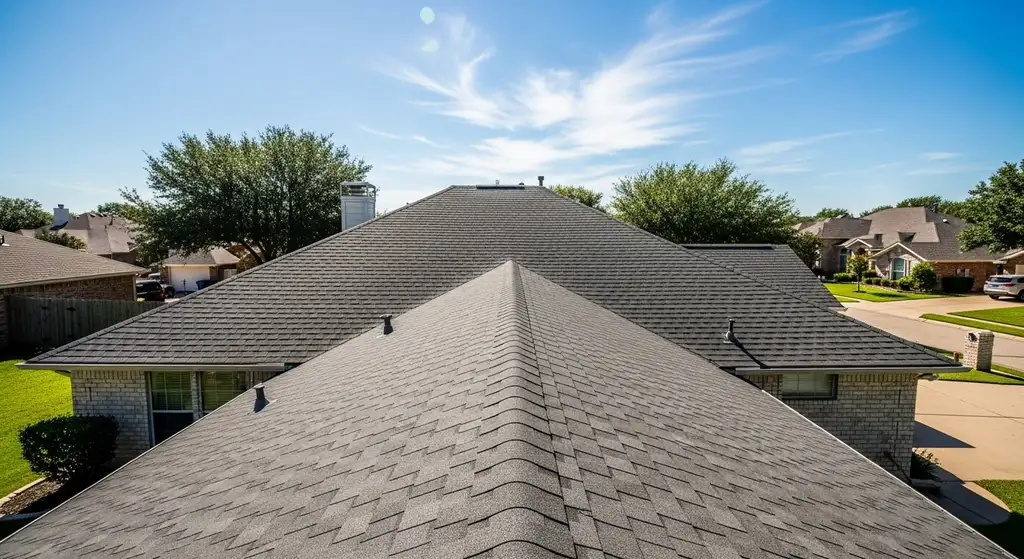
On a project in Frisco, I discovered that a client’s ‘hail damage’ was actually severe blistering caused by poor ventilation. The shingles were literally cooking from the inside out because the previous contractor blocked the soffit vents, costing the owner $14,000 in out-of-pocket repairs.
Critical ASTM Standards for Quality Assurance
When specifying fiberglass shingles, I always look for compliance with ASTM D3161 for wind resistance. In North Texas, where wind gusts can be significant, shingles should ideally meet Class F requirements, which covers wind speeds up to 110 mph. This is often achieved through high-performance adhesive strips that activate with solar heat after installation. Additionally, ASTM D7158 is a newer standard that measures the uplift resistance of shingles using a calculation-based method.
I recommend that Dallas homeowners choose products that carry a Class H rating under this standard for maximum protection. Ensuring your materials meet these ASTM International benchmarks is the only way to guarantee they will perform as advertised during a severe weather event.
| Standard | Property Measured | Requirement |
|---|---|---|
| ASTM D3462 | Physical Properties | Tear and Nail Pull Strength |
| ASTM D3161 | Wind Resistance | Class F (110 mph) |
| ASTM E108 | Fire Resistance | Class A Rating |
International Residential Code Compliance
The International Residential Code (IRC) 2021, which is adopted by most municipalities in the DFW Metroplex, provides strict guidelines for shingle application. Per IRC R905.2.1, asphalt shingles shall only be used on roof slopes of two units vertical in 12 units horizontal or greater. This ensures that water sheds correctly and does not back up under the fiberglass mat. Fastening patterns are also strictly regulated under IRC R905.2.5.
In high-wind areas like Dallas, the code often requires six nails per shingle instead of the standard four. I always verify that the pneumatic nailers are set to the correct depth; over-driven nails can cut through the fiberglass mat, while under-driven nails will prevent the shingles from sealing properly, leading to wind uplift failures.
High-nailing above the seal strip
Consequence: Voids the wind warranty and leads to shingle blow-offs.
Reusing old flashing
Consequence: Leads to leaks at penetrations that fiberglass shingles cannot prevent.
What Contractors Hide About Fiberglass Installations
Many contractors in the Dallas area will quote a low price by using standard felt underlayment instead of synthetic alternatives. While ASTM D226 Type II felt is code-compliant, synthetic underlayment provides a much better secondary water barrier for fiberglass shingles. It does not wrinkle when wet, which prevents the ‘telegraphing’ of bumps through your new shingles. Another common tactic is skipping the installation of a starter course at the eaves and rakes.
Some crews will simply turn a 3-tab shingle upside down to save on material costs. This is a major violation of manufacturer specifications and can lead to edge lift during the first wind storm. Always demand a dedicated starter shingle like GAF Pro-Start to ensure the perimeter of your roof is fully bonded.
What Contractors Hide
Using cheap off-brand valley metal
The Reality: Standard 26-gauge galvanized steel is often swapped for thinner material that rusts within 10 years.
Skipping ice and water shield in valleys
The Reality: Contractors save $50 per roll but leave the most vulnerable part of your roof at risk.
Dallas Market Pricing for Fiberglass Roofing
In the current 2026 Dallas market, the cost for a professional fiberglass shingle installation typically ranges from $4.50 to $6.75 per square foot. This price includes the removal of one layer of old roofing, the installation of synthetic underlayment, and the new shingles. High-end architectural shingles like CertainTeed Landmark Pro will sit at the higher end of this range due to increased material weight. Labor rates in the DFW Metroplex are currently higher than in rural parts of East or West Texas due to the demand for skilled crews and strict local permitting requirements.
Most cities in Dallas County require a permit and at least one mid-project inspection, which adds to the overhead cost. I recommend budgeting an additional 10% for potential decking replacement if your home currently has older OSB that has suffered moisture damage.
Dallas Market Pricing
In Dallas-Fort Worth, expect to pay $450-$675 per square. These are current 2026 Dallas market prices; costs vary by region and can be 15-25% higher in remote Texas areas. Peak pricing occurs spring (March-May) storm season.
Field Note from Experience
I recently helped a family in Plano review three quotes. The cheapest was $4,000 less than the others because they excluded the permit and the required ASTM D4869 underlayment. We went with the mid-range bid to ensure the roof actually passed the city inspection.
External Authoritative Resources
These industry-standard references support the information in this guide:
Building Codes
Frequently Asked Questions
How long do fiberglass shingles last in Dallas?
While many carry 30-year or ‘lifetime’ warranties, the intense Texas heat and hail typically result in a 18-22 year functional lifespan. Regular inspections by an NRCA-certified professional can help maximize this duration.
Are fiberglass shingles better than organic ones?
Yes, fiberglass shingles offer superior fire resistance (Class A) and better dimensional stability. They do not absorb moisture or rot, which is critical for the humidity levels found in the DFW Metroplex.
Do I need a special underlayment for fiberglass shingles?
The IRC R905.1.1 requires underlayment; however, I strongly recommend synthetic underlayment meeting ASTM D226 standards. It provides better UV protection and slip resistance for the installation crew.
Can fiberglass shingles withstand Dallas hail?
Standard shingles can handle small hail, but for Dallas, I recommend UL 2218 Class 4 impact-rated shingles. These often qualify for significant homeowners insurance discounts in Texas.
What is the minimum slope for fiberglass shingles?
Per IRC R905.2.2, the minimum slope is 2:12. For slopes between 2:12 and 4:12, a double layer of underlayment is required to prevent water infiltration.
Do fiberglass shingles improve energy efficiency?
Certain ‘cool’ fiberglass shingles are Energy Star rated and can reflect more solar radiation. This reduces attic temperatures and cooling loads during the 100-degree Dallas summer days.
Final Thoughts
Selecting the right fiberglass shingles for your Dallas home involves more than just picking a color. By insisting on materials that meet ASTM D3462 and ensuring your contractor follows IRC R905.2 fastening requirements, you are protecting your largest investment from the harsh Texas elements. Modern architectural shingles offer the best balance of cost, aesthetics, and performance for our region. FIELD NOTE #3: My final piece of advice for any DFW homeowner is to never skip the ventilation upgrade.
I’ve seen $25,000 roofs fail in less than a decade because the owner tried to save $800 on ridge vents. A high-quality fiberglass shingle is only as good as the system supporting it. Reach out to a qualified consultant if you have doubts about your contractor’s technical specifications.
