
Contractor’s Bottom Line
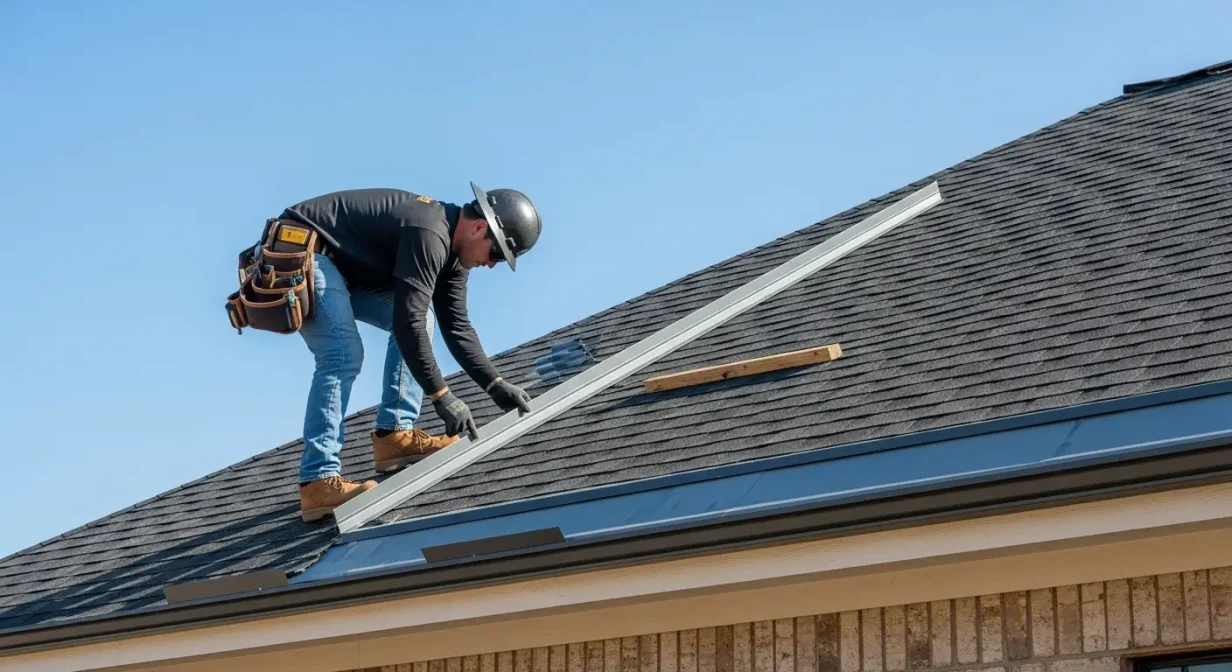
Roof trim installation involves applying metal flashing and fascia boards to the roof edges to create a finished, weather-resistant perimeter. Proper integration of drip edge, rake trim, and fascia caps is critical to direct water off the roof decking and into the gutter system. Overlap all horizontal joints by at least two inches and fasten the trim with color-matched nails to prevent moisture intrusion.
Key Takeaways
- IRC 2021 R905.2.8.5 requires drip edges to be mechanically fastened at maximum 12-inch intervals.
- ASTM D1761 compliant fasteners must be used to prevent galvanic corrosion between trim and roofing materials.
- In Dallas, North Texas heat causes thermal expansion; trim overlaps must be at least 2 inches to maintain a water-tight seal.
Installing roof trim is more than an aesthetic finishing touch; it is a critical structural barrier against moisture intrusion. I have spent years inspecting homes across the DFW Metroplex where improper trim installation led to catastrophic fascia rot and interior ceiling damage. Following National Roofing Contractors Association (NRCA) guidelines ensures that your roof perimeter can handle the 100-degree temperature swings common in our region. FIELD NOTE #1: Last month, I was called to a home in Lake Highlands where a contractor skipped the drip edge installation to save time.
A single spring thunderstorm resulted in $4,500 in water damage to the soffits and attic insulation because the water ‘wicked’ back under the shingles. This is why I always insist on verifying that the trim meets International Code Council (ICC) standards before the first shingle is even laid. We will cover the exact steps for a professional-grade installation, from material selection to final fastening. By adhering to ASTM International standards and local Dallas building codes, you can ensure a roof system that lasts for decades.
Let’s look at the tools and materials required for a high-performance installation.
Essential Tools for Precision Trim Installation
Professional installation requires specialized tools to ensure clean bends and secure fastening without damaging the material finish. We utilize heavy-duty metal snips and a portable brake for custom-fitting rake trim and eave details on-site. Using the right equipment prevents the jagged edges that often lead to premature rust in the humid North Texas environment. A pneumatic coil nailer is standard, but for trim, we often switch to hand-driving stainless steel or hot-dipped galvanized nails to prevent over-driving.
Over-driven fasteners can crush the trim profile, creating ‘oil canning’ or wavy appearances during high-heat cycles in Dallas. We also utilize moisture meters to ensure the CDX plywood or OSB decking is below 19% moisture content before the trim is secured.
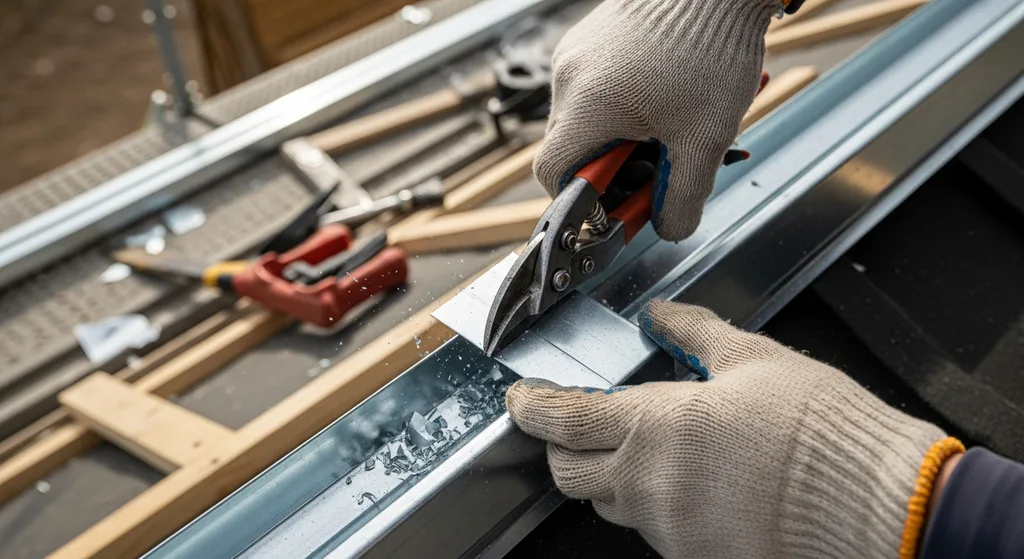
| Tool Type | Purpose |
|---|---|
| Portable Metal Brake | Custom bending for rake and eave trim |
| Aviation Snips | Cutting intricate corner details and overlaps |
| Pneumatic Trim Nailer | Rapid fastening of aluminum or steel components |
Step-by-Step Roof Trim Installation Procedure
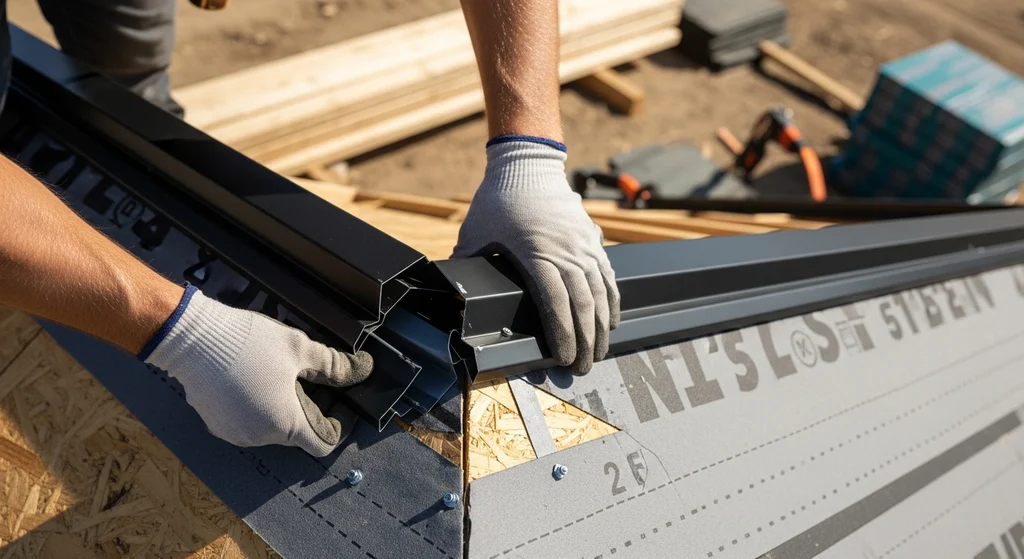
The installation begins at the eaves before the underlayment is applied to ensure a proper ‘shingle effect’ for water shedding. We install the drip edge directly to the deck, ensuring a 2-inch overlap at all joints per NRCA recommendations. This sequence prevents water from getting behind the trim and rotting the fascia board over time. Once the eaves are secure, we install the synthetic underlayment meeting ASTM D226 standards over the drip edge.
Along the rakes, the sequence is reversed; the trim goes over the underlayment to prevent wind-driven rain from lifting the edges. This specific layering is vital in North Texas to combat the high-velocity winds associated with spring supercell storms.
Field Note from Experience
On a project in Preston Hollow, I discovered the previous crew installed rake trim under the felt. This error caused $2,800 in damage as rain was funneled directly onto the wood decking for three years before it was noticed. (no /).
Fastener Standards and Material Compatibility
Fastener selection is governed by ASTM D1761 to ensure mechanical withdrawal resistance and corrosion protection. In the Dallas-Fort Worth area, we exclusively use hot-dipped galvanized nails or stainless steel for aluminum trim to prevent electrolysis. Using standard steel nails on aluminum trim will cause the fastener to fail within five years due to the Texas humidity. Fasteners should be spaced every 12 inches on center and driven straight to allow for thermal movement.
If nails are driven at an angle, the trim may buckle as it expands in the 105-degree August sun. We recommend a minimum 1.25-inch nail length to ensure full penetration through the CDX plywood or oriented strand board (OSB).
| Fastening Specs | |
|---|---|
| Spacing | 12 inches O.C. |
| Material | ASTM A153 Galvanized |
| Penetration | Min 3/4 inch into decking |
IRC 2021 Code Compliance in Dallas
The International Residential Code (IRC) 2021, which is the standard for most Dallas County municipalities, is very specific about perimeter flashing. Section R905.2.8.5 mandates that drip edges must be provided for asphalt shingle roofs. The code requires the vertical leg to be at least 1.5 inches long and the roof-side flange to extend at least 2 inches back onto the deck. Failure to comply with these dimensions can result in a failed municipal inspection and potential insurance claim denials later.
During my inspections in Plano and Frisco, I often see ‘fringe’ contractors using 1-inch trim to save on material costs. This is a direct code violation that compromises the entire roof’s wind uplift rating and longevity.
Undersized trim flanges
Consequence: Water wicking and failed code inspections
Missing drip edge
Consequence: Voided manufacturer warranties from GAF or CertainTeed
What Contractors Hide: Common Trim Failures
Many contractors attempt to reuse old flashing or trim when installing a new roof to increase their profit margins. This ‘re-flashing’ is a major red flag; old metal often has hidden nail holes or fatigue that will leak under pressure. In Dallas, the extreme heat makes old metal brittle, meaning any attempt to reshape it will cause micro-cracks that allow moisture penetration. Another common tactic is skipping the ‘kick-out’ flashing where the roof trim meets a vertical wall.
Without this $15 piece of metal, water is directed behind the siding, leading to structural rot that can cost over $10,000 to repair. Always ask your contractor for photos of the perimeter metal before the shingles are installed to verify new materials were used.
What Contractors Hide
Reusing old drip edge
The Reality: Saves the contractor $300 but risks a $10,000 leak
Skipping corner miters
The Reality: Leaves gaps that allow wasps and rodents into the soffit
Field Note from Experience
I recently inspected a home in Southlake where the contractor ‘forgot’ the rake trim on the back side of the house. The homeowner didn’t notice until the first hail storm, when wind-driven rain pushed water under the shingles, ruining the master bedroom ceiling. (no /).
External Authoritative Resources
These industry-standard references support the information in this guide:
Building Codes
International Residential Code (IRC 2021)
Official building code for residential construction
ICC Code Adoption Map
Find which IRC version your state uses
Industry Standards
NRCA Roofing Manual
National Roofing Contractors Association best practices
ASTM International Standards
Material testing standards (ASTM D3043, D1761)
Manufacturer Resources
Frequently Asked Questions
Is a drip edge required by code in Dallas?
Yes, IRC 2021 R905.2.8.5 requires a drip edge on all asphalt shingle roofs to prevent water from damaging the roof deck and fascia.
What is the best material for roof trim in North Texas?
G-90 galvanized steel is preferred for its rigidity and resistance to thermal expansion during 100-degree Dallas summers.
How much does roof trim installation cost in DFW?
Current 2026 rates range from $2.50 to $5.50 per linear foot, depending on the complexity of the roofline and material choice.
Can I install roof trim over old shingles?
No, NRCA standards require trim to be installed directly to the deck or underlayment to ensure a proper moisture seal.
Does insurance cover roof trim replacement?
If the trim is damaged by a covered peril like hail, insurance typically covers replacement to maintain code compliance via ordinance and law coverage.
How do I prevent ‘oil canning’ on my roof trim?
Ensure fasteners are not over-tightened and use heavier gauge metal to accommodate the extreme temperature swings in Texas.
Final Thoughts
Successful roof trim installation is the difference between a roof that lasts 30 years and one that fails after the first Dallas spring storm. By prioritizing IRC 2021 compliance and using high-quality materials like G-90 galvanized steel, you protect your home’s structural integrity. Never allow a contractor to cut corners on the perimeter; the small savings today are not worth the massive repair bills tomorrow. FIELD NOTE #3: I always tell my clients in the DFW Metroplex that the metal is just as important as the shingles.
A properly installed perimeter ensures that when the next 70-mph wind gust hits, your roof stays exactly where it belongs. If you are planning a replacement, verify these specs in your contract before work begins to ensure a high-performance outcome. (no /).
