
Contractor’s Bottom Line
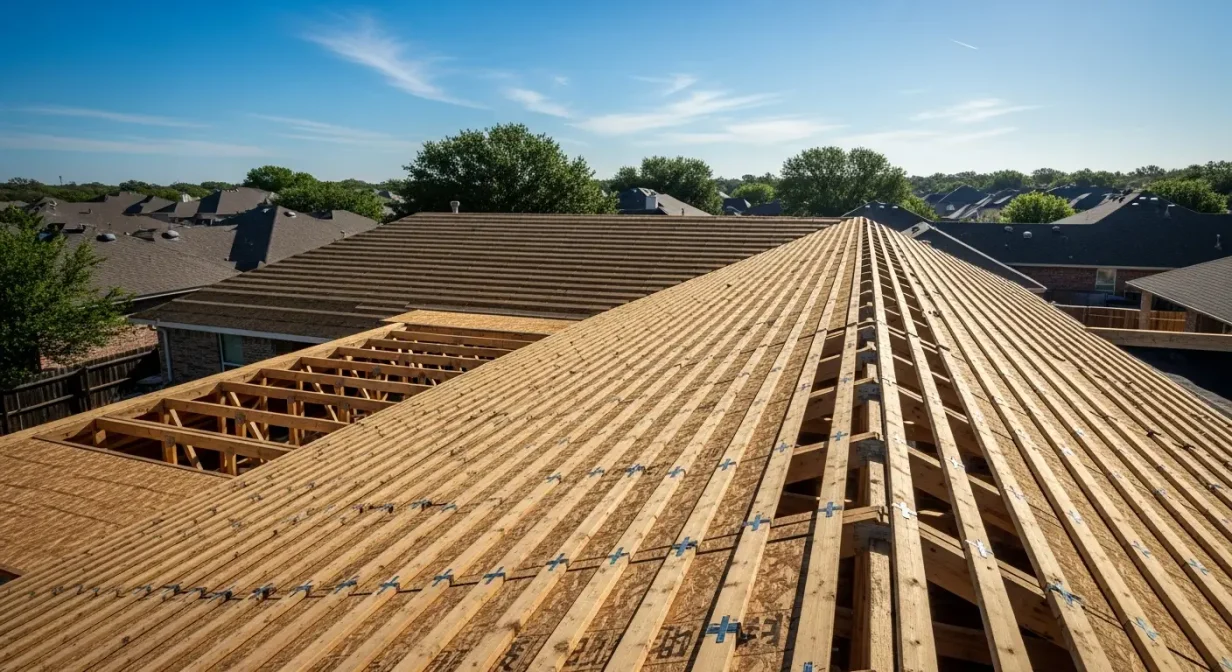
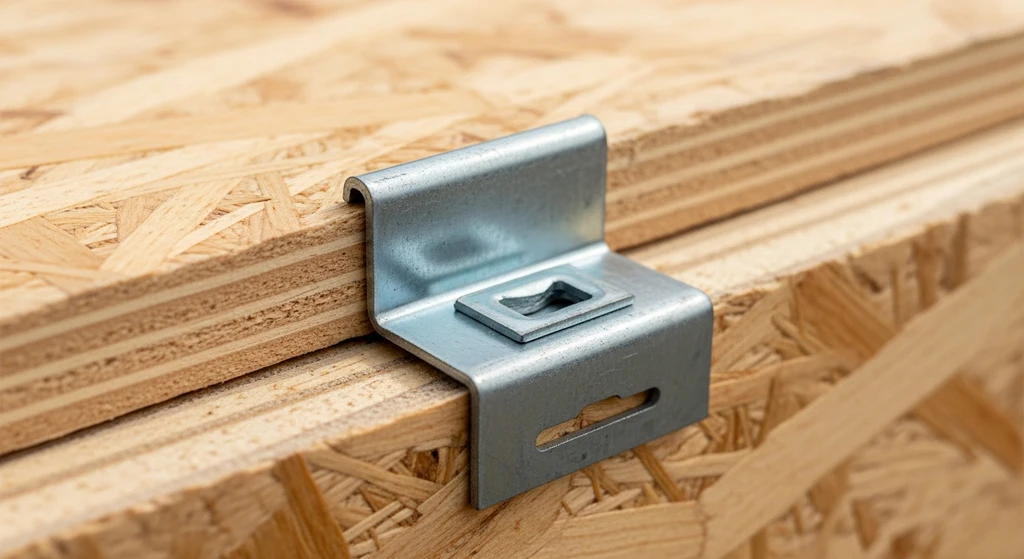
Roof decking H clips are metal brackets installed between panel edges to reduce edge deflection and prevent panel buckling. IRC R803.2.1 requires these clips when 7/16-inch OSB is used on 24-inch rafter spacing to meet minimum span ratings. Space the clips exactly 12 inches on center along the unsupported vertical joints to maintain structural load capacity.
Key Takeaways
- IRC R803.2.1 requires H clips for specific span-to-thickness ratios to ensure structural stability.
- H clips provide the mandatory 1/8-inch gap between OSB or CDX plywood panels for thermal expansion.
- Using clips prevents ‘telegraphing’ or buckling that ruins the appearance of architectural shingles in Dallas heat.
Roof decking H clips are small but vital components that maintain the structural spacing and edge support of your roof sheathing. In my 8+ years of consulting in the Dallas area, I have seen many contractors skip these to save time, only for the homeowner to face expensive repairs later. These clips ensure that your Oriented Strand Board (OSB) or CDX plywood has room to breathe as temperatures fluctuate. FIELD NOTE #1: Last year, I was called to a home in Plano where the roof looked like a washboard just three years after installation.
The contractor had tightly butted the OSB panels without H clips, causing the edges to buckle upward in the 105-degree Texas sun. The homeowner had to pay $5,200 to tear off the shingles and fix the decking because the original installer was nowhere to be found. Understanding the National Roofing Contractors Association (NRCA) guidelines and local building codes is essential for any roofing project in North Texas. The International Code Council (ICC) provides the framework for these requirements to prevent structural failure under load.
Proper use of H clips is one of the simplest ways to ensure your roof system lasts its full intended lifespan.
Understanding IRC R803.2.1 and Local Code Compliance
The International Residential Code (IRC) section R803.2.1 specifically addresses the requirements for panel edge support in roof sheathing. In the Dallas-Fort Worth Metroplex, most municipalities adopt these standards to ensure homes can withstand environmental stressors. The code generally requires edge support when the span between rafters exceeds the thickness rating of the material, which is common with 7/16-inch or 15/32-inch panels. Compliance with IRC R803.2.1 ensures that the edges of the OSB or CDX plywood do not deflect independently under a load, such as a roofer walking on the surface.
This is particularly important when applying heavy architectural shingles or synthetic underlayment that requires a perfectly flat substrate. Failure to follow these ICC standards can result in a failed inspection during the mid-roof phase of your project. Beyond the base code, the NRCA recommends H clips even when not strictly mandated by the span table to provide consistent 1/8-inch spacing. This gap allows for the natural expansion of wood fibers as humidity levels change in North Texas.
By adhering to these technical standards, you protect the manufacturer warranty of your GAF or CertainTeed roofing products.
| Code Quick Reference | |
|---|---|
| Primary Code | IRC R803.2.1 |
| Min. Spacing | 1/8-inch per APA standards |
| Material Spec | ASTM A653 Galvanized Steel |
Professional Installation Procedure for H Clips
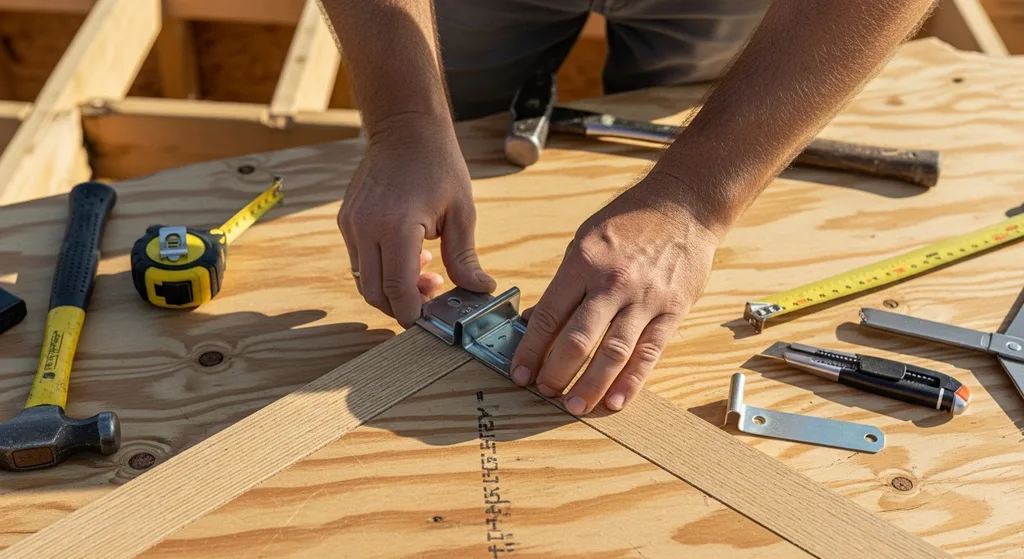
Installing H clips begins with the first row of roof decking, typically starting at the eave and working toward the ridge. As you lay the second row of OSB or CDX plywood, you must slide the H clips onto the horizontal edge of the panel between each rafter. For a standard 24-inch on-center rafter spacing, one clip placed mid-span is usually sufficient to meet IRC R803.2.1 requirements. You must ensure the clip is seated firmly against the panel edge before sliding the next panel into the top groove of the clip.
This automatically creates the 1/8-inch gap required by the APA – The Engineered Wood Association and ASTM D3043 standards. We often use pneumatic nailers to secure the panels to the rafters, but we are careful not to strike the clips themselves, which can deform the metal. FIELD NOTE #2: During a quality control inspection in Frisco, I discovered a crew installing H clips upside down, which actually trapped moisture against the panel edges. I had them stop immediately to restart, as this error would have led to premature rot.
Always ensure the ‘central bar’ of the H is seated horizontally between the two panel faces for maximum structural efficiency.
Skipping Clips on OSB
Consequence: OSB expands more than plywood; missing clips lead to ridged shingles and leaks.
Using Rusted Clips
Consequence: Corrosion can bleed through underlayment and damage the roof system over time.
Critical Errors to Avoid in the DFW Metroplex
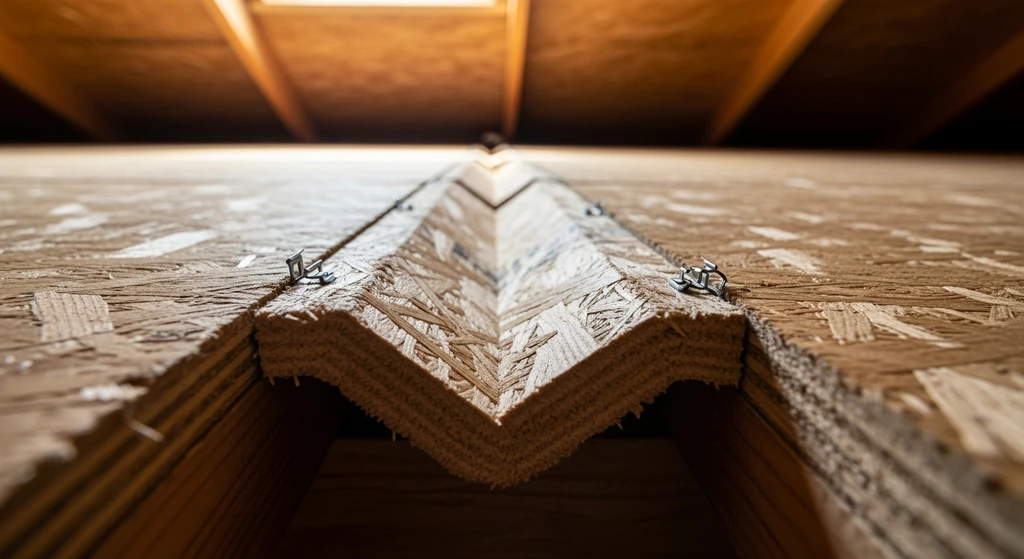
One of the most frequent mistakes I see in Dallas is the ‘tight-fit’ installation, where panels are forced together without any gap. In our humid North Texas climate, OSB panels will absorb moisture and expand, leading to ‘buckling’ if H clips aren’t present to maintain spacing. This expansion exerts massive pressure on the fasteners, often causing nails to pull through the decking. Another common error is improper clip frequency, such as placing clips too close to the rafters rather than at the mid-span.
The goal of the H clip is to support the weakest part of the panel edge, which is the center point between supports. Following ASTM D1761 for mechanical fasteners ensures that the clips and nails work together to provide the necessary shear strength during high-wind events. Finally, many installers fail to use clips that match the thickness of the decking material. Using a 1/2-inch clip on a 7/16-inch panel allows for too much movement, which defeats the purpose of the edge support.
Always verify that the clips are snug and meet the specifications for the specific Oriented Strand Board or Advantech product you are installing.
Panel Buckling
Typical Cost: $3,000 – $7,000
Prevention: Install H-clips per IRC R803.2.1
Insurance Coverage: Often denied as ‘workmanship’ issue
Code Reference: IRC R803.2.1
External Authoritative Resources
These industry-standard references support the information in this guide:
Building Codes
International Residential Code (IRC 2021)
Official building code for residential construction
ICC Code Adoption Map
Find which IRC version your state uses
Industry Standards
NRCA Roofing Manual
National Roofing Contractors Association best practices
ASTM International Standards
Material testing standards (ASTM D3043, D1761)
Manufacturer Resources
Frequently Asked Questions
Are H clips required by code in Dallas?
Yes, IRC R803.2.1 requires panel edge support like H clips when sheathing spans exceed certain limits, which is common in DFW residential construction. Using them ensures compliance with local building inspections and NRCA standards.
How many H clips do I need per sheet of plywood?
Generally, you need one H clip per span between rafters. For a standard 4×8 sheet over 24-inch centers, this usually means three clips along the long horizontal edge to satisfy ICC structural requirements.
Can I use H clips with Advantech decking?
While Advantech is highly moisture-resistant, the manufacturer and the NRCA still recommend following IRC R803.2.1 for edge support to maintain the 1/8-inch expansion gap.
Do H clips prevent roof leaks?
Indirectly, yes. By preventing the decking from buckling, H clips ensure the asphalt shingles and synthetic underlayment remain flat, preventing stress tears that lead to water intrusion.
What is the best material for roof clips?
ASTM A653 G-90 galvanized steel is the industry standard for H clips. This material provides the necessary strength and corrosion resistance required for the varied Texas climate.
What happens if my contractor forgot the H clips?
If the shingles are already installed, you may see ‘telegraphing’ lines. Per the NRCA, the only permanent fix is removing the shingles to install support, which can be a costly code violation repair.
Final Thoughts
In conclusion, roof decking H clips are a non-negotiable component for a high-quality roof in the Dallas-Fort Worth area. They provide the necessary structural support required by IRC R803.2.1 and facilitate the thermal expansion essential for OSB and plywood in the Texas heat. By insisting on these small galvanized steel clips, you are protecting your home from unsightly buckling and long-term structural issues. FIELD NOTE #3: I always tell my clients in Richardson that a $100 box of H clips is the cheapest insurance policy they will ever buy for their home.
Don’t let a contractor talk you out of them by saying they ‘aren’t necessary’—the building code and physical reality of wood expansion say otherwise. Ensure your next roof is built to last by following these simple but critical technical standards.
