
Contractor’s Bottom Line
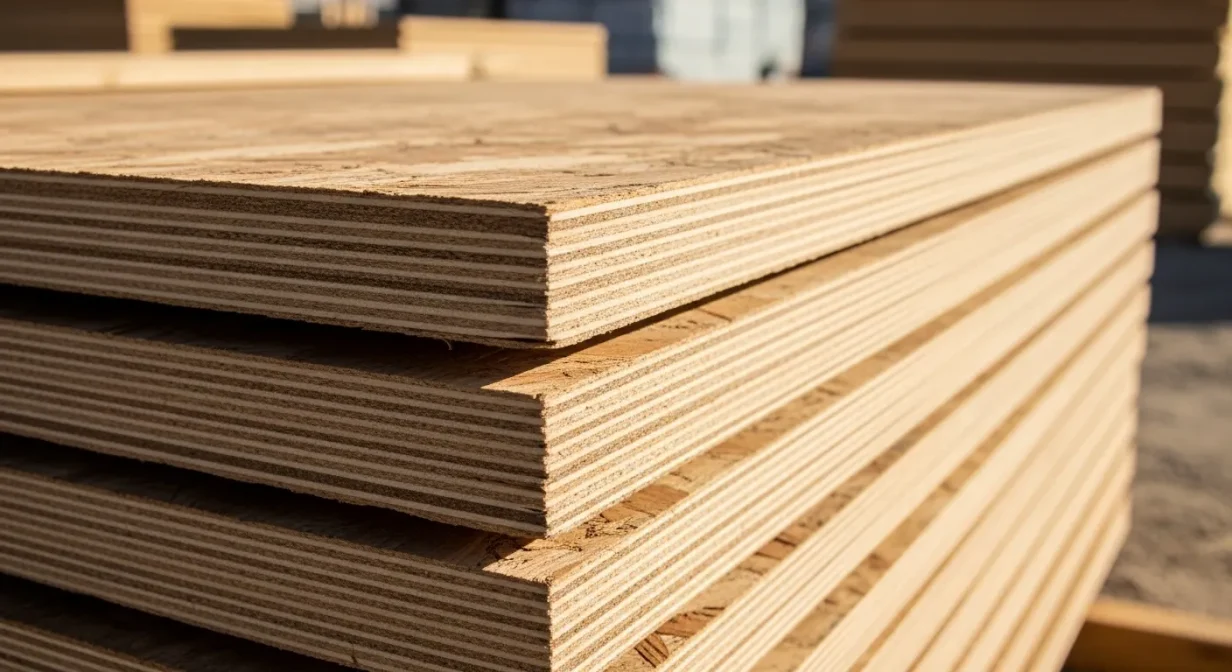
The best wood for roof decking balances structural stiffness, moisture resistance, and cost-effectiveness for the specific climate zone. CDX plywood offers superior nail holding and moisture recovery compared to OSB, making it the preferred choice for high-humidity or rainy environments. Specify APA-rated sheathing with an exterior glue bond to ensure the wood panels maintain structural integrity when exposed to incidental moisture.
Key Takeaways
- CDX plywood offers better moisture resistance and structural recovery than standard OSB in high-humidity North Texas climates.
- IRC R803.2.1 requires a minimum thickness of 15/32-inch for rafters spaced at 24 inches on center.
- Advantech is a premium moisture-resistant alternative that exceeds ASTM D3043 flexure standards for high-end residential projects.
- In Dallas-Fort Worth, thermal expansion from 100°F+ days can cause OSB edges to swell if not properly spaced.
Choosing the right substrate for your roof is more critical than the shingles themselves, especially in the volatile DFW Metroplex. I have seen countless roofs fail prematurely because the decking couldn’t handle the structural load of heavy architectural shingles or the moisture cycles of North Texas. The National Roofing Contractors Association (NRCA) emphasizes that the deck is the foundation of the entire roofing system. FIELD NOTE #1: Last month, a Dallas homeowner in Lakewood called me after their two-year-old roof started sagging.
The previous contractor used 7/16-inch OSB on 24-inch spans without H-clips, a clear violation of IRC R803.2.1.1. The resulting $14,000 deck replacement could have been avoided with an extra $800 in proper material specification during the initial build. Whether you are considering CDX plywood, Oriented Strand Board (OSB), or high-performance options like Advantech, you must account for ASTM D3043 performance standards. This guide breaks down the technical specifications and local code requirements to ensure your roof survives the next decade of Texas weather.
We will look at structural ratings, moisture response, and current 2026 pricing for the Dallas market.
Plywood vs. OSB: The Technical Divide
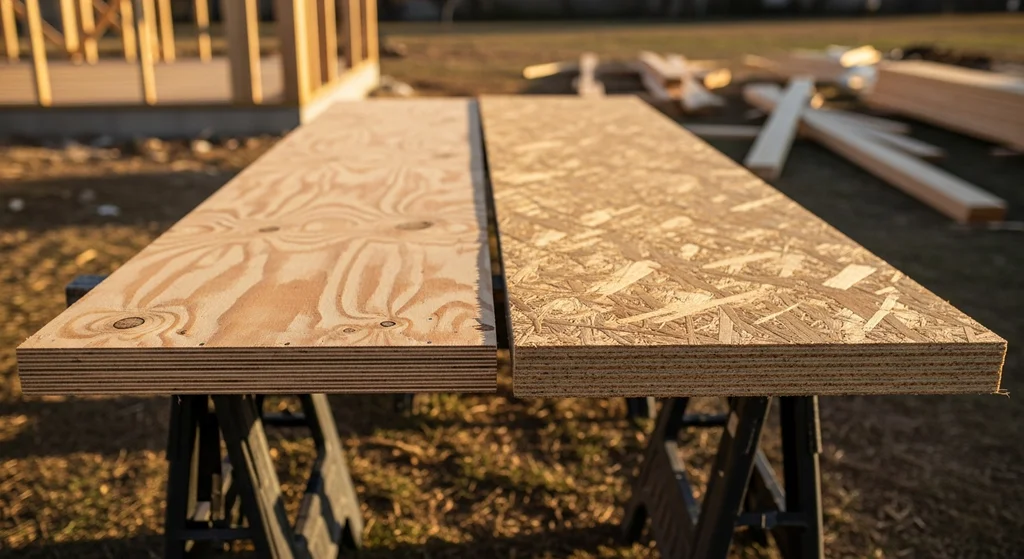
CDX plywood is constructed from thin layers of wood veneer glued in cross-grain patterns, providing high dimensional stability. This material conforms to ASTM D3043 standards for structural performance and is preferred for its ability to dry out quickly if a leak occurs. In my 8+ years of experience in North Texas, I have found that plywood holds fasteners more securely over multiple decades of thermal expansion. Oriented Strand Board (OSB) is manufactured from compressed wood strands bonded with wax and resin.
While OSB is more uniform and cost-effective, it is susceptible to ‘edge swell’ if exposed to moisture during installation or a subsequent leak. The International Code Council (ICC) approves both for residential use, but their performance during a Dallas spring storm varies significantly. Advantech and other high-performance engineered woods are essentially ‘OSB on steroids’ with higher resin content. These panels meet rigorous ASTM D1761 standards for fastener withdrawal resistance and are virtually waterproof during the construction phase.
For high-end homes in neighborhoods like Highland Park, the investment in premium decking often pays for itself in reduced maintenance costs.
Advantages
- CDX Plywood: Excellent moisture recovery and fastener retention
- OSB: Cost-effective and available in larger 4×9 or 4×10 sheets
- Advantech: Industry-leading moisture resistance and 50-year warranties
Disadvantages
- CDX Plywood: Higher price point and prone to natural knots/delamination
- OSB: Permanent edge swelling when wet, slower to dry than plywood
Structural Performance and Standards Comparison
When evaluating decking, we look at span ratings and load-bearing capacity as defined by the International Residential Code (IRC). Most North Texas homes use rafters spaced 16 or 24 inches on center. The thickness of the material must correspond to these spans to prevent bowing under the weight of asphalt shingles and potential snow or hail loads. ASTM International provides the testing protocols that manufacturers like GAF or CertainTeed rely on for their system warranties.
If your decking does not meet the minimum shear strength requirements, your wind uplift rating is compromised. This is especially dangerous during the high-wind events common in the DFW Metroplex during late spring.
| Material Type | IRC Minimum Thickness | ASTM Standard | Moisture Resistance |
|---|---|---|---|
| CDX Plywood | 15/32 inch | ASTM D3043 | High (Dries quickly) |
| Standard OSB | 7/16 – 15/32 inch | ASTM D3043 | Moderate (Edges swell) |
| Advantech | 1/2 inch | ASTM D3043 / D1761 | Extreme (Waterproof resin) |
Understanding IRC 2021 and Dallas Building Codes
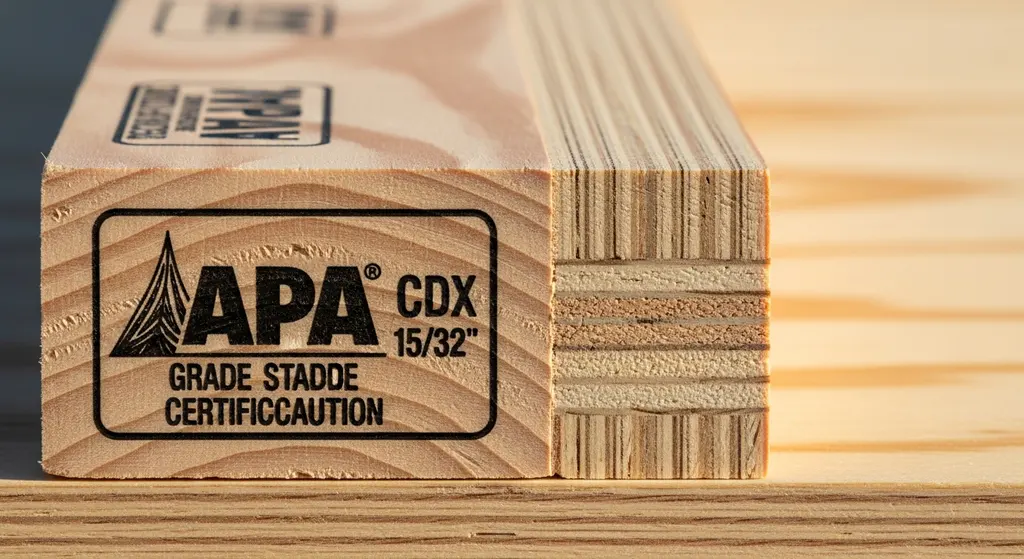
The International Residential Code (IRC) section R803.2.1 dictates that wood structural panels must be manufactured in accordance with DOC PS 1 or DOC PS 2. In Dallas County, building inspectors look specifically for the span rating stamped on the underside of the panel. For a standard 24-inch rafter spacing, you cannot legally use 3/8-inch material without a specific engineered design. IRC R803.2.1.1 also requires the use of H-clips between panels when the span exceeds certain limits.
These clips allow for natural thermal expansion and contraction, which is extreme in North Texas where attic temperatures can hit 150°F. Skipping these clips often leads to ‘buckling’ of the asphalt shingles, a common sight in poorly constructed DFW subdivisions. Furthermore, IRC R905 requires that the roof deck be clean and smooth before applying synthetic underlayment or felt underlayment. If your old wood is splintered or delaminated from years of heat, it must be replaced to maintain the Class A fire rating of your architectural shingles.
Most Dallas-area permits now require a mid-deck inspection to verify these standards are met.
Field Note from Experience
During a code compliance inspection in Frisco, I found a contractor using interior-grade particle board for a roof repair. This was a massive violation of IRC R803.2.1. The homeowner was facing a $9,000 bill to strip the new shingles and replace the improper decking. Always check the APA stamp before the shingles go down.
Performance in the Dallas-Fort Worth Climate
The DFW Metroplex presents a unique challenge for roof decking: extreme heat cycles and sudden, violent moisture. In the summer, the sun bakes asphalt shingles, transferring intense heat to the decking via thermal bridging. This causes wood to lose moisture and become brittle over time, a process accelerated in poorly ventilated North Texas attics. When the spring hail storms hit, the impact energy is absorbed by the decking.
If you have thin 7/16-inch OSB, a large hailstone can actually ‘micro-fracture’ the board, leading to soft spots that you won’t notice until you walk on the roof. I recommend at least 15/32-inch CDX plywood for homes in high-hail zones like Plano and McKinney for better impact resistance. Humidity is the final factor. North Texas humidity can cause OSB to hold moisture longer than plywood.
If your contractor uses standard felt underlayment (ASTM D226) instead of a high-quality synthetic underlayment, any trapped moisture can lead to mold growth on the underside of the deck. This is a common failure point I see in older Dallas homes with inadequate soffit ventilation.
Black mold on the underside of decking
Consequence: Indicates poor ventilation and potential structural rot requiring full replacement.
Spongy or bouncy feeling when walking on the roof
Consequence: Signifies delaminated plywood or moisture-damaged OSB that won’t hold nails.
Dallas Decking Replacement Costs
Replacing roof decking in Dallas-Fort Worth is typically priced ‘per sheet’ (4×8) or ‘per square’ (100 sq ft). As of 2026, material prices have stabilized, but labor remains a premium due to high demand. A full deck replacement for a 2,500 sq ft roof can range significantly based on the material chosen and the height of the home. Standard OSB is the most budget-friendly, while CDX plywood carries a 20-30% premium.
If you opt for Advantech or specialized radiant barrier decking (like TechShield), expect to pay 40-50% more than standard OSB. These costs usually include the removal of old wood, disposal fees, and the installation of new fasteners meeting ASTM D1761 specifications.
Dallas Market Pricing
In Dallas-Fort Worth, expect to pay $85-$125 per 4×8 sheet installed. These are current 2026 Dallas market prices; costs vary by region and can be 15-25% higher in remote Texas areas. Peak pricing occurs spring (March-May) storm season.
| Estimated Material Costs (DFW 2026) | |
|---|---|
| 7/16″ OSB | $22 – $28 per sheet |
| 15/32″ CDX Plywood | $34 – $42 per sheet |
| Advantech Premium | $55 – $65 per sheet |
What Contractors Hide About Decking Repairs
Many roofing companies in the DFW Metroplex will try to ‘skin over’ damaged wood to save on labor and disposal costs. They might tell you that a water-stained board is ‘fine’ as long as it isn’t soft. However, if that board has lost its structural integrity, it won’t meet IRC R905 requirements for a nailable surface, and your new shingles could blow off in a 60-mph North Texas wind gust. Another common tactic is reusing old flashing or skipping the ice and water shield (ASTM D1970) at the eaves.
They may also use 8d common nails instead of the required ring-shank nails, which have much higher withdrawal resistance. Always ask for a ‘wood supplement’ in your contract so you know exactly what you are paying for if rot is discovered after the tear-off.
What Contractors Hide
Reusing ‘good’ sections of rotted sheets
The Reality: Contractors do this to save $30 in material while charging you full price; it creates a structural weak point.
Skipping H-clips on OSB
The Reality: Saves 15 minutes of labor but leads to roof buckling and voided shingle warranties.
External Authoritative Resources
These industry-standard references support the information in this guide:
Building Codes
Frequently Asked Questions
Can I use 7/16-inch OSB for my roof in Dallas?
Yes, 7/16-inch OSB is permitted by the IRC for 16-inch rafter spans, but 15/32-inch is recommended for 24-inch spans to ensure structural stability against North Texas hail and wind loads.
Is plywood better than OSB for Texas heat?
Plywood is generally superior in Texas heat because it breathes better and recovers its shape after moisture exposure, whereas OSB can suffer permanent edge swelling in high humidity.
What is the life expectancy of roof decking?
With proper ventilation and a leak-free roof, decking can last 30-50 years. However, the NRCA recommends a full inspection every 20 years or during every roof replacement.
Does insurance cover roof decking replacement?
Insurance typically covers decking only if it was damaged by a covered peril like a fallen tree or fire. They rarely pay for rot or code upgrades unless you have ‘Ordinance or Law’ coverage.
What are H-clips and are they required?
H-clips are small metal spacers used between decking panels. IRC R803.2.1.1 requires them on certain spans to allow for thermal expansion and prevent roof surface buckling.
What is CDX plywood?
CDX stands for C-D Exposure 1, meaning one side is grade C, one is D, and the glue is designed for temporary moisture exposure during construction per ASTM D3043.
Final Thoughts
In the final analysis, the best wood for your roof decking in Dallas depends on your budget and long-term goals, but you should never compromise on IRC R803.2.1 thickness standards. While OSB is the standard for new construction, I firmly believe that CDX plywood or premium Advantech panels offer the best protection against the unique climate stressors of the DFW Metroplex. FIELD NOTE #3: I recently helped a family in North Dallas avoid a major scam where a contractor offered a ‘free roof’ but planned to use 3/8-inch plyscord—a major code violation. By insisting on 15/32-inch CDX and proper ASTM D226 underlayment, we ensured their home remained insurable and structurally sound.
Always prioritize the deck; it is the only thing between you and the next Texas supercell. Contact a licensed professional to verify your decking integrity today.
