
Contractor’s Bottom Line
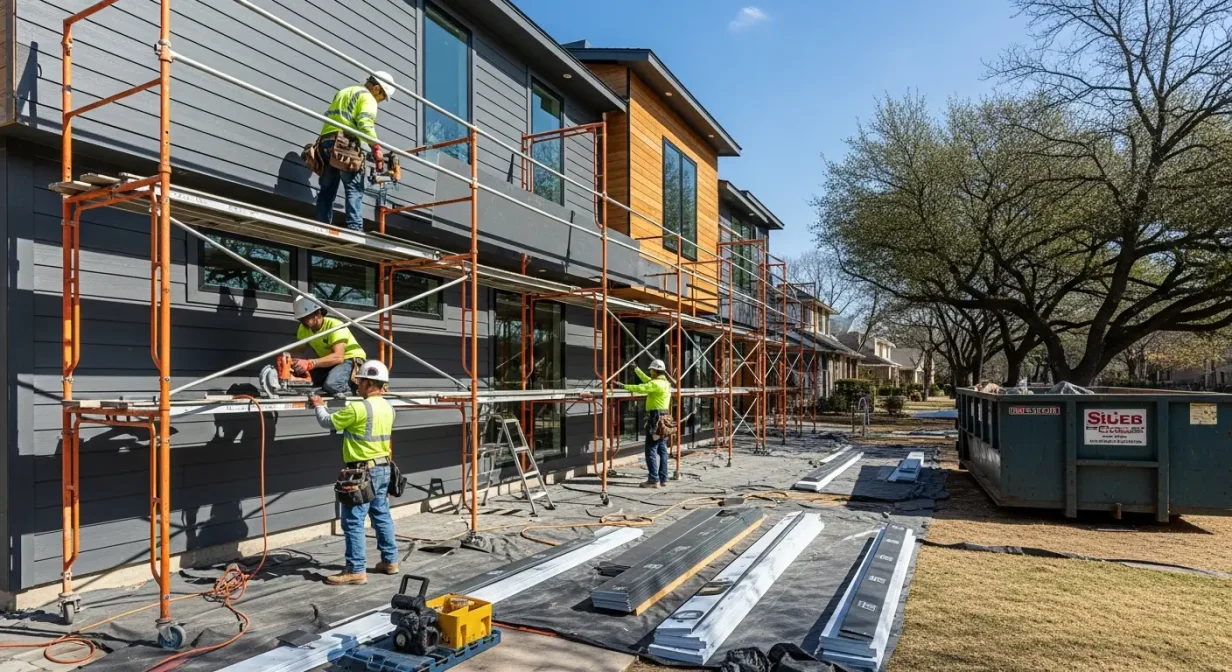
Siding replacements involve removing the existing exterior cladding and installing new weather-resistant materials to protect the wall cavity from moisture intrusion. The process requires the installation of a continuous weather-resistant barrier, integrated flashing at all penetrations, and proper fastening per the manufacturer’s specifications. Inspect the underlying wall sheathing for rot or water damage during the tear-off phase before covering the structure with the new cladding.
Key Takeaways
- IRC 2021 Section R703 requires a continuous water-resistive barrier (WRB) behind all new siding replacements.
- Fiber cement siding meeting ASTM C1186 is the gold standard for fire resistance and hail durability in the DFW Metroplex.
- Current 2026 Dallas market rates for professional installation range from $12,000 to $35,000 for average residential homes.
- Improper fastener penetration into studs can void manufacturer warranties and fail local Dallas County building inspections.
Navigating siding replacements in the North Texas climate requires a deep understanding of both thermal expansion and moisture management. I have spent over eight years inspecting homes across the DFW Metroplex, seeing firsthand how the extreme 100°F+ heat cycles can compromise poorly installed materials. We focus on ensuring every project meets the International Code Council (ICC) standards while addressing the specific environmental stressors unique to our region. FIELD NOTE: Last month, a Dallas homeowner called me after a cheap siding job resulted in $14,000 in structural rot because the contractor skipped the Z-flashing.
During my inspection in the M-Streets, I found that the lack of a proper water-resistive barrier meeting ASTM D226 standards allowed moisture to bypass the vinyl panels entirely. This scenario is unfortunately common when contractors prioritize speed over the technical requirements of the International Residential Code (IRC). Whether you are considering fiber cement, engineered wood, or high-grade vinyl, the installation methodology is more important than the product itself. The National Roofing Contractors Association (NRCA) often highlights that the building envelope’s integrity relies on the seamless transition between siding and roofing components.
In this guide, we will break down the technical specifications and local costs you need to know for a successful replacement in 2026.
IRC 2021 Code Requirements for North Texas Siding
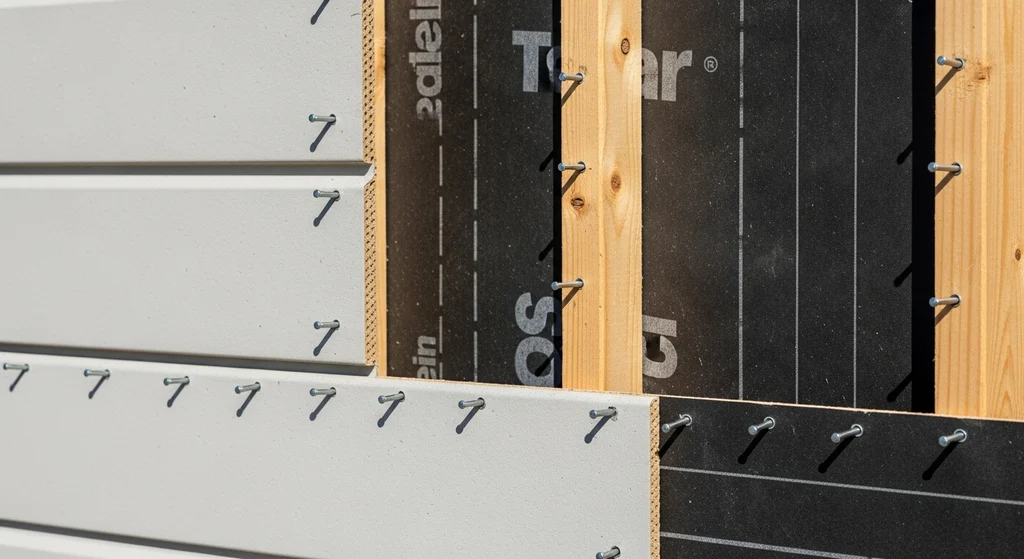
In Dallas and surrounding municipalities, siding replacements must comply with IRC 2021 Section R703, which governs exterior coverings. This code mandates the installation of a water-resistive barrier (WRB) such as felt underlayment or synthetic house wrap. We ensure that all WRB materials meet ASTM D226 Type I standards to provide a secondary line of defense against wind-driven rain. Proper lap dimensions are critical, as the IRC requires a minimum 2-inch horizontal lap and 6-inch vertical lap for these membranes.
Furthermore, IRC R703.4 requires that all fasteners be corrosion-resistant, typically hot-dipped galvanized nails conforming to ASTM A153. In the DFW Metroplex, we strictly follow these fastener schedules to prevent siding panels from rattling or detaching during high-wind events. The International Code Council (ICC) also specifies that flashing must be installed at all wall openings and intersections. This includes ‘kick-out’ flashing where a roof eave meets a vertical wall, a detail often missed by inexperienced crews.
| Critical Code Specs | |
|---|---|
| WRB Standard | ASTM D226 Type I |
| Fastener Type | Hot-dipped galvanized (ASTM A153) |
| Minimum Lap | 2-inch horizontal / 6-inch vertical |
Material Performance in the Texas Heat
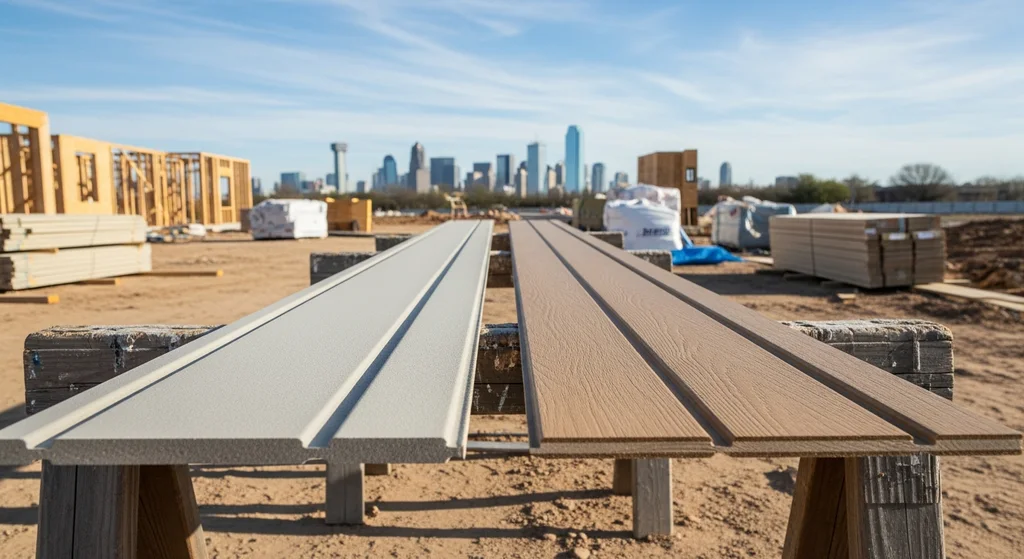
Fiber cement siding, such as James Hardie products, is the preferred choice for siding replacements in North Texas due to its ASTM C1186 compliance. This material is composed of Portland cement, sand, and cellulose fibers, making it resistant to the thermal expansion that plagues vinyl. In the 110°F Dallas summers, vinyl siding can reach critical temperatures, leading to warping or ‘oil canning’ if not installed with oversized nail slots. Fiber cement maintains its dimensional stability, providing a much tighter building envelope.
Engineered wood products like LP SmartSide are also gaining popularity in the DFW Metroplex for their impact resistance against hail. These products utilize the Zinc Borate treatment process to resist fungal decay and termites, which are prevalent in our humid spring months. When specifying materials, we look for a Class A fire rating to meet local safety ordinances. This is especially important in densely populated Dallas neighborhoods where fire spread between closely spaced homes is a significant concern for the ICC.
Advantages
- Fiber cement offers superior fire resistance (Class A)
- Engineered wood provides high impact resistance against DFW hail
- Modern vinyl is cost-effective and low maintenance
Disadvantages
- Vinyl can warp in extreme North Texas heat
- Fiber cement requires specialized cutting tools and OSHA-compliant dust control
Dallas Siding Replacement Cost Analysis
For a standard 2,000-square-foot home in Dallas, siding replacements currently range from $19,000 to $36,000 for full turn-key service. Labor in the DFW Metroplex has seen a steady increase due to high demand, with professional installation crews charging $4.50 to $7.00 per square foot. Material costs vary significantly, with premium fiber cement commanding a 25% premium over standard vinyl options. It is vital to include a 10% contingency fund for ‘hidden rot’ discovered once the old siding is removed.
Permit fees in Dallas County typically range from $200 to $500 depending on the project valuation. Additionally, professional disposal of old materials, especially if they contain lead or asbestos in older Highland Park homes, can add $1,500 to $3,000 to the total. We recommend scheduling replacements in the late fall or early winter. During the spring storm season, contractor availability drops and ‘storm chaser’ pricing can inflate quotes by as much as 30% across North Texas.
Dallas Market Pricing
In Dallas-Fort Worth, expect to pay $9.50-$18.50 per square foot. These are current 2026 Dallas market prices; costs vary by region and can be 15-25% higher in remote Texas areas. Peak pricing occurs spring (March-May) storm season.
| Material Type | Cost Per Sq. Ft. (Installed) | Expected Lifespan (Texas) |
|---|---|---|
| Vinyl (High Grade) | $9.50 – $13.00 | 20-25 Years |
| Fiber Cement | $14.00 – $18.50 | 30-50 Years |
| Engineered Wood | $13.00 – $17.00 | 25-40 Years |
Field Note from Experience
A client in Richardson recently received a ‘bargain’ quote for $11,000 for a full siding replacement. I reviewed the contract and found they were reusing the old felt underlayment and skipping the ASTM D226 requirements. By the time they added proper flashing and a new WRB, the price was $18,500—proving that the initial ‘savings’ were just a shortcut to future leaks.
What Siding Contractors Hide from Homeowners
Many siding contractors in the DFW Metroplex will attempt to reuse existing flashing to save on labor and material costs. This is a major red flag, as old flashing often has pinhole leaks or does not align with the new siding profile, violating NRCA best practices. Furthermore, some crews skip the ‘gap and seal’ method required for fiber cement expansion. If they don’t leave the 1/8-inch gap at trim junctions for high-quality sealant, the siding will eventually buckle and crack as it settles.
Another common tactic is using ‘house brand’ underlayment that doesn’t meet ASTM D4869 or ASTM D226 standards. These cheaper wraps often have lower UV resistance, which is a problem if the siding isn’t installed immediately in the harsh North Texas sun. Lastly, verify the nailing pattern; contractors often ‘over-drive’ nails with pneumatic guns, which breaks the surface of the material and voids the manufacturer warranty. A properly driven nail should be flush with the surface, not countersunk.
What Contractors Hide
Reusing old window flashing
The Reality: Leads to window frame rot within 3-5 years
Skipping the starter strip
The Reality: Allows insects and rodents to enter the wall cavity
Using non-galvanized nails
The Reality: Causes ‘rust bleeding’ streaks down your new siding
External Authoritative Resources
These industry-standard references support the information in this guide:
Building Codes
International Residential Code (IRC 2021)
Official building code for residential construction
ICC Code Adoption Map
Find which IRC version your state uses
Industry Standards
NRCA Roofing Manual
National Roofing Contractors Association best practices
ASTM International Standards
Material testing standards (ASTM D3043, D1761)
Manufacturer Resources
Frequently Asked Questions
Do I need a permit for siding replacement in Dallas?
Yes, most cities in the DFW Metroplex, including Dallas and Plano, require a building permit for siding replacements to ensure IRC 2021 code compliance for moisture barriers and structural attachment.
Which siding is best for North Texas hail?
Fiber cement (ASTM C1186) and engineered wood (LP SmartSide) offer the best impact resistance against the large hail frequently seen in North Texas, outperforming standard vinyl which can shatter under impact.
How long does a siding replacement take?
An average Dallas residential project typically takes 7 to 10 business days, assuming favorable weather and a crew following NRCA safety guidelines for scaffolding and staging.
Can I install new siding over my old siding?
While some contractors offer ‘lay-over’ installations, we strongly advise against it. Removing the old material is the only way to inspect for structural rot and install a WRB meeting ASTM D226 standards.
What is the best time of year for siding in Dallas?
Late fall (October-November) is ideal, as the moderate temperatures allow for proper sealant curing and lower demand avoids the peak pricing found during the spring storm season.
Does siding affect my home’s energy efficiency?
Yes, adding rigid foam insulation behind your new siding can significantly reduce thermal bridging, helping your HVAC system handle the extreme 100°F+ Dallas summer heat more efficiently.
Final Thoughts
Successful siding replacements in Dallas-Fort Worth are the result of meticulous planning and adherence to modern building codes. By choosing materials that meet ASTM C1186 and ensuring your contractor follows IRC 2021 standards, you protect your home from the unique stressors of the North Texas environment. Remember that the cheapest bid often excludes the critical flashing and moisture barriers that prevent five-figure repair bills down the road. FIELD NOTE: I always tell my clients in the DFW Metroplex that siding is your home’s first line of defense.
I once saw a beautiful home in Southlake lose its entire west-facing wall to mold because the ‘professional’ installer forgot to tape the seams of the house wrap. Don’t let your investment be compromised by a lack of oversight. Demand high standards, verify your materials, and ensure your 2026 project is built to last. Contact a qualified consultant if you have any doubts about your contractor’s technical approach.
