
Contractor’s Bottom Line
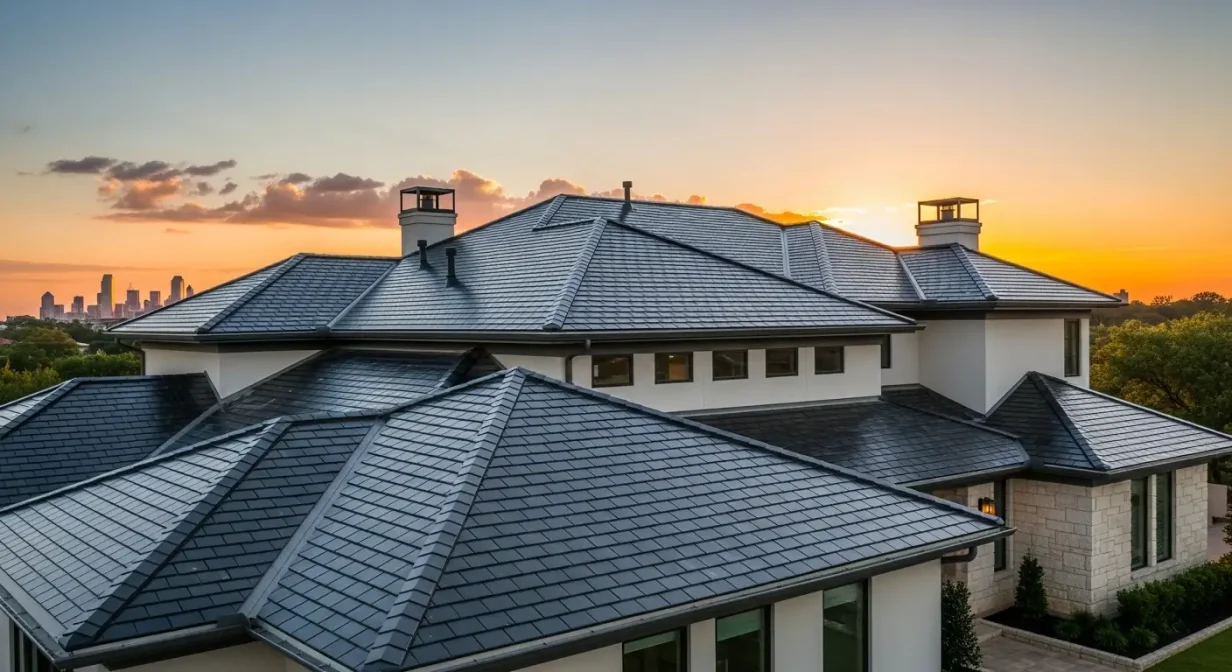
A composition roof is an asphalt-based roofing system constructed from a fiberglass mat coated with asphalt and embedded with ceramic granules. This type of roofing accounts for the vast majority of residential steep-slope applications due to its low cost and moderate weather resistance. Inspect the granule surface annually for excessive shedding, as the loss of this UV-protective layer significantly shortens the material’s lifespan.
Key Takeaways
- Architectural composition shingles offer superior wind resistance up to 130 mph, meeting IRC 2021 requirements for North Texas.
- ASTM D3462 is the critical physical property standard for fiberglass-reinforced composition shingles to ensure tear strength and nail pull-through resistance.
- In the DFW Metroplex, installing a Class 4 impact-resistant shingle can often reduce annual homeowners insurance premiums by 20-25%.
Choosing a composition roof for your home involves more than just picking a color; it requires understanding how asphalt, fiberglass, and granules interact under the Texas sun. As a consultant in Dallas-Fort Worth, I have seen how the right specification can mean the difference between a 20-year lifespan and a premature failure after the first spring storm. We will explore the technical standards set by ASTM International and the International Code Council (ICC) that govern these systems. FIELD NOTE #1: Last summer, a homeowner in Lake Highlands called me after their three-year-old composition roof began blistering and shedding granules at an alarming rate.
Upon inspection, I found the attic lacked the ventilation required by IRC R806.1, causing the shingles to ‘bake’ from the underside in 105°F heat. This oversight turned a $15,000 investment into a liability that required a full replacement because the manufacturer warranty was voided by poor installation. Most people use the terms asphalt shingle and composition roof interchangeably because these products are composed of multiple layers including a fiberglass mat and mineral granules. Organizations like the National Roofing Contractors Association (NRCA) provide the gold standard for installation practices that go beyond the minimum requirements of the International Residential Code (IRC).
Understanding these nuances ensures your Dallas home remains protected against the extreme thermal expansion cycles common in our region.
Anatomy of a Modern Composition Roof
A high-quality composition roof starts with a fiberglass mat that provides the structural framework and tensile strength for each shingle. This mat is coated with a specially formulated asphalt that must meet ASTM D3462 standards to ensure it remains flexible during cold winters and stable during 110°F Dallas summers. The top layer consists of ceramic-coated mineral granules that protect the asphalt from ultraviolet (UV) degradation and provide the fire rating required by the International Code Council (ICC). Manufacturers like GAF, Owens Corning, and CertainTeed have evolved these materials into ‘architectural’ or ‘laminate’ shingles which feature multiple layers bonded together.
This design provides a three-dimensional look and significantly higher wind uplift resistance compared to traditional 3-tab shingles. The NRCA recommends these multi-layered products for the North Texas region due to their ability to withstand the high-velocity straight-line winds often associated with spring supercell storms.
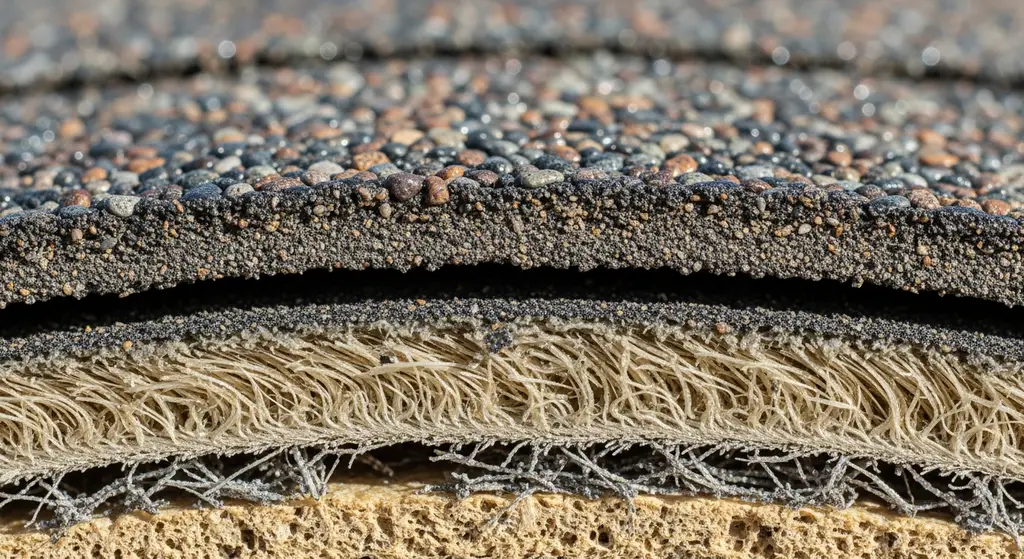
| Composition Material Layers | |
|---|---|
| Base Mat | Fiberglass (Glass Felt) |
| Coating | Weathering-grade Asphalt |
| Surface | Ceramic-coated Mineral Granules |
Performance in the Dallas-Fort Worth Climate
The Dallas climate presents a unique set of stressors for composition roofs, specifically extreme UV exposure and rapid temperature swings known as thermal shock. During a typical July day in North Texas, roof surface temperatures can exceed 160°F, only to drop 40 degrees in an hour during a thunderstorm. This causes constant expansion and contraction of the asphalt, which is why choosing a shingle with a high thermal stability rating is critical for longevity. Hail is the other primary concern for any homeowner in the DFW Metroplex.
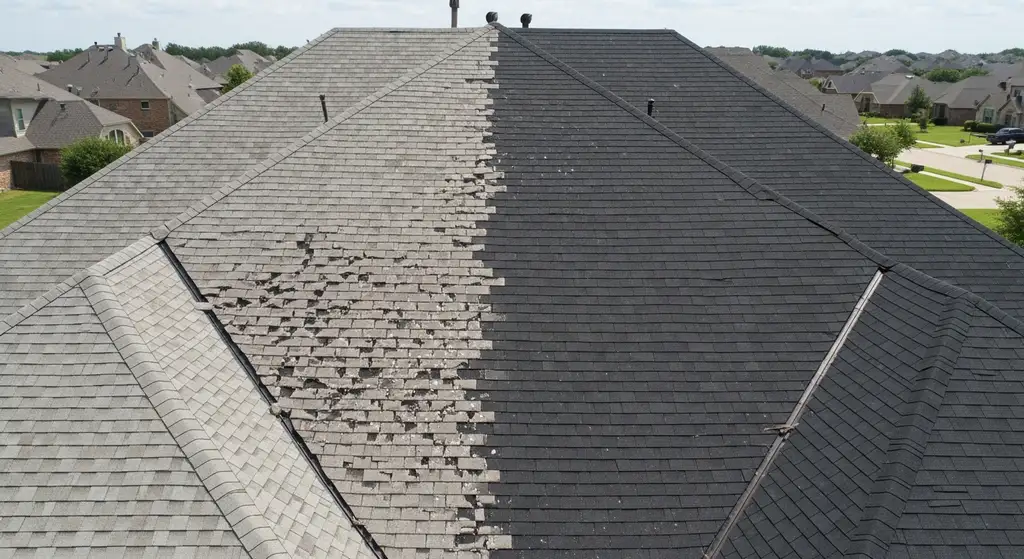
I always recommend specifying shingles that have passed the UL 2218 impact test with a Class 4 rating, which involves dropping a 2-inch steel ball onto the shingle to simulate large hail. Many insurance carriers in Texas now require this rating for new installations or offer substantial premium credits for homeowners who upgrade from standard composition materials.
Field Note from Experience
During an inspection in Plano after a major 2026 spring storm, I examined two neighboring houses. One had standard architectural shingles and suffered $18,000 in hail damage, while the other had Class 4 composition shingles from CertainTeed and required zero repairs. The difference in material cost was only $1,200, but the savings on the deductible alone made the upgrade a brilliant financial move for the homeowner.
Technical Standards and IRC Code Compliance
In Dallas, roofing installations must adhere to the International Residential Code (IRC 2021), specifically Section R905.2 for asphalt shingles. This code dictates that composition roofs cannot be installed on slopes less than 2:12 and require specific underlayment based on the roof pitch. For slopes between 2:12 and 4:12, double underlayment is mandatory per IRC R905.1.1 to prevent water backup during heavy Texas downpours. Fastener specification is another area where many contractors fail code inspections.
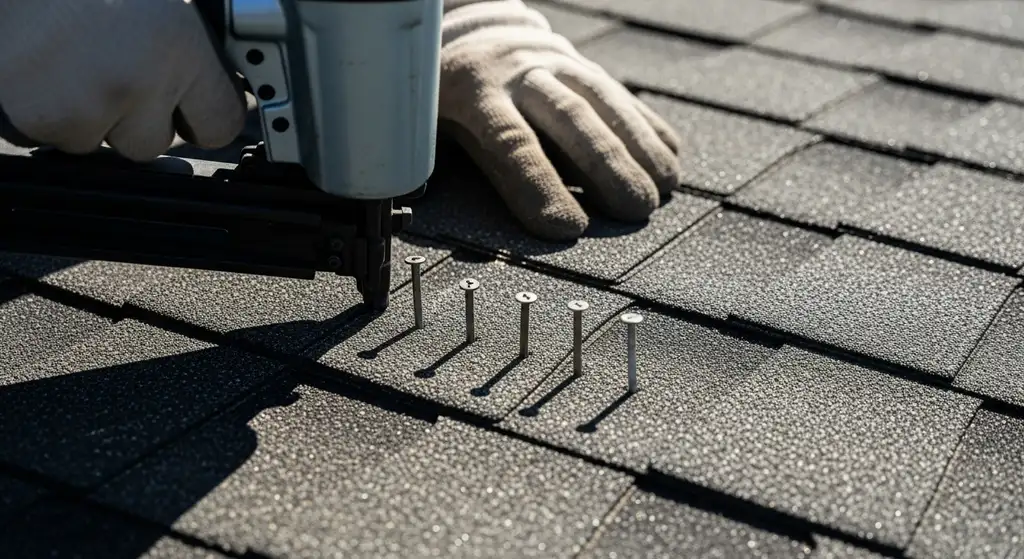
IRC R905.2.5 requires shingles to be fastened with a minimum of four nails, but in high-wind areas like North Texas, the NRCA and most manufacturers require six nails per shingle. These fasteners must be corrosion-resistant nails meeting ASTM D1761, with sufficient length to penetrate through the roof sheathing or at least 3/4 inch into the wood planking.
| Standard | Requirement | Purpose |
|---|---|---|
| ASTM D3161 | Class F | 110 mph Wind Resistance |
| ASTM D7158 | Class H | 150 mph Wind Uplift Resistance |
| ASTM E108 | Class A | Fire Penetration Resistance |
Dallas Composition Roof Cost Analysis
For a standard 2,500 square foot home in the DFW Metroplex, a full composition roof replacement typically ranges from $11,500 to $18,500. This price includes the removal of the old shingles, synthetic underlayment meeting ASTM D4869, new flashing, and labor. High-end architectural shingles or ‘designer’ lines can push these costs toward the $25,000 range, especially if structural repairs to the CDX plywood deck are required per IRC R803.2.1. Labor rates in Dallas are currently influenced by high demand during the spring storm season.
You should expect to pay a premium if you schedule work between March and June. I advise homeowners to consider a late fall installation when contractor availability is higher and material prices tend to stabilize. Always ensure your quote includes the cost of building permits required by the City of Dallas or your specific municipality, as these can range from $100 to $500 depending on the project value.
Dallas Market Pricing
In Dallas-Fort Worth, expect to pay $450-$750 per square (100 sq. ft.) for a professional installation. These are current 2026 Dallas market prices; costs vary by region and can be 15-25% higher in remote Texas areas. Peak pricing occurs during the spring (March-May) storm season when labor demand is highest.
What Contractors Hide
Reusing old flashing
The Reality: Contractors often reuse old roof-to-wall flashing to save $500 in labor/materials, but this is the #1 cause of leaks in composition roofs.
Skipping starter strips
The Reality: Using cut-up 3-tab shingles as a starter course instead of dedicated starter strips reduces wind resistance at the eaves by 40%.
Avoiding Roofing Scams in North Texas
The DFW Metroplex is unfortunately a magnet for ‘storm chasers’ who appear immediately after a hail event. One of the most common red flags is a contractor offering to ‘waive’ or ‘cover’ your insurance deductible. In Texas, this is a violation of Business and Commerce Code Chapter 707 (HB 2102), and it is considered insurance fraud. A reputable contractor will always require you to pay your deductible as mandated by law.
Another red flag is a contractor who refuses to provide a physical address in the Dallas area or lacks a certificate of insurance. Always verify their general liability and workers’ compensation coverage to ensure you aren’t liable for injuries on your property. I recommend checking the Texas Department of Licensing and Regulation (TDLR) for any specialty licenses and ensuring the company has been established in the DFW area for at least five years.

Contingency Agreements
Consequence: You may be legally bound to a contractor before your insurance claim is even approved.
Door-to-Door Sales with High Pressure
Consequence: These ‘storm chasers’ often use sub-par crews and disappear before warranty issues arise.
External Authoritative Resources
These industry-standard references support the information in this guide:
Building Codes
Frequently Asked Questions
How long does a composition roof last in Dallas?
While many shingles are rated for 30 years, the extreme Dallas heat and hail typically result in a functional lifespan of 18 to 22 years. Proper attic ventilation per NRCA standards is the most significant factor in extending this timeline.
Is synthetic underlayment better than felt for a composition roof?
Yes, synthetic underlayment meeting ASTM D4869 or D226 Type II is far superior to traditional 15lb felt because it is tear-resistant and does not absorb moisture, which prevents shingle wrinkling. Most Dallas contractors have made this the standard as of 2026.
Can I install a new composition roof over my old one?
While IRC R907.3 allows for a second layer in some cases, I strongly advise against it in Dallas. A ‘recover’ traps heat, shortens shingle life, and prevents the inspection of the decking for rot or mold.
What is the best brand of composition shingle for Texas?
GAF, Owens Corning, and CertainTeed all produce excellent products. In my experience, the Owens Corning Duration line is particularly effective in Dallas due to its patented ‘SureNail’ fabric strip that prevents blow-offs during high winds.
Does a composition roof have a fire rating?
Yes, most modern fiberglass composition shingles carry a Class A fire rating, the highest possible, according to ASTM E108. This is a critical safety feature for homes in suburban DFW areas near grasslands.
How much does a roof permit cost in Dallas?
In Dallas County, residential roofing permits typically cost between $100 and $300. This permit ensures a city inspector verifies the mid-progress or final installation meets IRC 2021 safety standards.
Final Thoughts
A composition roof is a reliable and cost-effective choice for protecting your Dallas home, provided you prioritize technical specifications over the lowest bid. By insisting on ASTM D3462 compliant materials, UL 2218 Class 4 impact resistance, and a contractor who follows NRCA guidelines, you can ensure your investment survives the volatile North Texas climate. Remember that the quality of the installation is just as important as the material itself. FIELD NOTE #3: I recently consulted for a family in Richardson who chose the cheapest bid for their composition roof.
The contractor skipped the drip edge and used improper flashing at the chimney, leading to a slow leak that caused $8,000 in interior drywall and mold damage just two years later. They saved $2,000 on the initial install but spent four times that on repairs. Don’t cut corners on the details—it always costs more in the long run. Contact a qualified local professional to ensure your roof is built to last until 2045 and beyond.
