
Contractor’s Bottom Line
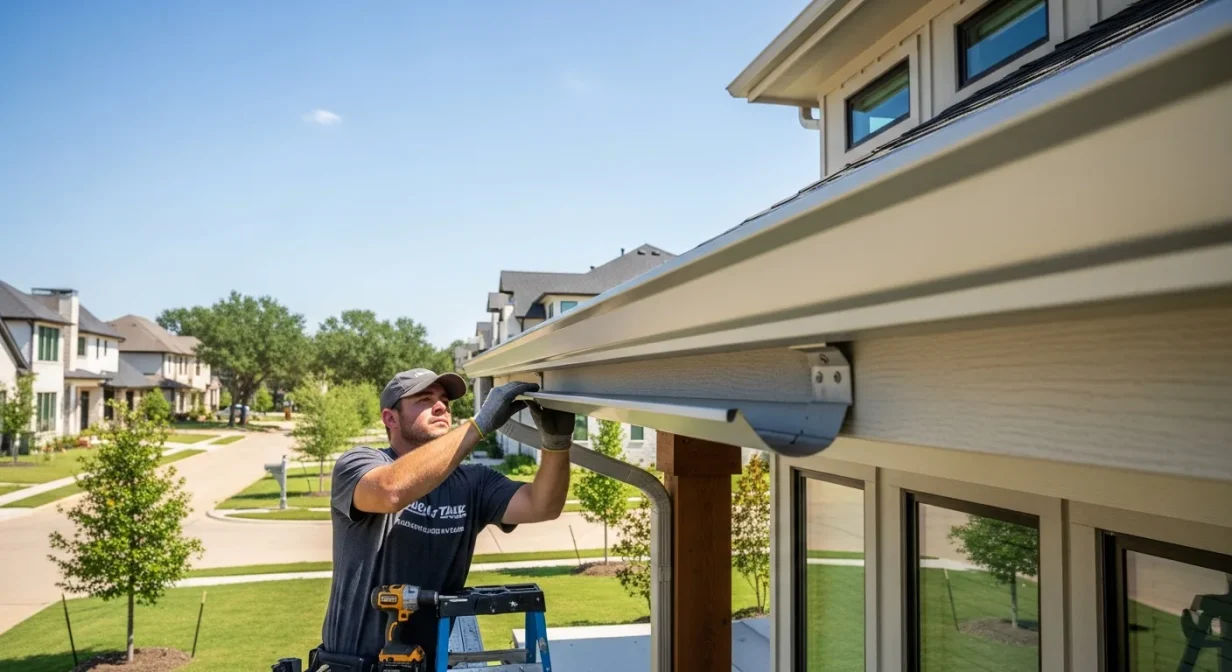
Seamless gutters differ from traditional sectional gutters by eliminating the longitudinal seams that are highly prone to leaks and debris accumulation. While traditional gutters are pieced together on-site using connectors and sealant, seamless gutters are formed to the exact roof length in a single continuous piece. Opt for seamless aluminum to reduce long-term maintenance, as the lack of seams prevents the structural separation common in sectional systems.
Key Takeaways
- Seamless gutters eliminate the 20+ leak points found in traditional sectional gutters on an average DFW home.
- ASTM B209 compliant 0.032-inch aluminum is the recommended thickness for North Texas to withstand moderate hail impacts.
- Dallas market pricing for seamless installation ranges from $1,800 to $4,500 for a standard 2,500 sq. ft. residence as of 2026.
In my 8 years as a construction consultant in the DFW Metroplex, I have seen thousands of gutter systems fail prematurely. The debate between seamless and traditional gutters isn’t just about aesthetics; it is about how well your home handles the torrential downpours common in North Texas. Traditional gutters rely on sealants at every joint, which eventually dry out and crack under the intense Texas sun. FIELD NOTE: Last month, a Dallas homeowner in Lakewood called me after their traditional sectional gutters resulted in $12,000 in foundation repairs.
The seams had slowly leaked over three years, saturating the expansive clay soil and causing the slab to heave. This is a common scenario where a ‘cheaper’ gutter choice leads to catastrophic structural costs. Understanding the technical differences is vital for any homeowner considering a roof replacement or upgrade. We will look at how materials like G-90 galvanized steel and aluminum perform according to ASTM International standards.
By the end of this guide, you will understand why the International Code Council (ICC) and NRCA prioritize efficient water shedding to protect the building envelope.
The Structural Difference: Custom Fabrication vs. Sectional Assembly
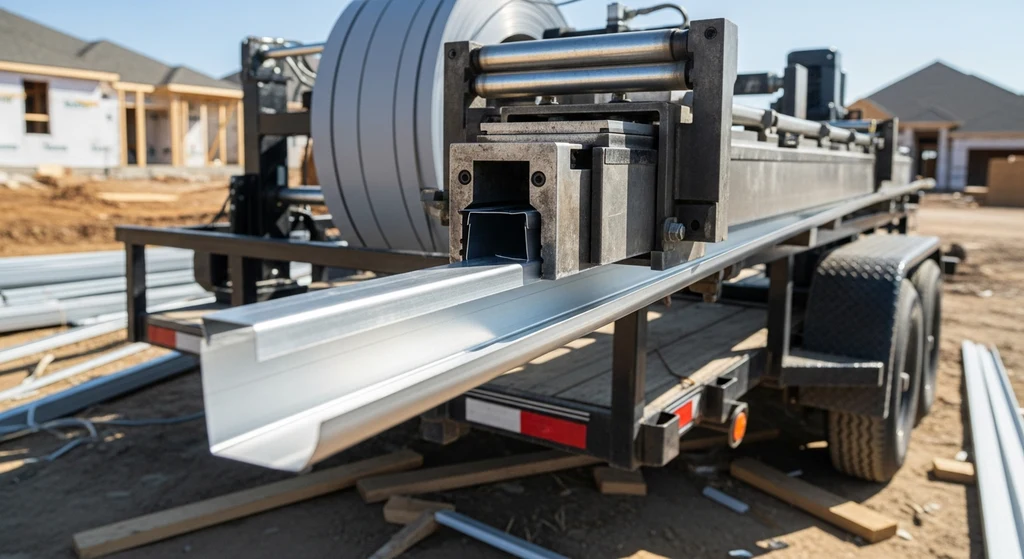
The primary difference lies in the fabrication process and the number of potential failure points. Traditional gutters are sold in 10-foot to 20-foot sections that contractors piece together using slip-joint connectors and heavy applications of sealant. These joints are prone to ‘thermal bridging’ and expansion, where the metal moves at a different rate than the sealant, eventually breaking the bond. Seamless gutters are roll-formed on-site using a specialized machine that creates a continuous piece of metal tailored to your home’s exact dimensions.
This process typically utilizes aluminum coils that meet ASTM B209 standards for structural integrity. Because there are no seams along the straight runs, the only leak points are at the corners (miters) and downspout outlets, which we reinforce with high-grade industrial adhesives.
Technical Specifications Comparison
When evaluating these systems, you must look at the gauge of the metal and the fastener spacing. For the DFW Metroplex, I always recommend 0.032-inch aluminum or 26-gauge G-90 galvanized steel. Thinner materials, like the 0.027-inch aluminum often found in big-box stores, are easily dented by the small hail we experience every spring in North Texas. Fastener spacing is another critical metric that many ‘storm chaser’ contractors ignore.
Per NRCA recommendations, hangers should be spaced every 24 inches on center to support the weight of water and debris. In areas of Dallas prone to heavy ice accumulation during winter ‘blue northers,’ we often tighten that spacing to 18 inches to prevent the gutter from pulling away from the fascia board.
| Feature | Seamless Gutters | Traditional Sectional |
|---|---|---|
| Material Options | Aluminum, Copper, Galvalume | Aluminum, Vinyl, Steel |
| Leak Risk | Extremely Low (Corners only) | High (Every 10-20 feet) |
| Standard Thickness | 0.032″ Aluminum (ASTM B209) | 0.027″ Aluminum or Vinyl |
| Installation | Professional Machine Required | DIY Friendly / Hand Tools |
| Dallas Lifespan | 20-30 Years | 10-15 Years |
Dallas-Specific Gutter Installation Costs
Pricing in the Dallas market is influenced heavily by the current cost of aluminum coils and labor demand. Currently, in 2026, seamless aluminum gutters (6-inch K-style) are the standard for most residential applications in neighborhoods like North Richland Hills or Mesquite. While the upfront cost is higher, the total cost of ownership is lower due to reduced maintenance. Labor costs in the DFW Metroplex are currently higher than the national average due to the high volume of roofing work.
Most reputable Dallas contractors will include the cost of old gutter disposal and fascia inspection in their per-linear-foot price. Be wary of quotes that seem too low, as they often skip the critical step of installing a drip edge or ‘kick-out’ flashing required by IRC R905.2.7.1.
Dallas Market Pricing
In Dallas-Fort Worth, expect to pay $12-$20 per linear foot for seamless aluminum. These are current 2026 Dallas market prices; costs vary by region and can be 15-25% higher in remote Texas areas. Peak pricing occurs during the spring (March-May) storm season when demand for drainage solutions spikes.
| Estimated Project Totals (2026) | |
|---|---|
| Standard Home (150 lf) | $1,800 – $2,700 |
| Large Custom Home (300 lf) | $3,600 – $6,000 |
| Copper Upgrade | $35 – $50 per lf |
What Contractors Hide: Gutter Industry Secrets
Not all ‘seamless’ installations are created equal, and some contractors cut corners to increase their 30% profit margins. One common tactic is using ‘spike and ferrule’ fasteners instead of hidden screw hangers. Spikes eventually back out of the wood as the fascia expands and contracts in the Texas humidity, leading to sagging gutters that don’t drain properly. Another hidden trick is skipping the splash guards or using undersized 2×3 inch downspouts on a large roof.
In Dallas, the rainfall intensity can exceed 3 inches per hour. If your contractor doesn’t upgrade you to 3×4 inch downspouts, your new seamless gutters will overflow, rendering the ‘seamless’ benefit useless. Always ask to see the ASTM D1761 certification for any mechanical fasteners used in the installation.
What Contractors Hide
Reusing old fascia flashing
The Reality: Contractors do this to save $200 in materials, but it often leads to wood rot behind the new gutter.
Using thin 0.027 gauge aluminum
The Reality: It looks the same as 0.032 gauge but will look like a ‘golf ball’ after the first Dallas hail storm.
Ignoring gutter slope
The Reality: They install it ‘level’ for aesthetics, but water pools and breeds mosquitoes in the DFW heat.
Field Note from Experience
During an inspection in Highland Park, I found a ‘pro’ install where the contractor used interior-grade silicone instead of ASTM-rated gutter sealant. The heat had literally melted the seal within one summer, costing the homeowner $1,500 to re-seal every miter on the house.
Performance in the North Texas Climate
The Dallas climate is brutal on exterior building materials. We experience temperature swings of 40 degrees in a single day, which causes significant thermal expansion in metal. Traditional gutters, with their numerous joints, cannot handle this movement. The sealant joints become the ‘weakest link,’ leading to drips that rot out your rafter tails.
Seamless systems are designed to move. When installed with hidden hangers that allow for slight lateral movement, the entire run can expand and contract without stressing the fasteners. Furthermore, the smooth interior of a seamless gutter reduces the snag points for debris, which is crucial for homes in wooded areas like Lake Highlands or Kessler Park where oak tassels and pecan leaves frequently clog drainage systems.
Standing water in gutters
Consequence: Attracts mosquitoes and causes rust in steel systems.
Gutter pulling away from roof
Consequence: Indicates rotten fascia or improper fastener spacing.
Water marks on the siding
Consequence: The gutter is overflowing or the back-flashing is missing.
External Authoritative Resources
These industry-standard references support the information in this guide:
Building Codes
Frequently Asked Questions
Can I install seamless gutters myself?
No, seamless gutters require a specialized roll-forming machine that costs thousands of dollars. While you can buy sectional gutters at big-box stores, the performance is vastly inferior to professional seamless systems.
Are seamless gutters hail resistant?
When using 0.032-inch aluminum or 26-gauge steel, they can withstand moderate hail. However, large Dallas hail (2+ inches) will dent any metal gutter, though seamless systems are less likely to leak after impact than sectional ones.
How long do seamless gutters last in Texas?
In the DFW Metroplex, a well-maintained seamless aluminum system typically lasts 20 to 30 years. Regular cleaning and miter resealing every 5-7 years are required to reach this lifespan.
Does insurance cover gutter replacement?
If your gutters are dented by hail or damaged by a fallen tree, homeowners insurance typically covers replacement. However, they will not cover leaks caused by old, dried-out sealant in traditional gutters.
What is the best gutter material for Dallas?
Aluminum is the best all-around choice because it does not rust. For high-end homes, copper is excellent but much more expensive. Avoid vinyl, as it becomes brittle and cracks in the intense Texas UV rays.
Do I need leaf guards with seamless gutters?
While not required by code, they are highly recommended in Dallas to prevent clogs. Ensure the guards are compatible with your gutter size and don’t void your roof warranty by lifting the shingles.
Final Thoughts
Choosing between seamless and traditional gutters is a decision that impacts your home’s foundation and structural integrity for decades. While the initial investment for seamless gutters is higher, the reduction in maintenance and the elimination of leak points make it the only logical choice for the Dallas-Fort Worth climate. By adhering to NRCA standards and using ASTM-compliant materials, you ensure your home is protected against the next North Texas supercell. FIELD NOTE: I always tell my clients in the DFW Metroplex that gutters are your home’s first line of defense.
I once saw a ‘cheap’ $900 sectional gutter job fail so badly during a spring storm that it flooded a finished basement in North Dallas, causing $25,000 in water damage. Don’t step over a dollar to pick up a dime—invest in a quality seamless system and hire a contractor who understands IRC 2021 compliance.
