
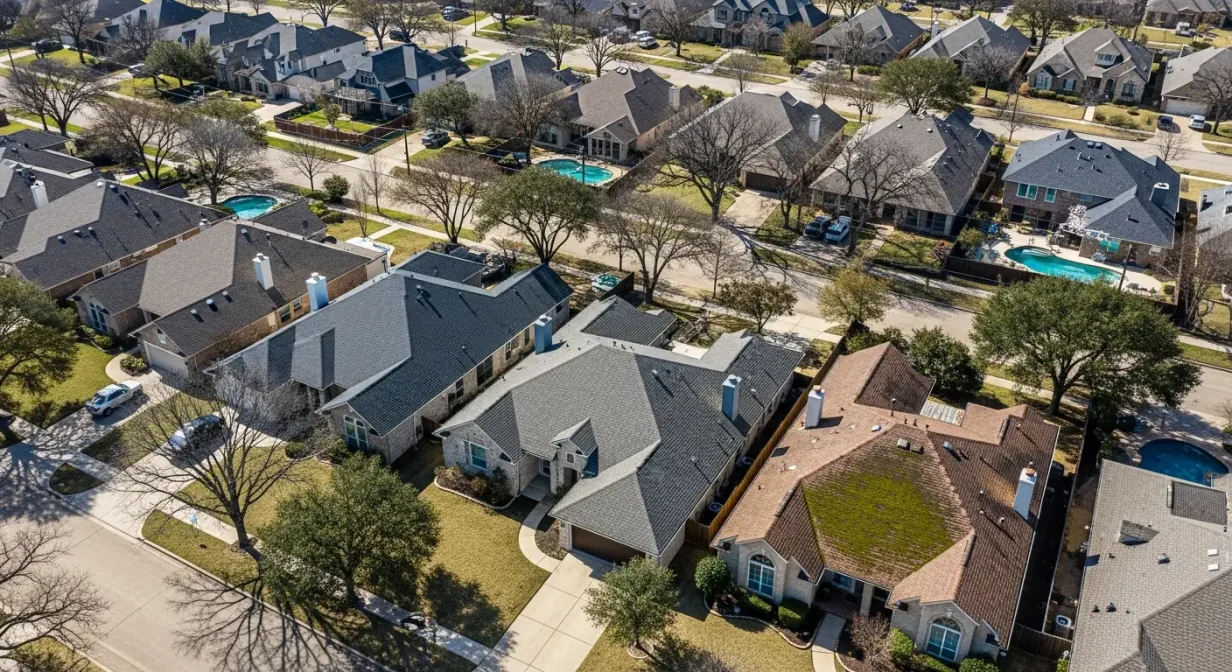
Contractor’s Bottom Line
Determining roof age involves inspecting the shingle condition, reviewing building permits, and locating manufacturer warranty documentation. Asphalt shingles typically exhibit granule loss, curling, and cracking as they approach the end of their 20 to 30-year service life. Cross-reference the installation date on the building permit with the shingle manufacturer’s date codes printed on the packaging wrapper.
Key Takeaways
- Granule loss and curling shingles often indicate a roof has exceeded 80% of its lifespan according to ASTM D3462 standards.
- Texas Department of Insurance (TDI) regulations allow carriers to limit coverage based on roof age, making documentation vital.
- A standard asphalt shingle roof in the Dallas climate typically requires replacement every 15 to 22 years regardless of manufacturer ratings.
Identifying your roof age is the first step in protecting your largest investment against North Texas weather. Many homeowners rely on the word of a previous seller, but technical markers and municipal records provide the only reliable timeline for IRC 2021 code compliance and insurance eligibility. Understanding where your system sits in its lifecycle prevents surprise leaks and helps you navigate the complex world of depreciation. FIELD NOTE: Last month, a Dallas homeowner in Lakewood called me after a minor leak resulted in $12,000 in interior damages because they assumed their roof was only 10 years old.
Upon inspection, I found 3-tab shingles installed over an old layer of felt underlayment, identifying the system as 24 years old and well past its prime. Had they checked their roof age sooner, a proactive replacement would have saved their custom hardwood floors.
Physical Indicators of Advanced Roof Age
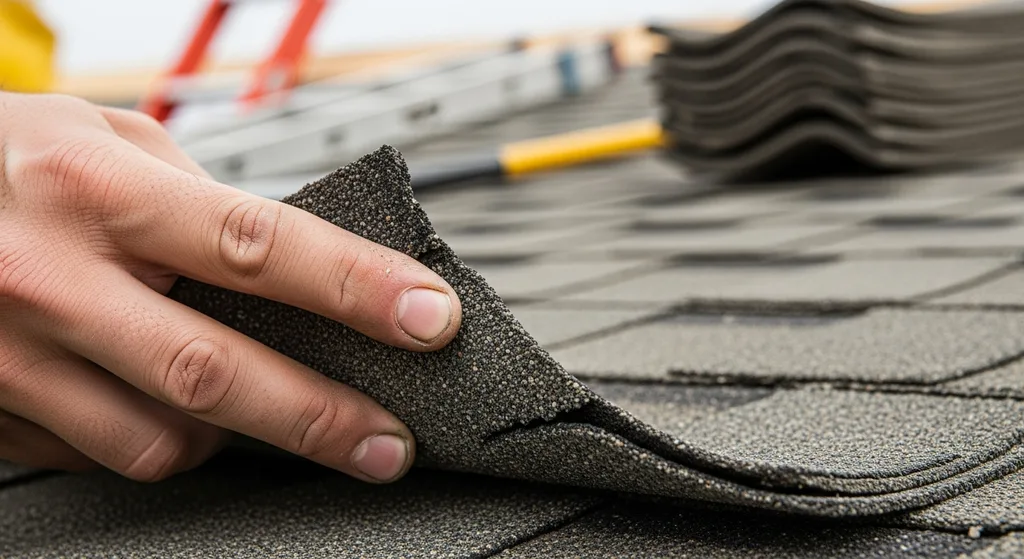
The most obvious sign of an aging roof is significant granule loss, which leaves the asphalt substrate exposed to UV degradation. When shingles reach the end of their functional life, they lose the flexibility required by ASTM D3462, leading to brittle edges that snap under wind pressure. In the Dallas-Fort Worth heat, this process accelerates as thermal expansion cycles cause shingles to ‘bridge’ or buckle over the roof decking. Look for ‘bald spots’ on your architectural shingles where the ceramic granules have washed into the gutters.
If you see the shiny fiberglass mat underneath, the shingle has lost its waterproofing capability and is prone to immediate failure during a North Texas thunderstorm. The National Roofing Contractors Association (NRCA) emphasizes that these symptoms usually manifest after year 15 in high-heat climates like ours.
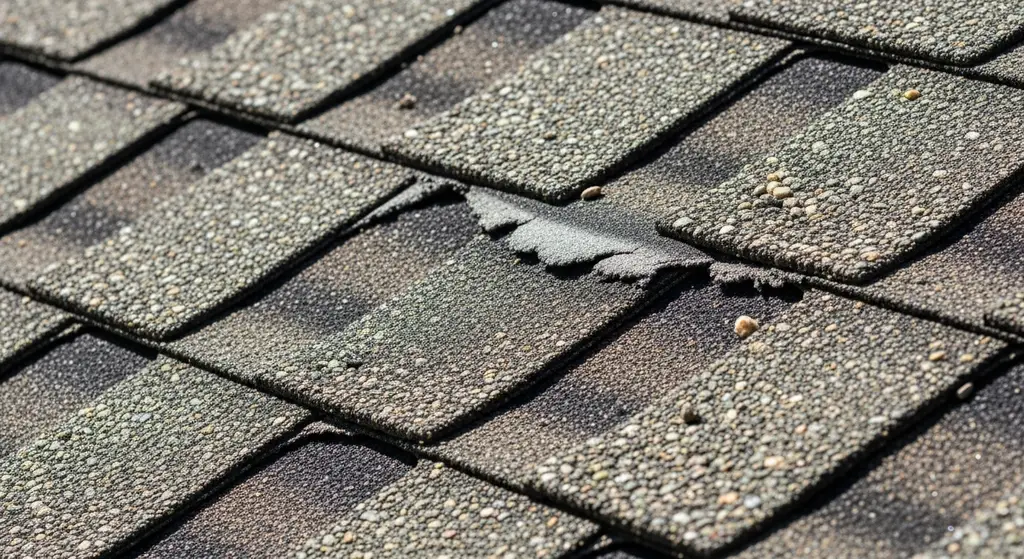
Curling Shingle Edges
Typical Cost: $500 – $1,500 for minor repairs
Prevention: Ensure proper attic ventilation per IRC R806.1
Insurance Coverage: Often considered wear and tear
Code Reference: IRC R905.2
Professional Methods to Verify Roof Age
To accurately determine roof age, I always start by pulling the building permit history from the City of Dallas or relevant DFW municipality. Most professional contractors will also look for a ‘date stamp’ on the underside of shingles if a sample can be safely removed, or check the manufacturing codes on the wrapper if leftovers are in the garage. These codes often follow ASTM D3043 testing protocols and provide a definitive production window. Another reliable method involves inspecting the flashing and underlayment materials.
If I find old organic felt underlayment (ASTM D226 Type I) instead of modern synthetic underlayment, it is a strong indicator the roof was installed prior to the widespread adoption of synthetics in the mid-2000s. We also evaluate the oxidation levels on lead pipe jacks and galvanized valley metal to estimate exposure time in the Texas sun.
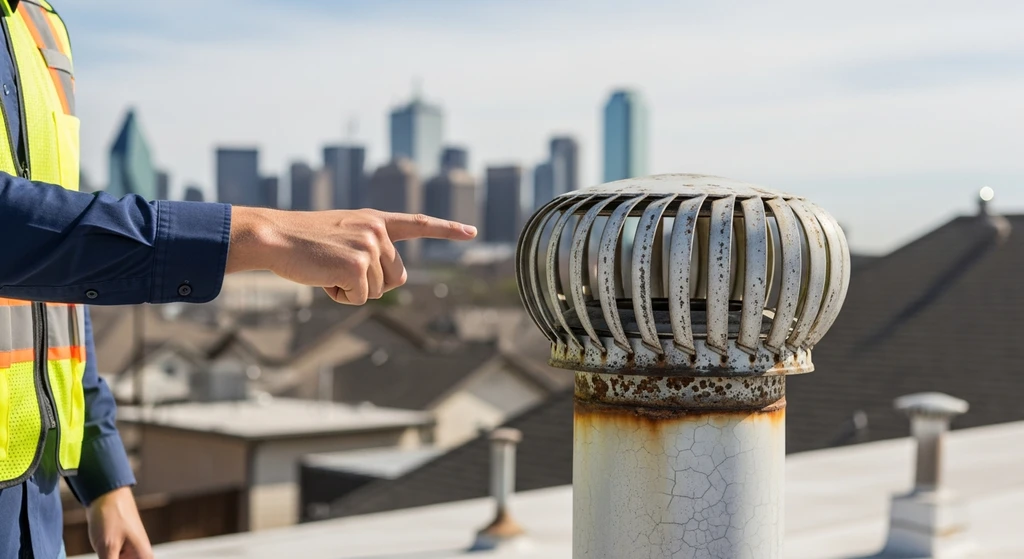
Field Note from Experience
During an inspection in Highland Park, I found a roof that looked brand new but the permit office had no record of a replacement in 20 years. I discovered the previous owner had ‘re-covered’ the roof with a second layer of shingles, a violation of IRC R908.3 in many jurisdictions, which eventually cost the new buyer $18,000 to strip and replace correctly.
How Roof Age Impacts Your Insurance Claim
In the current 2026 Texas insurance market, the age of your roof is the primary factor in determining your premium and claim payout. Most policies in Dallas-Fort Worth now include a ‘Roof Surface Schedule’ that automatically converts your coverage from Replacement Cost Value (RCV) to Actual Cash Value (ACV) once the roof hits 15 years. This means the insurance company will subtract depreciation based on age, often leaving homeowners with a massive out-of-pocket bill. Texas Department of Insurance (TDI) guidelines require carriers to be transparent about these schedules, but many homeowners don’t realize the shift has occurred until a hail storm hits.
If your roof is over 20 years old, you may only receive 30-40% of the total replacement cost after your deductible is applied. Understanding your roof age allows you to shop for ‘Ordinance or Law’ coverage, which helps pay for required upgrades to meet IRC 2021 codes during a replacement.

ACV-Only Policies
Consequence: You may pay 60%+ of the replacement cost yourself on older roofs.
Calculating Roof Depreciation in Dallas
Depreciation is calculated by dividing the current age of the roof by its expected useful life. In the DFW Metroplex, adjusters typically use a 20-year lifecycle for 3-tab shingles and a 25-year lifecycle for architectural shingles, regardless of the ‘Lifetime’ warranty printed on the GAF or CertainTeed packaging. If a 10-year-old roof is damaged, it has 50% depreciation applied if the expected life is 20 years. In Dallas-Fort Worth, expect to pay $450-$750 per square (100 sq.
ft.) for a professional replacement. These are current 2026 Dallas market prices; costs vary by region and can be 15-25% higher in remote Texas areas. Peak pricing occurs during the spring (March-May) storm season when labor demand is highest. Knowing your roof age allows you to calculate exactly how much ‘recoverable depreciation’ you might be owed by your carrier.
Dallas Market Pricing
In Dallas-Fort Worth, expect to pay $5.00-$8.50 per square foot for a full replacement. These are current 2026 Dallas market prices; costs vary by region and can be 15-25% higher in remote Texas areas. Peak pricing occurs spring (March-May) storm season.
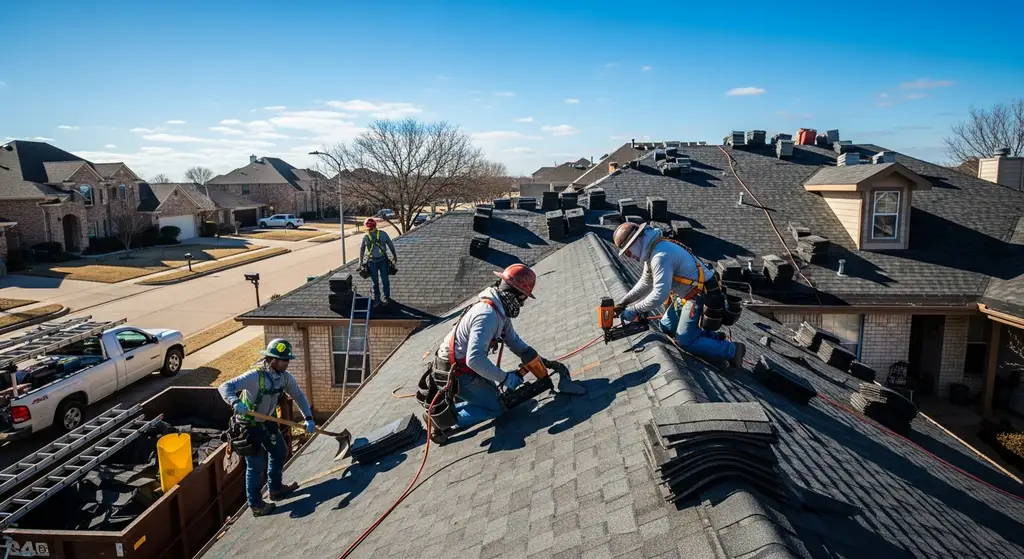
What Contractors Hide About Roof Age and Estimates
Some contractors will try to convince you that a roof is ‘too old to repair’ simply to secure a full replacement contract. While an older roof is harder to work on because the shingles become brittle and fail the ‘nail pull-through’ test (ASTM D1761), a reputable roofer should be able to show you exactly why a repair isn’t feasible. They often hide the fact that they are skipping the replacement of valley flashing or reusing old drip edge to save on labor costs. Always demand a ‘shingle brittle test’ video.
If the contractor can’t lift a shingle 45 degrees without it snapping, the roof is too aged for a localized repair. Furthermore, be wary of any contractor offering to ‘cover your deductible’ on an old roof; this is a violation of Texas HB 2102 and can lead to insurance fraud charges for both the contractor and the homeowner.
What Contractors Hide
Reusing Flashing
The Reality: Contractors save $500+ in materials but increase leak risk on aged roofs.
Skipping Underlayment
The Reality: Reusing old felt over new shingles violates most manufacturer warranties.
External Authoritative Resources
These industry-standard references support the information in this guide:
Building Codes
Frequently Asked Questions
Does a 30-year warranty mean the roof lasts 30 years?
No, manufacturer warranties cover defects, not environmental wear. In Dallas, the NRCA estimates the actual service life of a 30-year shingle is typically 18-22 years due to extreme UV exposure.
Can I tell the roof age from the ground?
You can spot major signs like curling or missing shingles, but a true age assessment requires a physical inspection of granule depth and flashing oxidation per ASTM standards.
How does roof age affect my home value in Dallas?
A roof over 15 years old often becomes a negotiation point in DFW real estate, as buyers may struggle to secure affordable homeowners insurance without a replacement.
What is the ‘brittle test’ for shingles?
It involves lifting a shingle to see if it cracks; if it does, the asphalt has lost its oils, indicating the roof is at the end of its functional life.
Does the City of Dallas require a permit for roofing?
Yes, IRC 2021 codes adopted by Dallas require permits for any replacement exceeding 100 square feet to ensure proper ice barrier and flashing installation.
Will insurance pay for a 20-year-old roof?
If there is sudden storm damage, they may pay, but the payout will be heavily depreciated based on the age of the system under Texas ACV policies.
Final Thoughts
Determining your roof age is not just about aesthetics; it is a financial necessity in the volatile North Texas climate. By combining physical evidence like granule loss with official permit records, you can accurately gauge when to transition from maintenance to replacement. This proactive approach ensures you aren’t left unprotected when the next spring hail storm rolls through the DFW Metroplex. FIELD NOTE: I recently helped a family in Lake Highlands who was facing a $25,000 replacement bill.
By finding the original manufacturer’s batch code in the attic, we proved the roof was only 12 years old rather than the 20 years the insurance adjuster claimed. This single piece of evidence moved their claim from ACV to RCV, saving them over $9,000 in depreciation. Always verify your age before accepting an adjuster’s first word. Contact a professional today to secure your home’s future.
