
Contractor’s Bottom Line
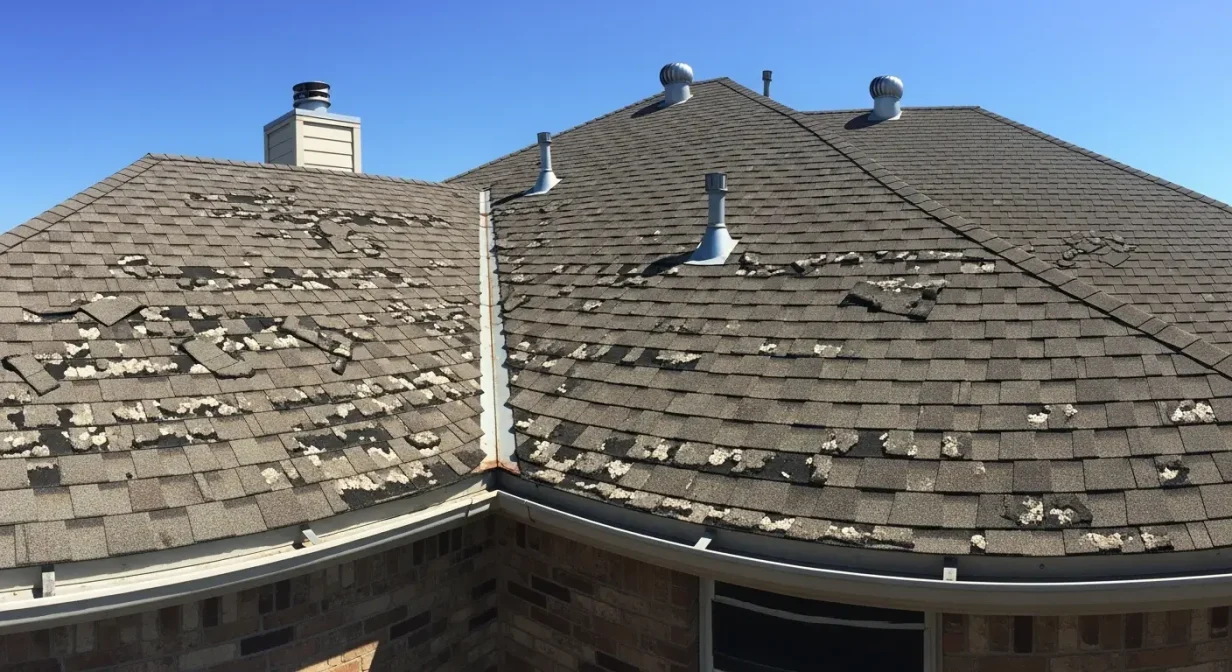
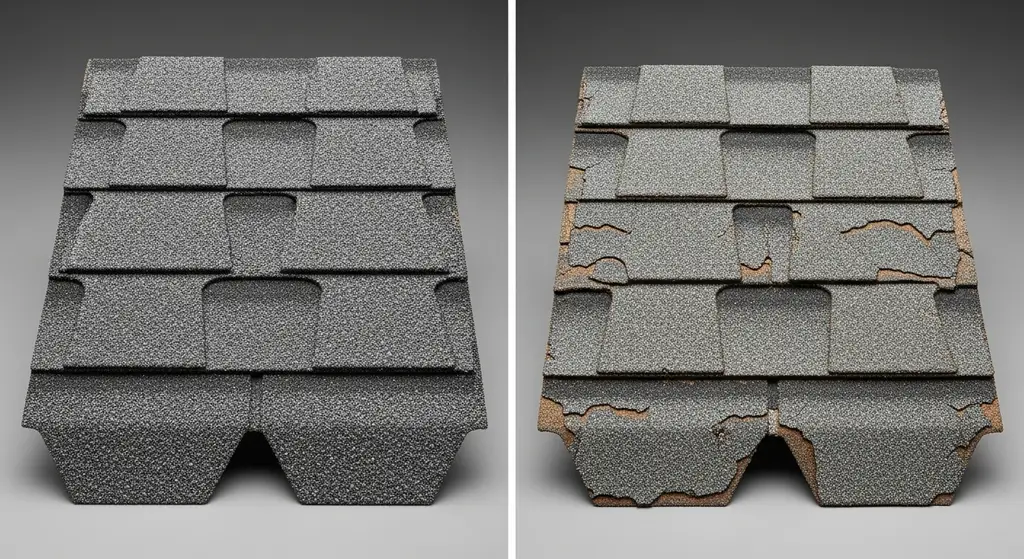
Granular loss on a roof occurs when the protective stone coating of asphalt shingles detaches, exposing the underlying asphalt to UV degradation. Minor granule shedding is normal during installation, but widespread bare spots indicate advanced aging or manufacturing defects that accelerate shingle deterioration. Run your hand over the shingle surface; if significant granules easily brush off, the waterproofing integrity of the roof is compromised.
Key Takeaways
- Granular loss is often accelerated by the 100°F+ temperatures in North Texas, which causes asphalt to soften and release minerals.
- The International Residential Code (IRC) R905.2.1 requires shingles to be tested under ASTM D3462 for tear resistance and granule adhesion.
- Finding sediment in your gutters is a sign of ‘blistering’ or age-related decay that can lead to insurance claim denials if not addressed.
- Localized granular loss from a fallen limb is a repairable issue, but widespread ‘bald spots’ usually signal the end of the roof’s service life.
As a consultant in the DFW Metroplex, I frequently meet homeowners who are alarmed by the ‘sand’ accumulating at their downspouts. This sediment consists of crushed stone granules that are essential for protecting asphalt shingles from the intense Texas sun. Without these granules, the asphalt layer becomes brittle, cracks, and eventually fails to provide a waterproof barrier for your home. FIELD NOTE #1: Last month, a Dallas homeowner in Lake Highlands called me after finding three inches of granules in their gutters.
Upon inspection, I found the 12-year-old 3-tab shingles had lost nearly 50% of their surfacing due to poor attic ventilation and heat. This negligence resulted in a $14,000 replacement that could have been deferred with better airflow management. Understanding the difference between normal ‘shedding’ and functional failure is critical for maintaining your property’s value. We will look at how the National Roofing Contractors Association (NRCA) defines significant loss and what the International Code Council (ICC) requires for a compliant roof system in North Texas.
Recognizing the Signs of Shingle Decay
The most obvious sign of granular loss is the accumulation of mineral debris in your gutter troughs or at the base of downspouts. While new architectural shingles may shed some excess granules shortly after installation, consistent shedding on an older roof is a red flag. You should also look for ‘bald spots’ where the dark, underlying asphalt or shiny fiberglass mat becomes visible to the naked eye. In the Dallas-Fort Worth area, these bald spots often appear first on south-facing slopes due to maximum UV exposure.
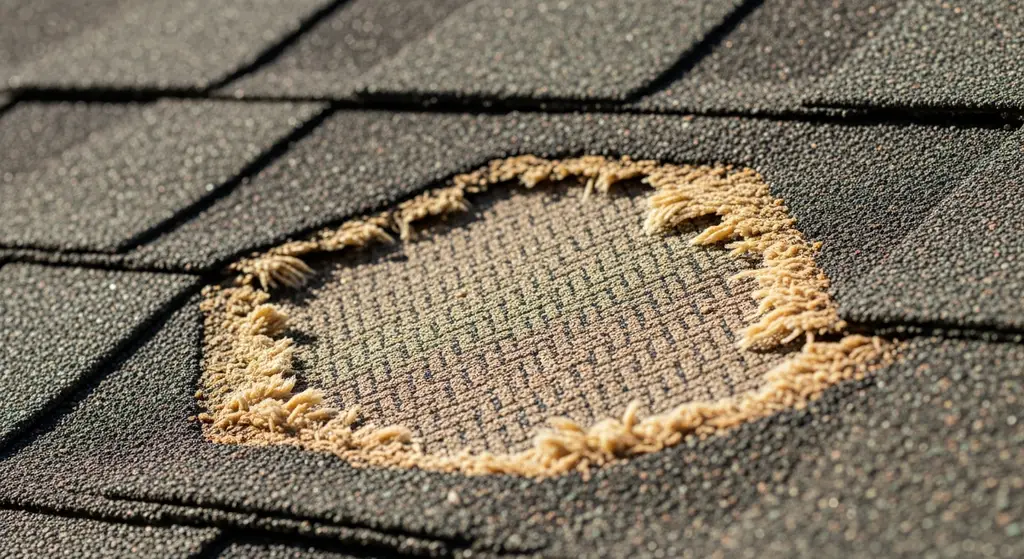
When the asphalt is exposed, it begins to ‘cook’ in the sun, leading to a condition known as thermal cracking. If you notice a shimmering or metallic reflection on your roof during the afternoon, it often indicates that the protective granules are gone and the fiberglass reinforcement is exposed.
| Symptoms of Granule Loss | |
|---|---|
| Gutter Sediment | Heavy mineral accumulation in troughs |
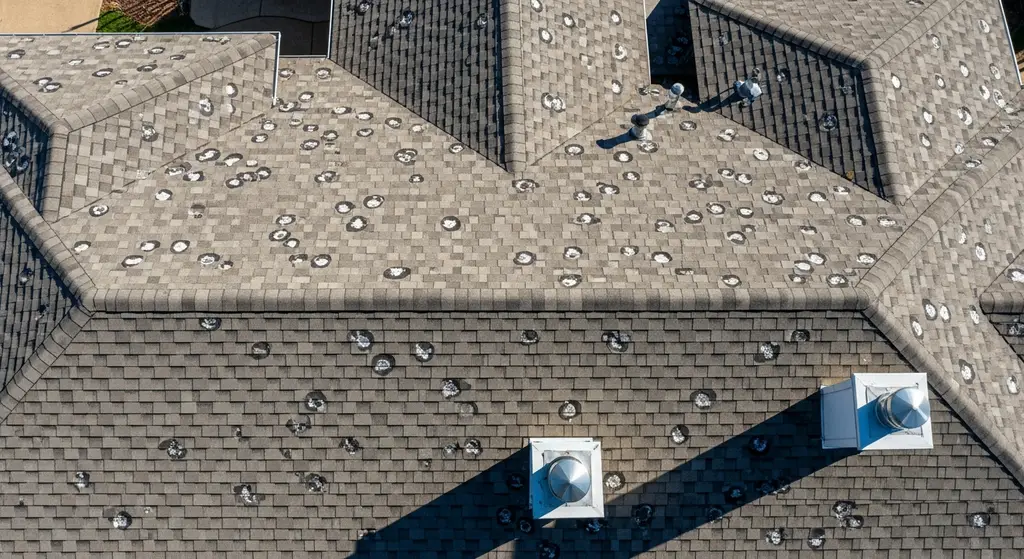
| Pitted Surface | Small circular voids from hail impact |
| Fiberglass Exposure | Shiny or ‘glittery’ patches on shingles |
Why Roofs Lose Granules in North Texas
The primary driver of granular loss in Dallas is the extreme temperature fluctuations that characterize our climate. Asphalt shingles expand and contract daily; over time, this movement loosens the bond between the granules and the asphalt substrate. Furthermore, high-velocity winds and hail common in the DFW Metroplex physically dislodge these minerals, leaving the roof vulnerable to further decay. Poor attic ventilation is another silent killer that accelerates granular loss from the inside out.
When attic temperatures exceed 150°F, the shingle’s asphalt binder softens, making it easier for granules to wash away during heavy rain. We ensure all specifications meet ASTM D4869 for underlayment to provide a secondary line of defense when the primary shingle layer begins to shed its protective coating.
Thermal Blistering
Typical Cost: $1,200 – $3,000
Prevention: Improve attic ventilation to meet IRC R806.1
Insurance Coverage: Rarely covered (maintenance issue)
Code Reference: IRC R806.1
Field Note from Experience
I recently inspected a property in Richardson where the homeowner’s insurance claim for ‘hail’ was denied. The adjuster argued the granular loss was ‘wear and tear’ because there was no bruising of the mat. I used a moisture meter to prove that the loss had already led to sub-surface saturation, eventually securing a $16,500 settlement for the client.
Professional Inspection Protocols
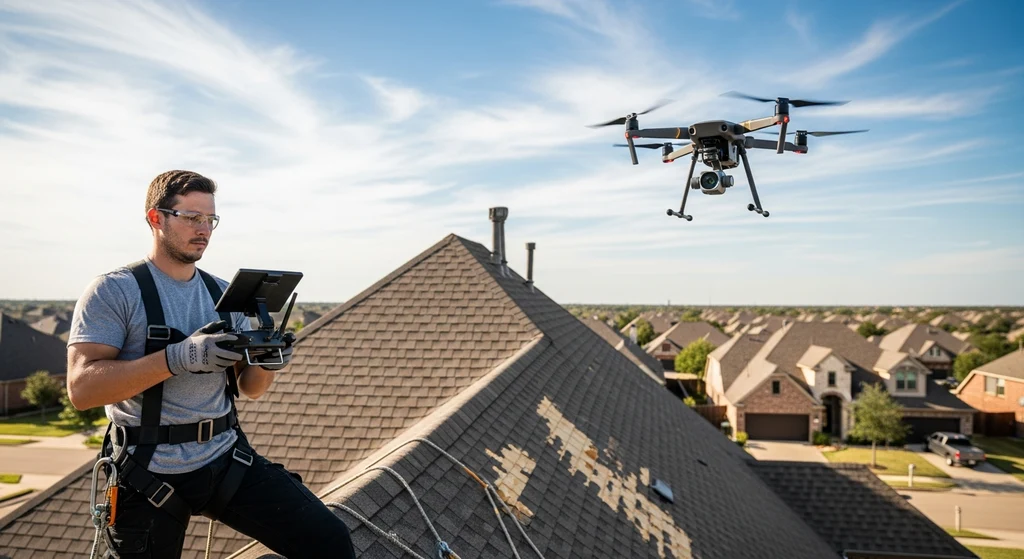
A proper assessment of granular loss requires more than just a quick look from the driveway. At my firm, we follow Occupational Safety and Health Administration (OSHA) fall protection guidelines to perform close-up physical inspections. We look for ‘scuffing’ caused by foot traffic and ‘bruising’ caused by hail, both of which accelerate mineral shedding and are often overlooked by untrained eyes. We also utilize high-resolution drone photography to map the extent of the loss across the entire roof plane.
This data allows us to determine if the loss is localized—perhaps due to an overhanging tree limb—or systemic across the entire structure. According to ASTM International standards, any shingle that has lost more than 15% of its granules is considered to be in a state of accelerated decline.
Power Washing
Consequence: Never let a contractor power wash shingles; it strips granules instantly and voids all warranties.
Should You Repair or Replace?
Deciding between a repair and a full replacement depends on the age of the roof and the uniformity of the granular loss. If the loss is restricted to a single slope or a few damaged shingles, a targeted repair using GAF Timberline HDZ or CertainTeed Landmark shingles can extend the roof’s life. However, if ‘bald spots’ are visible on multiple facets, the asphalt has likely reached its oxidation limit. In Dallas, we must also consider the ‘Two-Layer Rule’ found in IRC R907.3.
If your roof already has two layers of shingles and is experiencing widespread granular loss, code requires a full tear-off down to the CDX plywood or OSB decking. Attempting to patch a roof that is shedding granules systemically is a waste of capital, as the surrounding shingles are often too brittle to hold new fasteners.
Dallas Market Pricing
In Dallas-Fort Worth, expect to pay $450-$800 for minor granular loss repairs. These are current 2026 Dallas market prices; full replacements can be 20% higher in North Dallas neighborhoods like Preston Hollow. Prices fluctuate seasonally, with spring storm season driving 20-30% premiums.
What Contractors Hide
Granule ‘Rejuvenation’ Sprays
The Reality: Most ‘roof juice’ products are temporary oil coatings that do not replace lost minerals or restore IRC compliance.
External Authoritative Resources
These industry-standard references support the information in this guide:
Building Codes
Frequently Asked Questions
Is granular loss covered by insurance?
It depends on the cause; insurance typically covers sudden loss from hail or wind, but excludes gradual loss from age or lack of maintenance. An NRCA inspection can help document ‘proximate cause’ for your claim.
How many granules in gutters is ‘normal’?
New roofs will shed about 5-10% of their granules in the first year as ‘hitchhikers.’ Beyond that, any visible accumulation in the gutters suggests accelerated wear under ASTM D3462 standards.
Can I just paint over shingles that have lost granules?
No, painting shingles provides no UV protection and can trap moisture, leading to rot in the OSB or CDX plywood decking beneath. It also violates most manufacturer warranties and IRC codes.
Does heat cause granular loss?
Yes, in Dallas-Fort Worth, attic temperatures can reach 160°F, which softens the shingle’s asphalt and causes the granules to detach during rain. Proper ventilation per IRC R806.1 is essential.
What happens if I ignore granular loss?
The exposed asphalt will crack and curl within 12-24 months, leading to leaks that damage your insulation and ceiling drywall. This can eventually lead to mold issues that FEMA warns are costly to remediate.
Are architectural shingles better at holding granules?
Generally, yes; high-quality architectural shingles like Owens Corning Duration use advanced binders that meet higher ASTM standards for granule adhesion compared to basic 3-tab shingles.
Final Thoughts
Granular loss is more than an aesthetic issue; it is a ticking clock for your roof’s structural integrity. In the DFW Metroplex, the combination of high UV indices and seasonal storms makes regular monitoring of your shingle health a necessity. By following NRCA guidelines and ensuring your roof meets IRC 2021 standards, you can protect your home from the compounding costs of water damage. FIELD NOTE #3: A client in University Park recently ignored minor granular loss for three years.
What started as a $1,200 repair turned into a $22,000 whole-house remediation project after a spring storm exploited the bald spots and flooded the master suite. Don’t wait for a leak to act—if you see ‘sand’ in your gutters, call a professional consultant today.
