
Contractor’s Bottom Line
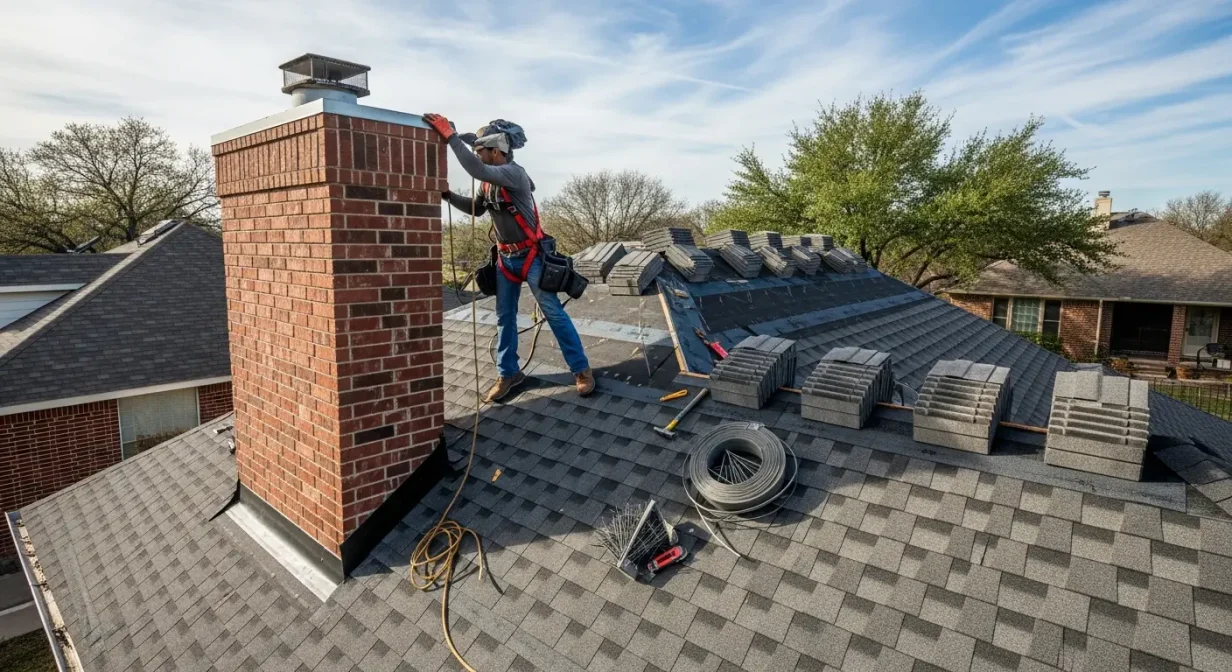
A roof with a chimney requires specialized flashing systems to prevent water intrusion at the intersection of the roofing materials and the masonry. IRC R903.2 mandates step flashing integrated with counter flashing, which must be mortared or caulked into the chimney masonry joints. Inspect the mortar joints and flashing seals annually, as thermal expansion differences between wood and masonry routinely break these watertight connections.
Key Takeaways
- IRC R903.2.2 mandates a chimney cricket for any chimney wider than 30 inches to divert water.
- Counter-flashing must be reglet-cut into masonry rather than just surface-mounted with sealant for long-term Dallas heat resistance.
- ASTM D4869 felt underlayment is the minimum, but synthetic underlayment offers superior UV protection during DFW summer installs.
Managing a roof with chimney requires more than just standard asphalt shingles; it demands precision at the intersection of masonry and roofing. In the Dallas-Fort Worth area, our extreme temperature swings cause significant thermal expansion, often tearing inferior sealants at the chimney base. FIELD NOTE #1: Last month, a Dallas homeowner in Highland Park called me after a ‘minor’ chimney leak resulted in $12,000 in hardwood floor damages. The previous roofer had skipped the step-flashing and relied entirely on caulk, which failed after just two seasons of North Texas heat.
This guide outlines the technical requirements established by the National Roofing Contractors Association (NRCA) and the International Code Council (ICC). We will examine how to identify failures before they compromise your structural CDX plywood decking or interior ceilings.
Identifying Chimney Leaks and Warning Signs
The first sign of a failing roof with chimney integration is often subtle, appearing as small water spots on the ceiling near the fireplace. In the DFW Metroplex, high-wind events often push rain behind loose counter-flashing that has pulled away from the brick. Look for rusted metal at the base or shingles that appear to be lifting away from the masonry wall. If you see ‘shingle kicking’ or buckling around the chimney base, it often indicates that the underlayment, potentially ASTM D226 Type II felt, has saturated and expanded.
In Dallas, our intense UV exposure can degrade exposed sealants in as little as three years, leaving the junction vulnerable. Check for any moss or algae growth at the high side of the chimney, which suggests standing water and poor drainage.
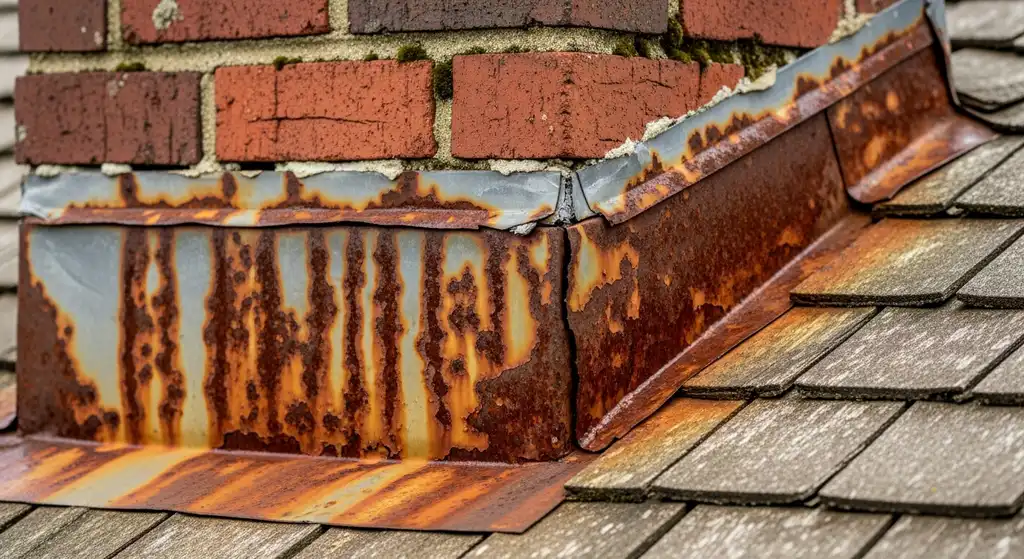
Visible roofing cement or ‘tar’ smeared on brick
Consequence: This is a temporary fix that hides leaks while the wood rots underneath.
Field Note from Experience
During an inspection in Plano, I found a chimney ‘repaired’ with five gallons of roofing cement. It looked sealed, but water was trapped behind the tar, rotting the oriented strand board (OSB) decking so badly I could put my finger through it.
IRC Building Codes for Chimneys and Flashing
The International Residential Code (IRC) 2021, currently applicable in Dallas as of 2026, provides strict mandates for chimney transitions. IRC R905.2.8.2 requires that flashing be installed in a manner that prevents moisture from entering the wall or roof through joints. This specifically means step-flashing must be woven into every course of architectural shingles. Furthermore, IRC R903.2.2 is the most frequently violated code in North Texas regarding chimneys.
It requires a ‘cricket’ or ‘saddle’ if the chimney is wider than 30 inches and does not intersect the ridge. Without this diversion structure, water pools behind the chimney, eventually bypassing even the best ASTM D1970 ice and water shield. Failure to install a cricket during a reroof is a major code violation in the Dallas County area.
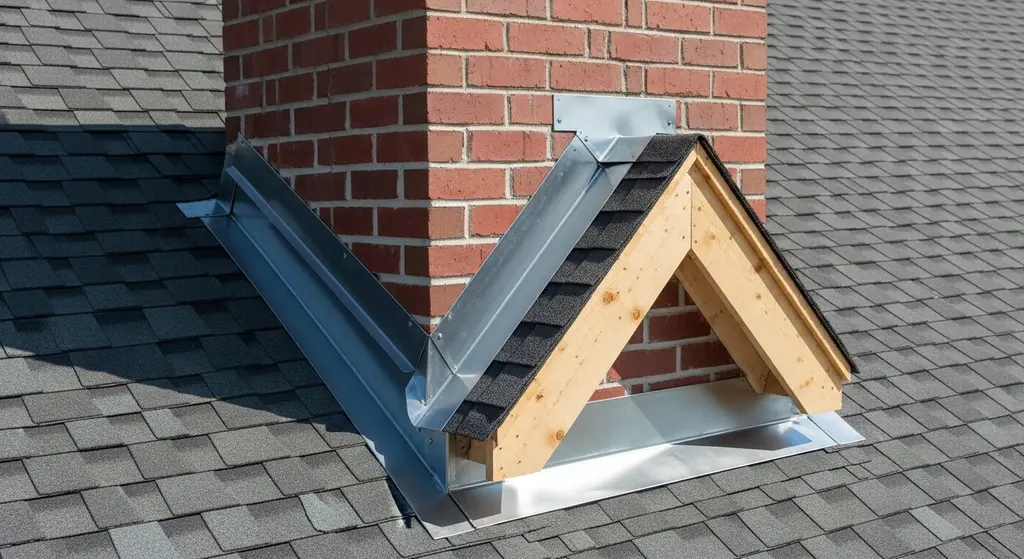
| Code Compliance Checklist | |
|---|---|
| Flashing Material | G-90 Galvanized or Copper (ASTM A653) |
| Minimum Cricket Height | Determined by roof pitch per IRC |
Why Chimney Flashing Fails in North Texas
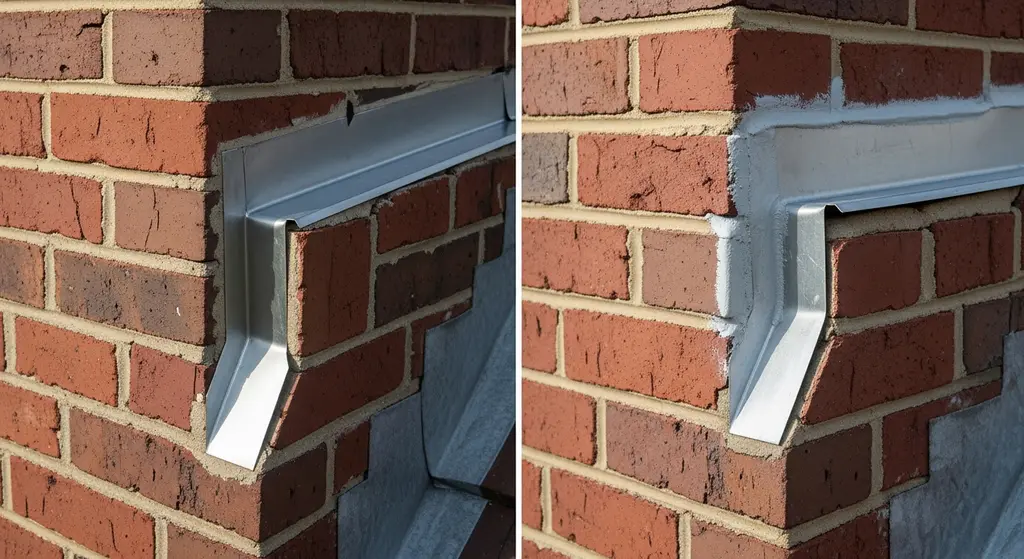
The primary root cause of failure for a roof with chimney in Dallas is differential movement between the heavy masonry and the flexible wood frame. As the DFW Metroplex experiences 40-degree temperature swings, the chimney and the roof deck expand and contract at different rates. If the flashing is nailed to both the chimney and the deck, it will eventually tear or pull loose. Proper installation requires a two-part flashing system: the base flashing attached to the deck and the counter-flashing embedded in the masonry.
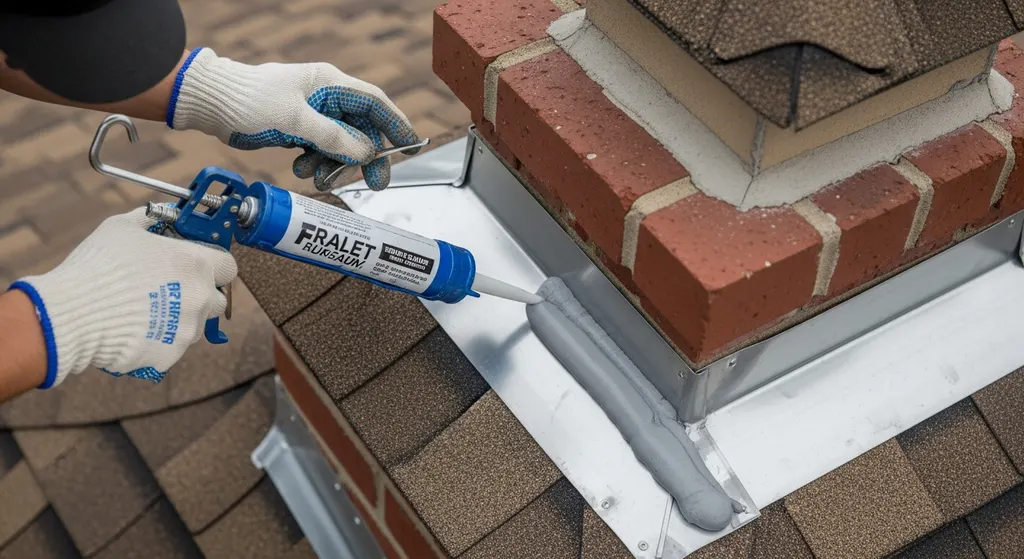
Many contractors in North Texas skip the reglet-cut counter-flashing, opting instead to nail a flat piece of metal to the brick and ‘seal’ the top with caulk. This method fails when the sealant dries out under the Texas sun, costing homeowners thousands in avoidable repairs.
What Contractors Hide
Reusing old flashing
The Reality: Contractors often reuse rusted flashing to save $200 in labor, but it almost always leaks within 24 months.
Long-Term Maintenance and Prevention
To protect your roof with chimney, I recommend a professional inspection every two years, especially after the spring hail season in Dallas. Ensure that your contractor uses a high-quality polyurethane sealant rather than standard silicone, as it bonds better to both brick and metal. If you are replacing your roof, specify the use of Advantech or CDX plywood around the chimney for superior moisture resistance compared to standard OSB. In Dallas-Fort Worth, expect to pay $800-$1,500 for a full chimney flashing replacement.
These are current 2026 Dallas market prices; costs vary by region and can be 15-25% higher in remote Texas areas. Peak pricing occurs during the spring (March-May) storm season. Investing in a stainless steel chimney cap can also prevent water from entering the flue and damaging the interior masonry crown.
Dallas Market Pricing
In Dallas-Fort Worth, expect to pay $800-$1,500 per chimney for flashing. These are current 2026 Dallas market prices; costs vary by region and can be 15-25% higher in remote Texas areas. Peak pricing occurs spring (March-May) storm season.
External Authoritative Resources
These industry-standard references support the information in this guide:
Building Codes
Frequently Asked Questions
How do I know if my chimney leak is from the roof or the brick?
If the leak occurs immediately during rain, it is likely the flashing. If it starts hours after rain begins, the masonry may be porous, requiring a silane-based water repellent as recommended by the NRCA.
Is a chimney cricket required by law in Dallas?
Yes, for chimneys wider than 30 inches, IRC R903.2.2 mandates a cricket. Most Dallas building inspectors will fail a roof replacement if this is missing.
What is the best flashing material for Dallas homes?
G-90 galvanized steel or 16oz copper are the gold standards. They meet ASTM A653 requirements and withstand the high thermal expansion rates common in North Texas.
Final Thoughts
A roof with chimney is a complex architectural feature that requires specialized knowledge to remain watertight. By adhering to IRC 2021 standards and ensuring proper cricket installation, you can avoid the most common causes of structural rot in Dallas homes. FIELD NOTE #3: I once saw a DFW homeowner lose a $25,000 insurance claim because their policy had a ‘seepage’ exclusion, and the chimney leak had been ongoing for months. Don’t wait for a ceiling collapse; address chimney flashing issues at the first sign of moisture.
Always hire a contractor who can provide proof of NRCA membership and a clear plan for reglet-cut flashing.
