
Contractor’s Bottom Line
Wet roof decking requires immediate assessment because prolonged moisture exposure rapidly degrades the internal glue bonds of wood structural panels. OSB swells and delaminates at the edges when saturated, while plywood is more resistant but can still develop fungal rot. Probe the panels for soft spots and replace any sections that exhibit structural compromise before covering them with underlayment.
Key Takeaways
- Moisture content must be verified below 19% using a professional meter before installing asphalt shingles.
- Oriented strand board (OSB) is more susceptible to edge swelling than CDX plywood when exposed to North Texas rain.
- IRC R803.2.1 requires roof sheathing to maintain structural spans; wet-damaged wood often fails this code.
- Synthetic underlayment meeting ASTM D4869 should be applied immediately once the deck is dry to prevent further issues.
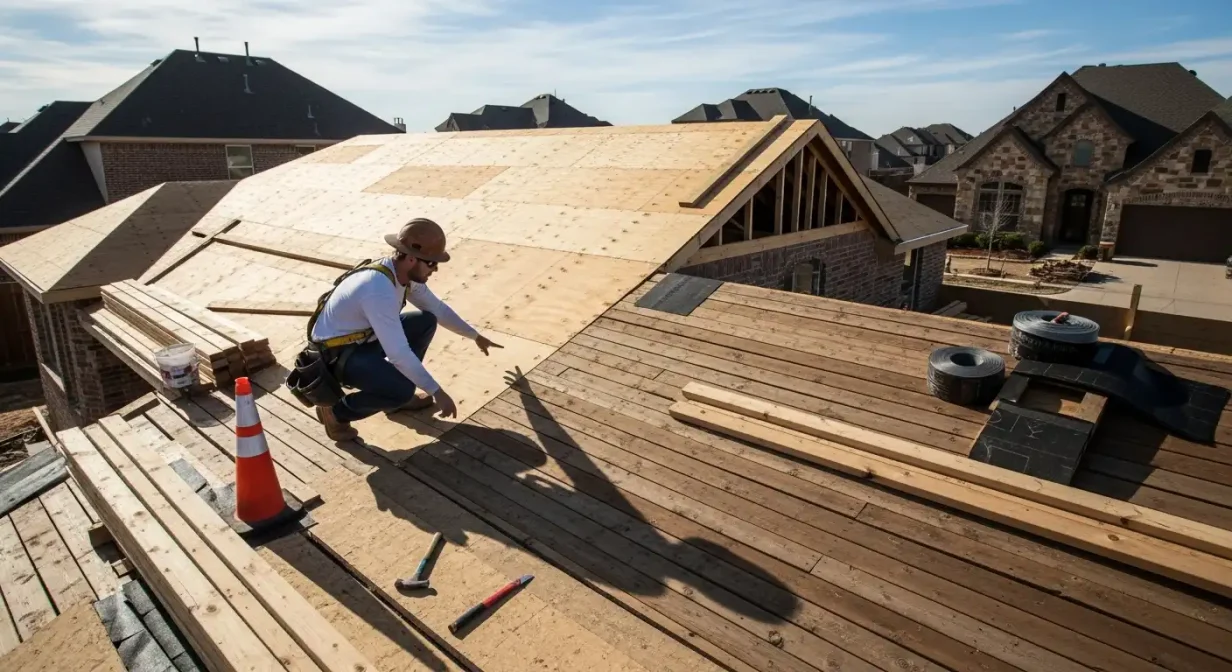
As a consultant in Dallas, I often see homeowners panic when a sudden thunderstorm hits during a roof replacement. It is a valid concern because moisture trapped under new architectural shingles can lead to rot, mold, and structural failure. Understanding how different materials like CDX plywood and OSB react to water is the first step in protecting your investment. FIELD NOTE #1: Last spring in a North Dallas neighborhood, a sudden microburst caught a local crew mid-tear-off, soaking the exposed OSB decking.
The homeowner was told it would ‘dry out under the shingles,’ but I was called in when the ceiling started sagging three weeks later. We found that the trapped moisture had nowhere to go, causing the OSB to lose its structural bond and requiring a full $14,000 deck replacement. Whether your decking got wet during a storm or due to a long-term leak, the response must be calculated and code-compliant. We use standards from ASTM International and the International Code Council (ICC) to determine if wood is salvageable.
In the Dallas-Fort Worth climate, the high heat can actually bake moisture into the wood if it isn’t ventilated properly during the drying phase.
Identifying Damage After Decking Gets Wet
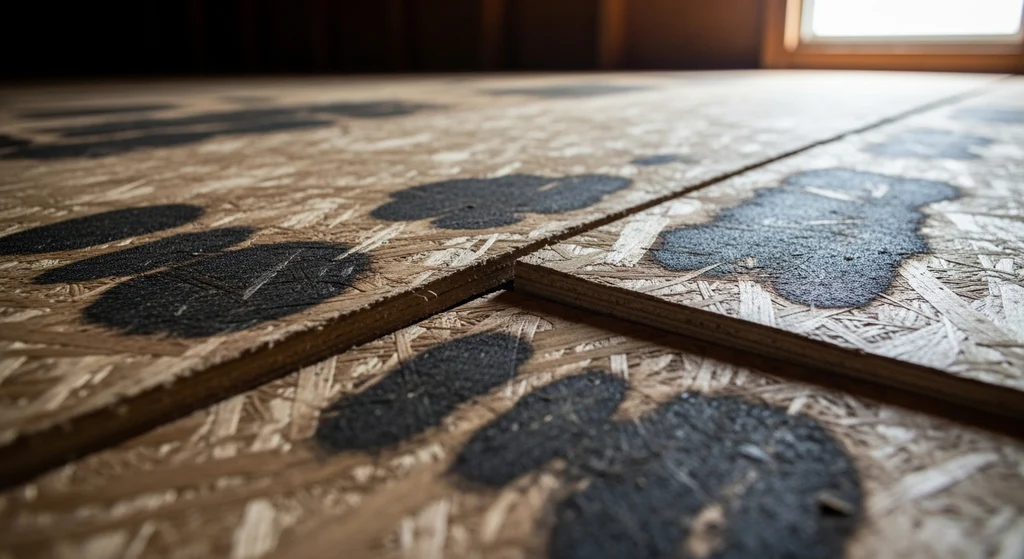
When roof decking gets wet, the primary concern is ‘wicking’ at the edges of the panels. For oriented strand board (OSB), this often manifests as ‘mushrooming,’ where the edges swell significantly thicker than the rest of the board. This creates uneven ridges that will be visible through your new asphalt shingles and can even cause premature shingle cracking. CDX plywood reacts differently, often showing signs of delamination where the veneer layers begin to peel apart.
You should also check for ‘soft spots’ between the rafters, which indicates that the internal glues have failed per ASTM D3043 standards. If you see black or green spotting, mold spores are already colonizing the wood fibers, which is a major health and structural red flag.
Spongy feel when walking on the deck
Consequence: Indicates the internal resins have failed and the deck cannot support a snow or wind load.
Visible ‘H-clip’ popping
Consequence: Shows the wood has expanded beyond its original dimensions, breaking the code-required spacing.
Immediate Steps to Dry Wet Roof Decking
If your decking is currently wet, the first priority is air circulation. In the Dallas-Fort Worth area, we utilize high-powered fans in the attic space to pull moisture out from the underside of the sheathing. You must remove any wet felt underlayment or saturated synthetic underlayment, as these materials trap water against the wood and prevent evaporation. Never install shingles over wood that feels damp to the touch or registers above 19% on a moisture meter.
The National Roofing Contractors Association (NRCA) warns that ‘sealing in’ moisture leads to deck buckling as the wood tries to expand under the Texas sun. If the rain is ongoing, a temporary tarp secured with furring strips is the only way to prevent further saturation of the rafters and insulation.

Field Note from Experience
On a project in Lakewood, I discovered that a crew had tarped over wet CDX plywood without removing the soaked felt. After 48 hours of 90-degree Dallas heat, the attic reached 130 degrees, effectively steaming the plywood until it warped. We had to replace 12 sheets of decking that would have been fine if they had just been allowed to breathe for one afternoon.
IRC Code Compliance for Wet Decking
The International Residential Code (IRC) is very specific about the structural integrity of roof sheathing. Under IRC R803.2.1, all wood-based panels must conform to DOC PS 1 or DOC PS 2 standards for structural use. When wood gets wet and stays wet, it no longer meets these manufacturing standards for span rating and nail-holding strength. Furthermore, IRC R905 requires that the roof deck be ‘solid’ and ‘smooth’ before the application of any roof covering.
Swollen OSB edges or delaminated plywood creates an uneven surface that violates this requirement. In Dallas, city inspectors will often fail a roof mid-progress if they see ‘telegraphing’ ridges caused by wet, swollen decking boards.

| Code Compliance Checklist | |
|---|---|
| IRC R803.2.1 | Requires minimum 15/32-inch thickness for most 16-inch spans |
| ASTM D226 | Standard for underlayment used over the deck |
| OSHA 1926.501 | Fall protection requirements for deck inspection |
Repair vs. Replace: Making the Call
Deciding whether to replace wet decking involves assessing the ‘bounce’ and the ‘bond.’ If the wood is CDX plywood and it only got wet once and dried quickly without delaminating, it is usually fine to keep. However, if the material is standard OSB and the edges have swollen more than 1/8th of an inch, replacement is the safer, code-compliant choice. In the Dallas market, replacing a few sheets during a roof job is relatively inexpensive compared to a callback. We generally recommend replacement if there is any sign of fungal growth or if the wood fails the ‘screw test’—where a fastener pulls through the wood with minimal resistance.
For high-end homes in areas like Highland Park, we often specify Advantech decking, which carries a 50-year warranty and a 500-day no-sanding guarantee against moisture damage.
Dallas Market Pricing
In Dallas-Fort Worth, expect to pay $95-$135 per sheet for decking replacement. These are current 2026 Dallas market prices; costs vary by region and can be 15-25% higher in remote Texas areas. Peak pricing occurs during the spring (March-May) storm season.
What Contractors Hide
Contractors ‘sanding’ swollen OSB edges
The Reality: This removes the waterproof resin layer, making the board even more vulnerable to future rot.
Reusing old flashing
The Reality: This is a common way moisture gets back into ‘new’ decking; always insist on new G-90 galvanized flashing.
External Authoritative Resources
These industry-standard references support the information in this guide:
Building Codes
Frequently Asked Questions
How long does it take for roof decking to dry?
In Dallas, drying time depends on humidity, but typically takes 24 to 48 hours with proper ventilation. The NRCA recommends using a moisture meter to ensure levels are below 19% before proceeding.
Can I install shingles over wet plywood?
No, installing over wet plywood traps moisture, leading to rot and voiding manufacturer warranties from companies like Owens Corning. It also violates IRC R905 requirements for a smooth, solid deck.
Does insurance cover wet roof decking?
If the decking got wet due to a covered peril like hail or wind damage, replacement is often covered under ‘Ordinance or Law’ provisions. Always document the moisture readings for your adjuster.
Is OSB or plywood better for wet conditions?
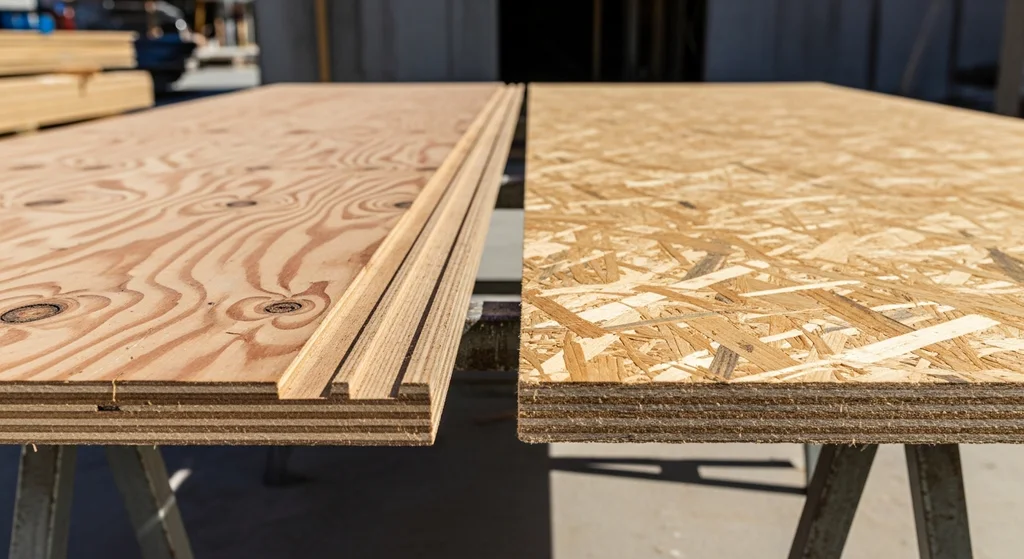
CDX plywood generally handles moisture better because it dries faster and resists edge swelling. However, premium OSB like Advantech is specifically engineered to withstand moisture during construction better than standard panels.
What happens if my contractor roofed over wet wood?
You will likely see ‘telegraphing’ or ridges in your shingles within months. This structural failure often requires a full tear-off and replacement to meet ASTM D3043 standards.
How do I know if my decking is rotten or just wet?
Wet wood is temporary; rot is permanent. If the wood fibers crumble when poked with a screwdriver or show dark fungal staining, it has lost structural integrity and must be replaced.
Final Thoughts
When your roof decking gets wet, time and ventilation are your two best friends. Rushing to install shingles over a damp substrate is a recipe for a five-figure failure that no manufacturer warranty will cover. By adhering to IRC R803.2.1 and ensuring your Dallas roofing contractor uses a moisture meter, you can protect your home’s structural integrity. FIELD NOTE #3: I recently helped a family in Frisco whose contractor insisted on roofing over ‘slightly damp’ decking to beat a deadline.
Six months later, the architectural shingles were buckling so badly the roof looked like a washboard. The homeowner had to pay $18,000 out of pocket for a total replacement because the original contractor disappeared. Don’t let a two-day drying delay turn into a permanent financial disaster. Always demand a moisture check.
