
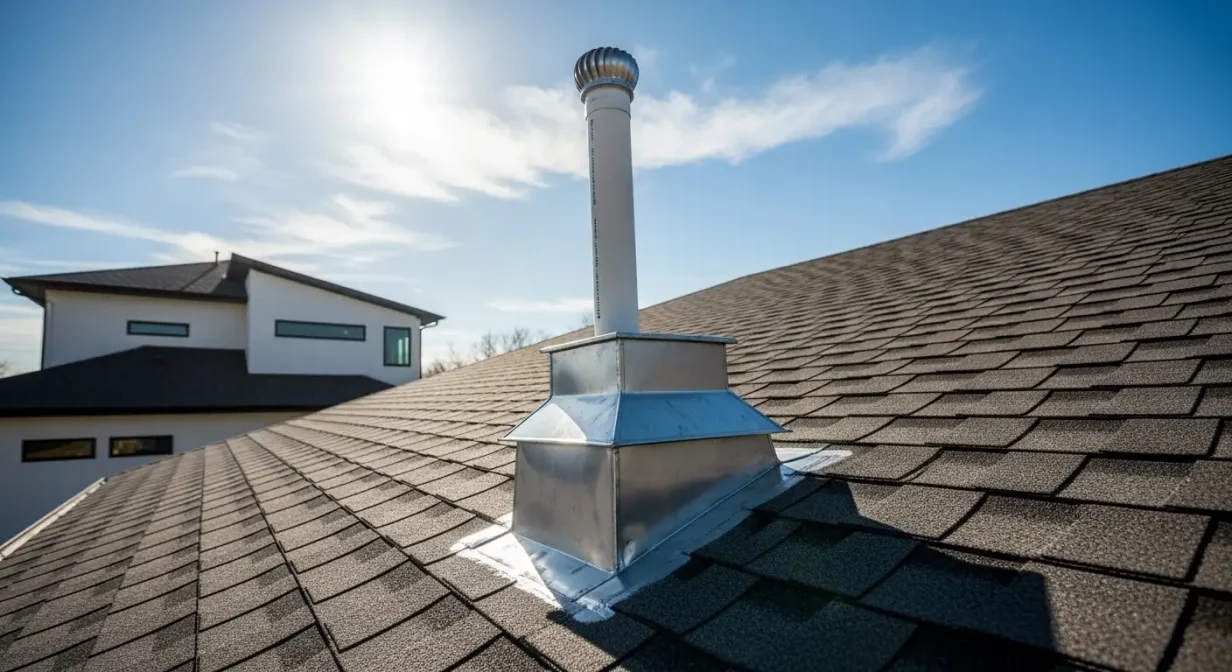
Contractor’s Bottom Line
Roof boots seal the cylindrical penetrations, such as plumbing vents, where they exit through the roof decking. Made from neoprene or rubber compounds, these boots degrade rapidly under UV exposure, cracking and allowing water to run down the outside of the vent pipe. Inspect the rubber collar for cracking during every roof assessment and replace the boot entirely rather than attempting a patch repair.
Key Takeaways
- The International Residential Code (IRC) R905.2.8.2 requires all pipe penetrations to be flashed with approved materials to prevent moisture ingress.
- Standard EPDM rubber boots often crack prematurely in the 100-degree Dallas heat, leading to attic mold and insulation damage.
- Upgrading to a silicone or lead roof boot can extend the life of your penetration seals to match the 30-year lifespan of architectural shingles.
As a consultant in the DFW Metroplex, I have walked thousands of roofs after spring hail storms. It is rarely the shingles themselves that fail first; rather, it is the small, often overlooked components like roof boots that give way to the elements. These flashing units surround plumbing vent pipes and are the primary line of defense against water entering your attic space. FIELD NOTE #1: I recently inspected a home in North Dallas where a $20 plastic roof boot had cracked, causing a slow leak that went unnoticed for two seasons.
By the time the homeowner saw a water spot on their ceiling, the repair bill had ballooned to $4,200 due to structural rot in the CDX plywood and extensive mold remediation. This is why understanding the condition of your pipe jacks is critical for every North Texas property owner. Maintaining these seals is not just about leak prevention; it is about adhering to the standards set by the National Roofing Contractors Association (NRCA). Proper installation ensures that your roofing system functions as a cohesive unit, shedding water effectively during our intense seasonal downpours.
In this guide, we will break down the technical requirements and material choices that determine the longevity of your roof’s penetrations.
Identifying Failing Roof Boots Before the Next Storm
Detecting a failing roof boot requires a keen eye for material degradation, particularly in the harsh North Texas climate. The most obvious sign is a ‘collar’ that has pulled away from the PVC vent pipe, creating a direct path for rainwater to follow the pipe into the building envelope. You should look for visible cracking or ‘alligatoring’ on the rubber surface, which indicates that the UV stabilizers in the EPDM have failed. Inside the attic, look for dark staining or moisture tracks along the vent pipes during a rainstorm.
If you notice a musty odor or damp insulation near the peak of your roof, it is highly likely that a pipe jack has reached the end of its service life. These symptoms often precede visible ceiling damage, making early detection a significant cost-saving measure for any homeowner.
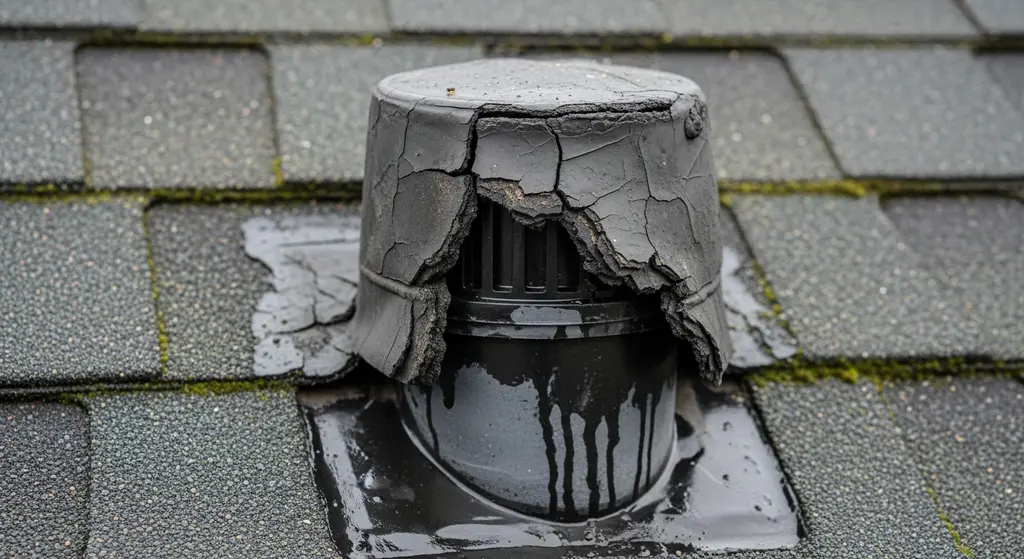
Cracked Rubber Collar
Typical Cost: $350 – $600
Prevention: Install silicone-based boots with 20-year UV ratings
Insurance Coverage: Typically excluded if deemed wear and tear
Code Reference: IRC R905.2.8.2
Code Compliance and IRC R905 Standards
The International Residential Code (IRC) is very specific regarding how penetrations must be handled to maintain a weather-tight seal. According to IRC R905.2.8.2, flashings shall be installed at wall and roof intersections, at gutters, and at penetrations. In Dallas, local building officials strictly enforce these requirements during re-roofing inspections to ensure that new asphalt shingles are properly integrated with the flashing flange. Failure to comply with these codes can lead to failed municipal inspections and potential issues during a home sale.
The code intent is to ensure that water is diverted over the shingles rather than under them. This requires the top flange of the roof boot to be tucked under the course of shingles above the pipe, while the bottom flange remains exposed on top of the shingles below.
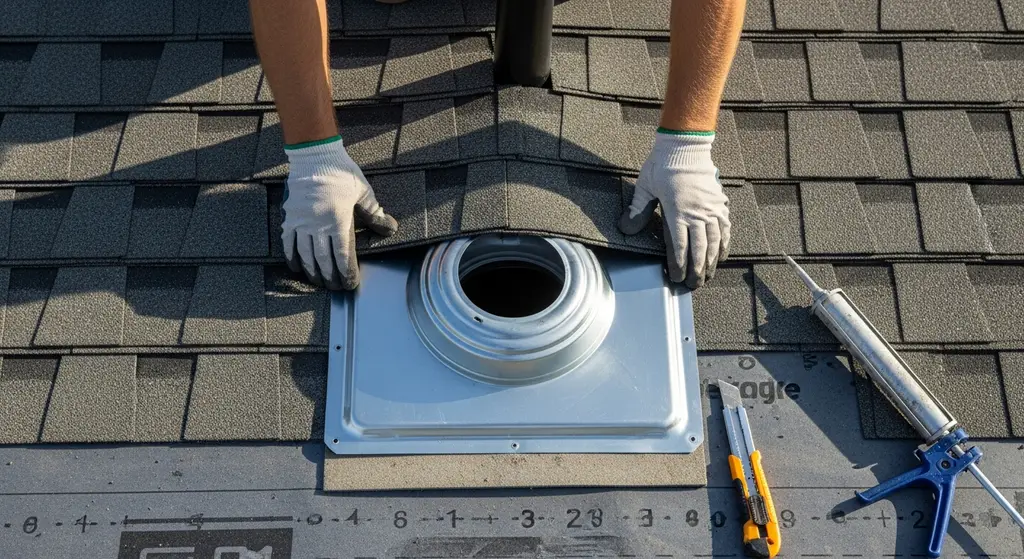
Field Note from Experience
During an inspection in Plano, I found a contractor had simply nailed a new boot on top of the shingles and heavily caulked it. This is a major code violation that I see far too often; the first heavy rain washed away the sealant, causing a $1,500 repair. Always ensure your contractor is ‘weaving’ the flashing into the shingle courses as required by IRC 2021 standards.
Material Selection: EPDM vs. Silicone vs. Lead
Not all roof boots are created equal, and in the DFW Metroplex, material choice is everything. Standard thermoplastic and EPDM (Ethylene Propylene Diene Monomer) boots are the most common but have the shortest lifespan in Texas. These materials meet ASTM D226 standards for underlayment compatibility but often struggle with the thermal expansion and contraction seen in our 40-degree daily temperature swings. For homeowners looking for a ‘lifetime’ solution, I recommend lead or high-grade silicone boots.
Lead boots are impervious to UV damage and can be molded to fit any pipe size, though they require a protective mesh to prevent squirrels from chewing them. Silicone boots, which often meet higher ASTM standards for heat resistance, remain flexible for decades and do not harden or crack like traditional rubber.
| Material Type | Expected Life | Dallas Performance |
|---|---|---|
| EPDM Rubber | 7-10 Years | Prone to UV cracking |
| Lead Flashing | 30+ Years | Excellent, but needs pest guard |
| Silicone | 20-25 Years | Best balance of cost and durability |
| Technical Specs | |
|---|---|
| UV Rating | High-grade silicone exceeds 20 years |
| Temp Range | -40°F to 250°F |
Seasonal Maintenance for North Texas Roofs
In Dallas, your roof boot maintenance should follow our storm patterns. I recommend a professional inspection twice a year: once in late February before the spring hail season begins, and again in October after the summer heat has had its chance to bake the roofing components. This proactive approach allows you to catch small cracks in the rubber before the heavy spring rains arrive. During these inspections, we also check for debris buildup around the base of the pipe jack.
In neighborhoods with heavy tree cover like Lakewood or Northwood Hills, leaves and twigs can trap moisture against the flashing flange, accelerating rust on galvanized steel components. Keeping these areas clear is a simple way to extend the life of your synthetic underlayment and shingles.
Field Note from Experience
I’ve seen EPDM boots fail in Texas heat because they were installed on a south-facing slope with no shade, costing homeowners $800 in emergency leak repairs during a July thunderstorm. If your pipes face south, you must use a higher-grade material to survive the 140-degree surface temperatures we see in August.
External Authoritative Resources
These industry-standard references support the information in this guide:
Building Codes
Frequently Asked Questions
How much does it cost to replace a roof boot in Dallas?
A professional repair for a single roof boot typically ranges from $250 to $550 in the current 2026 Dallas market. This includes labor, high-quality materials like silicone flashings, and proper integration with existing asphalt shingles according to NRCA standards.
Can I just use caulk to fix a leaking roof boot?
Caulk is a temporary fix and often fails within months due to thermal expansion. The International Residential Code (IRC) requires permanent flashing solutions, so replacing the boot entirely is the only way to ensure long-term compliance and protection.
How long do roof boots typically last in Texas?
Standard EPDM rubber boots usually last 7 to 10 years in the North Texas climate. However, high-performance materials like lead or silicone can last 20 to 30 years, matching the lifespan of modern architectural shingles.
Final Thoughts
Roof boots are small components that play a massive role in your home’s structural integrity. By choosing high-quality materials and ensuring your contractor follows IRC R905.2.8.2 guidelines, you can avoid the most common cause of interior water damage in the DFW Metroplex. Don’t wait for a ceiling stain to take action; proactive maintenance is always cheaper than reactive repair. FIELD NOTE #3: My final piece of advice for Dallas homeowners is to always ask for ‘Perma-Boot’ or silicone alternatives during your next roof replacement.
I’ve seen these upgrades save families thousands in deductible costs because they simply don’t fail like the cheap plastic versions. Secure your home today by insisting on professional-grade penetration flashings.
