
Contractor’s Bottom Line
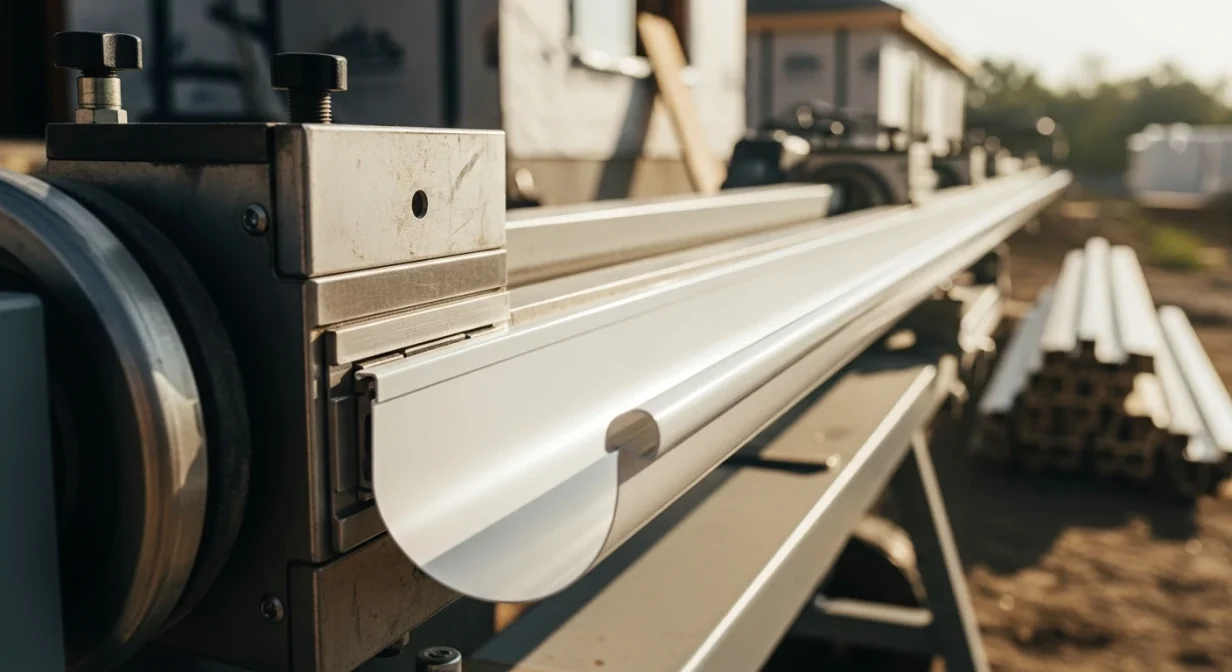
Seamless gutters are made by feeding a flat aluminum coil through a portable roll-forming machine mounted directly on the installation truck. The machine bends the metal through a series of dies to create the exact profile and length required, eliminating the need for sectional joints. Specify the correct gauge of aluminum coil, typically 0.027 or 0.032 inches, to ensure the formed gutter resists structural deformation.
Key Takeaways
- Seamless gutters are extruded from continuous aluminum coils using a roll-forming machine on-site to eliminate leak-prone joints.
- Professional standards in Dallas require 0.032-gauge aluminum and heavy-duty hangers spaced every 24 inches per NRCA recommendations.
- The manufacturing process must account for thermal expansion, especially in the 100°F+ Texas heat, to prevent buckling and hardware failure.
I have spent over eight years inspecting residential roofs across the DFW Metroplex, and I can tell you that the gutter system is your home’s first line of defense against foundation shifting. Unlike traditional sectional gutters found at big-box stores, seamless systems are fabricated right in your driveway to provide a perfect fit for your roofline. FIELD NOTE #1: Last month, a homeowner in Lakewood called me after their sectional gutters leaked at every seam, resulting in $4,500 in foundation stabilization costs. We replaced the entire system with custom-fabricated seamless aluminum, which eliminated the failure points and properly diverted runoff away from the expansive clay soils common in Dallas.
Understanding how these systems are made involves looking at the marriage of high-grade metallurgy and precision roll-forming technology. We use aluminum coils that meet ASTM International standards to ensure the longevity of the finish and the structural integrity of the trough under heavy rain loads.
Material Composition and Technical Specifications
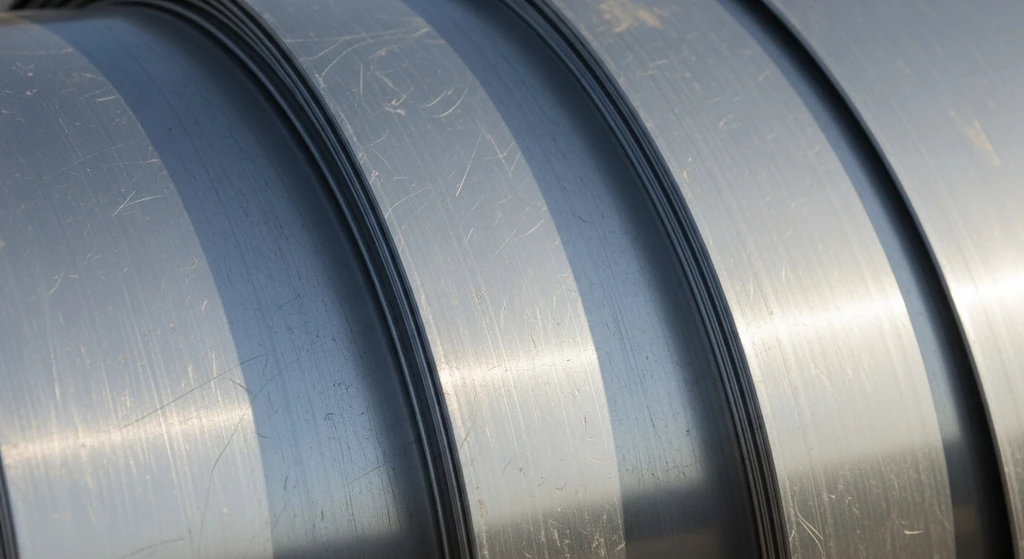
The foundation of a high-quality seamless gutter begins with the aluminum coil, typically a 3105-H24 aluminum alloy. We specify coils that are pre-finished with a baked-on enamel or fluorocarbon coating to resist the intense UV radiation found in North Texas. These materials must meet ASTM B209 standards for aluminum sheet and plate to ensure they don’t crack during the tight-radius bending of the roll-forming process. In the Dallas market, we strictly use 0.032-gauge aluminum for residential applications, which is significantly thicker than the 0.027-gauge material often used by budget contractors.
This extra thickness provides the tensile strength necessary to support the weight of wet leaves and heavy ice during our occasional North Texas winter storms. Using thinner materials can lead to sagging and eventual fastener pull-out from the fascia board.
| Gutter Material Specs | |
|---|---|
| Alloy Type | 3105-H24 Aluminum |
| Standard Gauge | 0.032 inches (Residential) |
| Compliance | ASTM B209 / IRC 2021 |
The On-Site Roll-Forming Process
The magic of seamless gutters happens inside a portable roll-forming machine mounted in the contractor’s trailer. The aluminum coil is fed into one end of the machine, where a series of heavy-duty steel rollers gradually bend the flat metal into the desired K-style or Half-Round profile. This process is continuous, allowing us to create a single gutter run that spans the entire length of a Dallas home without a single seam. Precision calibration of the machine is essential to ensure the trough is uniform and the ‘hem’ or top edge is crisp.
As the gutter emerges from the exit end of the machine, a guillotine shear cuts the metal to the exact inch required for that specific wall. This eliminates the waste associated with pre-cut lengths and ensures a custom fit that accounts for any irregularities in the home’s architecture.

Advantages
- Elimination of mid-run seams reduces leak potential
- Custom lengths provide a cleaner aesthetic
- On-site fabrication reduces transportation damage
Disadvantages
- Requires specialized, calibrated machinery
- Higher initial material cost than sectional vinyl
Field Note from Experience
During a project in Plano, I discovered a contractor using a machine with misaligned rollers that was ‘oil-canning’ the metal, creating ripples that trapped water. We had to scrap $1,200 worth of material and recalibrate the machine to ensure the 0.032 aluminum stayed perfectly flat for proper drainage.
Integration with Roofing and Code Compliance
Once the gutter is formed, the installation must comply with IRC 2021 standards for roof drainage. We install heavy-duty hidden hangers every 24 inches, which is more frequent than the 36-inch industry minimum, to account for the high-wind events common in the DFW Metroplex. These hangers are fastened through the gutter and into the rafter tails using 1.5-inch neoprene-sealed screws to prevent water intrusion into the fascia. We also pay close attention to the slope, ensuring a minimum drop of 1/16 inch per foot toward the downspouts.
In North Texas, where we experience rapid temperature swings, we must also allow for thermal expansion. Aluminum can expand significantly; a 50-foot run can move nearly half an inch between a 20°F winter night and a 110°F summer afternoon. Proper fastener placement allows this movement without stressing the metal.

Using spikes and ferrules instead of screws
Consequence: Spikes eventually pull out of the wood, causing the gutter to sag and overflow.
Dallas-Fort Worth Pricing and Cost Factors
In the current 2026 Dallas market, homeowners should expect to pay between $9 and $15 per linear foot for professional seamless gutter installation. This range accounts for 6-inch K-style gutters in 0.032-gauge aluminum, which is the standard for most modern homes in the area. Factors that drive pricing toward the higher end include two-story installations, steep roof pitches, and the addition of leaf protection systems. Labor costs in Dallas remain competitive but are influenced by the high demand during the spring storm season.
While you might find ‘tailgate’ contractors offering lower rates, they often cut corners by using 0.027-gauge material or skipping the necessary flashing. Investing in quality fabrication and installation typically pays for itself by preventing the foundation issues that plague North Texas properties.
Dallas Market Pricing
In Dallas-Fort Worth, expect to pay $9-$15 per linear foot. These are current 2026 Dallas market prices; costs can be 15-20% higher in remote Texas areas and 10% lower in rural counties. Prices fluctuate seasonally, with spring storm season driving a 20-30% premium.
What Contractors Hide
Using thin 0.027-gauge coil
The Reality: Contractors save about 15% on material costs, but the gutters are much more prone to hail damage and sagging.
External Authoritative Resources
These industry-standard references support the information in this guide:
Building Codes
Frequently Asked Questions
Why are seamless gutters better than sectional ones?
Seamless gutters eliminate the joints where 99% of leaks occur. By using a continuous run of aluminum, you reduce the risk of water damage to your fascia and foundation, which is critical in the expansive clay soils of Dallas.
Can seamless gutters be made of copper?
Yes, seamless gutters can be roll-formed from 16oz or 20oz copper coils. While more expensive, they offer incredible longevity and meet high-end architectural standards often seen in Highland Park or North Dallas estates.
How long does the on-site fabrication take?
A professional crew can typically roll-form and install a standard 2,500-square-foot home in Dallas in a single day. The machine can extrude metal at a rate of roughly 20 to 30 feet per minute.
Does the IRC code require gutters in Dallas?
While IRC 2021 doesn’t mandate gutters for all homes, it requires that water be directed away from the foundation. In Dallas, gutters are the most common way to meet this requirement and prevent soil erosion.
What gauge aluminum is best for North Texas?
I always recommend 0.032-gauge aluminum. It provides the necessary rigidity to withstand heavy rain, hail, and the weight of ladders during routine maintenance.
How do you handle corners in a seamless system?
While the runs are seamless, corners still require ‘miters.’ We use box miters or hand-cut strip miters sealed with high-grade solar-resistant sealant to ensure these few joints remain watertight.
Final Thoughts
Fabricating seamless gutters is a precision process that transforms high-grade aluminum coils into a custom-fit drainage solution. By understanding the importance of material gauge, ASTM standards, and the roll-forming process, you can ensure your home is protected from the unique climate challenges we face in North Texas. FIELD NOTE #3: I always tell my clients in the DFW Metroplex that the cheapest gutter is the one you only have to install once. I’ve seen $3,000 gutter jobs fail in two years because of poor fabrication, leading to $10,000 in siding and foundation damage.
Always prioritize 0.032-gauge material and a contractor who understands IRC 2021 drainage requirements. If you are ready to upgrade your home’s protection, focus on quality fabrication and professional installation standards.
