

Contractor’s Bottom Line
Removing water stains from a ceiling requires treating the discoloration before applying a permanent paint coating to prevent future bleed-through. The tannin-like residues in the water stain will penetrate standard latex paint, meaning an oil-based or shellac-based primer is mandatory. Apply a dedicated stain-blocking primer to the affected area, allow it to cure completely, and then finish with standard ceiling paint.
Key Takeaways
- Never paint over a damp stain; ensure the moisture source is sealed per NRCA standards first.
- Stains in Dallas homes are often caused by HVAC primary drain line clogs or cracked flashing meeting ASTM D1970 standards.
- A professional moisture meter reading is required to confirm the substrate is below 15% moisture before applying stain-blocking primers.
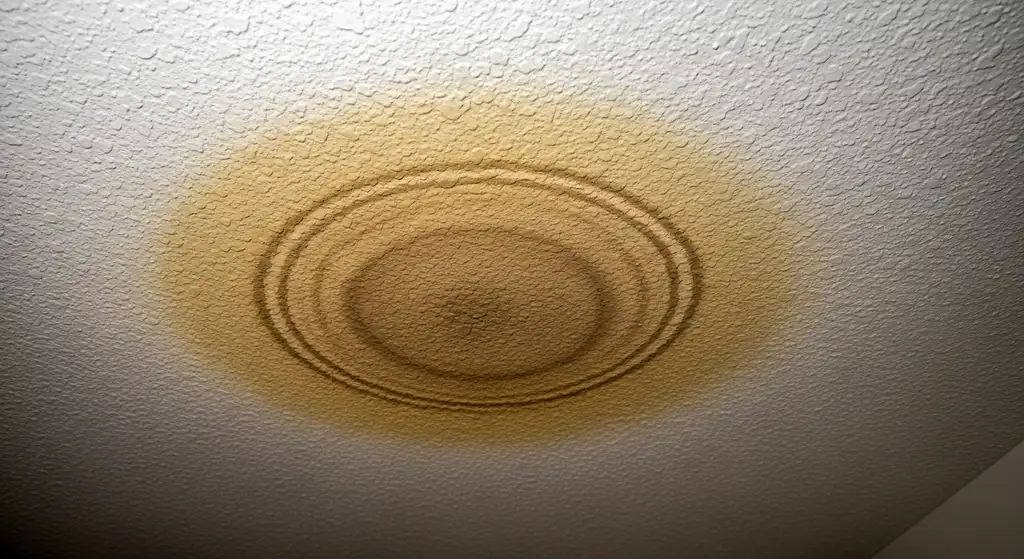
When you spot a yellow or brown ring on your ceiling, your first instinct is likely to grab a ladder and some paint. However, as a consultant in the Dallas-Fort Worth area, I have seen these minor blemishes hide significant structural decay in the attic. A water stain is an SOS from your home’s envelope, often indicating that your synthetic underlayment or flashing has reached its limit. FIELD NOTE #1: Last month, a Dallas homeowner in Lake Highlands called me after a ‘small’ stain resulted in $8,500 in damages.
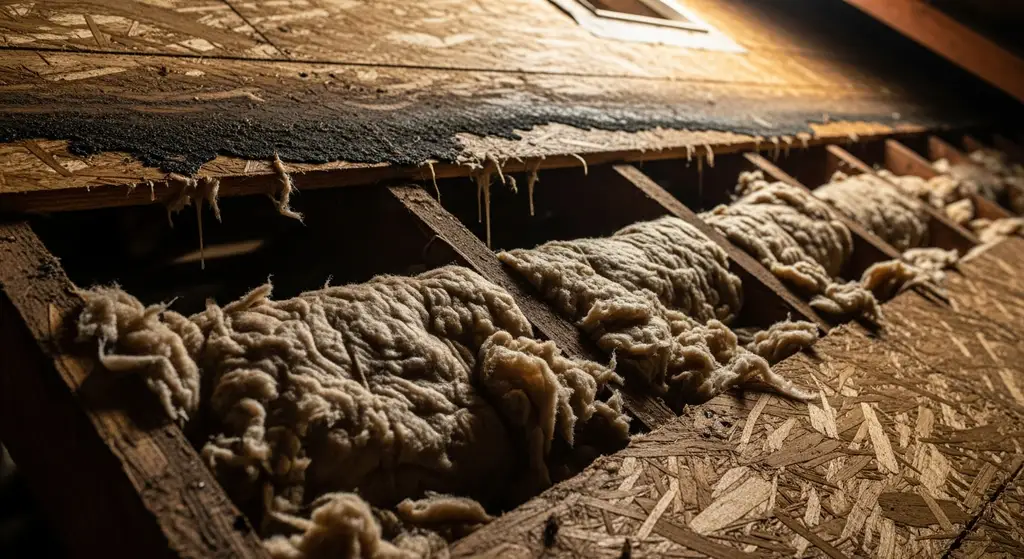
They had spent months simply painting over the spot, unaware that a slow leak from a roof valley was rotting their OSB (oriented strand board) decking. By the time I arrived, the drywall was ready to collapse, and the insulation was saturated with mold. To effectively remove the stain, we must first address the ‘why’ behind the moisture. Whether it is a failed GAF Timberline shingle or an HVAC overflow, the solution requires a technical approach that aligns with the International Residential Code (IRC 2021) to ensure your home remains protected against the next Texas supercell.
Identifying the Source: Roof Leak vs. HVAC Condensation
In the DFW Metroplex, the source of a ceiling stain usually falls into two categories: external water intrusion or internal mechanical failure. If the stain grows larger after a heavy North Texas thunderstorm, the culprit is likely your roofing system, specifically around penetrations like vent pipes or chimneys. We often find that fasteners failing to meet ASTM D1761 specifications allow water to track down the nail shank and drip onto the ceiling joists. If the stain appears during the peak of a 100-degree Dallas summer without rain, the issue is almost certainly your air conditioning system.
High humidity in the attic can lead to condensation on ductwork or a clogged primary drain line. The National Roofing Contractors Association (NRCA) emphasizes that proper attic ventilation is critical to preventing this moisture buildup, which can mimic a roof leak.
Failed Pipe Boot Flashing
Typical Cost: $250 – $450
Prevention: Install high-quality silicone boots instead of standard rubber
Insurance Coverage: Typically covered if caused by wind/hail
Code Reference: IRC R905.2.8.1
HVAC Drain Pan Overflow
Typical Cost: $150 – $600
Prevention: Annual HVAC maintenance and float switch installation
Insurance Coverage: Often covered under standard HO3 policies
Code Reference: IMC 307.2.3
The Clock is Ticking: Damage Progression in Texas Heat
In the humid environment of North Texas, moisture damage accelerates rapidly. Within the first 24 hours, the paper backing on your ceiling’s gypsum board absorbs water, losing its structural integrity. If the water has sat on your Advantech or CDX plywood decking for more than 48 hours, mold spores—which are naturally present in the air—will begin to colonize the organic material in your attic. By day five, the mineral salts in the water migrate to the surface of the drywall, creating the dark brown ‘tide mark’ you see from the floor.
At this stage, the International Code Council (ICC) standards suggest that the material may be too compromised for a simple patch. If the stain is soft to the touch or sagging, the IRC 2021 requires replacement of the affected section to maintain fire-rating and structural safety.
Field Note from Experience
During an inspection in Plano, I found a ceiling stain that looked like a simple drip. However, the homeowner had waited weeks to call. When I pulled back the insulation, the CDX plywood was so soft I could put a screwdriver through it. The repair bill jumped from a $300 leak fix to a $2,400 structural replacement because of that delay.
Immediate Steps to Minimize Ceiling Damage
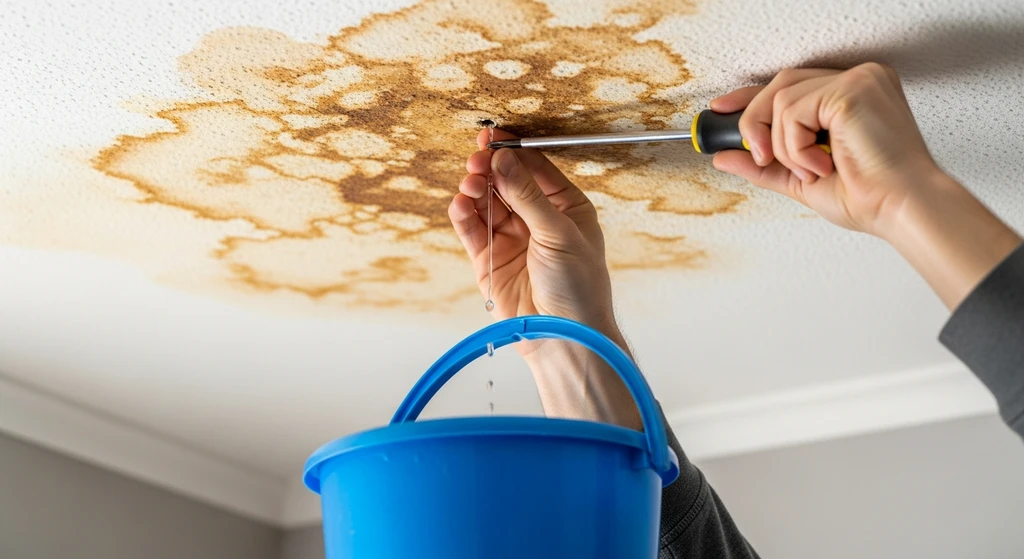
If you notice an active drip, your priority is to stop the spread of water across the ceiling. Use a ‘relief hole’ technique by taking a small screwdriver and poking a hole in the center of the stain to channel water into a bucket. This prevents the water from pooling and traveling horizontally, which could destroy a much larger area of your ceiling drywall. Once the drip is contained, clear away any wet insulation from the attic space above the stain.
Saturated fiberglass or cellulose insulation acts like a sponge, holding moisture against your ceiling joists and roof sheathing long after the rain stops. This proactive step is recommended by OSHA safety standards when working in confined attic spaces to prevent slips and falls while managing moisture.
Why Bleach and Latex Paint Fail
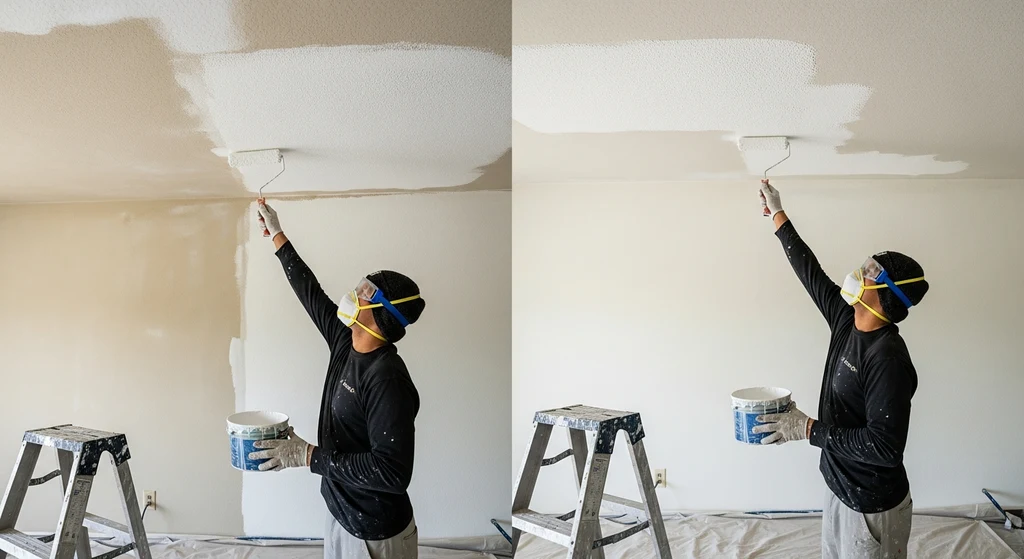
A common mistake I see in Dallas homes is the attempt to ‘clean’ the stain with a bleach-and-water solution. While bleach may kill surface mold, it does not stop the tannins and minerals from bleeding through your next coat of paint. Furthermore, standard latex ceiling paint is water-based; applying it over a water stain will simply re-solubilize the stain and cause it to reappear within days. To properly remove the stain, you must use a high-solids, oil-based or pigmented shellac primer.
Products like Kilz Restoration or Zinsser B-I-N are engineered to seal the porous drywall and prevent the stain from migrating. This technical specification is consistent with ASTM D3359 for adhesion testing, ensuring your repair actually bonds to the damaged substrate.
Using ‘Paint + Primer’ in one
Consequence: The stain will bleed through the water-based resins within weeks.
Ignoring the attic side
Consequence: Mold will continue to grow on top of the drywall even if the bottom looks clean.
Dallas Repair Costs: What to Expect
Repairing a water stain in the Dallas-Fort Worth area involves two distinct costs: fixing the source and repairing the cosmetic damage. For a standard 2,500-square-foot home in the DFW Metroplex, a professional roofing contractor will typically charge a minimum service fee for leak detection. Prices fluctuate based on the height of your roof and the complexity of the architectural shingles. Drywall repair costs in Dallas are currently influenced by high labor demand.
If the drywall is structurally sound and only needs priming and painting, the cost is relatively low. However, if the IRC 2021 requires a full section replacement due to sagging or mold, the price increases due to the need for taping, bedding, and texture matching to your existing ceiling.
Dallas Market Pricing
In Dallas-Fort Worth, expect to pay $350-$750 for leak repair and $250-$500 for ceiling cosmetic repair. These are current 2026 Dallas market prices; costs vary by region and can be 15-25% higher in remote Texas areas. Peak pricing occurs spring (March-May) storm season.
| Service Item | Estimated Dallas Cost |
|---|---|
| Roof Leak Detection & Minor Patch | $350 – $600 |
| Pipe Boot Replacement (2 Units) | $400 – $550 |
| Drywall Patch & Texture Match | $300 – $650 |
| Full Ceiling Repaint (Room) | $400 – $800 |
| Attic Insulation Removal (Localized) | $200 – $400 |
External Authoritative Resources
These industry-standard references support the information in this guide:
Building Codes
Frequently Asked Questions
Can I just paint over a dry water stain?
No, even if the stain is dry, the mineral deposits will bleed through standard latex paint. You must use an oil-based primer like Kilz, which is formulated to seal the substrate according to NRCA repair standards.
Is a ceiling water stain an emergency?
It is a ‘priority 1’ issue. While not an immediate collapse risk, it indicates a failure in your GAF shingles or HVAC system that can lead to mold growth within 48 hours in the Dallas humidity.
Will my insurance cover ceiling water stains?
If the stain was caused by a ‘sudden and accidental’ event like a Dallas hailstorm damaging your asphalt shingles, it is typically covered. Slow leaks due to lack of maintenance are often denied.
How do I know if the leak is from my roof or AC?
If the stain appears after rain, it is the roof. If it appears during hot, dry days, it is likely HVAC condensation or a secondary drain pan overflow, common in North Texas summers.
What is the best primer for ceiling stains?
I recommend a pigmented shellac or oil-based primer. These meet ASTM D3359 standards for adhesion and provide a vapor-tight seal that water-based primers cannot match.
Should I replace the insulation above a water stain?
Yes, if the insulation is compressed or shows signs of mold, it must be replaced. Wet fiberglass loses its R-value and can trap moisture against your ceiling joists, leading to rot.
Final Thoughts
Removing a water stain from your ceiling is more than a Saturday morning DIY project; it is a diagnostic process that ensures the longevity of your home. In the Dallas-Fort Worth area, our extreme weather cycles mean that a small stain today can become a major structural failure by the next storm season. By following IRC 2021 guidelines and using the correct ASTM-rated materials, you can protect your investment and maintain your home’s value. FIELD NOTE #3: A client in Frisco tried the ‘bleach and paint’ trick on a recurring stain.
They saved $200 on a professional repair but ended up spending $1,200 six months later when the entire ceiling section collapsed during a midnight thunderstorm. Don’t cut corners on moisture—fix the source, seal the damage properly, and sleep soundly when the North Texas winds start to howl.
