
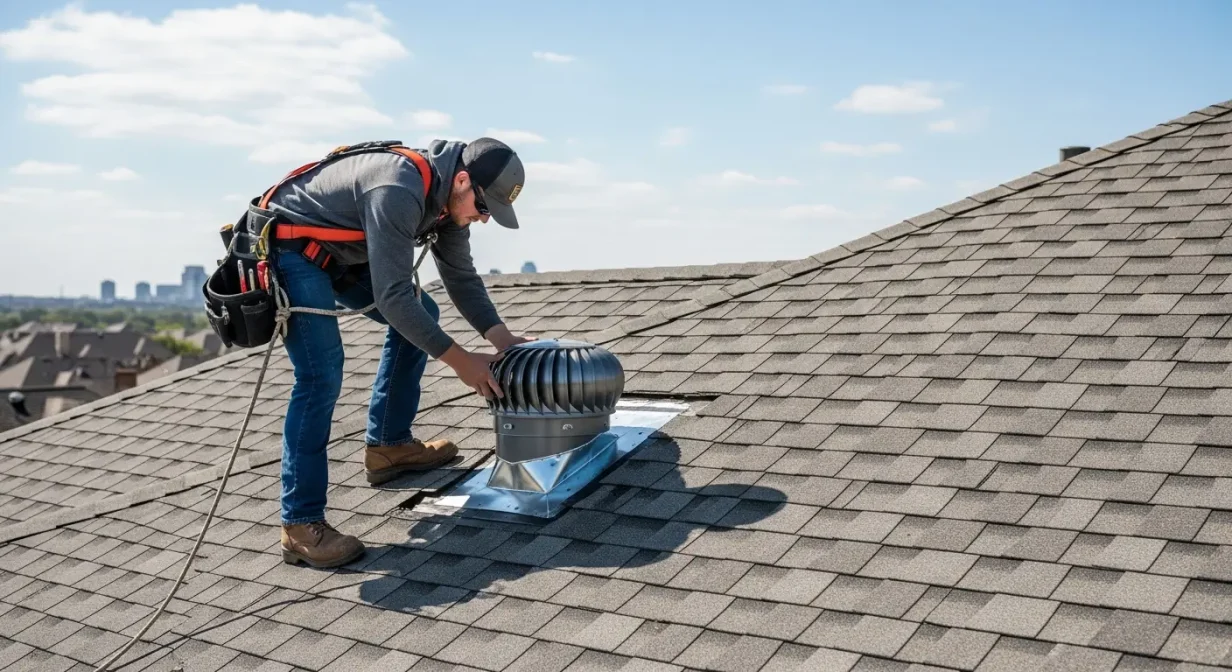
Contractor’s Bottom Line
A roof penetration is any hole cut through the roofing assembly to accommodate vents, pipes, or mechanical equipment. IRC R903.2 requires all penetrations to be flashed in a manner that directs water away from the opening and integrates with the surrounding drainage plane. Inspect the flashing collars and sealants around every roof penetration annually, as thermal movement routinely degrades these critical watertight connections.
Key Takeaways
- Every roof penetration must be flashed according to IRC R905.2.8 to prevent moisture intrusion and structural rot.
- NRCA standards recommend a 4-inch minimum flange for all pipe boots to ensure adequate coverage under asphalt shingles.
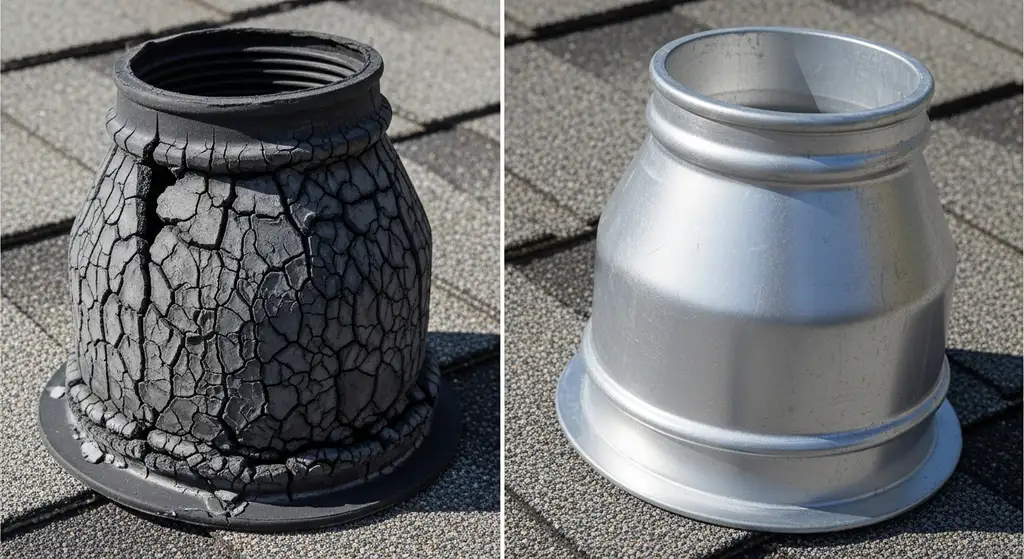
- In the DFW Metroplex, use UV-resistant silicone or lead boots rather than standard plastic to prevent heat-related cracking.
- ASTM D1970 compliant ice and water shield should be installed 12 inches past the penetration in all directions.
Installing a roof penetration correctly is the difference between a dry home and a $10,000 mold remediation bill. In my 8+ years as a consultant in the Dallas-Fort Worth area, I have seen more premature roof failures caused by improper vent flashing than by actual material defects. These penetrations—ranging from plumbing stacks to HVAC vents—must be integrated into the drainage plane of the roofing system using high-quality materials like architectural shingles and synthetic underlayment. FIELD NOTE #1: Last month, a Dallas homeowner in the Lakewood neighborhood called me after a minor rainstorm resulted in $1,200 in ceiling damages.
Upon inspection, I found the roofer had simply ‘caulked’ a plumbing vent instead of installing a proper boot meeting ASTM D4869 standards. This shortcut is common among low-bid contractors but violates the International Residential Code (IRC) and voids most manufacturer warranties. Understanding the technical requirements set by the International Code Council (ICC) and the National Roofing Contractors Association (NRCA) is vital for any property owner. In our harsh Texas climate, thermal expansion and contraction can pull apart weak seals in a single season.
This guide will break down the exact specifications required to ensure your roof remains watertight for its intended lifespan.
Flashing Integration and IRC R905 Compliance
The International Residential Code, specifically IRC R905, dictates that flashing must be installed at all roof penetrations to provide a weather-resistant barrier. In the Dallas area, we utilize a ‘shingle-fashion’ technique where the flashing is tucked under the upslope courses and over the downslope courses. This ensures that gravity-fed water moves over the penetration rather than under it. We recommend using G-90 galvanized steel or thick-gauge aluminum that meets ASTM D226 Type II standards for maximum corrosion resistance.
For asphalt shingles, the integration process involves more than just a metal plate; it requires a layered approach with synthetic underlayment. Many North Texas contractors skip the critical step of applying a target patch of ice and water shield around the base. According to NRCA recommendations, this patch should extend at least 6 inches beyond the flange in all directions to account for wind-driven rain. Without this, the high-velocity winds common in the DFW Metroplex can force water horizontally under the shingles and into the decking.
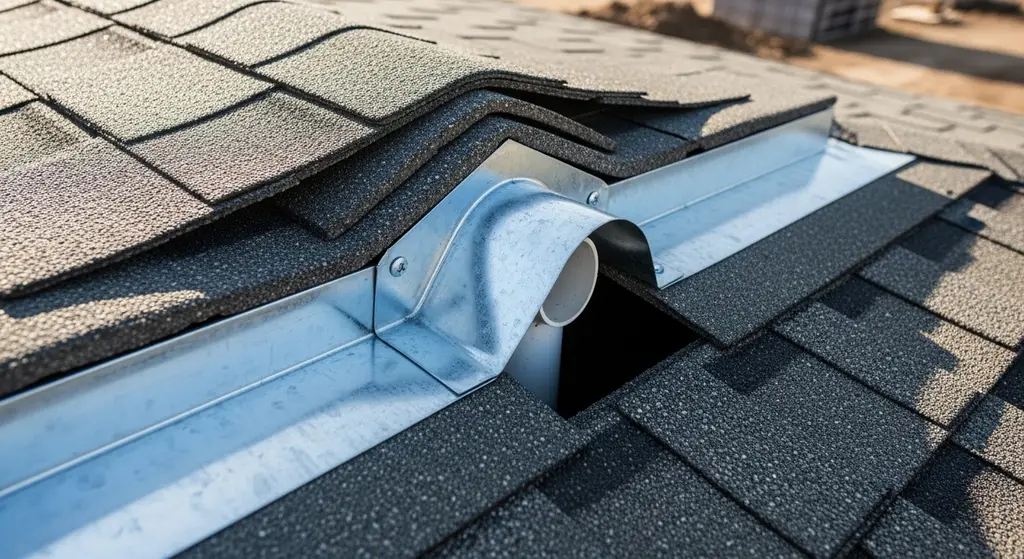
| Material Specifications | |
|---|---|
| Flashing Material | G-90 Galvanized Steel |
| Underlayment | ASTM D4869 Synthetic |
| Sealant | ASTM C920 Class 25 Silicone |
Field Note from Experience
During a code compliance inspection in Plano, I discovered a contractor using 3-tab shingles to ‘patch’ around a new HVAC penetration. This violated IRC R803.2.1 and could have led to a $3,500 decking replacement within two years due to rot. I required them to reinstall the penetration using a proper boot and ASTM D1970 membrane.
Step-by-Step Installation for Maximum Sealing
The installation of a roof penetration begins with a clean cut through the CDX plywood or OSB oriented strand board. OSHA safety standards must be followed during this phase, ensuring all fall protection is in place for the installers. Once the hole is cut, the primary synthetic underlayment is installed, followed by a secondary ‘target patch’ of self-adhering membrane that meets ASTM D1970. This creates a redundant seal directly against the pipe or vent.
Next, the flashing or boot is set in a bed of high-grade roofing cement or silicone sealant that complies with ASTM C920. In the Dallas-Fort Worth heat, standard asphalt plastic cement can become brittle, so we prefer high-performance polyurethanes. The shingles are then carefully trimmed around the penetration, ensuring a 1-inch ‘waterway’ on the sides and bottom to allow debris to wash away. This prevents the ‘damming’ effect that often causes leaks in older DFW homes.
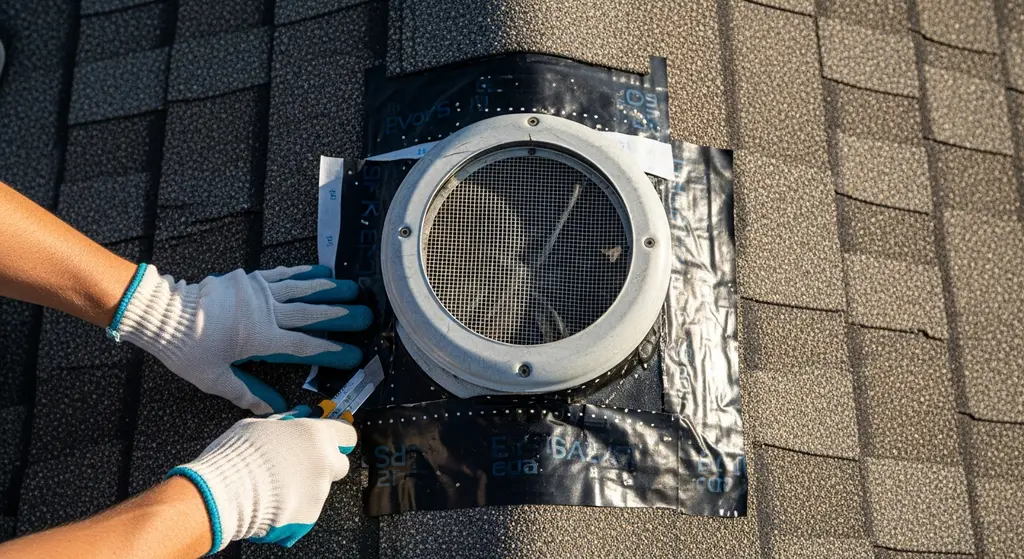
| Component | Standard Requirement | Dallas Best Practice |
|---|---|---|
| Pipe Boot | Plastic/Rubber | Lead or Silicone (Heat Resistant) |
| Underlayment | Felt Underlayment | Synthetic ASTM D4869 |
| Fasteners | ASTM D1761 Nails | Ring-shank Galvanized |
Quality Control and Post-Installation Testing
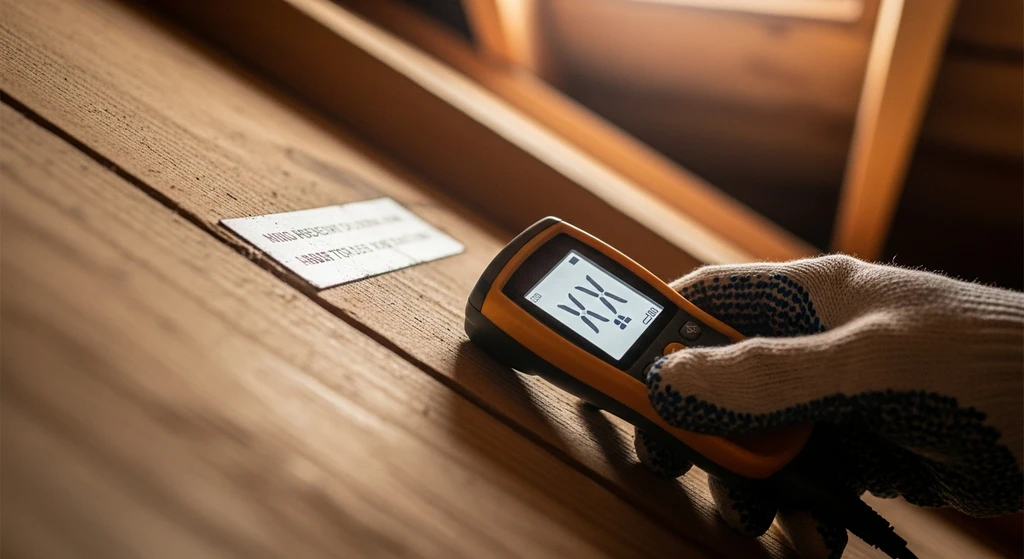
Verifying the seal of a roof penetration is a step most contractors overlook. I recommend a ‘hose test’ for any complex penetrations, such as skylights or large HVAC curbs, to simulate the heavy downpours we experience in North Texas. This test should be performed before the interior finishes are completed. We also check for ‘blind nailing’—a common error where nails are driven too close to the penetration, creating a direct path for water to enter the attic space.
Additionally, we use moisture meters to verify that the surrounding CDX plywood hasn’t absorbed water during the installation process. ASTM D3043 standards for structural panels are strictly monitored to ensure the decking maintains its load-bearing capacity. In Dallas, where humidity can stay high after a storm, any trapped moisture can quickly lead to fungal growth. Proper ventilation around the penetration is also checked to ensure no condensation builds up on the underside of the flashing.
Visible Caulk Only
Consequence: Caulk is a maintenance item, not a permanent flashing solution; it will fail in 2-3 years.
Reused Flashing
Consequence: Old nail holes in reused metal will leak immediately under North Texas wind-driven rain.
What Contractors Hide About Penetration Repairs
Many roofing companies in the DFW Metroplex will cut costs by reusing old flashing when performing a ‘tune-up’ or a full replacement. They might tell you the metal is ‘still good,’ but the reality is that the old nail holes and bent edges rarely seal properly with new architectural shingles. This practice saves the contractor about $50 per penetration in materials and labor but increases your risk of a leak by 40%. Always demand new G-90 galvanized flashing for every single penetration.
Another hidden tactic is the use of ‘all-purpose’ sealants instead of specific ASTM C920 rated roofing sealants. These cheaper tubes cost $5 compared to $15 for the professional grade, but they lack the UV resistance needed for the 100°F+ Dallas summers. Within 18 months, the sealant will shrink and pull away from the pipe, leaving a gap that you won’t notice until your ceiling starts to sag. Ensure your contract specifies the use of high-performance sealants and new boots for all vents.
Dallas Market Pricing
In Dallas-Fort Worth, expect to pay $150-$350 per penetration for professional flashing and boot installation. These are current 2026 Dallas market prices; costs vary by region and can be 15-25% higher in remote Texas areas. Peak pricing occurs spring (March-May) storm season.
What Contractors Hide
Reusing Lead Boots
The Reality: Lead is soft; old boots often have squirrel damage or thin spots that leak under pressure.
Skipping Underlayment Patches
The Reality: Contractors skip the 5-minute step of adding a target patch to save on material costs.
External Authoritative Resources
These industry-standard references support the information in this guide:
Building Codes
International Residential Code (IRC 2021)
Official building code for residential construction
ICC Code Adoption Map
Find which IRC version your state uses
Industry Standards
NRCA Roofing Manual
National Roofing Contractors Association best practices
ASTM International Standards
Material testing standards (ASTM D3043, D1761)
Manufacturer Resources
Frequently Asked Questions
How long does a roof penetration seal last in Dallas?
In the DFW Metroplex, a standard rubber boot lasts 7-10 years due to UV degradation, while a lead or silicone boot can last 20+ years. NRCA recommends inspecting these every 5 years to prevent leaks.
Does insurance cover leaks from roof penetrations?
Insurance typically covers ‘sudden and accidental’ damage, but leaks caused by worn-out flashing or poor maintenance are often denied. Proper documentation of IRC R905 compliance can help in claim disputes.
What is the best sealant for a roof penetration?
Use a high-performance polyether or silicone sealant meeting ASTM C920 standards. Avoid cheap asphalt plastic cement, which cracks under the extreme temperature swings common in North Texas.
Can I install a roof penetration myself?
While possible, it is not recommended due to the technical requirements of IRC R905. A single error in the shingle-fashion overlap can lead to thousands of dollars in structural rot.
Is lead flashing safe for residential roofs?
Yes, lead boots are a gold standard in the roofing industry for plumbing stacks because they are highly durable and can be molded to create a seamless, watertight fit that lasts decades.
What does IRC R905 require for vent flashing?
IRC R905.2.8 requires flashing to be installed in a manner that prevents water from entering the wall and roof through joints in the coping, through changes in roof classification, and through intersections with vents.
Final Thoughts
The integrity of your roof depends entirely on how well your contractor manages every roof penetration. By insisting on IRC 2021 compliance and following the high standards set by the NRCA, you can protect your home from the volatile weather patterns of North Texas. Remember that the cheapest bid often saves money by cutting corners on these critical flashing points, which leads to much higher costs down the road. FIELD NOTE #3: I recently consulted for a family in Richardson who had a ‘new’ roof installed just two years ago.
Because the contractor ignored the step-flashing requirements for a chimney penetration, they suffered $4,500 in interior damage during a spring hail storm. Don’t let your home be the next example; verify every seal and material specification before the first nail is driven. Contact a qualified specialist to ensure your penetrations are built to last through 2026 and beyond.
