

Contractor’s Bottom Line
Soundproofing a metal roof involves adding dense, sound-absorbing insulation materials beneath the roof deck to dampen acoustic transmission. Applying rigid foam or spray foam insulation directly to the underside of the metal panels significantly reduces the drumming effect caused by rain and hail. Create an insulated ceiling assembly with a high Sound Transmission Class rating to block noise transfer from the roof into the living space.
Key Takeaways
- Acoustic performance depends on the density of the substrate, typically requiring CDX plywood or OSB conforming to ASTM D3043.
- Installing heavy-duty synthetic underlayment or ASTM D4869 felt provides a critical decoupling layer that reduces decibel levels by up to 20%.
- IRC R905.10 governs metal roof installation in Dallas, but exceeding code with tighter fastener patterns is necessary for true soundproofing.
When homeowners in the DFW Metroplex consider switching from asphalt shingles to metal, the first question they usually ask me is about the noise during our famous Texas thunderstorms. Many fear that a metal roof will sound like a tin shed, but modern engineering allows us to create incredibly quiet systems. By focusing on the assembly layers and proper insulation, we can achieve decibel ratings that rival or even beat architectural shingles. FIELD NOTE: Last month, a Dallas homeowner in Highland Park called me because their new standing seam roof was deafening during a light rain.
I discovered the previous contractor had installed the panels directly over old 1×6 spaced decking without any solid substrate or underlayment. This shortcut saved the contractor about $2,500 in materials but resulted in a living room that sounded like a drum set during every spring shower. To avoid these issues, we follow strict standards set by the National Roofing Contractors Association (NRCA) and the International Code Council (ICC). These organizations provide the framework for building a roof that is not only weather-tight but also acoustically dampened.
In this guide, I will break down the specific materials and methods we use to ensure your North Texas home remains quiet regardless of the weather.
Technical Layers for Acoustic Dampening
The foundation of a quiet metal roof starts with the roof deck, where we specify 15/32-inch CDX plywood or oriented strand board (OSB) like Advantech. These materials must conform to ASTM D3043 standards to ensure they provide the structural mass necessary to absorb sound vibrations. In Dallas, we often see older homes with spaced board decking, which must be overlaid with solid sheathing to meet current IRC R803.2.1 requirements for modern roofing systems. Above the decking, the underlayment acts as a critical sound-deadening membrane.
We typically specify a high-temperature synthetic underlayment or a double layer of ASTM D226 Type II felt underlayment to provide a decoupling effect between the metal and the wood. This layer prevents the ‘clatter’ of metal-on-wood contact and provides a secondary moisture barrier that is essential for the extreme North Texas heat cycles. Finally, the metal panels themselves, whether they are G-90 galvanized steel or aluminum, should be specified with a textured finish or a stone-coated profile. These profiles, often seen in products like Decra or Westlake Royal, break up the surface area and disrupt sound waves more effectively than flat standing seam panels.
When combined with Energy Star rated coatings, these systems provide both acoustic comfort and superior thermal performance in the Dallas sun.

| Acoustic Material Specs | |
|---|---|
| Substrate | 15/32″ CDX Plywood (ASTM D3043) |
| Underlayment | ASTM D226 Type II Synthetic |
| Fasteners | ASTM D1761 Compliant Screws |
Professional Installation Procedures for Noise Reduction
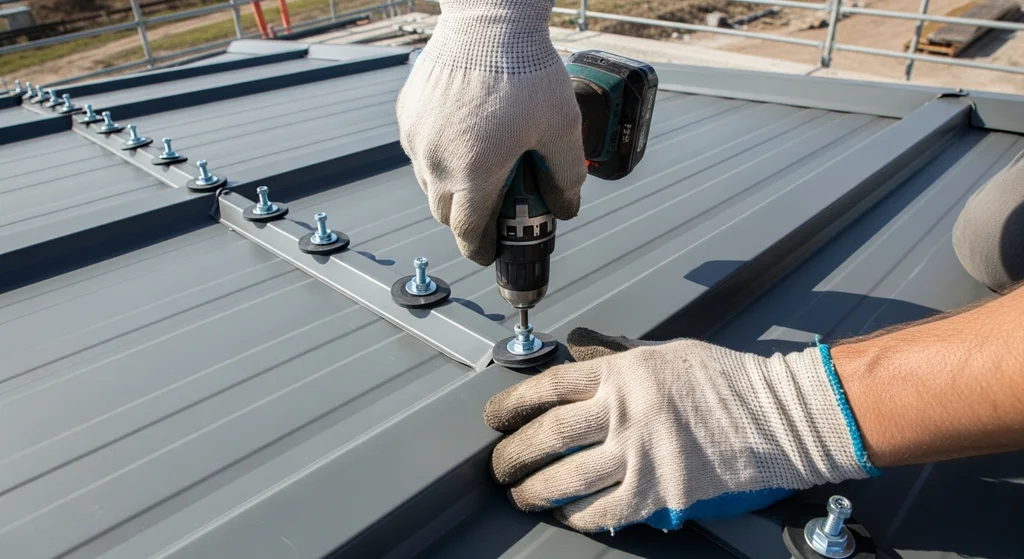
Proper installation is the most significant factor in preventing a metal roof from becoming noisy. We follow IRC R905.10 guidelines for metal roof fasteners but often increase the frequency of the screw pattern to ensure there is no ‘oil canning’ or panel movement. Using ASTM D1761 compliant mechanical fasteners with EPDM washers ensures that each panel is tightly secured to the deck, eliminating the vibration that causes noise. We also emphasize the use of foam closure strips at the eaves and ridges to prevent wind from entering beneath the panels.
In the DFW Metroplex, high winds can cause unsecured metal edges to vibrate against the flashing, creating a persistent humming sound. By sealing these gaps, we not only improve the acoustic profile but also prevent moisture intrusion and pest entry, which are common issues in North Texas attics. Another advanced technique involves the application of sound-dampening tape or ‘butyl’ strips along the underside of standing seam ribs. This small addition significantly reduces the resonance of the metal panels during heavy rain or hail.
While not required by the International Residential Code, it is a standard practice we use for high-end residential projects in neighborhoods like Preston Hollow where luxury homeowners demand absolute silence.
Field Note from Experience
On a project in Plano, I discovered a crew using the wrong fastener spacing, which caused the panels to rattle in 40mph winds. It sounded like a drum set over the master bedroom until we tightened the pattern to NRCA specifications, which cost the homeowner an extra $1,200 in labor but solved the noise completely.
Performance in the Dallas-Fort Worth Climate
The North Texas climate presents unique challenges for metal roofs, particularly regarding thermal expansion and contraction. In Dallas, temperatures can swing 40 degrees in a single day, causing metal panels to shift. If the roof is not installed with proper expansion clips, this movement can create popping or creaking sounds that homeowners often mistake for structural issues. We ensure all systems are designed to move silently under the Texas sun.
Hail is another major concern in the DFW area, and the sound of hail on metal can be intense without proper soundproofing. We recommend Class 4 impact-rated systems, which often feature a stone coating or a thicker gauge steel (24-gauge or lower). These systems are tested by ASTM International to withstand significant impact, and their added mass significantly dampens the ‘pinging’ sound of ice hitting the roof surface. Furthermore, the integration of attic insulation is a key component of the soundproofing strategy.
We often recommend blown-in cellulose or open-cell spray foam to achieve an R-value of R-49 or higher, as currently recommended for Dallas County. This insulation not only lowers your Energy Star efficiency ratings but also acts as a massive sound absorber, preventing any residual roof noise from entering the living space.

Direct-to-Deck Installation
Consequence: Installing metal directly over old shingles or spaced decking without a new underlayment leads to extreme noise and potential leaks.
Investment for a Quiet Metal Roof in Dallas
Upgrading to a soundproof metal roof system in the Dallas-Fort Worth area involves higher material and labor costs than a standard installation. You are essentially paying for extra layers of protection, including heavy-duty underlayments and high-quality fasteners. In the current market, these upgrades can add 15% to 25% to the total project cost, but they significantly increase the long-term value and comfort of the home. Labor in Dallas is currently at a premium due to high demand following the spring storm season.
Specialized crews who understand acoustic metal installation charge more than general roofers. However, skipping these professional installers often leads to ‘re-work’ costs that can exceed $5,000 for even small residential roofs. I always tell my clients that it is cheaper to do it right once than to fix a noisy roof later. Permit fees in Dallas County and surrounding municipalities like Frisco or Southlake also factor into the budget.
These cities require detailed inspections to ensure compliance with IRC 2021 codes. While these fees are relatively small (usually $200-$500), the requirement for professional engineering or manufacturer-specific installation details can drive up the initial consulting costs for complex roof designs.
Dallas Market Pricing
In Dallas-Fort Worth, expect to pay $12.00-$18.00 per square foot for a fully soundproofed metal roof system. These are current 2026 Dallas market prices; costs can be 15-20% lower in rural Texas areas like East Texas. Prices typically peak in spring (March-May) after storm season.
| Component | Standard Cost (sq ft) | Soundproof Upgrade (sq ft) |
|---|---|---|
| Underlayment | $0.30 – $0.50 | $0.90 – $1.50 |
| Metal Panels (24ga) | $4.50 – $7.00 | $8.00 – $12.00 |
| Acoustic Insulation | $1.20 – $1.80 | $2.50 – $4.00 |
What Contractors Hide About Metal Roof Noise
One of the most common secrets in the roofing industry is the reuse of old flashing and underlayment to save on labor. Many contractors in the DFW Metroplex will tell you that your existing felt is ‘fine’ to stay under a new metal roof. This is a major red flag; old felt is often brittle and provides zero acoustic dampening, which will leave you with a noisy, vibrating roof that fails prematurely. Another tactic is using lower-grade fasteners that do not meet ASTM D1761 standards.
These cheaper screws have smaller washers that degrade quickly in the Texas heat. Once the washer fails, the panel is no longer held tightly against the deck, leading to both noise and leaks. Contractors save about $400 per project using these sub-par parts, but the homeowner pays the price in three to five years when the rattling starts. Finally, some installers skip the ‘solid decking’ requirement if they think the homeowner isn’t watching.
They may try to install metal panels over old lath or spaced boards, claiming it provides better ventilation. In reality, this is a code violation under IRC R905 and a recipe for an incredibly loud roof. Always demand to see the decking inspection photos before the underlayment is applied to ensure your home meets modern standards.
What Contractors Hide
Reusing old drip edge and flashing
The Reality: This creates gaps where wind can enter and cause ‘panel lift’ noise.
Skipping the sound-dampening tape
The Reality: This saves $200 in materials but is the leading cause of ‘pinging’ noises in standing seam roofs.
External Authoritative Resources
These industry-standard references support the information in this guide:
Building Codes
Frequently Asked Questions
Is a metal roof louder than shingles during rain?
If installed correctly with a solid substrate and ASTM D226 underlayment, a metal roof is not significantly louder than asphalt shingles. The mass of the decking and insulation absorbs most of the impact noise.
Does attic insulation help with metal roof noise?
Yes, increasing attic insulation to R-49, as recommended in Dallas, provides a massive acoustic buffer that prevents roof vibrations from reaching the living space.
What is the best metal roof for soundproofing?
Stone-coated steel shingles are the quietest option because their irregular surface and heavy coating break up sound waves much better than flat standing seam panels.
Do I need a special permit for metal roofing in Dallas?
Yes, most DFW municipalities require a permit to ensure the roof meets IRC R905 codes for wind uplift and fire resistance.
Will hail damage a soundproof metal roof?
While hail can dent some metal, Class 4 impact-rated systems are designed to withstand 2-inch hail stones without compromising the roof’s integrity or acoustic performance.
Can I install a metal roof over my old shingles to save money?
While code allows it in some cases, I strongly advise against it for soundproofing. Removing old shingles allows for a proper inspection of the decking and the installation of high-performance acoustic underlayment.
Final Thoughts
Building a soundproof metal roof in Dallas-Fort Worth is entirely possible when you prioritize the quality of the assembly over the lowest bid. By adhering to ASTM International standards and ensuring your contractor follows the latest IRC 2021 codes, you can enjoy the longevity of metal without the noise. Remember that the substrate and underlayment are just as important as the metal panels you see from the street. FIELD NOTE: I helped a family in Southlake whose insurance claim was denied for ‘improper installation’ because their previous contractor skipped the required decking clips.
They had to pay $18,000 out of pocket to fix the rattling and leaks. Don’t let a contractor cut corners on your North Texas home; insist on a system that meets NRCA standards to protect your investment and your peace of mind. Contact a qualified Dallas consultant today to review your roofing specifications.
