
Contractor’s Bottom Line
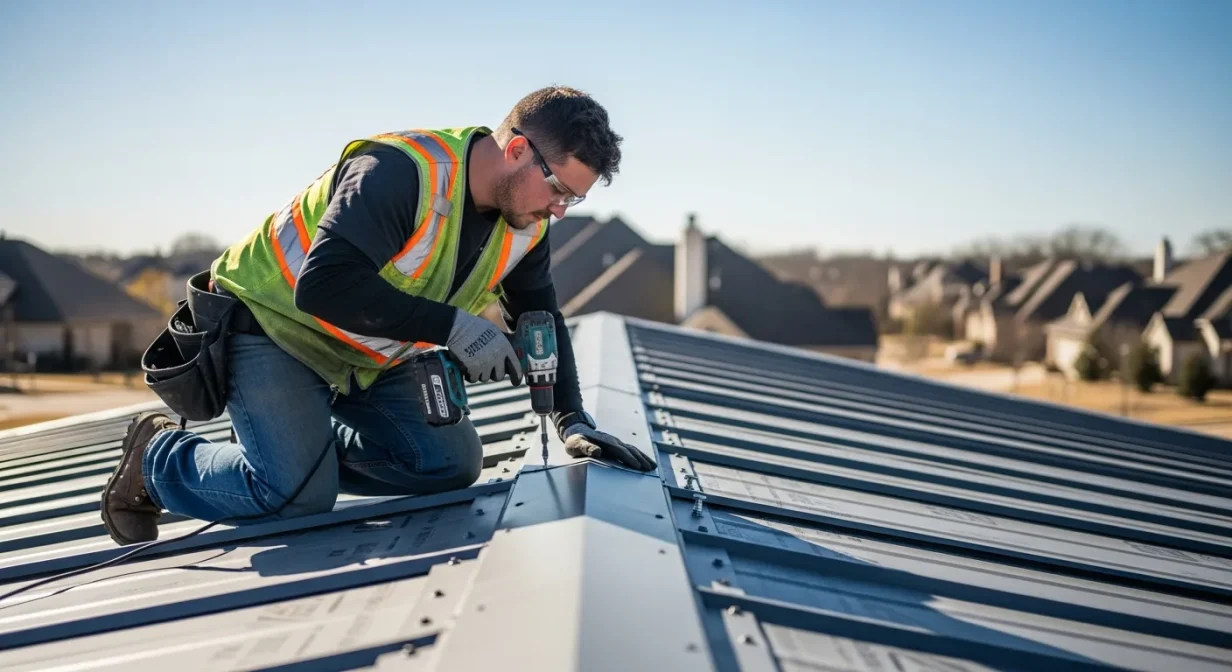
Fixing a leaking metal roof requires identifying whether the water intrusion originates from failed fasteners, compromised seams, or flashing intersections. Exposed fastener roofs routinely loosen under thermal cycling, while standing seam leaks typically occur where sealant tape has dried out at the laps. Remove and replace any backed-out screws with larger-diameter fasteners, and reapply specialized metal roof sealant to all suspect seam overlaps.
Key Takeaways
- Replace failed neoprene washers with EPDM fasteners meeting ASTM D1761 standards for superior UV resistance.
- Address ‘back-out’ screws immediately to prevent moisture infiltration into the synthetic underlayment or felt underlayment.
- Use only high-grade butyl tape or polyether sealants rather than standard silicone, which fails during Dallas heat cycles.
- Verify that any repair maintains the wind uplift resistance required by local Dallas County building codes.
Repairing a metal roof in North Texas is significantly different than working with asphalt shingles due to the material’s high thermal expansion coefficient. In the DFW Metroplex, metal panels can reach surface temperatures exceeding 160°F, causing significant movement that stresses fasteners and sealants. If you ignore a minor leak today, the next spring hail storm could turn a simple patch into a full-scale interior restoration project. FIELD NOTE: Last year, I visited a home in the Lakewood neighborhood of Dallas where a tiny leak at a ridge cap had been ignored for months.
The homeowner thought a bit of hardware store caulk would fix it, but the sealant didn’t meet ASTM International standards and cracked within weeks. By the time I arrived, the leak had rotted a 4×8 section of OSB decking, resulting in a $3,200 repair that could have been solved for $250 earlier. To successfully fix a metal roof, you must understand how the National Roofing Contractors Association (NRCA) defines proper seam integration and fastener tension. We will walk through the specific technical steps to identify the root cause and apply a solution that lasts through the next decade of Texas weather.
Immediate Emergency Response for Active Leaks
When water is actively entering your home during a Dallas thunderstorm, your first priority is containment to prevent ceiling collapse. Move furniture away from the drip and use a heavy-duty plastic bin to catch water, as small buckets can overflow quickly during heavy downpours. If you can safely access your attic, look for water traveling along rafters, as the entry point on the roof is often several feet higher than where the drip appears. Avoid climbing onto a metal roof while it is wet or during high winds, as the surface becomes incredibly slick and dangerous.
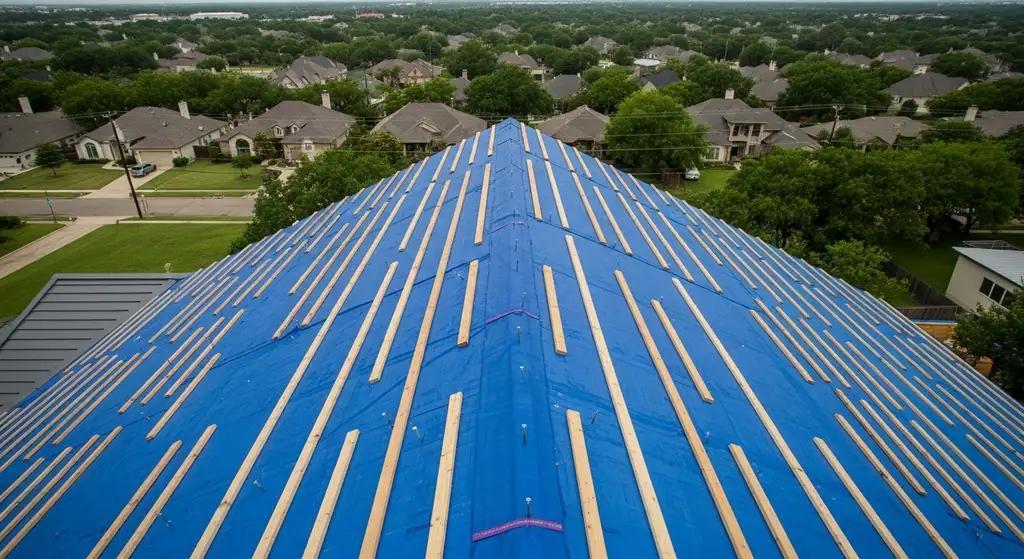
Occupational Safety and Health Administration (OSHA) guidelines require fall protection for work on roofs with a 4:12 pitch or greater. Once the rain stops, you can apply a temporary tarp secured with sandbags or 2×4 ‘sleepers’ to bridge the gap until a permanent repair can be performed according to IRC 2021 standards.
How to Diagnose Metal Roof Leak Sources
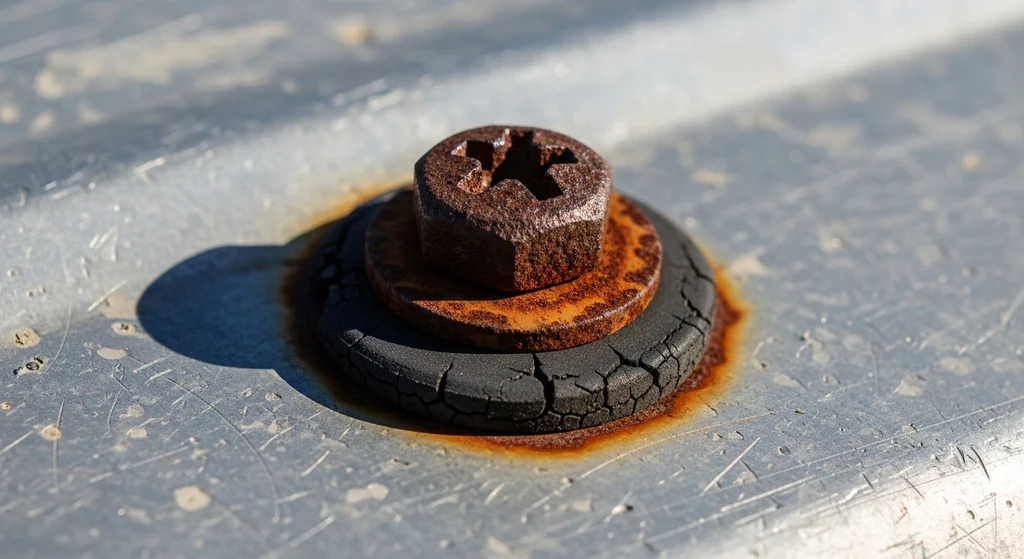
The most common leak points on a metal roof are the fasteners, which rely on a rubber washer to create a watertight seal. Over time, the extreme heat in the Dallas-Fort Worth area causes these washers to become brittle and crack, a process known as dry rot. You should inspect every screw head for ‘backing out,’ where the thermal movement of the panels literally unscrews the fastener from the wood decking. Check the transition points, such as where the roof meets a chimney or a valley, as these areas rely on flashing and sealants that meet ASTM D226 standards.
Look for signs of ‘chalking’ or oxidation on the metal surface, which can indicate where water is pooling. If the leak is near a plumbing vent, inspect the EPDM ‘boot’ for cracks or splits caused by UV degradation, which is a frequent failure point in North Texas.
Field Note from Experience
During an inspection in Plano, I found a roof where the previous installer used standard zinc screws instead of G-90 galvanized fasteners. The screws had rusted through in just five years, causing dozens of micro-leaks that the homeowner didn’t notice until their insulation was saturated. Replacing all 1,200 fasteners cost the family $2,800, but it saved them from a total roof replacement.
Technical Fastener and Sealant Specifications
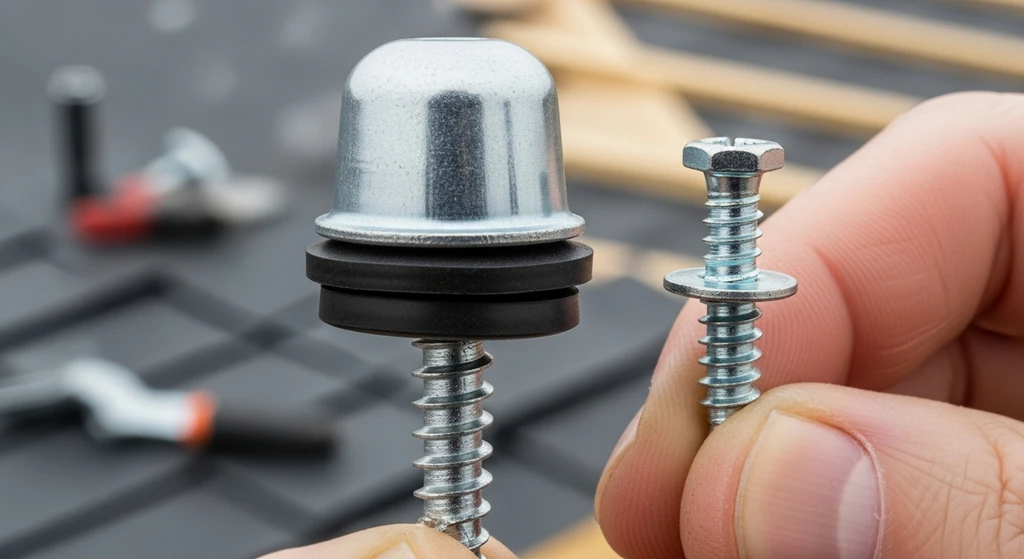
When replacing fasteners, you must use screws that are slightly larger in diameter than the ones you removed to ensure they ‘bite’ into the existing holes in the CDX plywood. I recommend using #14 diameter screws with an integrated EPDM washer that meets ASTM D1761 for mechanical fasteners. These provide a significantly better seal against the 100°F+ temperatures common in the DFW Metroplex compared to standard neoprene. For seam repairs, never use standard silicone caulk, as it does not adhere well to the Kynar 500 or Hylar 5000 coatings used on high-end metal panels.
Instead, specify a high-solids polyether or tripolymer sealant that remains flexible during thermal expansion. For overlapping panels, the International Code Council (ICC) recommends the use of butyl tape between the metal layers to create a gasket-like seal that wind-driven rain cannot penetrate.
| Required Material Standards | |
|---|---|
| Fastener Coating | G-90 Galvanized or Stainless Steel |
| Washer Material | EPDM (Ethylene Propylene Diene Monomer) |
| Sealant Type | ASTM C920 Class 25 or higher |
Common Repair Errors to Avoid in Texas
One of the biggest mistakes I see Dallas homeowners make is ‘over-driving’ the fasteners during a repair. If you tighten the screw too much, the EPDM washer will splay out and crown, which actually creates a funnel for water to enter the hole. Conversely, under-driving the screw leaves the washer loose, allowing wind to vibrate the panel and widen the opening over time. Another critical error is using ‘spray-on’ leak sealers seen on television commercials; these products are not compatible with metal roofing and will peel off within one summer season.
Furthermore, avoid using copper flashing or fasteners on a galvalume or aluminum roof. The dissimilar metals will cause a galvanic reaction, leading to rapid corrosion and holes in your roof that IRC R905 specifically prohibits.
Using Silicone on Kynar Coatings
Consequence: The sealant will lose adhesion within 12 months, leading to recurring leaks.
Mixing Dissimilar Metals
Consequence: Electrolysis will eat through the metal panels, causing permanent structural damage.
Repair Costs and Value Analysis in Dallas
In the current 2026 Dallas market, a professional minor repair for a metal roof typically starts at $450 for basic fastener replacement and seam sealing. If the leak has reached the synthetic underlayment or requires the replacement of multiple panels, costs can escalate to $1,500 or more. Compared to the $18,000 to $35,000 cost of a full metal roof replacement in the DFW Metroplex, timely repairs offer an incredible return on investment. You should consider a full replacement only if more than 25% of the fasteners have failed or if the panels show significant ‘pitting’ from previous hail damage that has compromised the protective coating.
For homes in North Texas, maintaining a metal roof is a 40-50 year investment, but only if the integrity of the fastener system is preserved through regular maintenance and high-quality ASTM-rated materials.
Dallas Market Pricing
In Dallas-Fort Worth, expect to pay $450-$1,500 per repair project. These are current 2026 Dallas market prices; costs can be 20% higher in remote Texas areas and 10% lower in rural counties. Prices fluctuate seasonally, with spring storm season driving 20-30% premium.
| Repair Type | Est. Dallas Cost (2026) | Expected Lifespan |
|---|---|---|
| Fastener Replacement (per Square) | $350 – $600 | 10-15 Years |
| Pipe Boot Replacement | $450 – $750 | 8-12 Years |
| Seam Resealing (per 50 ft) | $600 – $1,200 | 5-8 Years |
External Authoritative Resources
These industry-standard references support the information in this guide:
Building Codes
Frequently Asked Questions
Can I use roof cement to fix a metal roof leak?
No, standard asphalt-based roof cement will crack and peel off metal surfaces due to the high rate of thermal expansion. Use a polyether sealant that meets NRCA recommendations for metal systems.
How often should I check my metal roof fasteners in Dallas?
I recommend a professional inspection every 3-5 years, as the extreme DFW heat cycles can degrade EPDM washers faster than in cooler climates. This aligns with National Roofing Contractors Association (NRCA) maintenance best practices.
Does insurance cover metal roof leak repairs?
If the leak was caused by a sudden event like a Dallas hail storm or high winds, it is typically covered. However, leaks caused by oxidized sealants or old fasteners are considered ‘maintenance’ and are usually excluded.
What is the best sealant for a metal roof in Texas?
A high-quality polyether or tripolymer sealant is best because it withstands UV rays and stays flexible at 160°F. Ensure it meets ASTM C920 standards for high-movement joints.
Why is my metal roof leaking only during heavy rain?
This usually indicates a ‘capillary draw’ issue where water is being pulled upward between overlapping seams. Installing butyl tape according to IRC R905 standards will resolve this problem.
Is a leaking metal roof a sign I need a new roof?
Not necessarily. Most metal roof leaks are localized to fasteners or flashing and can be repaired for a fraction of the cost of a full replacement if caught early.
Final Thoughts
Fixing a leaking metal roof in the Dallas-Fort Worth area is a task that requires technical precision and the right materials to combat our extreme climate. By following IRC 2021 codes and utilizing high-quality ASTM-rated fasteners and sealants, you can extend the life of your roof by decades. Remember that metal roofing is a system; one small failure in a fastener can compromise the entire structure if left unaddressed. FIELD NOTE: I once worked with a family in Frisco whose insurance claim for interior water damage was denied because they had visible ‘temporary’ repairs that didn’t meet code.
The adjuster ruled it as ‘improper maintenance.’ Don’t let a $50 DIY mistake cost you a $20,000 claim. If you aren’t comfortable with the technical requirements of metal roof repair, hire a professional who understands the specific needs of North Texas homes.
