
Contractor’s Bottom Line
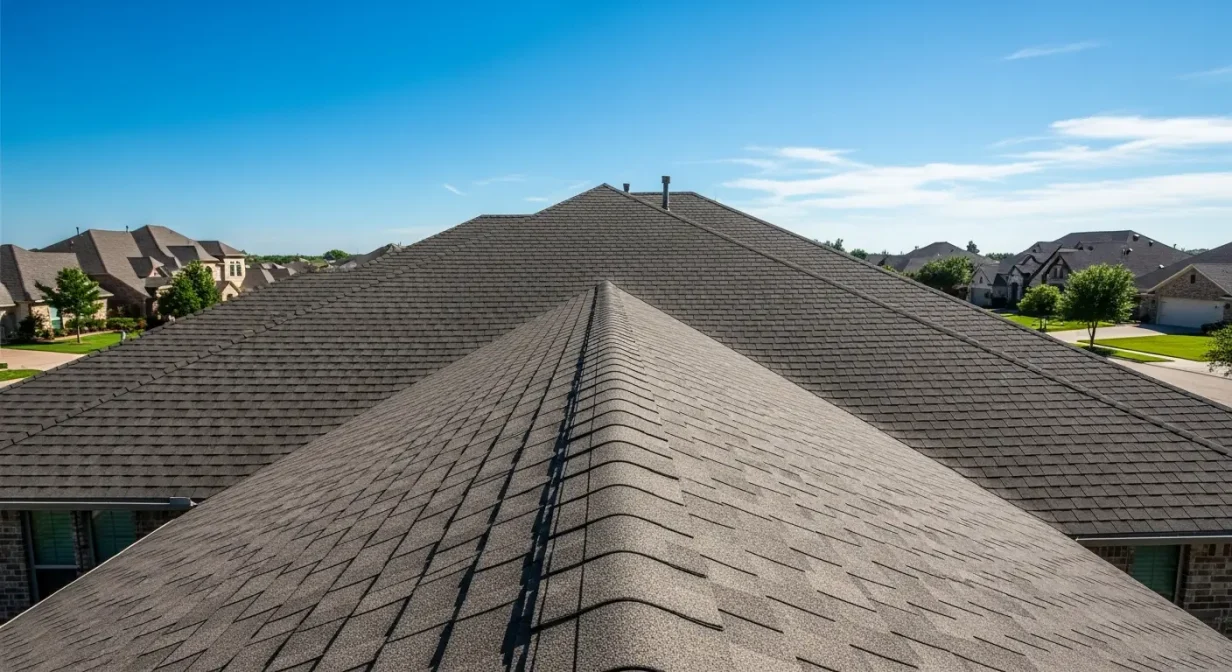
Roof vents are mechanical or static fixtures installed in the upper portion of the roof envelope to exhaust hot air from the attic. Options include ridge vents, turbines, and powered fans, all of which must be balanced with lower soffit intake vents per IRC R806. Select a vent type that matches the roof architecture and calculate the required net free area to achieve adequate attic air exchange.
Key Takeaways
- Maintain a 50/50 balance between intake (soffit) and exhaust (ridge or box) vents to comply with IRC R806.1.
- Avoid mixing different exhaust vent types, such as combining a ridge vent with a power fan, which causes ‘short-circuiting’.
- In the DFW Metroplex, high-profile vents are preferred to prevent snow or heavy rain infiltration during spring storm seasons.
Properly specified roof vents are the primary defense against the punishing Texas heat that can reach 150 degrees in an unventilated attic. In my eight years as a consultant in the DFW Metroplex, I have seen hundreds of roofs fail prematurely because the ventilation was treated as an afterthought rather than a structural necessity. FIELD NOTE #1: Last summer, a homeowner in Plano called me because their second-floor AC couldn’t keep up. I found their attic reached 162 degrees because a previous contractor installed 3-tab shingles over an unvented deck, causing $4,500 in shingle blistering and decking rot.
We had to retrofit a GAF Cobra ridge vent system to save the structure. Understanding the relationship between net free area (NFA) and the International Residential Code (IRC) is essential for any roofing project. Whether you are installing asphalt shingles or architectural shingles, the ventilation strategy must align with National Roofing Contractors Association (NRCA) recommendations to ensure warranty compliance and energy efficiency.
Types of Roof Vents and Material Composition
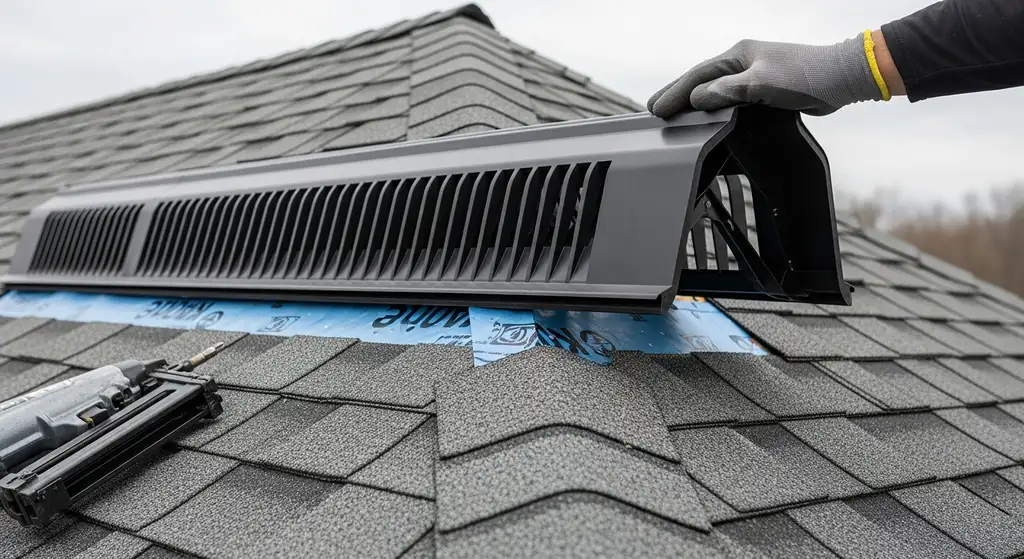
Roof vents are generally categorized into intake and exhaust components, with materials ranging from G-90 galvanized steel to high-impact polypropylene. Ridge vents, like those from GAF or CertainTeed, are often preferred for their low profile and continuous airflow along the peak. These systems often utilize a baffle design to create external pressure that draws air out of the attic space. Static box vents and turbine vents provide alternative exhaust solutions for roofs with limited ridge lines.
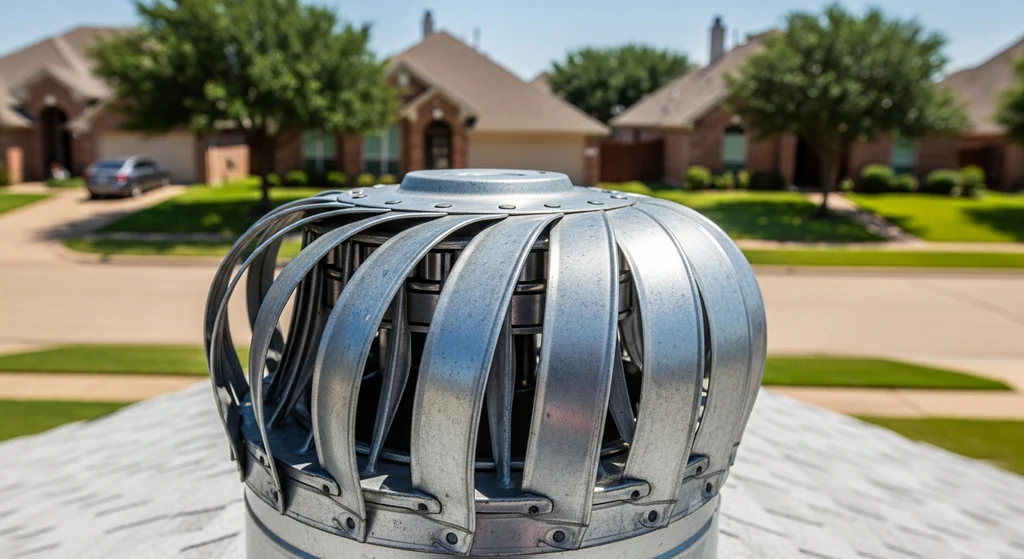
Turbines, often referred to as ‘whirlybirds’, use wind power to actively pull air, making them highly effective in the breezy North Texas plains. It is critical to ensure these components meet ASTM D1761 for mechanical fasteners and are installed with high-quality synthetic underlayment to prevent leaks around the penetrations.
| Common Vent Materials | |
|---|---|
| Galvanized Steel | G-90 Zinc Coating |
| Polypropylene | UV-Stabilized High-Impact |
| Aluminum | .025″ Minimum Thickness |
Code Compliance: IRC R806.1 and Ventilation Ratios
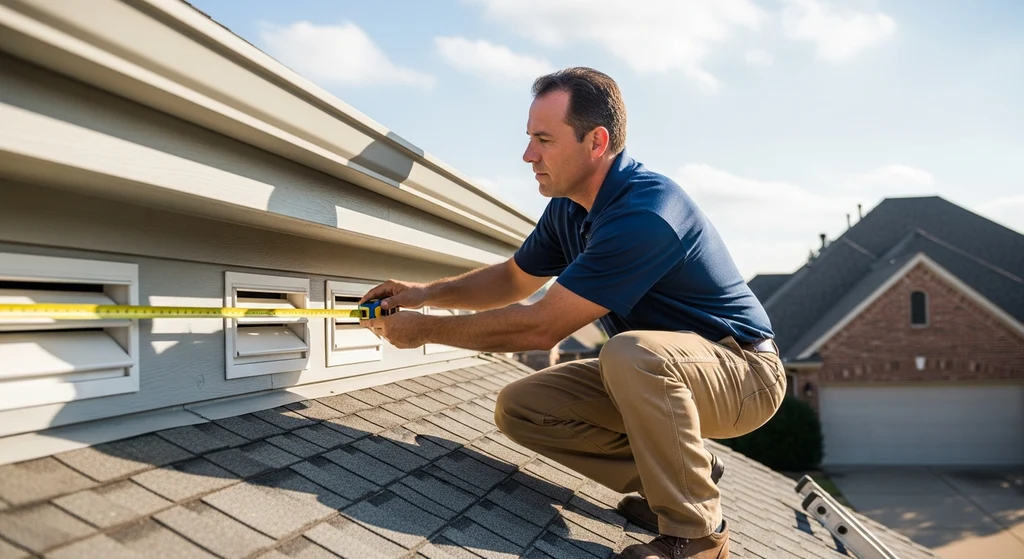
The International Residential Code (IRC) 2021, currently applicable in Dallas as of 2026, dictates strict requirements for attic ventilation. Section R806.1 requires that the net free ventilating area shall not be less than 1/150 of the area of the space ventilated. This ratio can be reduced to 1/300 if a vapor retarder is installed on the warm-in-winter side or if specific balance requirements are met between high and low vents. Failure to meet these codes can lead to building permit denials and the voiding of manufacturer warranties for architectural shingles.
In the DFW Metroplex, municipal inspectors frequently check for the 50/50 balance between soffit intake and ridge exhaust. I always specify that the intake area must exceed the exhaust area to maintain a slight positive pressure, preventing the ‘vacuum effect’ that draws conditioned air from the living space.
Field Note from Experience
FIELD NOTE #2: During a 2026 inspection in Frisco, I discovered a contractor had installed a power fan right next to a ridge vent. This created a ‘short-circuit’ where the fan pulled air from the ridge vent instead of the soffits, leaving the rest of the attic stagnant. The homeowner had to pay $1,200 to remove the fan and repair the decking.
Performance in the Dallas-Fort Worth Climate
The North Texas climate presents unique challenges for roof vents, including 100-degree summer days and violent spring hail storms. Vents must be rated for high-wind resistance and impact, as standard plastic box vents can be shattered by large hail common in the DFW Metroplex. I recommend metal-reinforced vents that meet UL 2218 Class 4 impact ratings to ensure longevity. Thermal expansion is another critical factor in Dallas, where temperatures can swing 40 degrees in a single day.
Ridge vents must be installed with enough flexibility to expand and contract without pulling the fasteners through the synthetic underlayment. We often see ‘buckling’ in poorly installed ridge vents that were nailed too tightly during the winter months.
Professional Installation Procedure for Ridge Vents
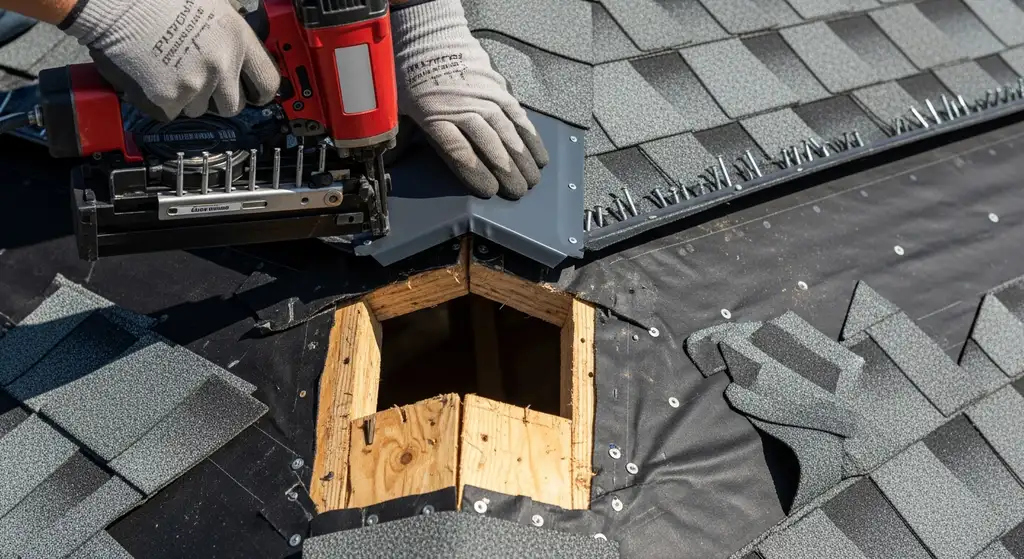
Installation begins with cutting a slot in the roof sheathing, typically 1 inch on each side of the ridge board, while stopping 6 to 12 inches from the end walls. We ensure that the cut does not damage the structural rafters or trusses, maintaining the integrity of the CDX plywood or OSB. The ridge vent is then centered over the slot and fastened using 1.75-inch or 2-inch galvanized roofing nails that penetrate through the shingles and into the deck. It is vital to use an ice and water shield or a high-quality synthetic underlayment meeting ASTM D226 standards at the ridge before the vent is placed.
This provides a secondary layer of protection against wind-driven rain. Finally, cap shingles are installed over the vent using longer fasteners to accommodate the additional thickness of the ventilation material.
Advantages
- Provides continuous airflow across the entire roof deck
- Low-profile aesthetic that blends with architectural shingles
- No moving parts to wear out or replace
Disadvantages
- Requires a long, continuous ridge line to be effective
- Can be prone to leaking if fasteners are not sealed correctly
- More expensive than individual box vents
Frequent Ventilation Failures and Errors
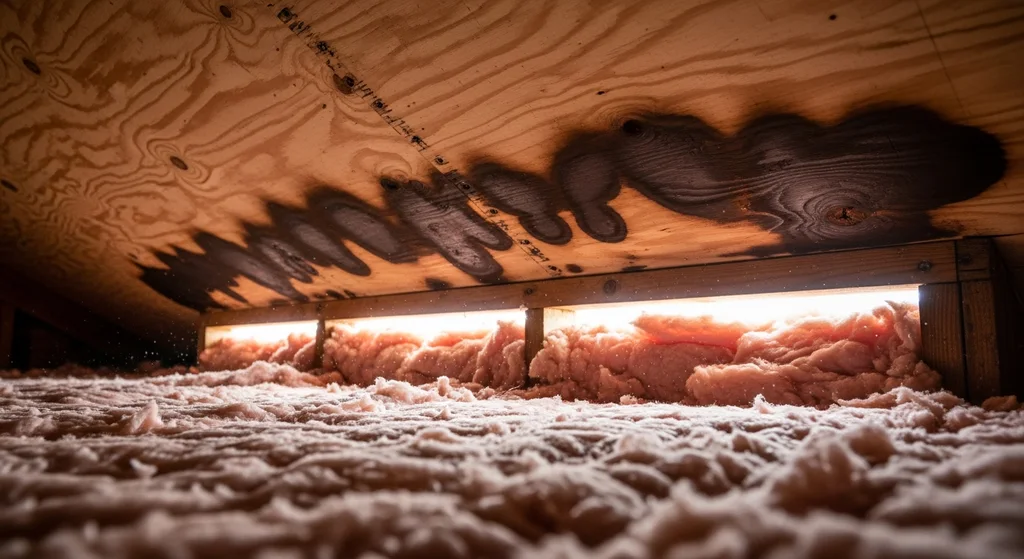
One of the most common errors I see in North Texas is ‘clogged intake’. Homeowners or insulation contractors often blow fiberglass or cellulose insulation into the eaves, completely blocking the soffit vents. Without intake, the exhaust vents are useless, leading to moisture buildup and mold on the underside of the OSB decking. Another critical error is the use of ‘mixed systems’.
Installing a solar-powered fan alongside a passive ridge vent causes the fan to pull air from the ridge vent rather than the soffit. This creates a localized cooling zone while leaving the rest of the attic in a ‘dead zone’. This mistake often leads to localized wood rot and localized shingle degradation over time.
Mixed Exhaust Systems
Typical Cost: $800 – $1,500
Prevention: Never install two different types of exhaust vents on the same roof plane.
Insurance Coverage: Typically not covered as it is considered a workmanship error.
Code Reference: IRC R806.1 Balance Requirements
The Hidden Realities of Ventilation Quotes
Many contractors in the DFW Metroplex will skip the calculation of Net Free Area (NFA) to save time, simply installing what they ‘always use’. This often results in an under-ventilated attic that meets the bare minimum code but fails to handle the 110-degree Dallas summers. I have seen markups of 40% on vent materials where a cheaper, non-baffled ridge vent is substituted for a high-performance model. Furthermore, some contractors will ignore the soffit intake entirely because it is labor-intensive to clear or install.
They focus only on the exhaust vents because they are visible from the street. Always demand a written ventilation calculation that shows the balance between intake and exhaust based on your specific attic square footage.
Contractor says ‘you have plenty of vents’ without measuring.
Consequence: You may void your shingle warranty and face higher energy bills.
What Contractors Hide
Substituting non-baffled vents
The Reality: Non-baffled vents can allow wind-driven rain to enter the attic during Texas thunderstorms.
Skipping soffit baffles
The Reality: Without baffles, new insulation will eventually block the intake, rendering the system useless.
External Authoritative Resources
These industry-standard references support the information in this guide:
Building Codes
Frequently Asked Questions
Can I mix a ridge vent with a power attic fan?
No, mixing exhaust types is a major error. The power fan will pull air from the ridge vent instead of the soffits, leaving most of your attic unventilated and potentially drawing rain into the house. Stick to one exhaust method as recommended by the NRCA.
How many vents do I need for a 2,000 square foot home?
Based on the IRC 1/150 rule, you need approximately 13.3 square feet of total Net Free Area. This should be split equally between intake (6.6 sq ft) and exhaust (6.6 sq ft) to maintain proper airflow balance.
Are turbine vents better than ridge vents for Dallas homes?
Turbines are excellent for moving large volumes of air in windy areas, but ridge vents offer more consistent, aesthetic ventilation across the entire roof deck. Both are effective if sized correctly according to ASTM standards.
Do roof vents help with electricity bills in Texas?
Yes, proper ventilation can reduce attic temperatures by 30-50 degrees, significantly lowering the load on your HVAC system. Energy Star research indicates this can save up to 15% on cooling costs during summer months.
What is Net Free Area (NFA)?
NFA is the actual open space in a vent that allows air to pass through, excluding louvers or screens. Manufacturers like GAF provide NFA ratings for all products to help meet IRC R806.1 requirements.
Does a new roof include new vents?
Typically, yes, but some contractors reuse old vents to cut costs. Always specify ‘all new ventilation’ in your contract to ensure they meet modern ASTM D1761 fastener standards and are not damaged by previous hail.
Final Thoughts
Specifying the correct roof vents is not just about code compliance; it is about protecting your largest investment from the extreme North Texas environment. By adhering to the 1/150 rule and ensuring a balanced system of intake and exhaust, you can extend the life of your architectural shingles and reduce your monthly energy expenditures. FIELD NOTE #3: I recently helped a family in Arlington who had mold growing on their rafters just three years after a new roof installation. The contractor had installed a beautiful ridge vent but never checked the soffits, which were solid wood with no holes.
We had to cut 20 new intake vents to fix the $6,000 mold issue. Don’t let this happen to you—verify your ventilation balance before the crew leaves the site.
