
Contractor’s Bottom Line
Flex seal roof products provide a temporary, cosmetic barrier over minor roof defects but are not a substitute for proper structural repairs. These liquid rubber coatings degrade rapidly under UV exposure and lack the adhesion properties required to withstand wind uplift pressures. Use these products only for emergency water diversion until permanent flashing or membrane repairs can be professionally executed.
Key Takeaways
- Flex Seal is classified as a temporary emergency patch and does not meet IRC 2021 code for permanent roof repairs.
- The extreme Dallas heat causes liquid rubber to expand and contract at different rates than asphalt shingles, leading to delamination.
- Professional Dallas roof repairs typically cost between $350 and $800, which is significantly cheaper than replacing moisture-damaged CDX plywood later.
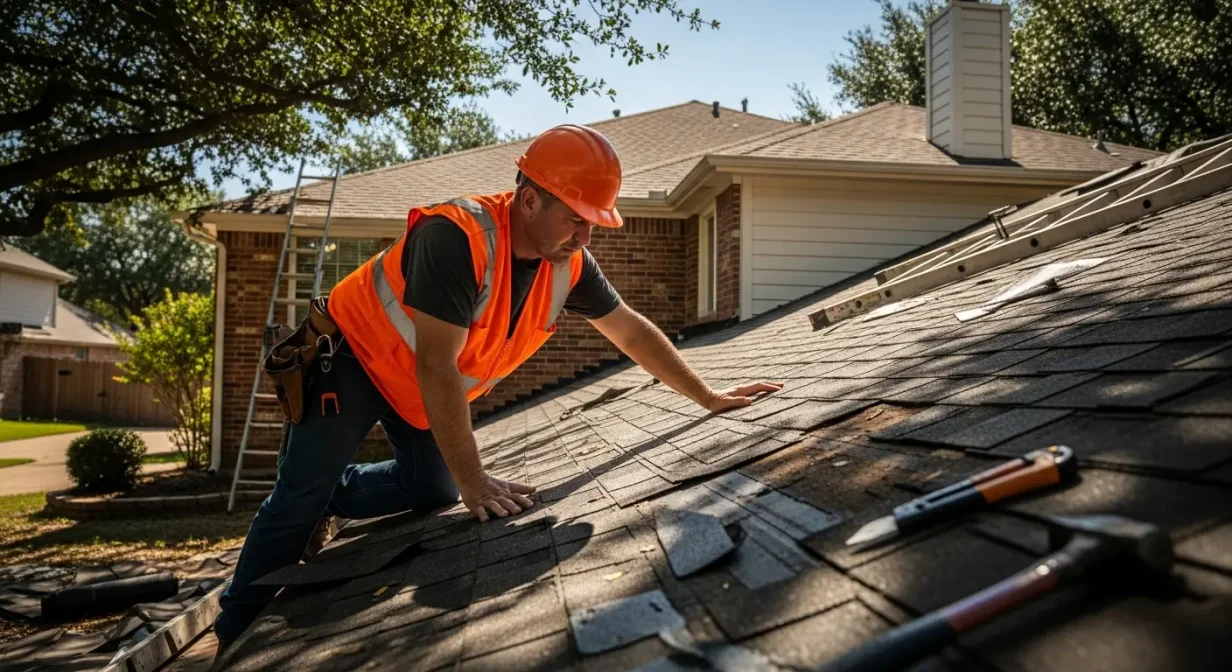
Dealing with a sudden roof leak in the DFW Metroplex is a high-stress situation, especially during the volatile spring storm season. Many homeowners consider using Flex Seal as a quick way to stop water from damaging their interiors. While liquid rubber products are marketed for versatility, they are rarely a substitute for proper flashing and ASTM-rated materials. FIELD NOTE #1: Last month, a Dallas homeowner in Lakewood called me after using Flex Seal on a chimney leak.
The DIY spray failed during a 105-degree July heatwave, resulting in $4,500 in interior ceiling damage that their insurance company eventually denied because the repair was not considered ‘workmanlike’ or code-compliant. I had to explain that temporary fixes often mask deeper structural issues. As a consultant, I recommend understanding the difference between an emergency patch and a long-term solution. The National Roofing Contractors Association (NRCA) provides specific standards for repairing asphalt shingles that ensure your home stays dry and your warranty remains intact.
This guide examines whether these DIY products actually hold up against the unique environmental stressors of North Texas.
Flex Seal vs. Permanent Roofing Repairs
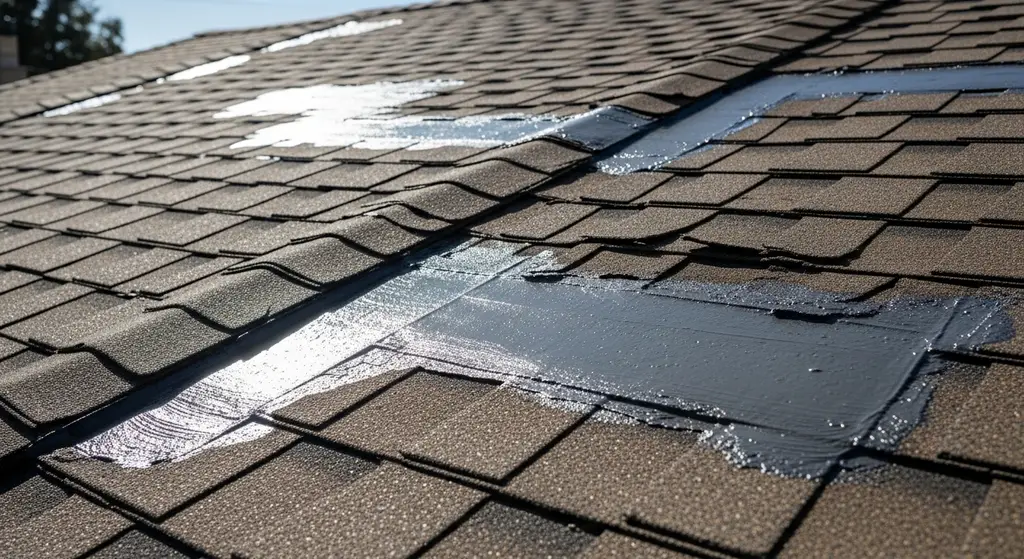
Flex Seal operates as a liquid-applied rubber coating that creates a waterproof barrier upon curing. However, in the roofing industry, we distinguish between ‘waterproof’ and ‘weatherproof’ for long-term durability. Most residential roofs in Dallas-Fort Worth use architectural shingles which require mechanical flashing and synthetic underlayment to shed water effectively. Liquid sealants often lack the breathability required for attic ventilation systems.
When you spray a thick layer of rubber over a leak, you may inadvertently trap moisture against the OSB or oriented strand board decking. This leads to localized wood rot and mold growth that remains hidden until the structural integrity of the roof deck is compromised.
| Sealant vs. Professional Repair | |
|---|---|
| Flex Seal Lifespan | 3-6 months in Texas heat |
| Professional Repair Lifespan | 5-10 years (material dependent) |
| Code Compliance | Non-compliant for permanent use |
Performance in the Dallas-Fort Worth Climate
The DFW Metroplex presents a brutal environment for any roofing material, particularly liquid-based products. Our temperature swings can exceed 40 degrees in a single day, causing significant thermal expansion and contraction. While Flex Seal is flexible, it often loses its bond with asphalt shingles when surface temperatures hit 150 degrees on a Dallas summer afternoon. Furthermore, North Texas is known for high-velocity winds and large hail.
A thin layer of liquid rubber offers zero impact resistance compared to UL 2218 Class 4 rated shingles. During a typical spring storm, the sealant can be stripped away or punctured, leaving the underlying felt underlayment or ice and water shield exposed to the elements.
Advantages
- Inexpensive for immediate 24-hour emergency use
- Easy for homeowners to apply without specialized tools
Disadvantages
- Rapid degradation from UV exposure in Texas
- Cannot be easily removed once cured, complicating future repairs
- Does not meet ASTM D3043 standards for structural integrity
Field Note from Experience
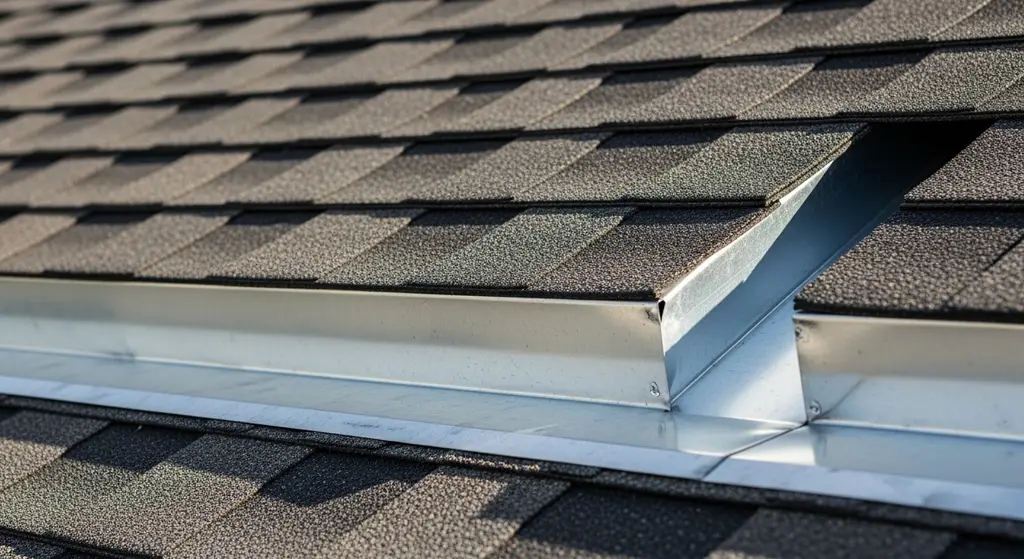
On a project in North Dallas, I discovered that a client had used several cans of Flex Seal to ‘seal’ their valley flashing. The rubber had actually trapped debris and water, causing the galvanized steel to rust through in less than a year, necessitating a $2,200 valley reconstruction.
IRC 2021 Code Compliance and Standards
The International Residential Code (IRC) is very specific about how roof repairs must be conducted in Dallas. IRC R905.1 requires that all roof coverings be installed in accordance with the manufacturer’s instructions. No major shingle manufacturer, such as GAF or CertainTeed, lists Flex Seal as an approved repair method for their warranty-backed systems. Additionally, IRC R908.3 states that if a roof has more than two layers of roofing, it must be completely replaced.
Applying thick layers of liquid sealant can sometimes be interpreted by building inspectors as an unapproved additional layer. To maintain your home’s value and pass a Dallas County building inspection, repairs should utilize code-approved materials like ASTM D226 felt or compatible synthetic underlayments.
Using sealants on structural leaks
Consequence: Voids manufacturer warranties and may lead to insurance claim denial.
Dallas Repair Costs: DIY vs. Professional
In the Dallas-Fort Worth area, a professional roof repair for a standard leak around a pipe boot or chimney typically ranges from $350 to $750. This includes the removal of damaged shingles, installation of new G-90 galvanized flashing, and matching 3-tab or architectural shingles. While a $15 can of sealant seems cheaper, the long-term cost of ownership is significantly higher. If a DIY repair fails and leads to decking failure, you will be looking at replacing CDX plywood or OSB sheets.
In the current 2026 market, replacing a single 4×8 sheet of roof decking in Dallas costs approximately $110-$150 including labor. If the leak spreads across a large area, a full roof replacement in DFW can range from $12,000 to $25,000 depending on the square footage and material grade.
Dallas Market Pricing
In Dallas-Fort Worth, expect to pay $350-$800 per repair incident. These are current 2026 Dallas market prices; costs vary by region and can be 15-25% higher in remote Texas areas. Peak pricing occurs spring (March-May) storm season.
| Repair Type | DIY Cost (Sealant) | Professional Cost (Dallas) |
|---|---|---|
| Pipe Boot Leak | $20 – $50 | $350 – $500 |
| Valley Repair | $40 – $100 | $600 – $1,200 |
| Chimney Flashing | $30 – $80 | $500 – $900 |
External Authoritative Resources
These industry-standard references support the information in this guide:
Building Codes
Frequently Asked Questions
Can I use Flex Seal on my roof for an emergency?
Yes, it can work as a very temporary emergency patch during a storm, but it should be replaced by a professional repair following NRCA standards as soon as weather permits. (no /)
Does Flex Seal void my roof warranty?
Most manufacturers like GAF or Owens Corning will void the warranty on the affected area because liquid sealants are not an approved ASTM D3043 repair method. (no /)
How long does Flex Seal last on a roof in Texas?
Due to high UV index and thermal expansion in Dallas, expect liquid rubber sealants to begin cracking or peeling within 3 to 6 months. (no /)
Is Flex Seal better than roofing cement?
Roofing cement meeting ASTM D4586 is generally superior for small shingle repairs as it is specifically formulated for asphalt compatibility, unlike general-purpose sprays. (no /)
Will insurance cover damage if I used Flex Seal?
Insurance adjusters often view DIY sealants as ‘temporary maintenance.’ If the sealant fails, they may deny coverage for subsequent interior damage citing ‘neglect’ or ‘improper repair.’ (no /)
What is the best way to fix a roof leak permanently?
A permanent fix requires replacing the damaged shingles and metal flashing according to IRC R905 code requirements and manufacturer specifications. (no /)
Final Thoughts
While the convenience of a spray-on solution is tempting, Flex Seal is not a viable long-term strategy for maintaining a roof in the DFW Metroplex. The combination of intense heat, UV degradation, and strict IRC 2021 building codes makes professional repairs using ASTM-rated materials the only way to protect your home’s value and safety. FIELD NOTE #3: I recently consulted for a family in Plano who tried to save $400 by ‘Flex Sealing’ their roof vents. They ended up with a slow leak that rotted three sheets of OSB decking over two years.
The final bill was $3,800 for structural repairs that could have been avoided with a simple $150 pipe boot replacement. Don’t let a $20 can of spray turn into a multi-thousand dollar headache. When in doubt, always prioritize mechanical flashing over liquid shortcuts.
