
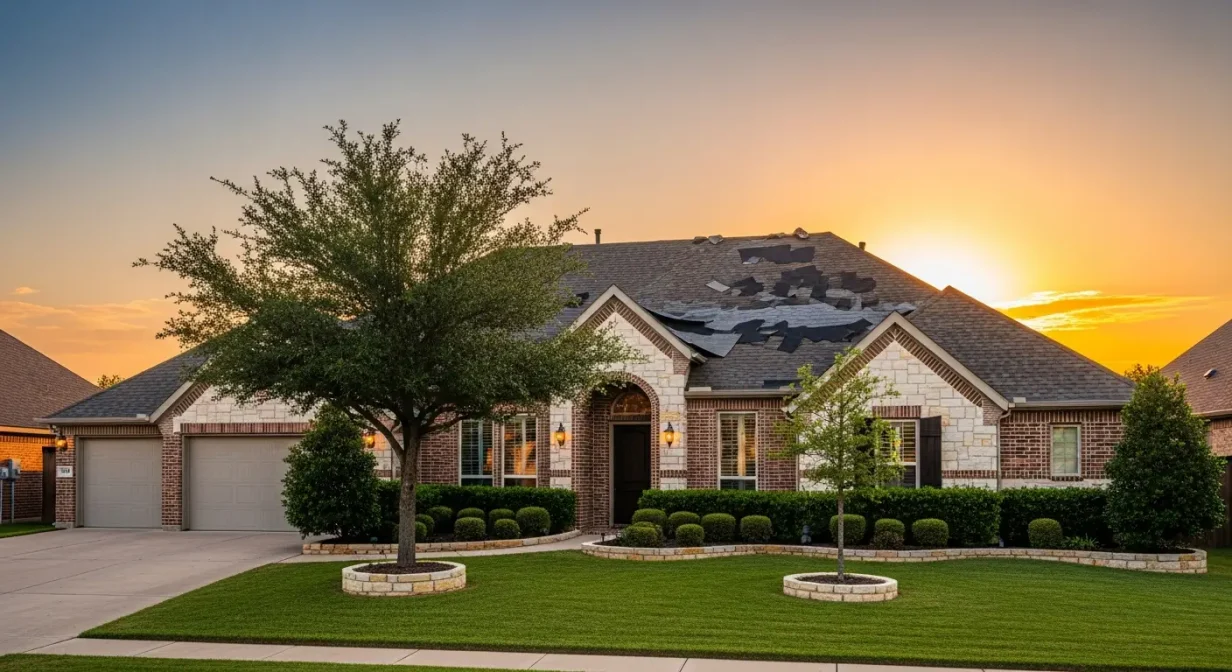
Contractor’s Bottom Line
Shingles lifting is a critical failure often caused by poor attic ventilation or improper nailing patterns that violate IRC R905.2.6. In the Dallas-Fort Worth area, extreme UV exposure and thermal expansion can degrade the sealant strip on architectural shingles like GAF Timberline HDZ. Repairing isolated lifting tabs typically costs $350 to $650, but widespread lifting often indicates a system-wide failure requiring full replacement ($10,000-$18,000). Homeowners should ensure all repairs meet ASTM D3161 Class F wind resistance standards to withstand North Texas storm seasons.
Key Takeaways
- Lifting shingles are often the result of ‘thermal shock’ caused by inadequate ventilation violating IRC R806.1.
- Fasteners must be installed according to ASTM D3462 to ensure the sealant strip activates properly.
- In Dallas County, shingles must meet high-wind uplift requirements of at least 110 mph per the International Residential Code.
When you notice shingles lifting on your roof, it is rarely just an aesthetic issue. In the DFW Metroplex, our intense heat cycles cause rapid expansion and contraction of asphalt shingles, which can break the factory-applied adhesive bond. This phenomenon often leads to ‘fish-mouthing’ or curling, leaving the underlying synthetic underlayment exposed to the elements. I have seen many homeowners ignore a few lifted tabs only to face massive interior damage after a spring storm.
The National Roofing Contractors Association (NRCA) emphasizes that a sealed roof system is the primary defense against water intrusion. If the sealant strip fails, the wind uplift resistance of the entire assembly is compromised, regardless of the material’s age. FIELD NOTE: Last month, a Dallas homeowner in Highland Park called me after a minor rainstorm resulted in $14,000 in interior ceiling damages. I discovered that their 3-tab shingles were lifting due to improper nail placement, which is a direct violation of IRC R905.2.6.
Because the shingles weren’t fastened in the common bond, the wind simply peeled them back like a banana skin.
Recognizing the Early Signs of Shingle Lifting
The first sign of shingle lifting is often subtle curling at the corners or edges of individual asphalt shingles. This is frequently referred to as ‘clawing’ when the center rises or ‘curling’ when the edges turn upward. Both conditions indicate that the shingles are losing their structural integrity and are no longer adhering to the course below. You may also notice ‘fish-mouthing,’ where the shingle creates a hump in the center of the tab.
This usually happens when the shingles were installed over damp felt underlayment or if the attic temperature is excessively high. According to ASTM D228 standards, shingles must remain flat to provide effective shedding of water away from the roof deck. In Dallas-Fort Worth, look for these signs specifically on south-facing roof slopes where UV degradation is highest. If you see shadows under the shingle edges during the midday sun, the sealant bond has likely failed.
This leaves the roof vulnerable to wind-driven rain that can bypass the ASTM D4869 underlayment and rot the CDX plywood sheathing.
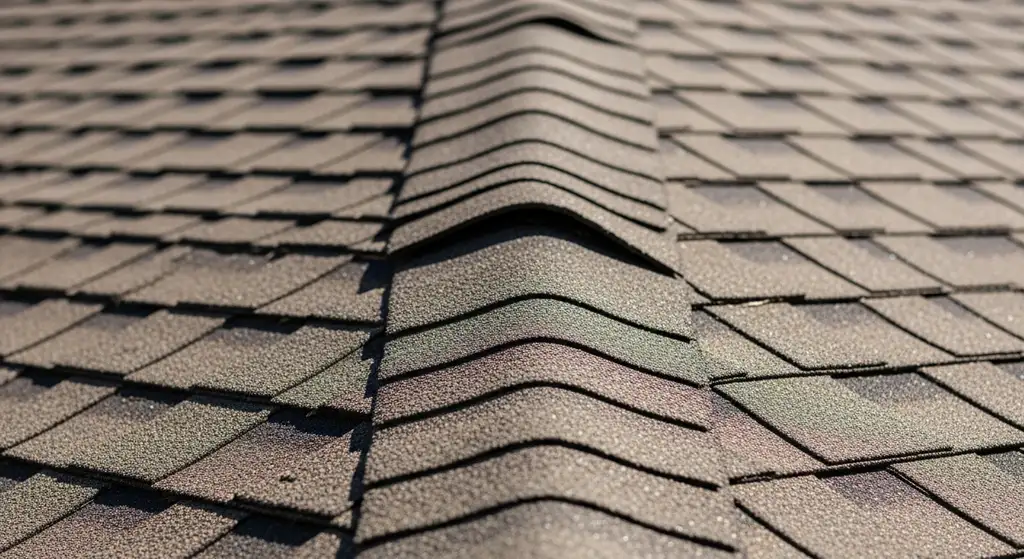
Fish-mouthing
Typical Cost: $450 – $800
Prevention: Proper attic ventilation per IRC R806.1
Insurance Coverage: Often excluded if due to wear and tear
Code Reference: IRC R905.2
Why Shingles Lift: Thermal Shock and Poor Ventilation
One of the primary reasons for shingles lifting in North Texas is inadequate attic ventilation. When heat builds up in the attic, it literally bakes the shingles from the underside, causing the volatiles in the asphalt to evaporate. The International Code Council (ICC) requires a specific ratio of net free ventilating area to prevent this premature failure. Improper nailing is another common culprit I encounter during inspections.
If a roofer ‘high-nails’ the shingles, they miss the double-layer common bond area, which significantly reduces wind uplift resistance. The National Roofing Contractors Association (NRCA) recommends four to six nails per shingle, depending on the roof slope and local wind zone requirements. Additionally, the use of low-quality organic felt underlayment instead of modern synthetic underlayment can contribute to lifting. Organic felt absorbs moisture and can wrinkle, pushing the shingles upward from underneath.
We always specify materials like Advantech for decking and high-performance underlayment to ensure a flat, stable substrate that conforms to ASTM D1970 standards.
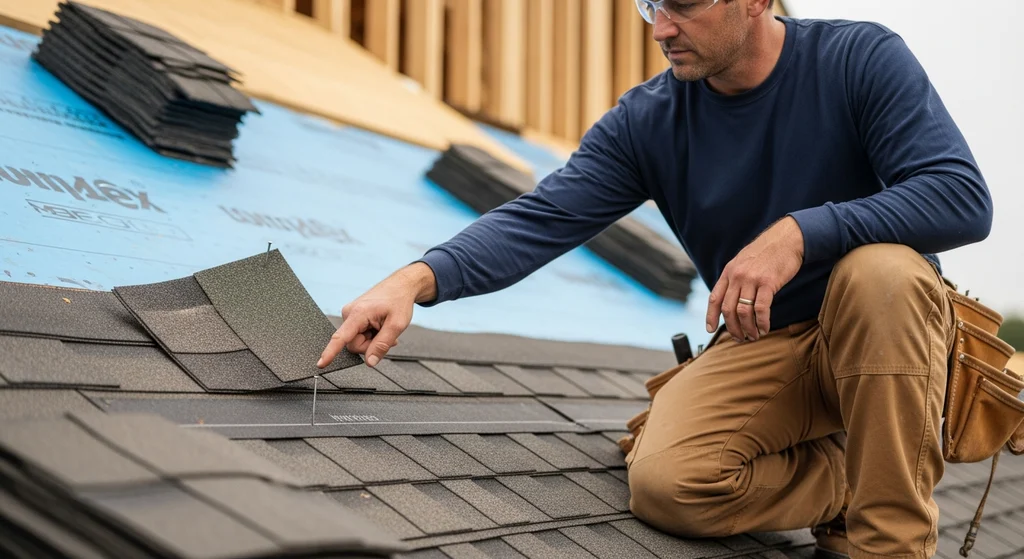
| Primary Causes of Lifting | |
|---|---|
| Thermal Expansion | Caused by 100°F+ Dallas summer days |
| Improper Fastening | Violates IRC R905.2.6 |
| Poor Ventilation | Exceeds manufacturer temperature limits |
Field Note from Experience
During an inspection in Arlington, I discovered that a five-year-old roof was failing because the contractor skipped the starter course. This resulted in the first row of shingles lifting across the entire eave, which would have cost the homeowner $2,500 in mold remediation if we hadn’t caught it before the spring rains. We had to perform a targeted repair to bring the edge detail up to IRC R905.2.8.5 standards.
Assessing the Risk: When Lifting Becomes an Emergency
Not every lifted shingle requires an immediate full roof replacement, but the severity must be assessed by a professional. If more than 15% of the roof surface shows signs of lifting or curling, the system’s ability to withstand a North Texas windstorm is compromised. This is especially true for older 3-tab shingles which lack the weight and adhesive strength of modern architectural shingles. When shingles lift, they create a ‘sail’ effect during high winds.
A single lifted tab can allow the wind to get underneath the surrounding shingles, leading to a chain reaction of blow-offs. FEMA guidelines for high-wind regions emphasize that maintaining the integrity of the roof cover is the most important factor in preventing total structural loss during severe weather. If you notice shingles lifting near critical junctions like valleys, chimneys, or dormers, this is considered a high-priority repair. These areas rely on integrated flashing and sealant to remain watertight.
A failure here often leads to immediate leaks into the building envelope, which can damage insulation and drywall, potentially costing thousands in secondary repairs.
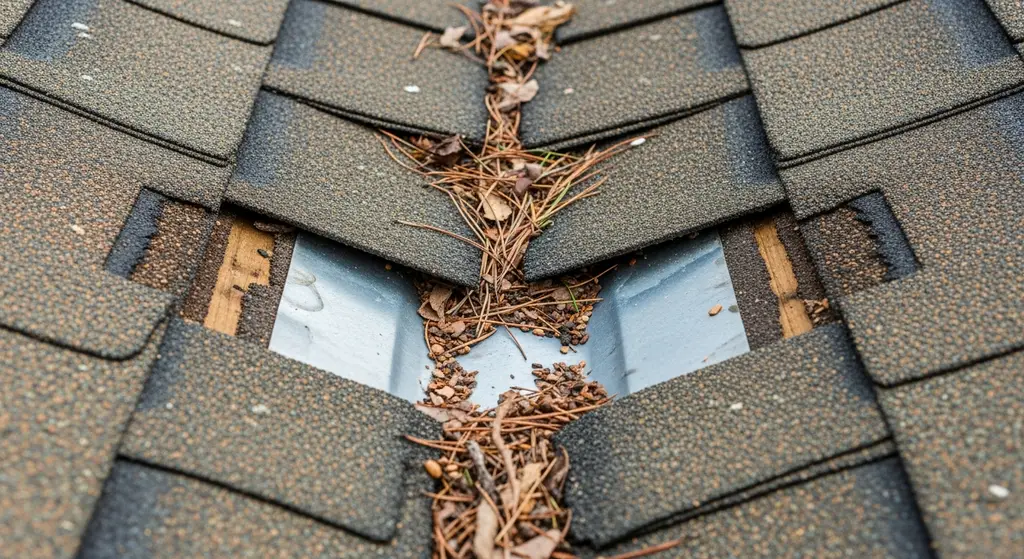
Missing Sealant Strips
Consequence: Total shingle blow-off during 60mph+ winds
Exposed Nail Heads
Consequence: Direct water path to the roof decking
Professional Inspection Protocols for Lifting Shingles
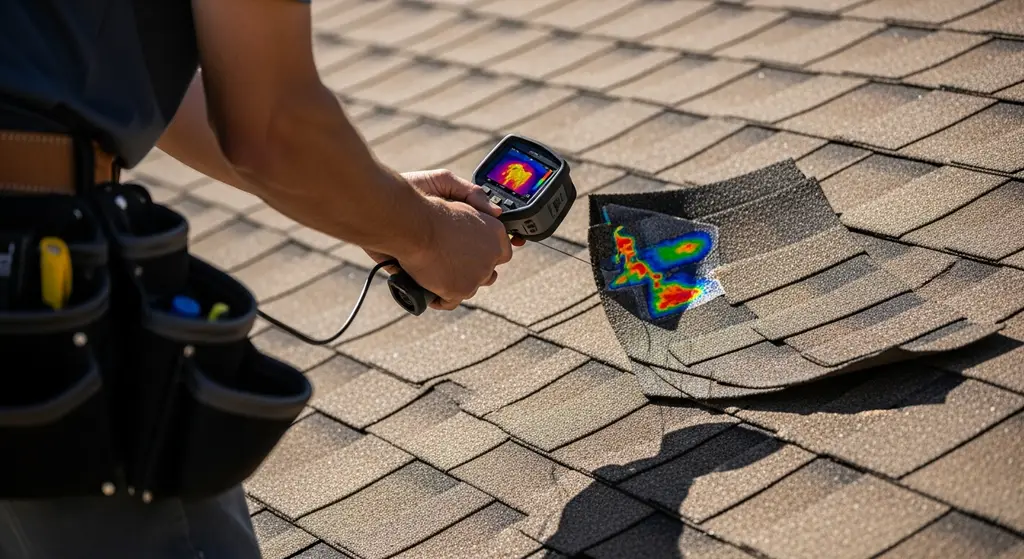
A thorough inspection for lifting shingles involves more than just a quick look from the ground. We use a ‘tab test’ where we gently attempt to lift shingles in various sections of the roof to check the strength of the adhesive bond. If the shingles lift with minimal pressure, the sealant has reached the end of its functional life or was never properly activated. We also utilize infrared thermography to detect moisture trapped under lifted shingles.
In the Dallas heat, damp insulation or wet OSB (oriented strand board) will hold heat differently than dry areas, allowing us to see leaks before they manifest as spots on your ceiling. This method is highly effective for identifying the extent of damage without invasive tearing. Finally, we verify that the installation meets the International Residential Code (IRC) for the DFW Metroplex. This includes checking the drip edge installation and ensuring that the shingles overlap correctly per ASTM D3043.
We look for ‘shiners,’ which are nails that were driven into the gaps between the roof sheathing rather than into the solid wood.
What Contractors Hide
Relying on drone-only inspections
The Reality: Drones cannot perform ‘tab tests’ to check adhesive bond strength.
Long-Term Solutions to Prevent Shingle Failure
Preventing shingles from lifting starts with choosing the right materials for the Texas climate. I recommend architectural shingles that carry a UL 2218 Class 4 impact rating and an ASTM D3161 Class F wind rating. These products are designed with reinforced nail zones and superior adhesives that can withstand the 100°F+ temperatures common in North Texas. Proper attic ventilation is the single most effective way to extend the life of your shingles.
Installing a balanced system of soffit vents for intake and ridge vents for exhaust ensures that the attic temperature remains within 15-20 degrees of the outside air. This prevents the ‘baking’ effect that causes shingles to curl and lift prematurely. Lastly, ensure your contractor uses high-quality fasteners and follows the manufacturer’s specific nailing pattern. For roofs in Dallas County, we often recommend a 6-nail pattern instead of the standard 4-nail pattern to provide extra security against wind uplift.
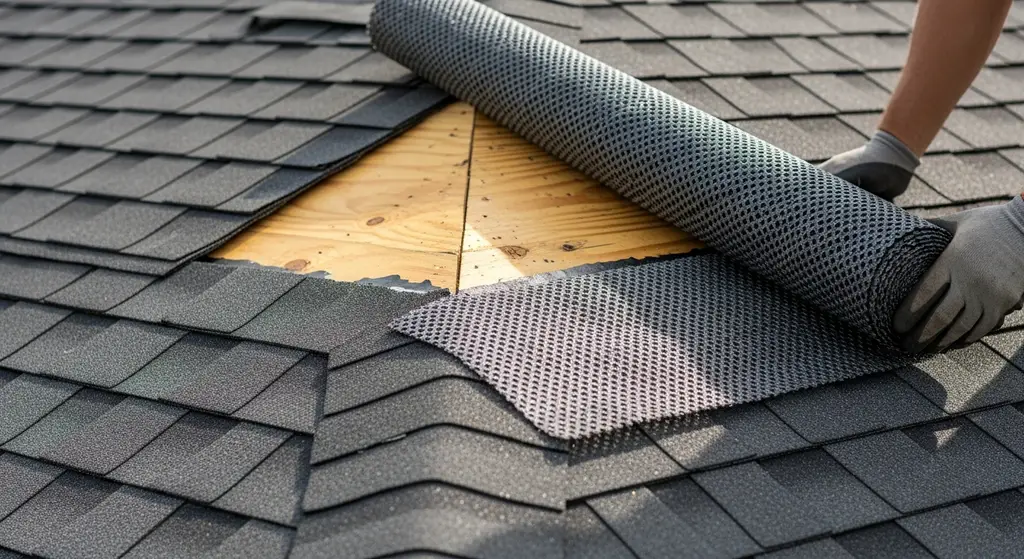
Using a high-quality synthetic underlayment also provides a smoother surface for the shingles to bond to compared to traditional felt.
Field Note from Experience
I recently worked with a family in McKinney whose 10-year-old roof looked like it was 25 years old. The shingles were lifting because the previous builder had blocked the soffit vents with insulation. By spending $400 to install baffles and clear the vents, we saved them from a $16,000 premature roof replacement. Always check your intake air before blaming the shingles.
External Authoritative Resources
These industry-standard references support the information in this guide:
Building Codes
Frequently Asked Questions
Can I just glue down lifting shingles?
While you can use roofing cement for a temporary fix, it is not a permanent solution if the shingle has already lost its granules or curled significantly. The NRCA recommends replacing the damaged shingle to ensure the water-shedding integrity of the system is maintained.
Does insurance cover lifting shingles?
Insurance typically covers lifting if it was caused by a sudden wind event or hail. However, if the lifting is due to age or poor ventilation, it is considered a maintenance issue and is usually excluded from coverage under most Texas policies.
How much does it cost to fix lifted shingles in Dallas?
For minor repairs involving a few tabs, expect to pay between $350 and $600 in the DFW Metroplex. If the problem is widespread, a full replacement is often more cost-effective in the long run to avoid repeated repair bills.
Why are my new shingles lifting?
New shingles may lift if they were installed during cold weather and the sealant strip hasn’t had enough heat to activate. In Dallas, this usually resolves after the first few warm days, but if they remain unsealed, it may indicate a manufacturing defect or improper storage.
What is the best shingle for high winds in Texas?
Look for shingles with an ASTM D7158 Class H rating, which is the highest wind resistance rating available. Brands like CertainTeed Landmark or GAF Timberline HDZ are popular choices in North Texas for their strong adhesive bonds.
Is lifting the same as wind damage?
Not necessarily. While wind can cause lifting, shingles can also lift due to thermal expansion or poor installation. A professional inspection is required to determine if the cause is a covered peril or a structural failure.
Final Thoughts
Lifting shingles are a clear warning sign that your roof’s protective barrier is failing. In the harsh climate of Dallas-Fort Worth, addressing these issues early can mean the difference between a simple repair and a total loss. By ensuring your roof meets IRC 2021 standards and has proper ventilation, you can protect your home from the unpredictable North Texas weather. Don’t wait for a leak to appear on your ceiling to take action.
If you see signs of curling or lifting, have a qualified consultant evaluate the system to ensure it meets the necessary ASTM standards for safety and longevity. A proactive approach today will save you thousands in the future. FIELD NOTE: I always tell my clients in Southlake that a roof is a system, not just a product. I once saw a roof where the shingles were perfectly fine, but they were lifting because the contractor used the wrong fasteners, violating ASTM D1761.
That mistake led to an $18,000 replacement that could have been avoided with a simple $50 box of the correct nails.
