

Contractor’s Bottom Line
Spray foam roof insulation creates a continuous air barrier and high thermal resistance layer directly applied to the underside of the roof deck. Closed-cell foam provides both insulation and vapor retardation in a single application, eliminating the need for separate vapor barriers in unvented attic designs. Ensure the substrate is clean and dry before application, as moisture trapped beneath the foam will cause rapid wood decay.
Key Takeaways
- Closed-cell spray foam provides a superior R-value of 6.5+ per inch, significantly exceeding Energy Star requirements for North Texas.
- IRC 2021 Section R905.11 mandates specific application thicknesses and protective coatings for SPF roofing systems.
- In the Dallas-Fort Worth area, SPF roofs must be finished with a UV-resistant coating to prevent degradation from intense Texas sun exposure.
Installing spray foam roof insulation is one of the most impactful upgrades a homeowner in the DFW Metroplex can make to their building envelope. Unlike traditional fiberglass batts or blown-in cellulose, spray foam expands to fill every void, creating an airtight seal that prevents thermal bridging. The National Roofing Contractors Association (NRCA) recognizes spray foam for its ability to provide both insulation and a secondary water barrier. FIELD NOTE #1: Last summer, a Dallas homeowner in the M-Streets called me because their upstairs bedroom wouldn’t stay below 80 degrees despite a new HVAC system.
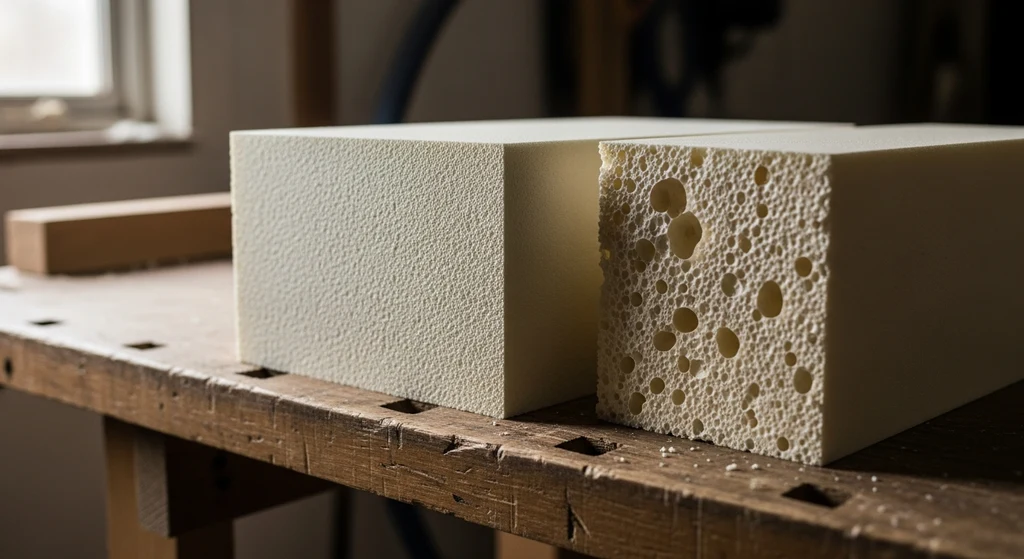
We found their attic was reaching 150 degrees due to poor ventilation and traditional insulation failure. After installing three inches of closed-cell spray foam, their attic temperature dropped to within 5 degrees of the living space, saving them nearly $200 a month on electricity. Choosing the right SPF system requires understanding the nuances between open-cell and closed-cell varieties. While open-cell is more affordable, closed-cell foam offers structural reinforcement and a higher moisture resistance rating per ASTM International standards.
In our local climate, selecting the wrong density can lead to moisture entrapment and premature deck rot.
Chemical Composition and Material Science of SPF
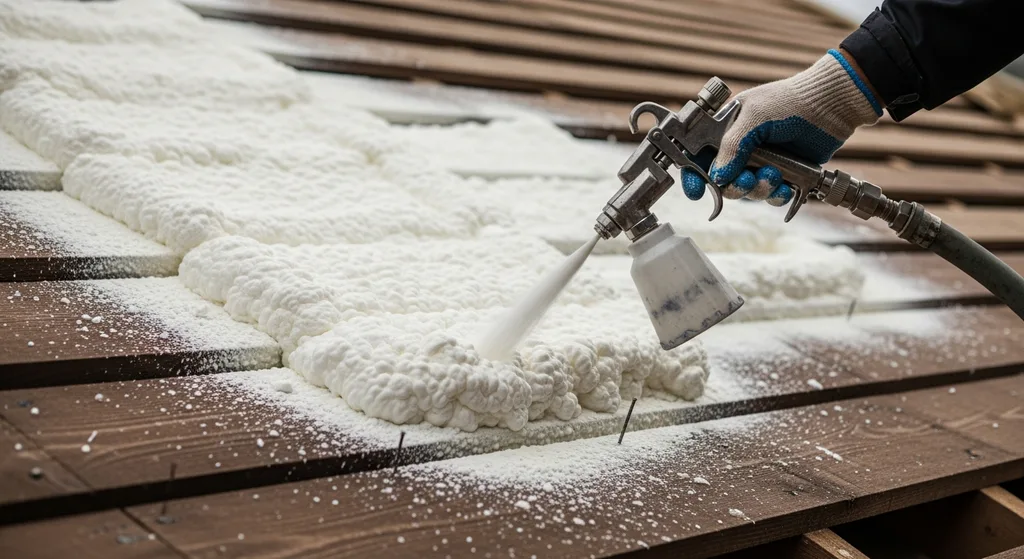
Spray Polyurethane Foam is created by a chemical reaction between two primary components: an ‘A’ side consisting of isocyanates and a ‘B’ side containing polyol resins and catalysts. When these components meet at the spray gun tip, they expand up to 30 times their liquid volume within seconds. This rapid expansion allows the material to conform to complex Dallas roof geometries that standard asphalt shingles or synthetic underlayment cannot protect. The National Roofing Contractors Association (NRCA) emphasizes that the quality of the foam is highly dependent on the ambient temperature and humidity during application.
In the Dallas-Fort Worth area, we must carefully monitor the ‘dew point’ to ensure the substrate is dry before spraying. Failure to do so can result in delamination, where the foam pulls away from the CDX plywood or OSB decking, compromising the entire system.
Performance in the Extreme North Texas Climate
Dallas-Fort Worth presents a unique challenge for roofing materials due to 100-degree summer days followed by sudden spring hail storms. Spray foam roof insulation excels here because it lacks the seams found in traditional systems, which are often the primary failure points during high-wind events. FEMA has actually noted that SPF roofs provide enhanced wind uplift resistance compared to standard architectural shingles. Thermal expansion and contraction are the silent killers of roofs in the DFW Metroplex.
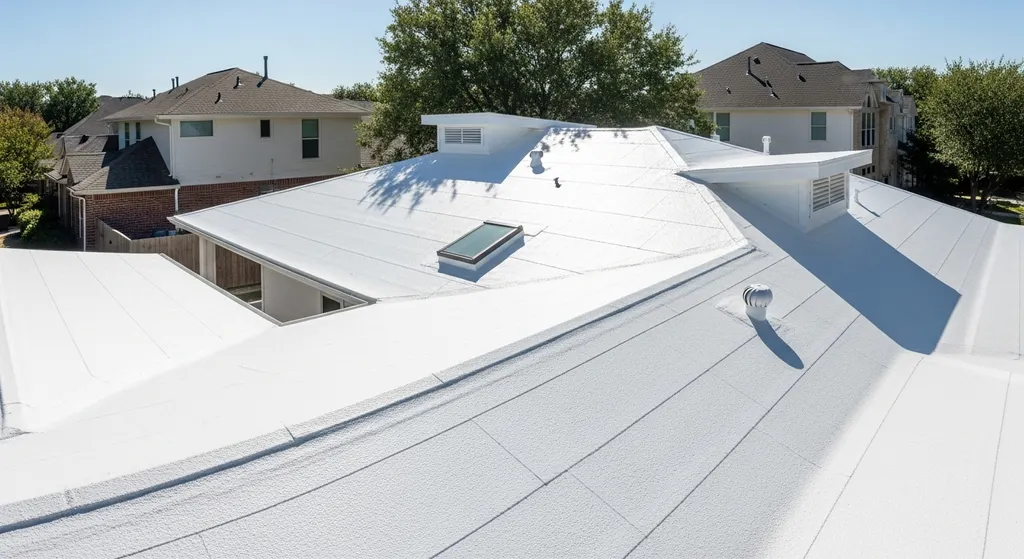
Because SPF is flexible, it moves with the structure during our 40-degree daily temperature swings without cracking. However, it must be protected by a high-quality elastomeric coating to shield it from the intense UV radiation that characterizes our region. Without this coating, the foam will become brittle and lose its R-value within months.
Field Note from Experience
I’ve seen SPF systems in Richardson survive 2-inch hail that completely totaled neighboring roofs with 3-tab shingles. The foam’s ability to absorb impact energy, combined with a thick silicone topcoat, prevented a $25,000 replacement for one of my clients in 2026.
Thermal Resistance and Structural Integrity
The primary draw for SPF is its incredible R-value, which measures the material’s resistance to heat flow. Closed-cell foam typically provides an R-value of R-6.5 to R-7.0 per inch, whereas open-cell foam offers around R-3.5 to R-4.0. For Dallas homes, we generally recommend at least three inches of closed-cell foam to meet modern energy efficiency goals and provide a robust moisture barrier. Beyond insulation, closed-cell SPF significantly increases the structural strength of the roof.
Testing shows that SPF can increase the racking strength of a roof deck by up to 200%. This is a critical factor for older homes in neighborhoods like Highland Park or Lakewood, where the original rafters may need additional support to handle modern loads or potential snow accumulation during rare North Texas winter storms.
| Property | Closed-Cell SPF | Open-Cell SPF |
|---|---|---|
| R-Value per Inch | 6.5 – 7.0 | 3.5 – 4.0 |
| Vapor Retarder | Yes (at 1.5″) | No |
| Density (pcf) | 2.0 lbs | 0.5 lbs |
IRC 2021 Code Compliance for SPF Roofing
Compliance with the International Residential Code (IRC) is non-negotiable for any roofing project in Dallas County. IRC R905.11 specifically governs the application of sprayed polyurethane foam roofing. This code requires that the foam be applied to a clean, dry substrate and that the finished surface be protected from UV degradation. Furthermore, the International Code Council (ICC) mandates specific fire-resistance ratings for these materials.
In Dallas, building inspectors will look for a minimum 1/4 inch per foot slope to ensure proper drainage, as standing water can damage the protective coating over time. Additionally, IRC R806.5 provides the requirements for unvented attic assemblies, which is how most SPF systems are designed. If you are converting a vented attic to an unvented one using spray foam, you must ensure the air barrier is continuous to avoid localized condensation issues.
| Code Compliance Checklist | |
|---|---|
| IRC Section | R905.11 (SPF Roofing) |
| Fire Rating | ASTM E108 Class A, B, or C |
| Vapor Retarder | Required per IRC R806.5 |
Dallas-Fort Worth Pricing and ROI Analysis
The cost of spray foam roof insulation in the DFW Metroplex is influenced by material costs, labor expertise, and the height of the structure. Currently, homeowners should budget for a significant upfront investment compared to traditional materials. However, the long-term energy savings in our high-demand cooling climate often offset these costs. In Dallas, labor rates for certified SPF installers are slightly higher than the national average due to the specialized training required by OSHA for handling chemical components.
We also see seasonal fluctuations; prices tend to rise during the spring storm season (March-May) when demand for all roofing services peaks across North Texas. Investing in the off-season can sometimes yield a 10-15% discount from local contractors.
Dallas Market Pricing
In Dallas-Fort Worth, expect to pay $4.50-$7.50 per square foot for a complete SPF roofing system. These are current 2026 Dallas market prices; costs vary by region and can be 15-25% higher in remote Texas areas. Peak pricing occurs spring (March-May) storm season.
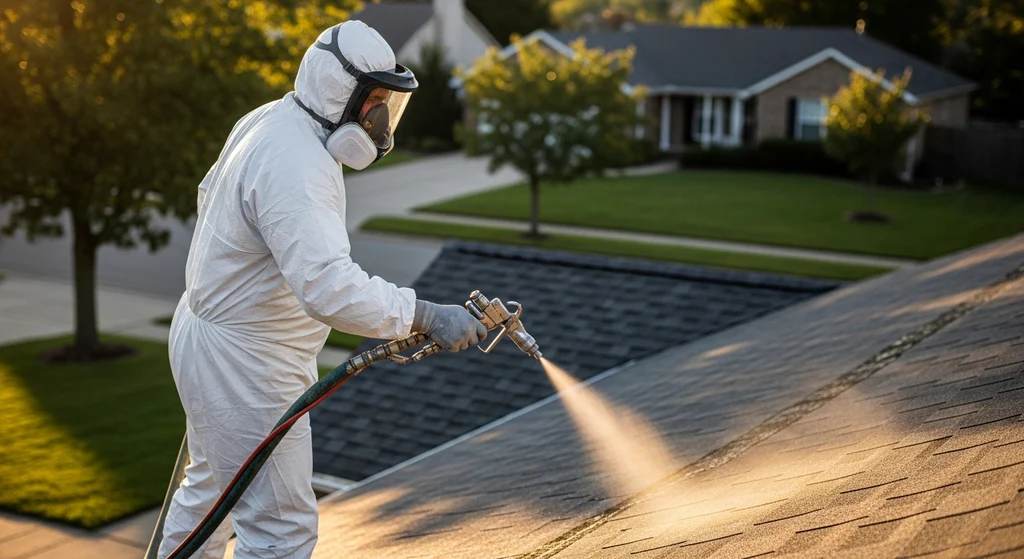
What Contractors Hide: The SPF Industry Secrets
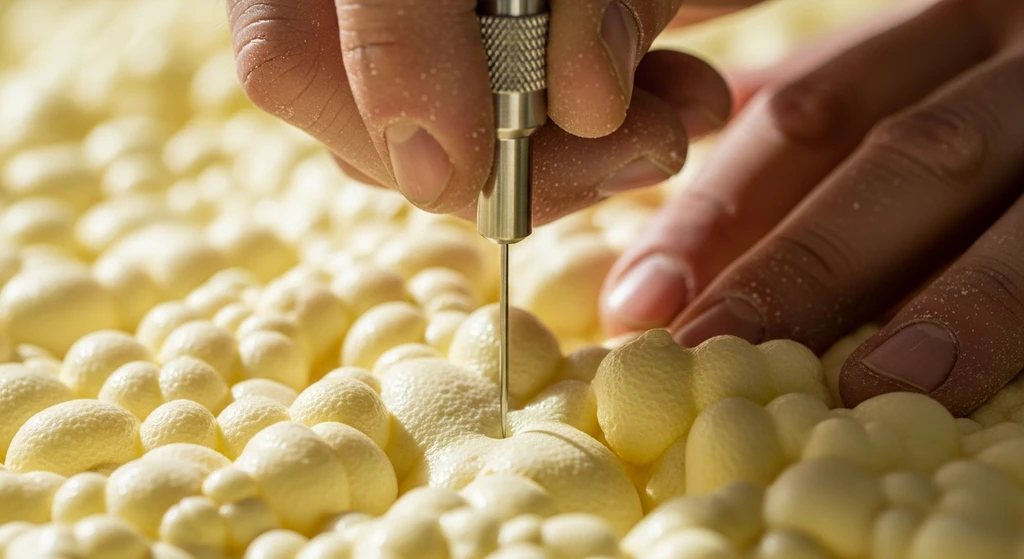
While spray foam is an excellent product, there are several ways unscrupulous contractors cut corners. The most common tactic is ‘shorting’ the thickness. Because foam expands, it can be difficult for a homeowner to tell the difference between 2.5 inches and the 3 inches they paid for. Always demand a depth-gauge check during the final inspection.
Another hidden truth involves the ‘A’ and ‘B’ side mixing. If the chemicals are not heated to the exact manufacturer specifications, the resulting foam will be ‘off-ratio.’ This can lead to lingering chemical odors or a foam that never fully cures, remaining soft or brittle. Ensure your contractor uses a high-end reactor system that logs temperature and pressure data throughout the job.
No respirator or PPE
Consequence:
What Contractors Hide
Using low-grade UV coatings
The Reality: Contractors may use cheap acrylics that flake off within 3 years, requiring a full recoat.
Skipping substrate prep
The Reality: Spraying over dust or old bitumen leads to poor adhesion and eventual roof leaks.
Technical Standards and Quality Verification
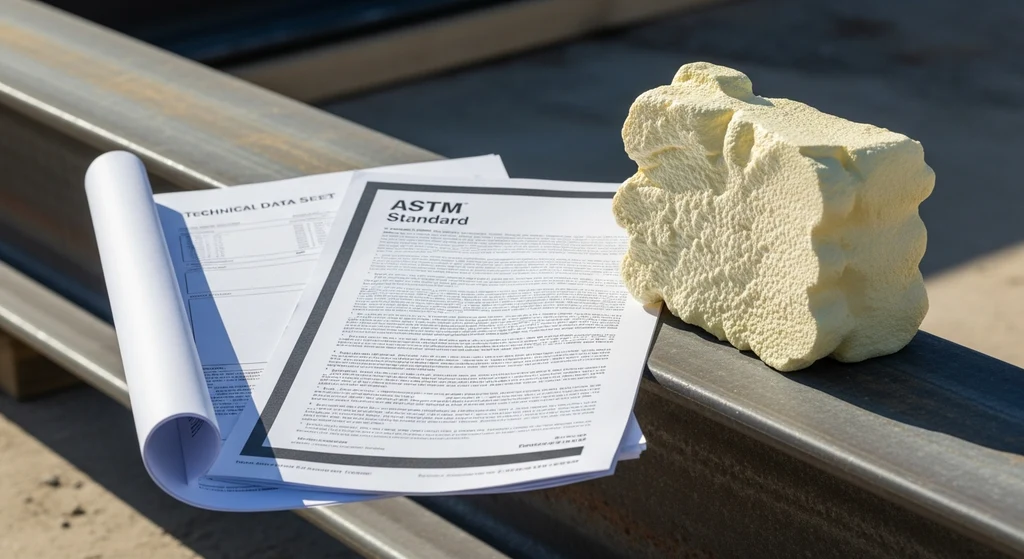
To ensure you are getting a high-quality product, the foam must meet several ASTM International standards. ASTM C1029 is the primary specification for spray-applied polyurethane foam used as roofing. This standard covers physical properties like compressive strength, water vapor permeability, and thermal resistance. Furthermore, the protective coating applied over the foam should meet ASTM D6083 for liquid-applied acrylic coatings or ASTM D6694 for silicone coatings.
In Dallas, we strongly prefer silicone coatings (ASTM D6694) because they are more resistant to ponding water and have better UV stability in the Texas sun. Always ask your contractor for the Technical Data Sheets (TDS) for both the foam and the coating to verify these ratings.
External Authoritative Resources
These industry-standard references support the information in this guide:
Building Codes
Frequently Asked Questions
How long does a spray foam roof last in Texas?
With proper maintenance and recoating every 10-15 years, an SPF roof can last over 30 years. The NRCA notes that as long as the foam is protected from UV, it does not degrade.
Can I install spray foam over my existing roof?
Yes, IRC R908 allows for SPF to be applied over existing roofs in many cases, provided the substrate is structurally sound and dry. This saves on disposal costs in Dallas.
Is spray foam roof insulation hail resistant?
Yes, SPF is highly resilient and often sustains less damage than asphalt shingles. It meets ASTM D3746 for impact resistance, which is vital for the DFW Metroplex.
Does spray foam cause roof rot?
Only if installed incorrectly. If the foam is ‘off-ratio’ or if there is an existing leak that wasn’t repaired, moisture can become trapped. Proper application per NRCA guidelines prevents this.
What is the best time of year to install SPF in Dallas?
Late summer or early fall (September-October) is ideal. The humidity is lower, and the temperatures are consistently above the 50°F threshold required for proper chemical reaction.
Are there tax incentives for spray foam in Dallas?
Yes, many SPF systems qualify for federal Energy Star tax credits. Check with your DFW utility provider for local rebates related to high-R-value insulation.
Final Thoughts
Spray foam roof insulation represents a significant but worthwhile investment for any Dallas property owner looking to maximize energy efficiency and structural longevity. By creating a seamless, airtight barrier, SPF addresses the specific thermal challenges of the North Texas climate while meeting stringent IRC 2021 codes. FIELD NOTE #3: I recently consulted on a project in Southlake where a ‘cheap’ contractor used an unheated rig, resulting in foam that looked like cottage cheese and smelled like rotten eggs. The homeowner had to pay $12,000 for a full removal and replacement.
Don’t gamble with your building envelope—choose a certified professional who understands the chemistry and the Texas heat. When done right, your SPF roof will be the last one you ever need to buy.
