
Contractor’s Bottom Line
Roofing in the winter presents challenges because cold temperatures prevent asphalt shingle sealant from activating and creating a watertight bond. Most manufacturers require ambient temperatures above 40 degrees Fahrenheit for proper tab adhesion, meaning hand-sealing is required in colder conditions. Use an approved roof cement to manually seal every shingle tab if installation must occur below the manufacturer’s minimum temperature threshold.
Key Takeaways
- Asphalt shingles require thermal bonding; temperatures below 40°F often necessitate manual hand-sealing per NRCA standards.
- IRC 2021 R905.2.1 requires specific fastener placement to maintain wind warranties when materials are brittle from cold.
- Winter roofing in North Texas can save homeowners 5-10% on labor, but weather delays can extend project timelines significantly.
- Ice and water shield meeting ASTM D1970 is critical in DFW to prevent leaks from rare but damaging ice damming events.
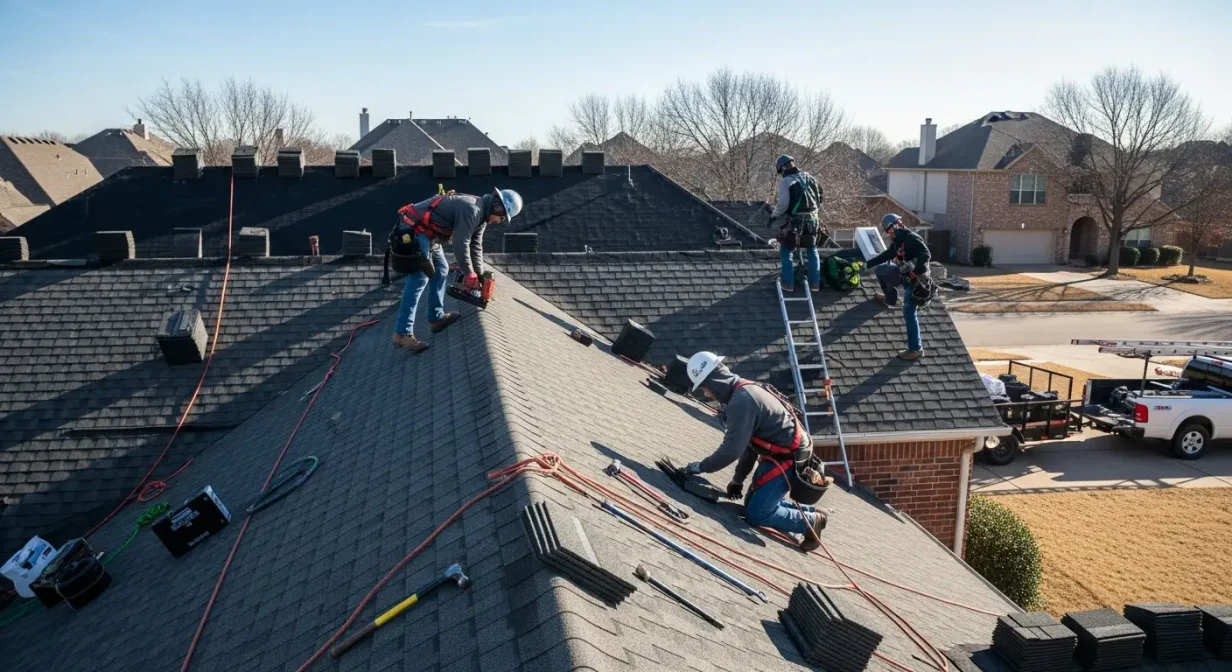
Many Dallas homeowners wonder if roofing in the winter is a viable option or a recipe for structural failure. While the DFW Metroplex rarely sees the sustained sub-zero temperatures of the north, our sudden cold fronts can compromise the integrity of a new roof installation. Professional contractors must balance the benefits of off-season pricing with the technical limitations of modern roofing materials. FIELD NOTE #1: Last January, I was called to a home in North Dallas where a ‘budget’ crew had installed architectural shingles during a 30-degree cold snap.
Because the shingles didn’t reach their thermal bonding temperature, a standard 40-mph wind gust blew off three squares of material, resulting in a $4,500 emergency repair bill. This could have been avoided by following the National Roofing Contractors Association (NRCA) cold-weather application guidelines. Successful winter projects require a deep understanding of ASTM International standards and local International Residential Code (IRC) requirements. In this guide, we will explore how to safely navigate a roof replacement during the Texas winter while ensuring your manufacturer warranty remains fully intact.
Thermal Stressors and Material Fragility in North Texas
In the Dallas-Fort Worth area, the primary challenge of roofing in the winter is the rapid fluctuation in temperature. Asphalt shingles become brittle as temperatures drop, making them susceptible to ‘blow-through’ where nails penetrate too deeply through the reinforced mat. This violates IRC R905.2.5, which mandates specific fastener head flushness to ensure the shingles stay secured during high wind events. Furthermore, the self-sealing strips on architectural shingles require solar heat to activate and bond the layers together.
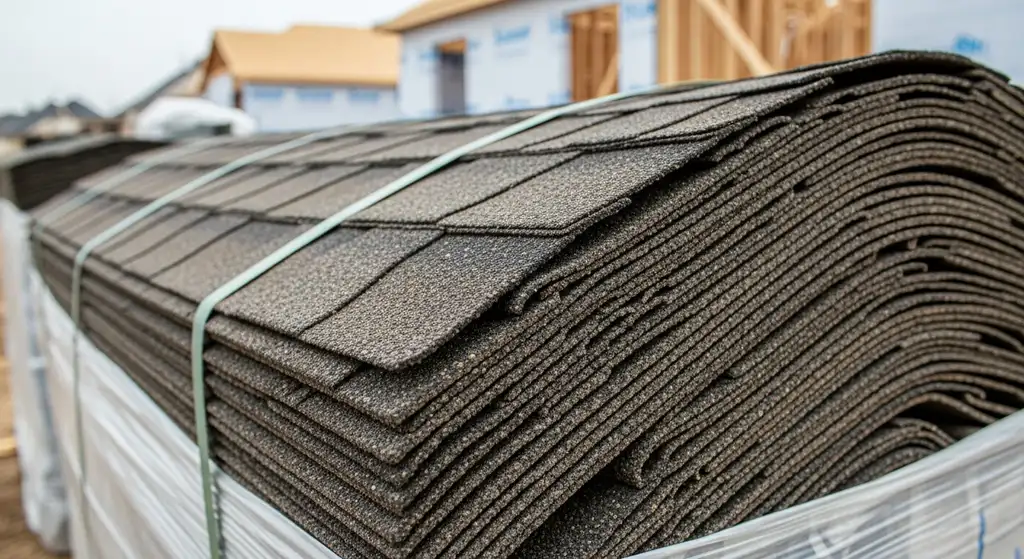
Without this thermal bond, the roof remains vulnerable to wind uplift and moisture infiltration from winter rains. The International Code Council (ICC) standards suggest that if the ambient temperature does not reach 40°F for several consecutive days, the roof may not seal until the following spring. Proper material storage is also a critical environmental consideration for DFW contractors. Materials like synthetic underlayment and felt underlayment should be kept in a conditioned space until the moment of installation.
Cold-stored underlayment tends to wrinkle when applied to the roof deck, which can lead to telegraphing through the shingles and potential water-shedding issues.
Shingle Performance and ASTM Standards in Cold Weather
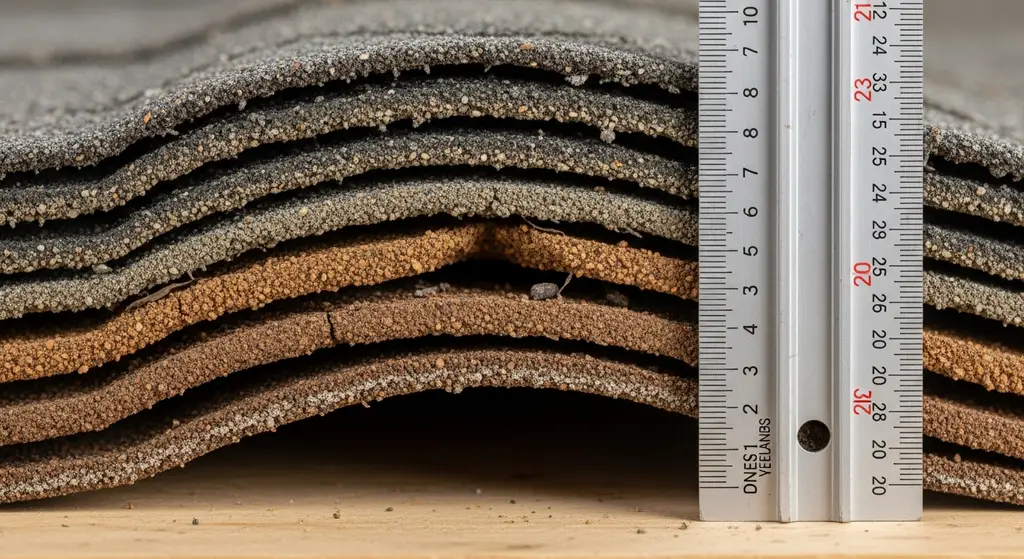
When selecting materials for roofing in the winter, the physical properties of the asphalt shingles are paramount. Products like GAF Timberline HDZ or Owens Corning Duration are engineered to meet ASTM D3462 standards, but their flexibility significantly decreases in temperatures below 45°F. This loss of elasticity can lead to cracking during the ‘racking’ or ‘stair-stepping’ installation process common in the DFW Metroplex. We also pay close attention to the underlayment performance during North Texas winters.
Synthetic underlayment meeting ASTM D226 Type II standards is preferred over traditional felt underlayment because it remains more pliable in the cold and doesn’t absorb moisture. This prevents the ‘buckling’ effect that often occurs when organic felt is exposed to the high humidity levels typical of a Dallas winter morning. For areas of the roof prone to ice accumulation, such as valleys and eaves, an ice and water shield is non-negotiable. This self-adhering membrane must conform to ASTM D1970 to provide a watertight seal around nail penetrations.
In Dallas-Fort Worth, while we don’t see heavy snow loads, the freeze-thaw cycles can cause water to back up under shingles if these critical barriers are omitted.
The Cold-Weather Installation Protocol
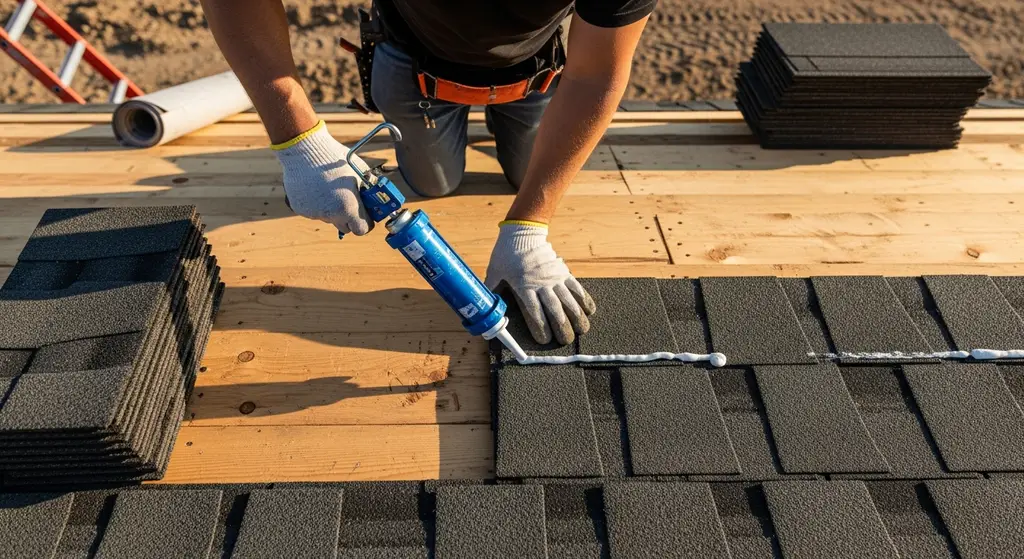
To ensure a successful winter installation, our crews follow a modified protocol that exceeds the minimum requirements of IRC 2021. First, we implement ‘hand-sealing’ for every shingle if the temperature is below 40°F. This involves applying three to four dots of ASTM D4586 roof cement under each shingle to provide immediate wind resistance while waiting for the sun to activate the factory sealant. Next, we adjust the pneumatic pressure on our roofing nailers.
As the air becomes colder and denser, nail guns can over-drive fasteners through the OSB or CDX plywood decking. We perform hourly checks to ensure nails are driven flush and straight, as required by IRC R905.2.5. Any nail that is over-driven or ‘crooked’ is removed and the hole is sealed before a new fastener is correctly placed. Finally, we pay special attention to the flashing details around chimneys and valleys.
Metal flashing is more difficult to bend in the cold and can snap if not handled with care. We often use a heat gun to slightly warm the metal and the surrounding shingles, ensuring a tight fit that meets National Roofing Contractors Association (NRCA) best practices for water shedding.
Field Note from Experience
During a project in Fort Worth, I discovered the previous contractor had skipped hand-sealing during a February install. The first spring storm resulted in a claim for 12 missing shingles. We now mandate hand-sealing for all DFW projects installed between December and February to protect our clients’ investments.
Dallas Winter Roofing Costs and Hidden Realities
Roofing in the winter in the DFW Metroplex offers a unique financial landscape. Because demand drops after the fall rush, many Dallas contractors are willing to reduce their labor margins to keep their crews working. However, these savings are sometimes offset by the increased labor time required for hand-sealing and the potential for weather-related delays that can stretch a two-day job into a week-long ordeal. In Dallas-Fort Worth, expect to pay $450 to $675 per square (100 sq.
ft.) for a high-quality architectural shingle replacement. These are current 2026 Dallas market prices; costs in more remote areas of North Texas may be 10-15% lower due to reduced overhead, but urban Dallas County permits and disposal fees keep prices higher. Homeowners should be wary of ‘too good to be true’ winter quotes that may indicate a contractor is skipping the necessary cold-weather steps like manual sealing or using inferior felt underlayment. It is also important to account for the Texas Department of Insurance (TDI) requirements if you are in a windstorm-designated area.
While Dallas is not currently in the Seaward or Inland I/II zones, using materials that meet high-wind standards like UL 2218 Class 4 can lead to significant insurance premium discounts that outweigh the initial cost of the roof.
Dallas Market Pricing
In Dallas-Fort Worth, expect to pay $4.50-$6.75 per square foot. These are current 2026 Dallas market prices; costs vary by region and can be 15-25% higher in remote Texas areas. Peak pricing occurs during the spring (March-May) storm season.
| Component | Estimated Winter Cost (Dallas) |
|---|---|
| Architectural Shingles (per sq) | $180 – $240 |
| Labor & Hand Sealing (per sq) | $250 – $350 |
| Synthetic Underlayment (per roll) | $95 – $130 |
| Permit & Disposal Fees | $400 – $800 |
What Contractors Hide
Winter labor discounts
The Reality: Contractors often cut labor prices by 10% to keep crews busy, but may rush the job to avoid the cold.
Reusing old flashing
The Reality: In winter, old flashing is brittle; reusing it almost guarantees a leak within 24 months.
Why Winter Roofs Fail in North Texas
The most common failure we see with roofing in the winter is ‘shingle blow-off’ caused by inadequate bonding. In Dallas, we often experience ‘Blue Northers’ that bring 50+ mph winds immediately following a cold front. If a roof was installed the day before and wasn’t hand-sealed, the shingles have no structural integrity against those winds. This is a direct violation of the intent behind IRC R905.2.4.1.
Another frequent issue is ‘thermal cracking.’ When shingles are installed at 35°F and then the Texas sun heats the roof to 75°F by the afternoon, the rapid expansion can cause the asphalt to crack if the shingles were fastened too tightly or ‘racked’ improperly. This failure typically manifests as small fissures near the nail line, which eventually expand into full leaks during the spring rainy season. Finally, improper attic ventilation often causes major issues during winter installs. If the contractor blocks the soffit vents with insulation or fails to install a ridge vent that meets ICC requirements, moisture from the home’s interior will condense on the cold underside of the new roof deck.
This leads to mold growth and wood rot in the OSB or CDX plywood long before the roof’s expected lifespan is reached.
Contractor doesn’t mention hand-sealing
Consequence: Roof may blow off in the first spring storm.
Using pneumatic tools at high pressure
Consequence: Nails will blow through brittle shingles, voiding the warranty.
Sealant Failure
Typical Cost: $1,200 – $3,500
Prevention: Hand-seal with ASTM D4586 cement
Insurance Coverage: Likely denied if installation error
Code Reference: IRC R905.2.4.1
Thermal Cracking
Typical Cost: $2,000 – $5,000
Prevention: Avoid installation below 40°F
Insurance Coverage: Hard to prove as storm damage
Code Reference: ASTM D3462 Compliance
External Authoritative Resources
These industry-standard references support the information in this guide:
Building Codes
Frequently Asked Questions
Can you install a roof in the winter in Dallas?
Yes, roofing in the winter is possible in Dallas if temperatures are above 40°F. The NRCA recommends hand-sealing shingles with asphalt cement if temperatures are lower to ensure wind resistance.
Will my roof warranty be valid if installed in winter?
Most manufacturers like GAF and CertainTeed honor warranties for winter installs, provided the contractor follows specific cold-weather instructions, such as manual sealing and proper fastener placement per IRC R905.
Is it cheaper to replace a roof in the winter?
Generally, yes. Dallas homeowners can often see a 5-10% reduction in labor costs as contractors look to fill their schedules during the off-peak season between December and February.
How long does it take for shingles to seal in winter?
In the North Texas winter, it may take several weeks or even months for shingles to thermally bond. If the roof doesn’t receive direct, warm sunlight, manual sealing is required by ASTM standards.
What is the biggest risk of winter roofing?
The primary risk is shingle blow-off due to the sealant not bonding. Brittle shingles are also more likely to crack during installation if handled roughly in temperatures below freezing.
Should I wait until spring to replace my roof?
If your roof is actively leaking, do not wait. A professional Dallas contractor can safely install a roof in winter using cold-weather techniques that meet all ICC and ASTM safety standards.
Final Thoughts
Roofing in the winter in Dallas-Fort Worth is a strategic choice that requires a balance of technical expertise and weather timing. By adhering to NRCA guidelines and ensuring your contractor uses hand-sealing techniques, you can take advantage of off-season pricing without compromising the structural integrity of your home. Always prioritize contractors who understand the nuances of IRC 2021 codes and ASTM material standards. FIELD NOTE #3: I recently helped a family in Highland Park who saved over $3,000 by scheduling their roof replacement in January.
We monitored the forecast closely and chose a three-day window where highs reached 55°F, ensuring the GAF Timberline shingles began their bonding process immediately. If you choose the right partner and the right materials, a winter roof can be just as durable as one installed in June. Contact a qualified professional today to discuss your winter roofing options.
