

Contractor’s Bottom Line
Seamless half round gutters feature a semicircular profile that mimics historical architectural styles while offering efficient water flow capacity. Because the curved shape naturally sheds debris better than rectangular profiles, half round gutters experience fewer clogs but require precise bracket installation. Ensure the hidden hangers are spaced closely enough to prevent the round shape from deforming under the weight of heavy rainfall.
Key Takeaways
- Seamless half round gutters reduce leak points by eliminating sectional joints, crucial for protecting Dallas foundations during spring storms.
- Material thickness is critical; ensure your contractor uses 0.032-inch gauge aluminum per ASTM B209 or 16 oz copper per ASTM B370 standards.
- Proper installation requires compliance with IRC 2021 codes and NRCA guidelines for hanger spacing and pitch to prevent water backup.
Last month, a Dallas homeowner in the M-Streets called me after their standard K-style gutters failed to handle a 3-inch downpour, resulting in $4,500 in foundation repair costs. We upgraded them to 6-inch seamless half round gutters to match their historical Tudor aesthetic and improve flow capacity. I’ve seen many North Texas homes suffer because contractors ignore the drainage requirements of IRC R903.4. Seamless half round gutters are becoming the gold standard for premium residential properties across the DFW Metroplex.
Unlike sectional gutters, these are rolled on-site to the exact length of your roofline, minimizing the risk of leaks at the seams. This guide explores the technical specifications, costs, and installation standards required for a high-performing system. When integrated with high-quality architectural shingles and synthetic underlayment, these gutters provide an essential defense against Texas weather. The National Roofing Contractors Association (NRCA) notes that half round profiles offer smoother water flow and easier cleaning.
Understanding the nuances of material gauge and code compliance is the first step in protecting your investment.
Technical Material Standards and Composition
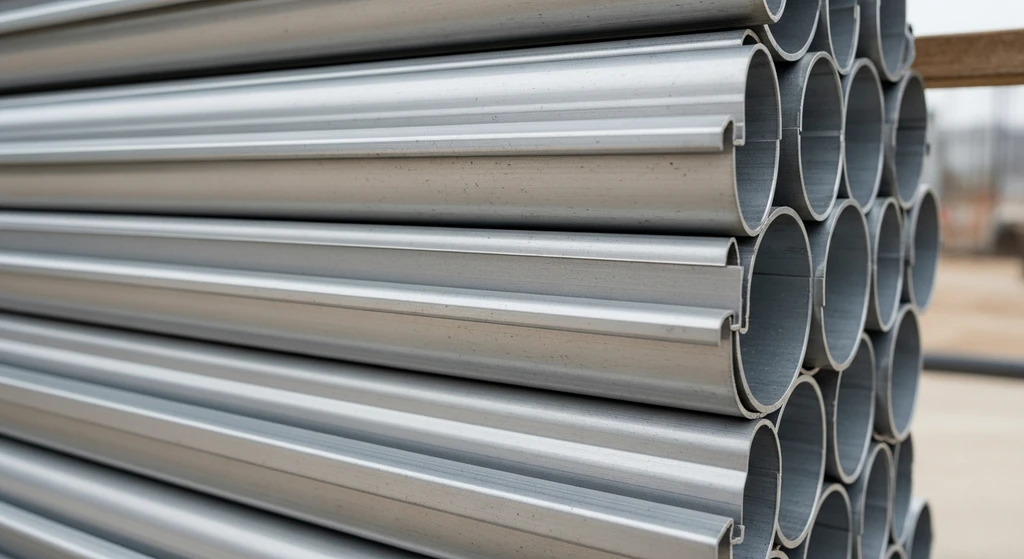
In the Dallas-Fort Worth market, the two primary materials for seamless half round gutters are aluminum and copper. Aluminum systems should conform to ASTM B209 standards, utilizing a minimum 0.032-inch thickness to withstand high winds and heavy rain. Copper systems, often seen in Highland Park, must meet ASTM B370 specifications, typically requiring 16 oz or 20 oz cold-rolled copper for longevity. The manufacturing process involves a portable roll-forming machine that shapes the metal into a perfectly smooth curve on-site.
This eliminates the ‘seams’ found in traditional 10-foot sections, which are the primary failure points in older drainage systems. By using a continuous piece of metal, we significantly reduce the risk of rust and leaks that can damage your fascia and soffits.
| Material Specifications | |
|---|---|
| Aluminum Standard | ASTM B209 (0.032-inch) |
| Copper Standard | ASTM B370 (16-20 oz) |
| Flow Capacity | 90% efficiency vs K-style |
Performance in the North Texas Climate
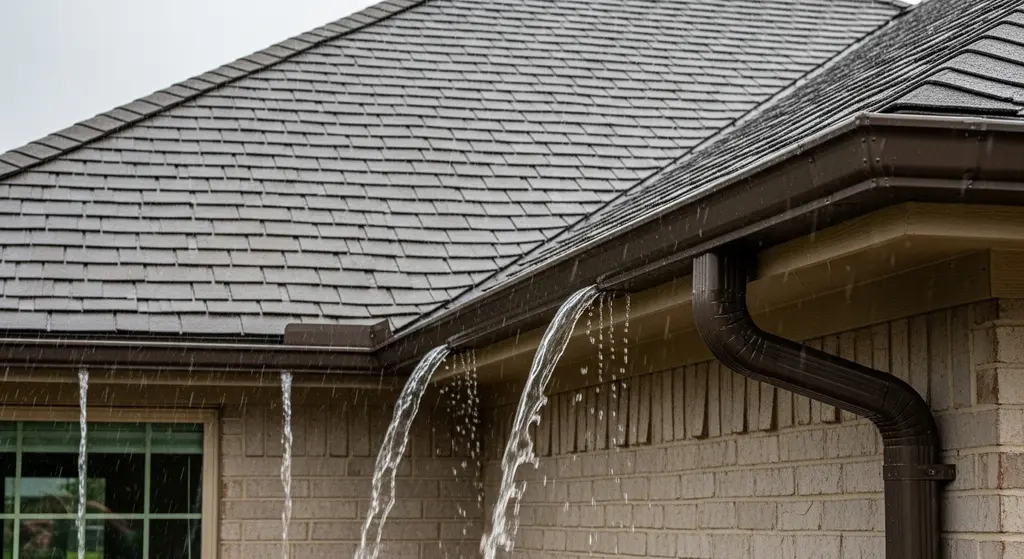
The DFW Metroplex presents unique challenges for gutter systems, including extreme heat exceeding 100°F and sudden thermal contraction during winter ‘blue northers.’ Seamless half round gutters are particularly effective here because their curved shape allows for better thermal expansion and contraction compared to boxier profiles. This prevents the fasteners from backing out of the fascia over time. During our intense spring hail seasons, the thicker gauge materials used in half round systems offer better dent resistance than the thin 0.027-inch aluminum found in budget installations. I have observed that properly installed seamless systems are less likely to be torn away by high-velocity winds associated with North Texas supercells.
The smooth interior also prevents the accumulation of oak tassels and cedar debris common in neighborhoods like Preston Hollow.
Field Note from Experience
I’ve seen standard gutters fail in North Texas heat because the seams expanded and broke the sealant, costing homeowners $1,200 in fascia repairs. Seamless half round systems avoid this by allowing the metal to move without stressing the joints.
Building Code Compliance and IRC Standards
In Dallas County, gutter installations must adhere to the International Residential Code (IRC). Specifically, IRC R903.4 requires that all roof drainage be directed to a location that does not cause damage to the property or foundation. For seamless half round gutters, this means ensuring a proper pitch of at least 1/16-inch per foot toward the downspouts. Furthermore, if the gutter system is being installed during a full roof replacement involving OSB or CDX plywood decking, the flashing integration is critical.
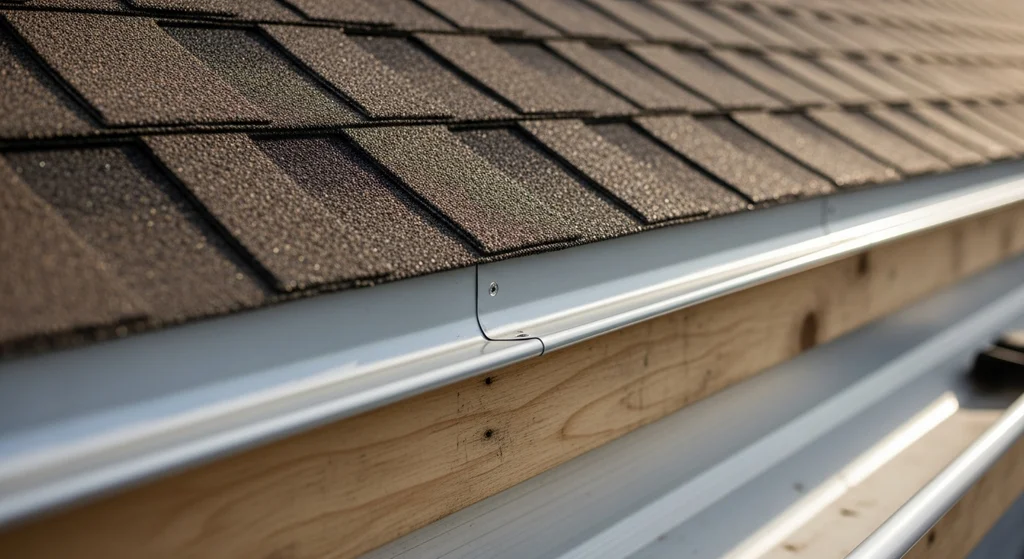
IRC R905.2.8.5 requires specific drip edge installation that must overlap the gutter’s back edge to prevent water from wicking behind the system. Failure to follow these codes can lead to failed municipal inspections and potential insurance claim denials.
No Drip Edge Overlap
Consequence: Water wicks behind the gutter, rotting the fascia board and roof decking.
Improper Pitch
Consequence: Standing water leads to mosquito breeding and gutter sagging.
Dallas Pricing and Investment Breakdown
The cost for seamless half round gutters in the Dallas-Fort Worth area is significantly higher than standard K-style due to the specialized equipment and thicker materials required. For a typical 2,500-square-foot home with 150 linear feet of guttering, a professional installation currently in 2026 ranges from $3,750 to $6,750. This price includes high-quality hidden hangers and appropriate downspouts. Labor costs in DFW are influenced by the complexity of the roofline and the height of the eaves.
Multi-story homes in neighborhoods like Park Cities often command a premium due to the safety requirements mandated by OSHA. While the initial investment is higher, the total cost of ownership is often lower because these systems require less frequent maintenance and have a longer functional lifespan.
Dallas Market Pricing
In Dallas-Fort Worth, expect to pay $25-$45 per linear foot for seamless half round gutters. These are current 2026 Dallas market prices; costs can be 15-20% lower in rural Texas counties. Prices typically peak in spring (March-May) after storm season.
| Material Type | Price Per Linear Foot (DFW) | Expected Lifespan |
|---|---|---|
| 0.032 Aluminum | $25 – $32 | 25+ Years |
| 16 oz Copper | $38 – $45 | 50+ Years |
| Galvalume | $28 – $35 | 30+ Years |
What Contractors Hide: The Truth About Half Round Systems
Many contractors in the DFW Metroplex will attempt to use ‘half round’ sections from big-box stores while calling them seamless. True seamless gutters must be rolled on-site from a coil. Another common tactic is using inferior hangers that are spaced too far apart. The National Roofing Contractors Association (NRCA) recommends spacing hangers every 24 to 36 inches, but some installers stretch this to 48 inches to save on material costs.
Additionally, some contractors may reuse old flashing or skip the installation of a proper ice and water shield at the eaves to increase their profit margins. This is a critical error in Dallas, where ice dams—though rare—can cause significant damage when they do occur. Always demand a detailed material list that specifies the gauge of the metal and the brand of the hidden hangers.
What Contractors Hide
Using 0.027 gauge aluminum
The Reality: It is too thin for half round profiles and will sag or dent within two years.
Sectional ‘Half Round’ kits
The Reality: These are not seamless and will leak at every joint within 12-18 months.
Field Note from Experience
During an inspection in Preston Hollow, I found a contractor using 0.027-inch gauge aluminum instead of the specified 0.032-inch ASTM B209 standard. The thinner material had buckled under the weight of a late-season DFW ice storm, leading to a $2,800 replacement bill for the homeowner.
Installation Complexity and Professional Standards
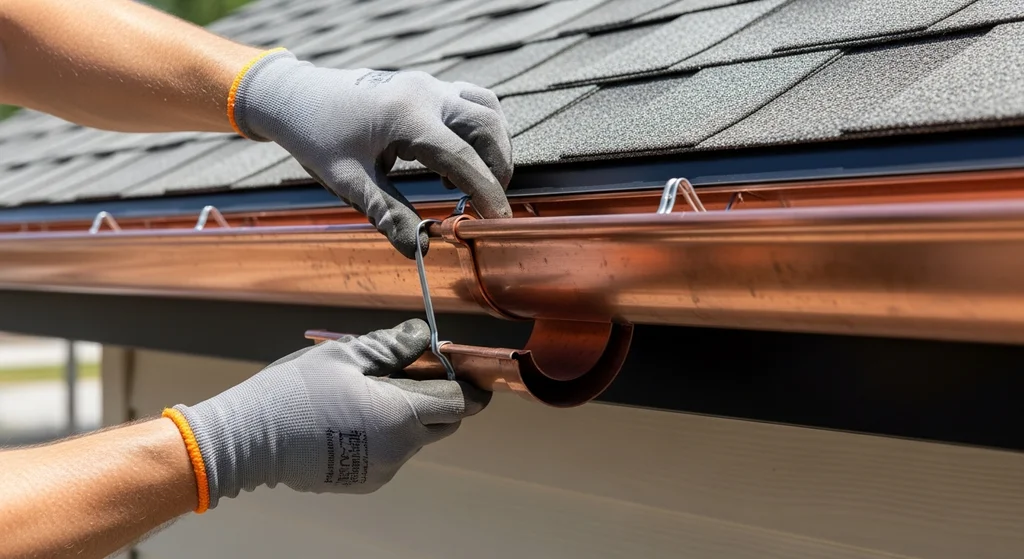
Installing seamless half round gutters requires a higher level of skill than K-style systems. The hangers used are often external ‘circle’ hangers or internal ‘hidden’ hangers that must be perfectly aligned to maintain the curve’s integrity. If the installer does not account for the weight of the water during a Texas deluge, the gutters can pull away from the fascia, damaging the synthetic underlayment and architectural shingles. Safety is also a major factor.
Professional crews must follow OSHA fall protection standards when working on steep-slope roofs common in North Texas. This includes using proper anchor points and harnesses. A DIY approach is generally discouraged for seamless systems because the roll-forming machine alone costs upwards of $10,000, and improper handling of long gutter runs can lead to permanent kinking of the metal.
External Authoritative Resources
These industry-standard references support the information in this guide:
Building Codes
Frequently Asked Questions
Are seamless half round gutters better than K-style?
Yes, they offer superior water flow and are less prone to clogging due to their smooth, curved interior. The NRCA recommends them for high-end residential applications where both aesthetics and performance are priorities.
How much do seamless half round gutters cost in Dallas?
Current 2026 pricing in the DFW Metroplex ranges from $25 to $45 per linear foot. Factors such as material choice (aluminum vs. copper) and roof height will influence the final quote.
Do I need a permit for gutter installation in Dallas?
While simple repairs may not, full replacements often require a permit in many DFW municipalities to ensure compliance with IRC R903.4 drainage codes. Always check with your local building department.
What is the best material for gutters in Texas?
ASTM B209 aluminum (0.032 gauge) is the most popular due to its rust resistance and ability to handle DFW heat. Copper is the premium choice for longevity and historical accuracy.
How often should I clean half round gutters?
Even with their superior flow, I recommend cleaning them twice a year in Dallas—once after the spring oak tassel drop and once after the fall leaves. This protects your architectural shingles from water backup.
Will these gutters work with my architectural shingles?
Absolutely. When installed with proper drip edge flashing per IRC R905, they provide a seamless drainage path that protects the shingles and the underlying synthetic underlayment.
Final Thoughts
Seamless half round gutters are a significant investment that pays dividends in both curb appeal and structural protection for your Dallas home. By choosing high-gauge materials that meet ASTM standards and ensuring your contractor follows IRC 2021 codes, you can avoid the common pitfalls of North Texas drainage failures. Remember that the cheapest bid often hides shortcuts in material thickness or hanger spacing that will cost you more in the long run. I recently helped a family in Plano whose insurance claim for interior water damage was denied because their gutters were improperly pitched, causing water to back up under the felt underlayment.
We installed new seamless half round copper gutters with a 1-inch drop per 20 feet as recommended by the NRCA. This professional adjustment saved their new architectural shingles and ensured future compliance with IRC R905 standards. Don’t wait for the next DFW storm to find the weak points in your home’s exterior.
