
Contractor’s Bottom Line
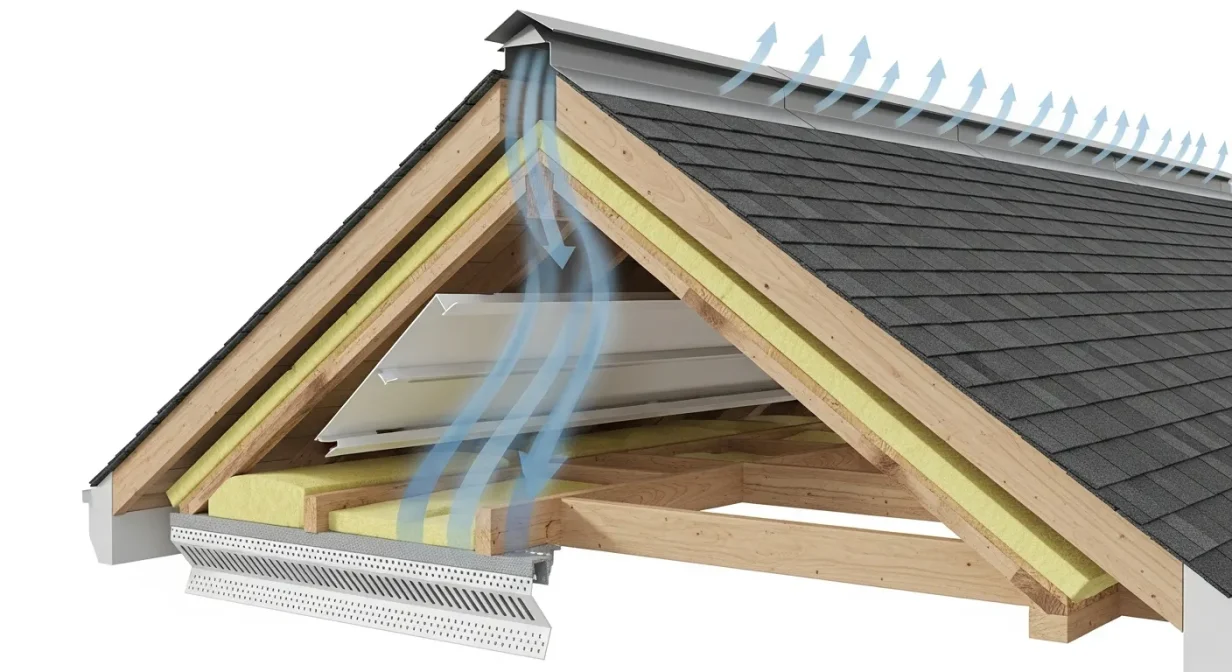
Roof ventilation is a mechanical or passive system designed to exhaust excess heat and moisture from the attic space to the exterior. The IRC requires a balanced system where the net free area of intake vents matches the exhaust vents to prevent static pressure buildup. Calculate the total net free area based on the attic’s square footage and distribute the vents evenly across the roof structure.
Key Takeaways
- Dallas homes typically require a 1:150 ventilation ratio to combat extreme attic temperatures that can exceed 150°F.
- IRC R806.1 mandates balanced ventilation with 50-60% of the net free area provided by intake vents at the eaves.
- ASTM D226 compliant underlayment must be paired with proper airflow to prevent moisture entrapment and mold growth.
- Improper ventilation can void GAF or Owens Corning shingle warranties due to excessive thermal expansion.
Understanding roof ventilation in North Texas is not just about comfort; it is about protecting your largest investment from the brutal Texas sun. As a consultant in Dallas, I have seen hundreds of roofs fail prematurely because the attic was essentially acting as a convection oven. Proper airflow involves a scientific balance of intake at the soffits and exhaust at the ridge to meet International Code Council (ICC) standards. FIELD NOTE: Last July, I inspected a home in Highland Park where the attic temperature hit a staggering 162°F.
The previous contractor had installed high-end architectural shingles but completely blocked the soffit vents with blown-in insulation, leading to $12,000 in decking rot. This mistake is common in the DFW Metroplex and can be avoided by following National Roofing Contractors Association (NRCA) guidelines for baffles and airflow. Effective ventilation systems utilize natural convection and the stack effect to cycle hot air out. By adhering to IRC 2021 requirements, homeowners can significantly extend the life of their asphalt shingles and reduce seasonal cooling costs.
This guide breaks down the technical specifications and local Dallas requirements for a high-performance roofing system.
Dallas-Fort Worth Climate Zone Challenges
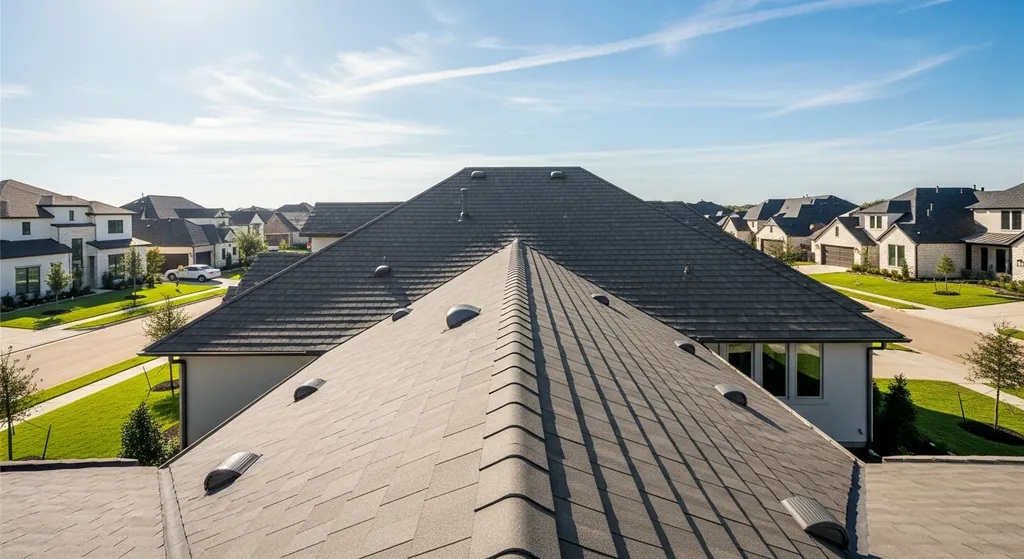
Dallas is located in Climate Zone 3, characterized by extreme heat cycles and high humidity during the spring storm season. The International Code Council (ICC) classifies this region as having significant cooling degree days, which places immense pressure on roof ventilation systems. Without a constant exchange of air, the radiant heat from the Texas sun transfers directly into the attic, causing the roof assembly to bake from both sides. In North Texas, we must account for the high frequency of hail storms that can damage vent caps and obstruct airflow.
ASTM International standards for ventilation components emphasize impact resistance for this very reason. When we specify a system for a Dallas home, we look for ‘Texas-tough’ components that can withstand 100-mph wind gusts and 2-inch hail while maintaining high net free area (NFA) ratings.
| Dallas Environmental Stats | |
|---|---|
| Avg Summer Attic Temp | 140°F – 160°F |
| Required Air Exchange | 10-12 times per hour |
| Primary Stressor | Radiant Heat & Humidity |
IRC 2021 Ventilation Codes for North Texas
The International Residential Code (IRC) R806.1 is the governing standard for most residential projects in the DFW Metroplex. This code requires that net free ventilating area be provided at a ratio of 1 square foot for every 150 square feet of attic space. However, if a vapor retarder is installed on the warm-in-winter side in colder climates, or if specific balance requirements are met, this can be reduced to 1:300. In Dallas, we almost always recommend the 1:150 ratio to account for the extreme heat.
IRC R806.2 further specifies that at least 40 percent and not more than 50 percent of the required ventilating area must be provided by ventilators located in the upper portion of the attic. This creates the ‘balanced’ system that the National Roofing Contractors Association (NRCA) advocates for. Without this balance, ridge vents can actually pull air from the interior of the home or from other exhaust vents rather than the cool intake at the eaves.
Field Note from Experience
During a 2026 inspection in Frisco, I discovered a builder had installed 100% of the ventilation at the ridge with zero intake. The vacuum created was pulling conditioned air from the house through recessed lighting cans, increasing the owner’s electric bill by $150 a month.
Intake vs. Exhaust: The Physics of Airflow
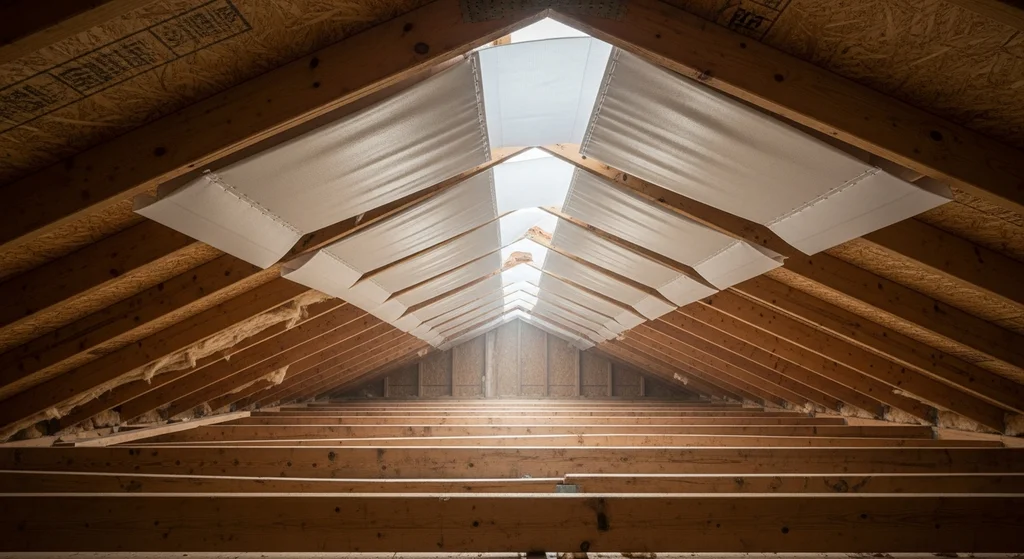
A high-performance roof in Texas requires a synergy between intake and exhaust components. Intake is typically achieved through soffit vents or drip edge vents, which must remain unobstructed by insulation. We utilize baffles, often conforming to ASTM D4869 standards, to maintain a 1-inch clear path for air to travel from the eave to the ridge. This cool air displaces the hot, buoyant air that naturally rises to the peak.
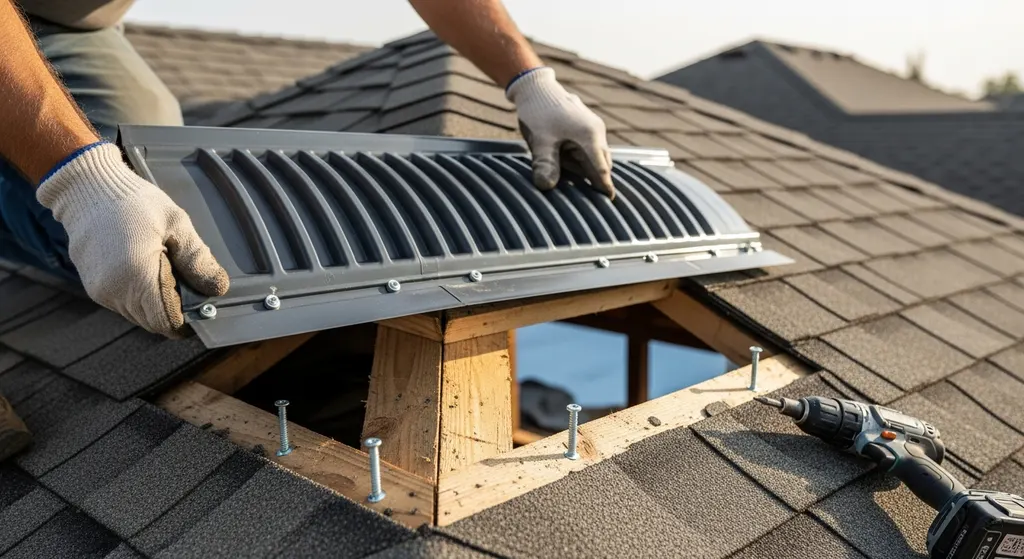
Exhaust options in the Dallas market vary from static box vents to wind-driven turbines and solar-powered fans. The NRCA suggests that ridge vents provide the most uniform exhaust path, but they must be sized correctly for the roof’s pitch. For larger commercial roofs in North Texas, we often look at OSHA-compliant power ventilators that can move thousands of cubic feet of air per minute to protect sensitive equipment and inventory.
| Vent Type | NFA (Sq. Inches) | Best Use Case |
|---|---|---|
| Ridge Vent | 18 per linear foot | Standard gabled roofs |
| Soffit Vent (8×16) | 56-65 per unit | Primary intake for all homes |
| Solar Attic Fan | 800-1200 CFM | Large hips or low-pitch roofs |
Thermal Shock and Material Failure in Dallas
When ventilation fails in the DFW Metroplex, the consequences are visible and expensive. Asphalt shingles are subject to ‘thermal shock’—rapid expansion and contraction caused by 40-degree temperature swings in a single spring day. Without airflow to cool the underside of the decking, the shingles can reach 190°F, leading to granule loss and ‘blistering,’ where the asphalt oils literally boil and pop. This is a common reason for the denial of GAF or CertainTeed warranty claims.
Moisture entrapment is the second major failure point. During humid North Texas nights, warm air trapped in the attic condenses on the underside of the OSB or CDX plywood decking. This leads to ‘decking waviness’ and eventually rot. Using synthetic underlayment that meets ASTM D226 Type II can help, but it is not a substitute for moving air.
I have seen 5-year-old roofs in Plano require full deck replacement because of simple ventilation neglect.
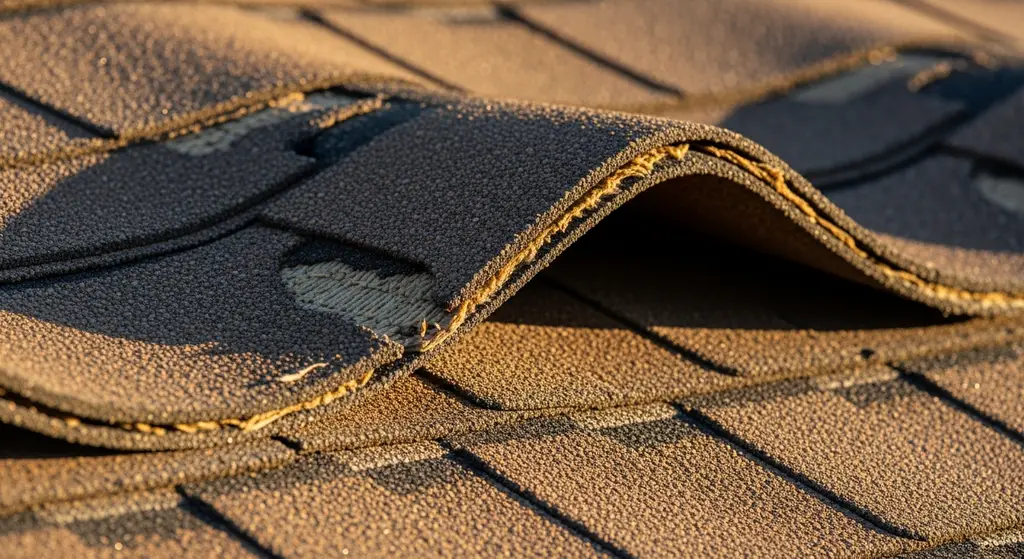
Shingle Blistering
Typical Cost: $2,500 – $5,000 (Repair)
Prevention: Balanced ridge/soffit system
Insurance Coverage: Typically excluded (Maintenance issue)
Code Reference: IRC R905
Decking Delamination
Typical Cost: $85 – $120 per sheet
Prevention: Proper NFA calculations
Insurance Coverage: Covered only if storm-related
Code Reference: IRC R803.2.1
Investment in Roof Ventilation: Dallas Pricing
Retrofitting a ventilation system in Dallas involves both material costs and skilled labor. A standard ridge vent installation typically costs between $12 and $20 per linear foot. If your home requires new soffit intakes, expect to pay $35 to $75 per vent including the cutting of the soffit panels. For homeowners looking at active ventilation, a high-quality solar attic fan installed in the DFW area ranges from $750 to $1,200 per unit.
It is important to note that these costs are significantly lower than the price of a premature roof replacement. In Dallas, a full roof replacement on a 2,500-square-foot home can easily exceed $15,000. Investing $1,500 in a proper ventilation tune-up can add 10 years to the life of your architectural shingles. Most reputable Dallas contractors will include a ventilation audit as part of their standard inspection process.
Dallas Market Pricing
In Dallas-Fort Worth, expect to pay $600-$2,500 for ventilation upgrades. These are current 2026 Dallas market prices; costs vary by region and can be 15-25% higher in remote Texas areas. Peak pricing occurs spring (March-May) storm season.
What Contractors Hide
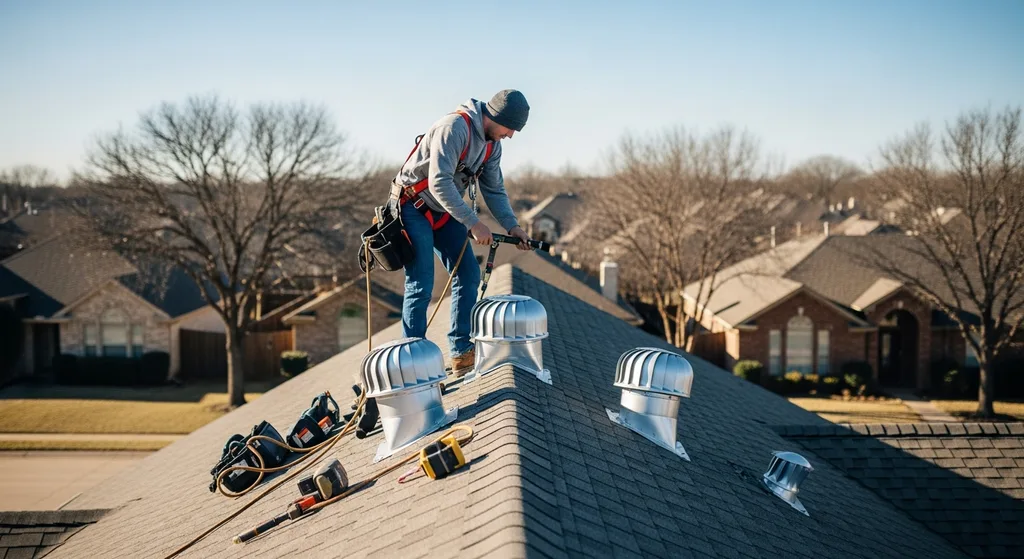
Reusing old vents
The Reality: Contractors often reuse old plastic vents to save $200, but these are often brittle and crack within one Texas summer.
Mixing vent types
The Reality: Installing a solar fan near a ridge vent short-circuits the system, pulling air only from the ridge and leaving the rest of the attic stagnant.
External Authoritative Resources
These industry-standard references support the information in this guide:
Building Codes
Frequently Asked Questions
How many vents do I need for my Dallas home?
Following IRC R806.1, you need 1 square foot of vent area for every 150 square feet of attic. A typical 2,000 sq. ft. attic requires about 13.3 square feet of total net free area.
Can I mix different types of exhaust vents?
No, the NRCA strongly advises against mixing vent types like ridge vents and turbines. This can cause ‘short-circuiting’ where air is pulled from the nearest vent rather than the soffit intakes.
Will better ventilation lower my Dallas electric bill?
Yes, reducing attic temperatures from 150°F to 110°F reduces the heat load on your HVAC ductwork, often resulting in a 10-15% reduction in cooling costs during Texas summers.
Does improper ventilation void my shingle warranty?
Most major manufacturers like GAF and CertainTeed require proof of proper ventilation per IRC codes to honor full warranty claims on material defects like blistering.
What is the best vent for the DFW climate?
A combination of continuous soffit vents and a high-quality ridge vent is generally considered the ‘gold standard’ by the National Roofing Contractors Association for our region.
How do I know if my vents are blocked?
Look for dark staining on the roof decking or ‘rusty’ nails in the attic, which indicate moisture buildup. A professional can use a smoke pencil to verify actual airflow.
Final Thoughts
Proper roof ventilation is the unsung hero of a long-lasting North Texas roof. By adhering to IRC 2021 codes and ensuring a balanced system of intake and exhaust, you protect your home from the destructive power of the Dallas sun and humidity. Don’t let a $500 ventilation oversight turn into a $15,000 roof replacement. FIELD NOTE: I always tell my clients in the DFW Metroplex that a roof needs to breathe just like we do.
I recently helped a family in Southlake whose shingles were curling after only 7 years; we added four additional intake vents and a solar exhaust, and their attic temp dropped 35 degrees instantly. If you haven’t had your ventilation calculated recently, now is the time to call a consultant before the next heatwave hits.
