
Contractor’s Bottom Line
A professional roof replacement in the Dallas-Fort Worth Metroplex is a comprehensive system overhaul, not just a shingle swap. According to the International Code Council (ICC) standards, a full scope includes the complete tear-off of old materials, inspection of the CDX plywood or OSB decking (IRC R803.2.1), and installation of new drip edges, synthetic underlayment (ASTM D226), and ventilation systems. In Dallas, current 2026 market rates for a standard 2,500 sq. ft. home typically range from $11,500 to $18,500 depending on material choice. Failure to include flashing or proper ventilation can void manufacturer warranties and lead to premature failure in the North Texas heat.
Key Takeaways
- A full replacement requires a complete tear-off to the wood deck to comply with IRC R905 requirements.
- High-performance synthetic underlayment meeting ASTM D4869 standards is now the professional baseline over traditional felt.
- Dallas building codes mandate specific drip edge and flashing details that many ‘low-bid’ contractors skip.
- Expect to pay $4.50 to $6.50 per square foot in the DFW area for a high-quality architectural shingle system.
When you invest in a new roof in Dallas, you are purchasing a complex weatherproofing system designed to withstand extreme North Texas climate shifts. Many homeowners assume a replacement is merely about the visible asphalt shingles, but the National Roofing Contractors Association (NRCA) emphasizes that sub-surface components are equally critical for longevity. Understanding the full scope of work ensures you don’t fall victim to corner-cutting tactics that compromise your home’s structural integrity. FIELD NOTE: Last month, a Dallas homeowner in the M-Streets called me after a ‘bargain’ roof replacement resulted in $6,000 of interior water damage.
The previous contractor had simply nailed new shingles over rotten OSB decking to save time, a direct violation of IRC R803.2.1. We had to strip the entire system back to the rafters to fix the underlying rot that was hidden beneath the new shingles. This guide breaks down every technical phase of the replacement process, from the initial permit acquisition to the final magnetic sweep of your property. We will examine the specific ASTM International standards for materials and the IRC 2021 codes currently applicable in the Dallas-Fort Worth region.
By the end of this article, you will know exactly what should appear on your contractor’s line-item estimate.
The Professional Roof Replacement Process Step-by-Step
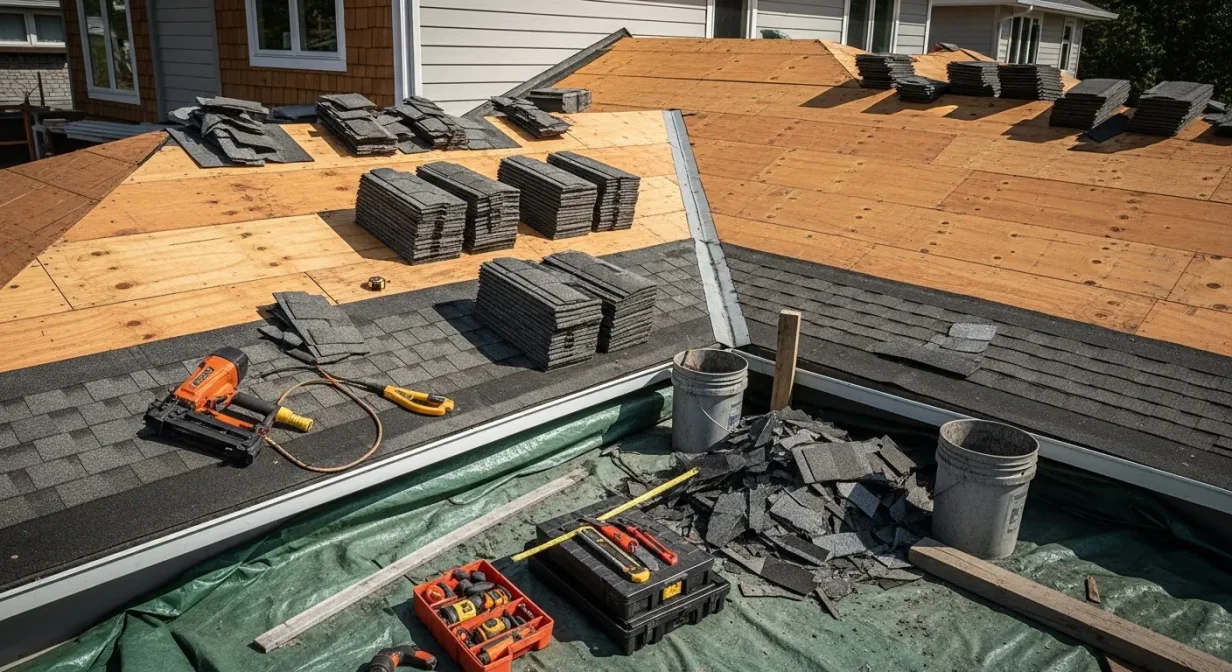
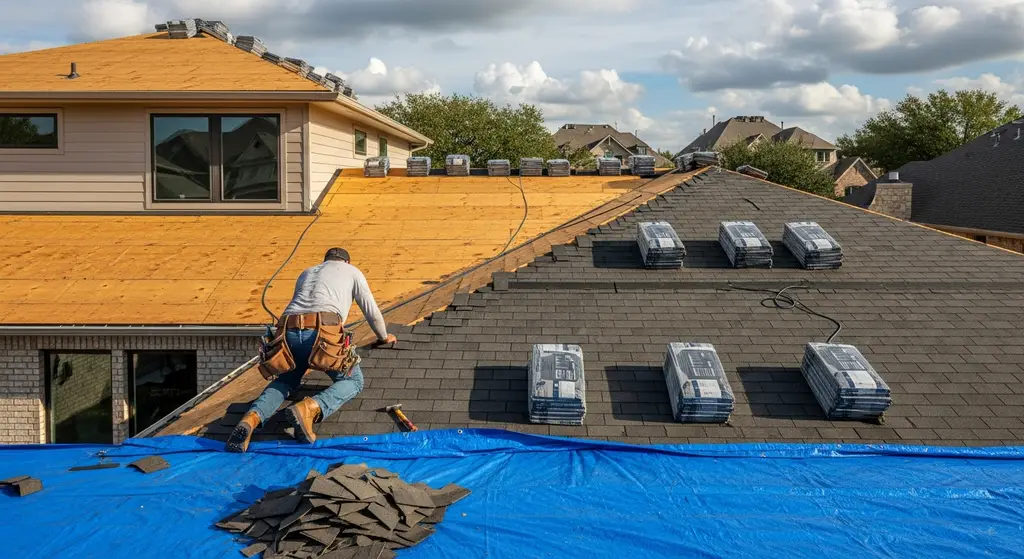
The process begins with a complete tear-off of all existing roofing layers down to the structural sheathing. The Occupational Safety and Health Administration (OSHA) requires specific fall protection for crews during this high-risk phase, especially on steep-slope Dallas residences. Removing the old material is the only way to identify underlying deck rot or structural sagging that could lead to future system failure. Once the deck is cleared, we install a leak barrier, often referred to as an ice and water shield, in critical areas like valleys and around chimneys.
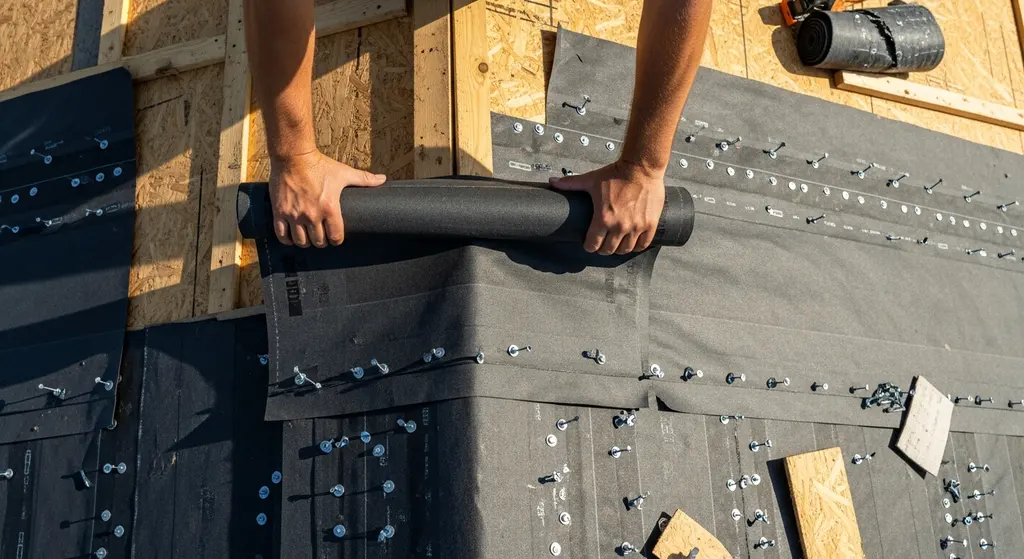
This material must meet ASTM D1970 standards to provide a self-adhering, waterproof seal against wind-driven rain. In the DFW Metroplex, these ‘critical zones’ are where most leaks originate during our intense spring thunderstorm cycles. Following the leak barrier, we apply synthetic underlayment across the remaining deck surface, which offers superior tear resistance compared to organic felt. This layer acts as a secondary defense, meeting ASTM D226 Type II requirements for moisture protection.
Finally, the installation of starter shingles and the main field shingles, such as GAF Timberline HDZ or Owens Corning Duration, completes the primary water-shedding surface.
Field Note from Experience
On a project in Highland Park, I discovered the original builder used 3-tab shingles with no starter strip. This caused the first row to blow off during a 60mph wind event. We replaced it with a full system including GAF Pro-Start shingles to ensure the 130mph wind warranty was fully valid.
Code Compliance and Structural Integrity Standards
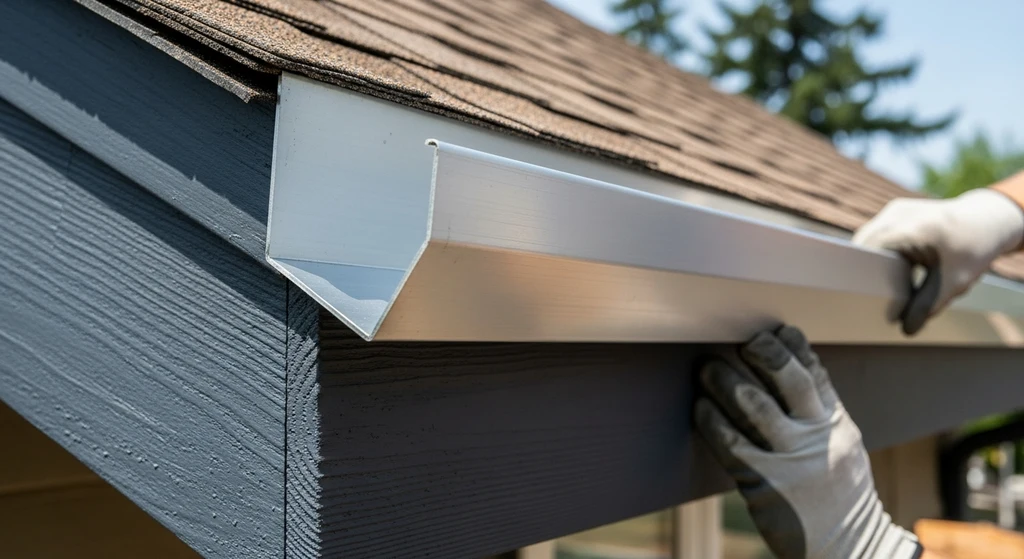
Adhering to the International Residential Code (IRC) is not optional for professional contractors in North Texas. IRC R803.2.1 requires that roof sheathing must be of a minimum thickness, typically 15/32-inch for rafters spaced 24 inches on center. If your current decking is 3/8-inch or shows signs of delamination, it must be replaced with CDX plywood or APA-rated oriented strand board (OSB) to ensure proper fastener withdrawal resistance. IRC R905.2.8.5 also mandates the installation of a drip edge at the eaves and gables of the roof.
This metal flashing prevents water from wicking back into the fascia board and decking edges, a common cause of wood rot in humid Dallas summers. Many contractors skip this $500–$800 detail to lower their bid, but its absence is a major red flag during municipal inspections. Proper ventilation is the final code requirement that often gets overlooked. IRC R806.1 requires a specific ratio of net free ventilating area to the space being ventilated.
In the DFW heat, an improperly vented attic can reach 160°F, which effectively ‘bakes’ the asphalt shingles from the inside out, cutting their 30-year lifespan in half.
| Critical Code Checklist | |
|---|---|
| Sheathing Thickness | Minimum 15/32-inch per IRC R803.2.1 |
| Fastener Type | 12-gauge galvanized nails per ASTM D1761 |
| Drip Edge | Mandatory eave and gable flashing |
Dallas-Fort Worth Replacement Cost Breakdown
Estimating a roof replacement in Dallas requires looking beyond the price of shingles. A standard architectural shingle system involves material costs, labor, debris disposal, and permit fees. In the current market, material prices for high-quality shingles like CertainTeed Landmark have stabilized, but labor remains a significant variable due to the high demand for skilled trades in the DFW Metroplex. Disposal fees are another factor often underestimated by homeowners.
A typical 30-square roof (3,000 sq. ft.) generates approximately 3 to 4 tons of waste. In Dallas County, landfill fees and roll-off dumpster rentals add roughly $600 to $900 to the total project cost. If your roof has multiple layers of old shingles, these disposal costs can double quickly.
Permit fees also vary by municipality within North Texas. While some smaller suburbs may only charge $50, larger cities like Dallas or Fort Worth have sliding scales based on the project value. Expect to allocate $150 to $300 for professional permit handling and the subsequent city inspections required to close out the project legally.
Dallas Market Pricing
In Dallas-Fort Worth, expect to pay $450-$650 per square (100 sq. ft.). These are current 2026 Dallas market prices; costs vary by region and can be 15-25% higher in remote Texas areas. Peak pricing occurs spring (March-May) storm season.
| Component | Estimated DFW Cost (per 100 sq ft) |
|---|---|
| Architectural Shingles (Material) | $140 – $180 |
| Labor (Tear-off & Install) | $200 – $300 |
| Underlayment & Accessories | $40 – $70 |
| Disposal & Permits | $30 – $50 |
What Some Contractors Hide in Their Estimates
One of the most common ways contractors hide costs—or cut them—is by reusing old flashing and pipe boots. While a lead pipe jack may look fine from the ground, the rubber seal often dry-rots in the Texas sun after 10 years. Reusing these components is a primary cause of ‘mystery leaks’ in new roofs, as the old metal fails to bond properly with the new shingle layers. Another hidden tactic involves ‘short-nailing’ or using fewer fasteners than required by the manufacturer.
For a GAF or CertainTeed wind warranty to be valid, shingles must be installed with a specific nailing pattern (usually 4 to 6 nails per shingle). Using only 3 nails saves the contractor money on materials and labor time, but it leaves your roof vulnerable to being stripped bare during a North Texas windstorm. Finally, be wary of estimates that do not specify the brand of underlayment or starter shingles. Some contractors use ‘off-brand’ accessories while installing premium shingles.
This ‘mixed system’ often voids the manufacturer’s enhanced labor warranty, which requires all components—from the ridge vent to the starter strip—to be from the same product family.
No mention of IRC code compliance
Consequence: You may fail a city inspection or have issues during a future home sale.
Refusal to provide a ‘Certificate of Insurance’
Consequence: You are liable for any injuries that occur on your property.
What Contractors Hide
Reusing old valley flashing
The Reality: Saves $300 but causes leaks in 3-5 years due to metal fatigue.
Skipping the magnetic sweep
The Reality: Saves 30 minutes but leaves thousands of dangerous nails in your lawn.
Using ‘fake’ ridge caps
The Reality: Using cut-up 3-tab shingles as ridge caps instead of dedicated high-profile caps voids wind warranties.
Field Note from Experience
I recently saw a ‘storm chaser’ in Richardson quote a price $4,000 lower than mine. I checked his specs and found he wasn’t replacing the chimney flashing—he was just ‘caulking’ it. In our 100-degree heat, that caulk will crack in 12 months, leading to a massive leak.
External Authoritative Resources
These industry-standard references support the information in this guide:
Building Codes
International Residential Code (IRC 2021)
Official building code for residential construction
ICC Code Adoption Map
Find which IRC version your state uses
Industry Standards
NRCA Roofing Manual
National Roofing Contractors Association best practices
ASTM International Standards
Material testing standards (ASTM D3043, D1761)
Manufacturer Resources
Frequently Asked Questions
Can I just install new shingles over my old ones?
While IRC codes may allow a second layer in some cases, the NRCA strongly recommends a full tear-off. Adding a second layer traps heat, voids manufacturer warranties, and prevents the inspection of the structural decking for rot.
How long does a full roof replacement take?
A standard 2,500 sq. ft. home in Dallas typically takes 1 to 2 days to complete, assuming good weather. Complex roofs with steep pitches or multiple valleys may take 3 to 4 days for a full crew.
What is the best material for Dallas heat?
Architectural asphalt shingles with high solar reflectance (Energy Star rated) or Class 4 impact-resistant shingles are ideal. These materials handle the thermal expansion and hail threats common in the DFW Metroplex.
Is a permit required for roof replacement in Dallas?
Yes, most North Texas municipalities, including Dallas and Fort Worth, require a building permit. This ensures a city inspector verifies that the work meets IRC 2021 safety and structural standards.
What is an ice and water shield?
It is a self-adhering membrane meeting ASTM D1970 standards. It provides a waterproof seal in high-risk areas like valleys, eaves, and penetrations where standard underlayment might fail.
What happens if my decking is rotten?
Per IRC R803.2.1, any soft or rotten decking must be replaced with new CDX plywood or OSB. Installing new shingles over rotten wood is a code violation and will cause the nails to pull out.
Final Thoughts
A roof replacement is a significant investment that protects your home’s entire structural value. By ensuring your contractor follows a comprehensive scope—including a full tear-off, decking inspection, and the use of ASTM-certified materials—you avoid the common pitfalls that plague many North Texas homeowners. Remember that the lowest bid often excludes critical items like drip edges or proper ventilation, which are mandated by the International Residential Code (IRC). FIELD NOTE: I always tell my Dallas clients that a roof is only as good as the flashing.
I’ve seen $50,000 roofs fail because a $20 pipe boot was installed incorrectly. Insist on a final walk-through and a magnetic sweep of your yard. If you have any doubts about the scope of your project, consult with an independent inspector to verify the installation meets NRCA standards before you make the final payment.
