
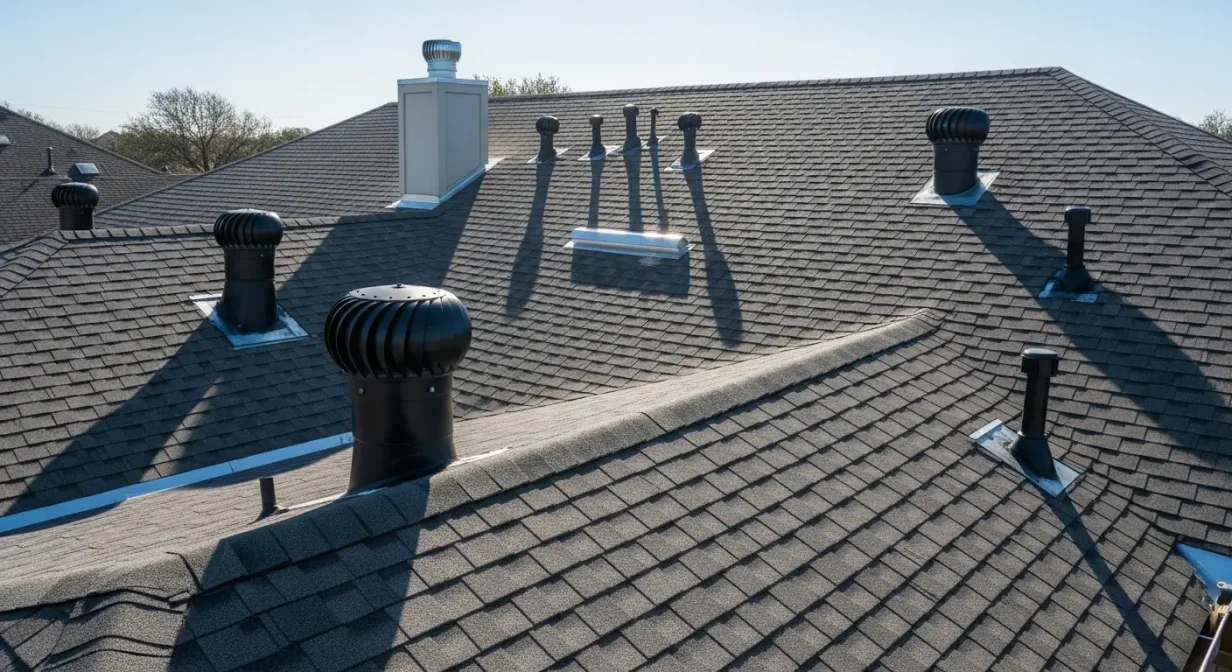
Contractor’s Bottom Line
Identifying roof sealant failure early is crucial to prevent costly water damage. Look for cracking, peeling, or discoloration around flashing, vents, and chimneys. A professional inspection in the Dallas-Fort Worth area typically costs $200-$500. Neglecting these issues can lead to leaks and structural damage, potentially costing thousands to repair. IRC R905 addresses roofing material requirements and proper installation. Prompt action and adherence to NRCA guidelines can save you significant expense. Remember, proper sealant application is vital for a weathertight roof system.
Key Takeaways
- Cracked, peeling, or discolored roof sealant indicates potential failure and requires attention.
- Regular roof inspections, especially after storms common in North Texas, can identify sealant issues early.
- Ignoring sealant problems can lead to leaks, wood rot, and costly repairs, potentially exceeding $5,000 in the DFW Metroplex.
Roof sealants play a vital role in protecting your home from water damage, especially in the harsh Texas climate. They create a watertight barrier around vulnerable areas like flashing, vents, and chimneys, preventing leaks that can lead to costly repairs. Understanding the signs of sealant failure is the first step in maintaining a healthy roof. The International Code Council (ICC) publishes the International Residential Code (IRC), which provides guidelines for roof construction and maintenance.
In my 8+ years as a construction consultant in Dallas, I have seen firsthand the devastating effects of neglected roof sealant. Often, homeowners only notice the problem when water starts dripping inside, but by then, significant damage may already be done. Regular inspections and timely repairs are key to preventing these issues. Field Note #1: I recall a case where a homeowner in Plano delayed sealant repairs, resulting in over $10,000 of damage to their attic and ceiling.
Synthetic underlayment can also help prevent water damage, but sealants are still a crucial part of a comprehensive roof protection system.
Recognizing the Warning Signs of Roof Sealant Failure
Several visual cues indicate that your roof sealant may be failing. Cracking is a common sign, as the sealant loses its elasticity and becomes brittle over time. Peeling or bubbling also suggests that the sealant is no longer properly adhered to the underlying surface. Discoloration, such as fading or staining, can indicate exposure to UV radiation and weathering, compromising its protective abilities.
These issues are exacerbated by the intense Texas sun, which can degrade even high-quality materials. Another warning sign is the presence of debris embedded in the sealant. This can happen when the sealant becomes sticky or tacky due to age or heat exposure, attracting dirt, leaves, and other particles. These embedded materials can create pathways for water to penetrate, leading to leaks.
Check around roof penetrations like vent pipes, chimneys, and skylights. The NRCA recommends regular inspections to identify these problems early. Asphalt shingles also rely on proper sealant for wind resistance.
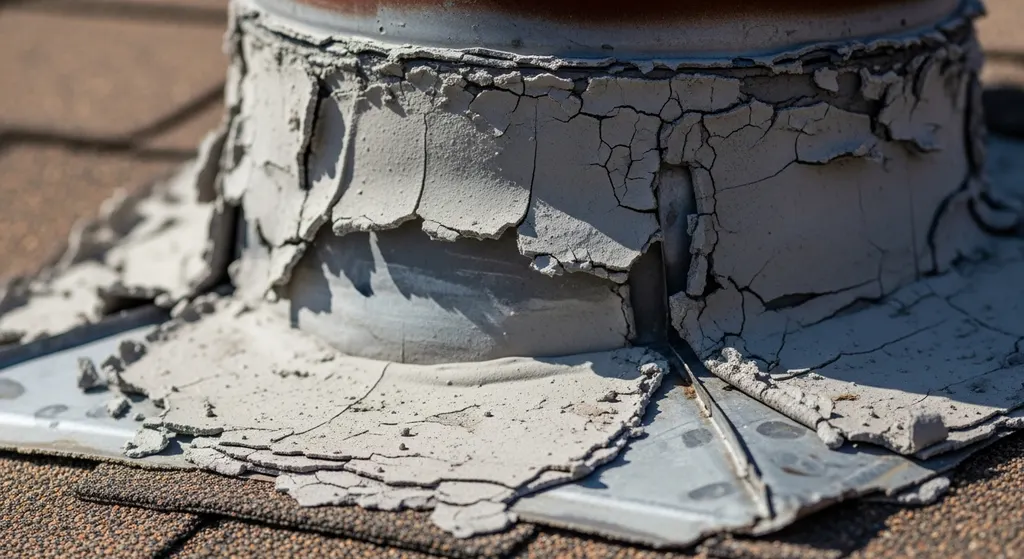
Cracked Sealant
Typical Cost: $1,000 – $5,000 (leak repair)
Prevention: Regular inspections and reapplication
Insurance Coverage: May be covered if caused by covered peril (hail)
Code Reference: IRC R905.10
Field Note from Experience
After inspecting dozens of Dallas-area roofs, I found that sealant around plumbing vents is often the first to fail due to constant exposure to moisture and temperature fluctuations.
How to Inspect Your Roof Sealant
Inspecting your roof sealant requires a careful visual assessment. Start by observing the sealant from the ground using binoculars to identify any obvious signs of damage. Then, if you are comfortable and have the proper safety equipment, carefully access the roof for a closer look. Pay particular attention to areas around flashing, vents, chimneys, and skylights.
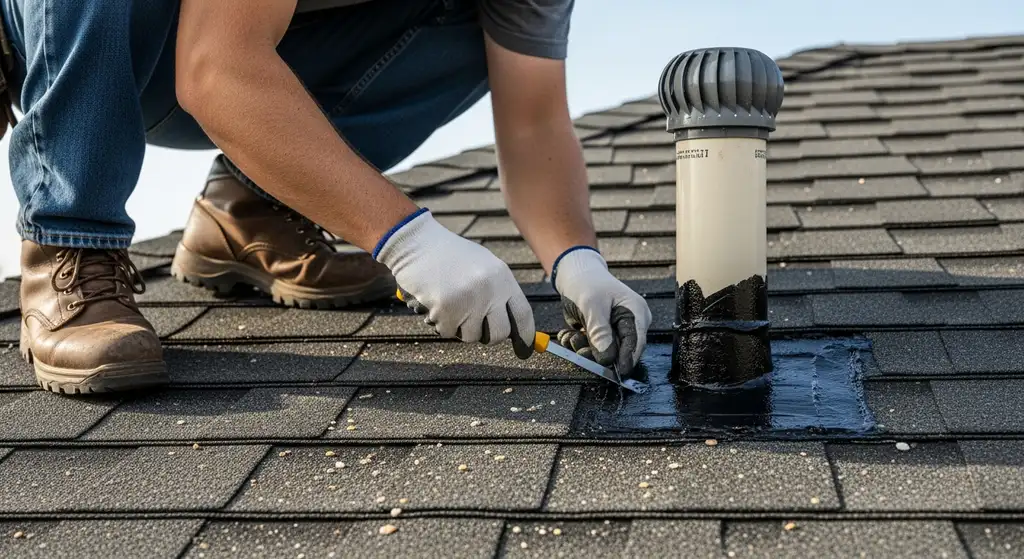
Look for cracks, peeling, bubbling, and discoloration. Be sure to check the condition of the sealant where it meets different materials, such as metal flashing and asphalt shingles. While on the roof, gently probe the sealant with a screwdriver or other tool to check its flexibility. If it feels hard and brittle, it’s likely nearing the end of its lifespan.
Check the adhesion by attempting to gently lift the edge of the sealant. If it comes away easily, it’s no longer providing a proper seal. The Occupational Safety and Health Administration (OSHA) provides guidelines for safe roofing practices, and these must be followed. ASTM D4869 covers performance requirements for asphalt shingles.
| Sealant Inspection Checklist | |
|---|---|
| Cracks | Check for hairline cracks and larger fissures. |
| Peeling | Look for sealant that is lifting away from the surface. |
| Discoloration | Note any fading, staining, or chalking. |
| Adhesion | Gently test the sealant’s bond to the surrounding materials. |
Field Note from Experience
Working on Texas roofing projects, I have noticed that many homeowners neglect the sealant around their skylights, leading to leaks during heavy rain. Regular inspection can catch this early.
Assessing the Severity of Roof Sealant Damage
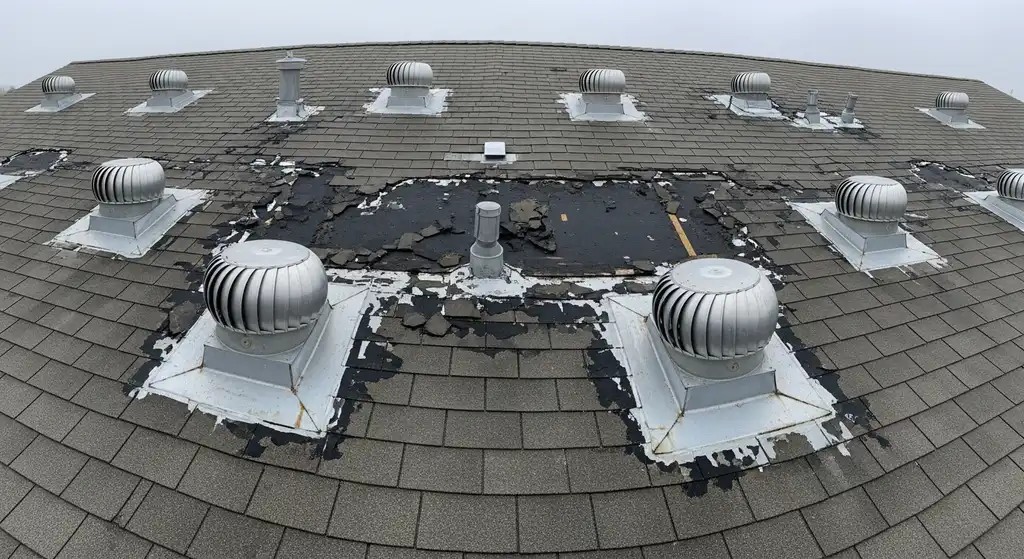
The extent of roof sealant damage can range from minor surface cracks to widespread deterioration. Minor cracks may only require a simple sealant repair, while more extensive damage could necessitate replacing entire sections of flashing or even the surrounding roofing materials. The severity of the damage also depends on the location. Sealant failure around critical areas like chimneys or valleys poses a greater risk of leaks compared to sealant issues on less vulnerable parts of the roof.
Consider the age of your roof. If your roof is nearing the end of its lifespan, extensive sealant damage could be a sign that it’s time for a complete roof replacement. In Dallas-Fort Worth, extreme heat cycles can accelerate the degradation of roofing materials. Consulting with a qualified roofing contractor is essential for accurately assessing the damage and determining the appropriate course of action.
ASTM D3043 provides testing methods for roofing materials. FEMA also offers guidance on roof repair and replacement after storm damage.
| Damage Level | Description | Recommended Action |
|---|---|---|
| Minor | Small cracks, slight peeling | Sealant repair |
| Moderate | Extensive cracking, moderate peeling | Sealant replacement or flashing repair |
| Severe | Widespread deterioration, leaks | Roof repair or replacement |
Field Note from Experience
In my experience, many Dallas homeowners do not realize the importance of proper attic ventilation in preventing sealant failure. Poor ventilation can trap heat and moisture, accelerating sealant degradation.
External Authoritative Resources
These industry-standard references support the information in this guide:
Building Codes
Frequently Asked Questions
How long does roof sealant typically last?
The lifespan of roof sealant varies depending on the type of sealant, the climate, and the quality of installation. Generally, you can expect a lifespan of 5 to 10 years. However, in the harsh Texas climate, with its extreme heat and UV radiation, sealant may degrade faster. Regular inspections can help you determine when it’s time for a replacement.
Felt underlayment, while offering some protection, cannot replace the role of properly applied sealant.
What type of sealant should I use for my roof?
The best type of sealant for your roof depends on the materials and the specific application. Polyurethane sealants are generally considered to be a good all-around choice due to their flexibility and durability. Silicone sealants offer excellent water resistance but may not be as durable in high-traffic areas. Consult with a roofing professional to determine the best sealant for your needs.
NRCA provides guidance on sealant selection based on roofing materials.
Can I repair roof sealant myself?
Minor sealant repairs, such as patching small cracks, can often be done yourself. However, it’s important to use the correct type of sealant and follow the manufacturer’s instructions carefully. For more extensive damage or if you’re not comfortable working on your roof, it’s best to hire a qualified roofing contractor. Safety should always be your top priority.
IRC R803.2.1 requires minimum roof sheathing thickness for safety.
How much does it cost to repair or replace roof sealant in Dallas?
The cost to repair or replace roof sealant in Dallas-Fort Worth can vary depending on the extent of the damage and the type of sealant used. Minor repairs may cost a few hundred dollars, while more extensive replacements could cost several thousand. Getting multiple quotes from reputable roofing contractors is essential. Advantech or CDX plywood may also need repair if water damage is present.
Will my insurance cover roof sealant damage?
Whether your insurance covers roof sealant damage depends on the cause of the damage and your insurance policy. Sealant damage caused by a covered peril, such as hail or wind, may be covered. However, damage due to normal wear and tear or neglect is typically not covered. Review your insurance policy carefully and consult with your insurance agent.
Insurance fraud is a serious offense; do not participate in schemes offering to waive deductibles.
What are the benefits of using ice and water shield in addition to sealant?
Ice and water shield is a waterproof membrane that provides an extra layer of protection against water damage, particularly in areas prone to ice dams and heavy rain. While sealant protects around penetrations, ice and water shield protects the roof deck itself. Using both ice and water shield and sealant provides a comprehensive waterproofing system, especially beneficial in the unpredictable Texas weather. The NRCA recommends ice and water shield in areas prone to ice dams.
The IRC 2021 provides minimum standards for ice and water shield installation.
Final Thoughts
Roof sealant is a critical component of a healthy and weathertight roof. Recognizing the warning signs of sealant failure, performing regular inspections, and addressing damage promptly can save you significant money and prevent costly water damage. Don’t neglect this important aspect of roof maintenance, especially in the challenging climate of North Texas. Field Note #3: I’ve seen situations where homeowners tried to save money by using cheap sealants, only to have them fail within a year, leading to even more expensive repairs.
Invest in quality materials and professional installation for long-term peace of mind. Contact a licensed roofing contractor in the DFW Metroplex for expert advice and services.
