
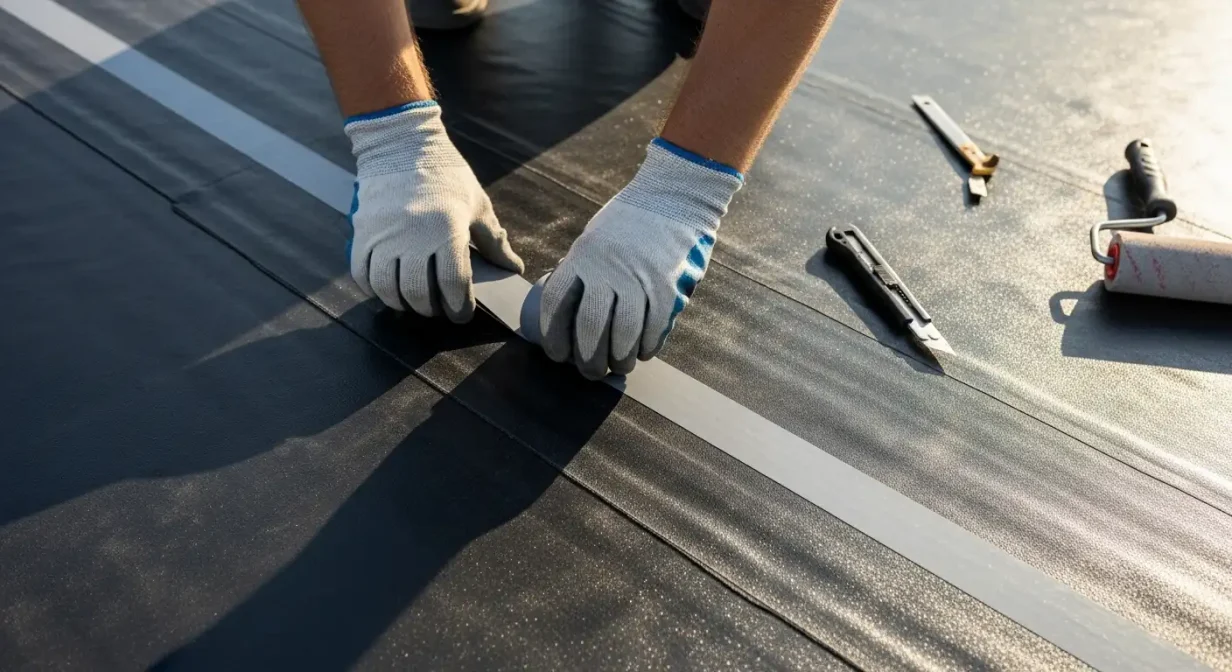
Contractor’s Bottom Line
Ethylene Propylene Diene Monomer (EPDM roofing) remains a premier solution for low-slope applications in the Dallas-Fort Worth area due to its exceptional UV resistance and elasticity. Currently, in the 2026 Dallas market, professional installation ranges from $8.50 to $14.50 per square foot depending on the attachment method and insulation requirements. Compliance with IRC R905.12 and ASTM D4637 is mandatory for structural integrity. While EPDM excels in thermal expansion cycles, I warn clients that improper seam sealing is the primary cause of premature failure in North Texas. Always verify that your contractor follows National Roofing Contractors Association (NRCA) details for flashing and edge terminations.
Key Takeaways
- EPDM roofing must meet ASTM D4637 standards for synthetic rubber membranes to ensure longevity in the Texas sun.
- IRC 2021 code R905.12 requires specific substrate preparation and fastener densities for wind uplift resistance in the DFW Metroplex.
- Fully adhered systems offer superior performance over ballasted systems in Dallas due to high-wind storm events and hail impact concerns.
EPDM roofing has served as a workhorse for flat and low-slope structures across North Texas for decades. Whether you are covering a modern residential addition or a commercial warehouse, understanding the chemical resilience of this synthetic rubber is critical. I have found that homeowners often overlook the importance of substrate compatibility, which can lead to catastrophic membrane blistering. FIELD NOTE: Last month, a Dallas homeowner in Lake Highlands called me after a ‘budget’ contractor installed EPDM directly over old asphalt shingles.
The resulting chemical reaction caused the new $12,000 membrane to liquefy and fail within weeks. We had to strip the entire roof down to the CDX plywood and start over to meet ASTM D4637 standards. In the Dallas-Fort Worth climate, the extreme temperature swings demand a material that can stretch without cracking. The National Roofing Contractors Association (NRCA) highlights EPDM for its ability to handle thermal shock.
As we look at current 2026 standards, selecting the right thickness—typically 60-mil or 90-mil—is the first step toward a thirty-year roof.
EPDM Composition and Technical Specifications
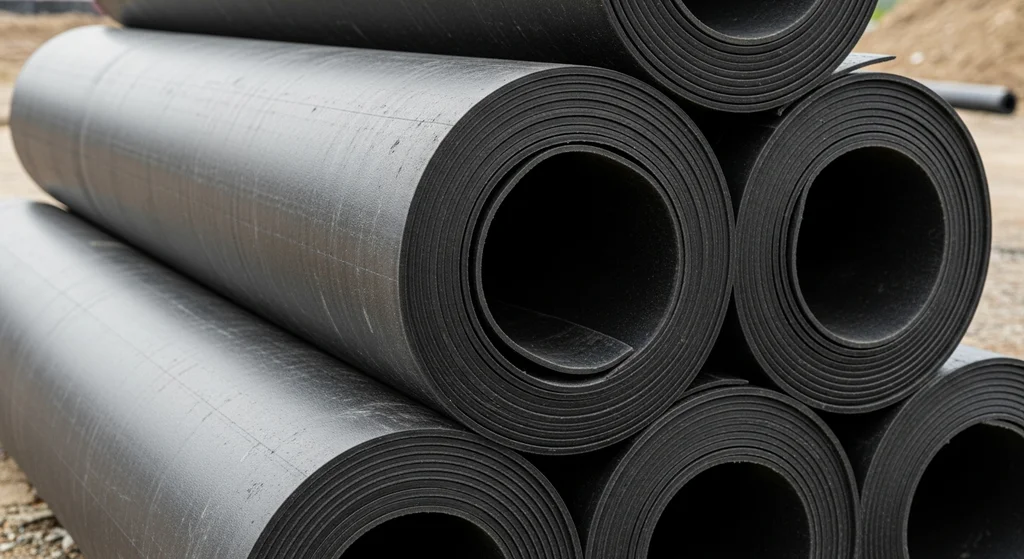
EPDM roofing is a synthetic rubber membrane composed primarily of ethylene and propylene derived from oil and natural gas. The material is engineered to resist ozone and UV radiation, which is essential for the intense North Texas sun. Most high-quality membranes used in Dallas conform to ASTM D4637, which governs the physical properties of single-ply membranes. Architects often specify 60-mil reinforced EPDM for residential porches and 90-mil for heavy-duty commercial applications.
The reinforcement layer, usually a polyester scrim, provides enhanced tear resistance against falling branches or light hail. When evaluating products from manufacturers like Firestone or Carlisle, always check the tensile strength and factory-applied tape options.
| EPDM Technical Data | |
|---|---|
| Common Thickness | 45-mil, 60-mil, 90-mil |
| Standard Compliance | ASTM D4637 Type I, II, or III |
| Solar Reflectance | Varies (Black vs. White EPDM) |
Performance in the Dallas-Fort Worth Climate
The DFW Metroplex presents unique challenges for flat roofing, specifically regarding thermal expansion and contraction. EPDM roofing is highly elastic, often reaching over 300% elongation, which allows it to move with the building during 100°F summer days and 20°F winter nights. This flexibility prevents the splitting common in older built-up roofing systems. However, black EPDM can reach surface temperatures of 160°F in North Texas, increasing the heat load on your HVAC system.
To combat this, I recommend installing high-R-value polyiso insulation boards beneath the membrane. This approach meets International Code Council (ICC) energy efficiency standards while protecting the interior from the Texas heat.
Code Compliance and IRC R905 Standards
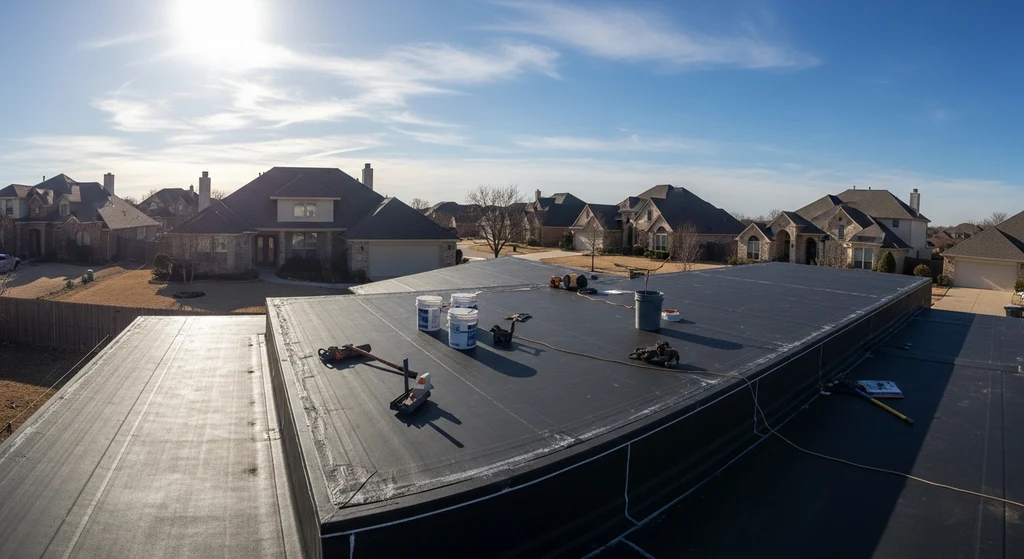
In Dallas County, roofing permits require strict adherence to the International Residential Code (IRC). Specifically, IRC R905.12 dictates the installation requirements for thermoset single-ply roofing like EPDM. The code mandates that the membrane must be applied to a clean, dry, and compatible substrate, such as OSB or oriented strand board with a proper cover board. Field inspections often focus on the flashing details at parapet walls and penetrations.
IRC R905.1 requires all roof coverings to be installed according to manufacturer specifications and the NRCA manual. Failure to provide a minimum 1/4:12 slope for positive drainage can lead to ponding water, which violates local Dallas building amendments.
| Dallas Inspection Checklist | |
|---|---|
| Minimum Slope | 1/4:12 (2 percent) |
| Fastener Standard | ASTM D1761 for mechanical fasteners |
| Underlayment | ASTM D226 Type II or equivalent |
Field Note from Experience
During an inspection in North Dallas, I found a contractor skipping the ‘cricket’ installation behind a large chimney. This violated IRC R905.12 drainage requirements and caused a $4,500 interior leak repair after the first spring storm. We had to reinstall the EPDM flashing to meet 2026 code standards.
EPDM Roofing Costs in Dallas-Fort Worth
Budgeting for EPDM roofing in the DFW Metroplex requires understanding both material costs and labor intensive seam work. For a standard 2,000 square foot flat roof, homeowners should expect a total project cost between $17,000 and $29,000. This range includes the removal of existing materials, disposal fees, and the installation of new insulation boards. Labor rates in Dallas are currently influenced by high demand during the spring storm season.
Choosing a fully adhered system, where the membrane is glued to the substrate, is more expensive than a mechanically attached system but offers better wind uplift resistance. I always suggest clients account for a 10% contingency fund for deck repairs if CDX plywood rot is discovered.
Dallas Market Pricing
In Dallas-Fort Worth, expect to pay $8.50-$14.50 per square foot. These are current 2026 Dallas market prices; costs vary by region and can be 15-25% higher in remote Texas areas. Peak pricing occurs spring (March-May) storm season.
| Component | Dallas Cost (Per Sq. Ft.) |
|---|---|
| 60-mil EPDM Membrane | $2.50 – $4.00 |
| Polyiso Insulation (R-20) | $3.00 – $4.50 |
| Labor & Installation | $3.00 – $6.00 |
What Contractors Hide: The Truth About EPDM
Transparency is often lacking when it comes to material markups and installation shortcuts. Many contractors in the DFW area will quote a low price but use ‘B-grade’ membranes or expired bonding adhesives. Adhesives have a shelf life, and using expired glue in the 100-degree Texas heat will lead to membrane delamination within two years. Another common tactic is skipping the installation of a cover board over the insulation.
While not always required by the base code, the NRCA recommends a cover board like DensDeck to provide impact resistance against hail. Contractors hide this to save $1.50 per square foot, but it leaves your roof vulnerable to the next North Texas hailstorm.
Contractor suggests ballasted (gravel) systems
Consequence: Gravel is difficult to remove for leak detection and adds massive structural weight.
What Contractors Hide
Reusing old metal flashing
The Reality: Contractors do this to save labor, but it creates leak points at every corner.
Using glue-only seams
The Reality: Modern standards require seam tape for a 20-year bond; glue-only seams often fail in 5 years.
External Authoritative Resources
These industry-standard references support the information in this guide:
Building Codes
Frequently Asked Questions
How long does EPDM roofing last in Texas?
A professionally installed EPDM system typically lasts 25 to 30 years in the DFW area. Longevity depends on maintaining seams and ensuring compliance with NRCA maintenance standards.
Is white EPDM better than black EPDM for Dallas?
White EPDM is an Energy Star rated option that reduces cooling costs. However, it is generally more expensive and requires more frequent cleaning to maintain its reflective properties.
Can EPDM be installed over existing roofs?
IRC R908.3 generally allows one recover, but I advise against it for EPDM. Chemical incompatibilities with old asphalt can cause the new membrane to fail prematurely.
Does EPDM stand up to North Texas hail?
EPDM is highly impact-resistant due to its rubber composition. Using a 90-mil membrane with a high-density cover board provides the best protection against typical DFW hail events.
What is the difference between EPDM and TPO?
EPDM is a thermoset rubber, while TPO is a thermoplastic. EPDM generally offers better long-term UV resistance, whereas TPO has heat-welded seams that some prefer for water tightness.
How do I find a leak in an EPDM roof?
I recommend a professional infrared moisture survey. This identifies trapped water beneath the membrane without needing to tear up the entire system, saving thousands in diagnostic costs.
Final Thoughts
EPDM roofing remains one of the most reliable choices for the Dallas-Fort Worth climate when installed with precision. Its ability to withstand the punishing Texas sun and move with the building’s thermal cycles is unmatched by traditional asphalt systems. However, the success of the system relies entirely on the quality of the seams and the integrity of the substrate. FIELD NOTE: I recently assisted a family in Frisco whose EPDM roof was failing because the installer used house-wrap tape on the seams instead of ASTM-rated seam tape.
The resulting $15,000 replacement could have been avoided with a simple inspection of the materials before they went on the roof. Always demand a material list that cites ASTM D4637 and IRC R905 compliance before signing a contract. If you are ready to move forward, ensure your contractor provides a written warranty that covers both labor and materials. A 20-year ‘No Dollar Limit’ (NDL) warranty is the gold standard for commercial and high-end residential EPDM projects in Texas.
