
Contractor’s Bottom Line
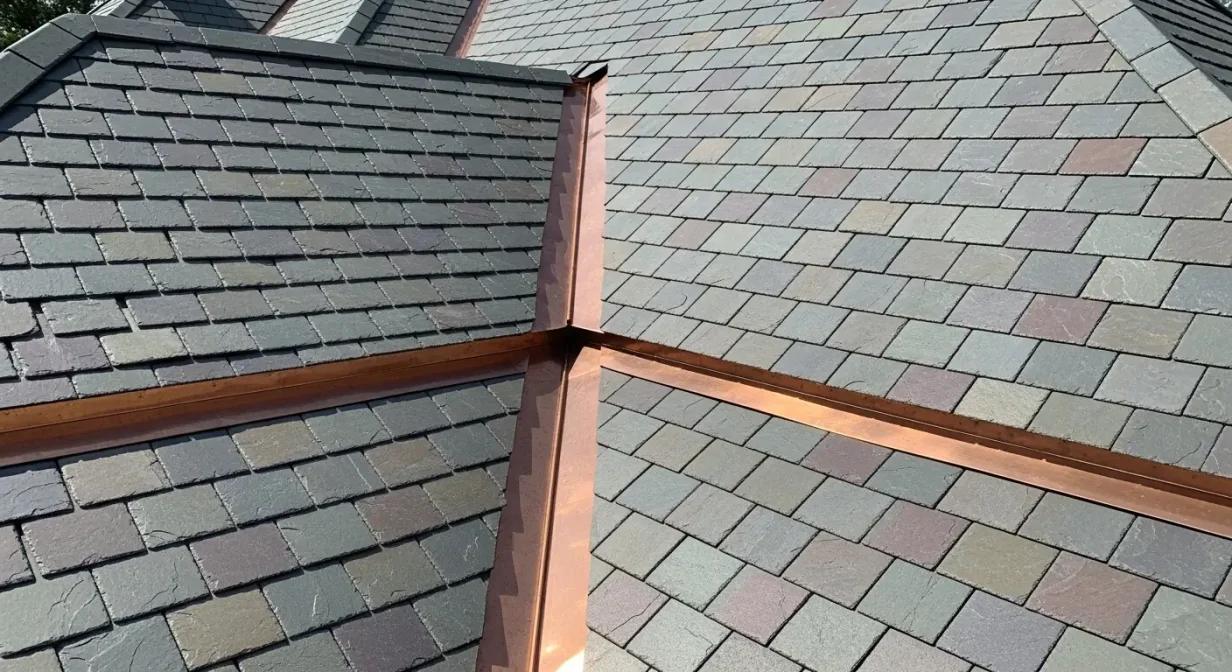
Slate roofing is a natural stone clamping system that provides an exceptionally long service life and high fire resistance for steep-slope structures. Because natural slate is extremely heavy, the roof framing must be engineered to support 800 to 1,500 pounds per square of material. Inspect the nail holes and flashing annually, as the primary failure mode is broken slates allowing water to penetrate the fastener points.
Key Takeaways
- Genuine slate must meet ASTM C406 standards, with S1 grade offering the 75+ year longevity expected in the Dallas climate.
- Structural reinforcement is mandatory as slate weighs 800-1,500 lbs per square, often requiring an engineer’s seal for IRC 2021 compliance.
- In the DFW Metroplex, copper flashing and stainless steel fasteners (ASTM D1761) are essential to match the slate’s lifespan.
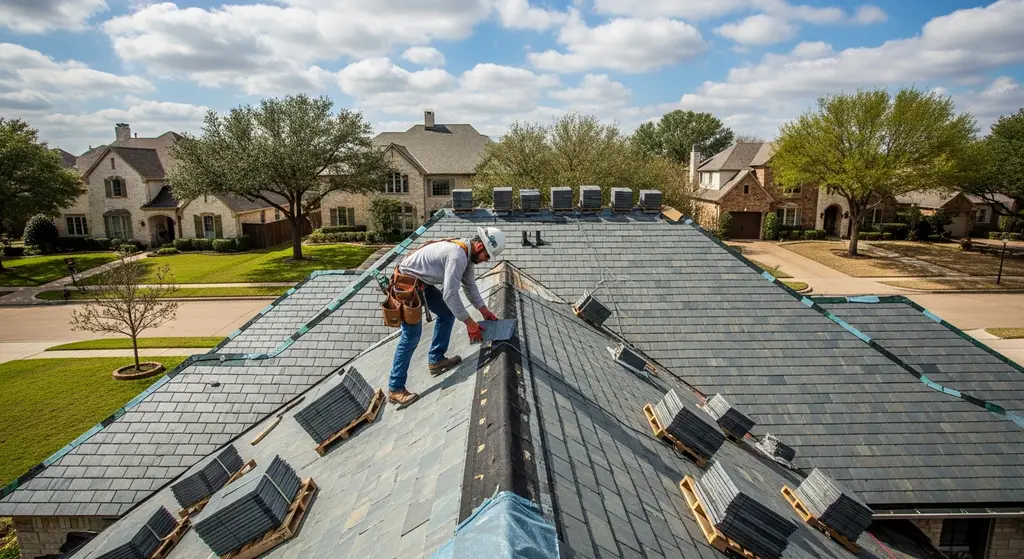
I have spent over eight years inspecting roofs across the DFW Metroplex, and nothing matches the architectural prestige of genuine slate. While many homeowners are drawn to its aesthetic, slate is a complex geological material that requires a specialized installation approach. Most residential structures in North Texas are originally designed for asphalt shingles, meaning a transition to slate involves more than just a material swap. FIELD NOTE #1: Last year, I was called to a beautiful estate in Highland Park where the homeowner was convinced they needed a full replacement after a minor leak.
Upon inspection, I found that while the slate itself was in perfect condition after 60 years, the original galvanized flashing had rusted through. We were able to save the client over $85,000 by performing a surgical repair using high-grade copper flashing instead of a full tear-off. It is a classic example of how the ‘forever’ nature of slate is only as good as the metals supporting it. Understanding the nuances of slate roofing means looking beyond the surface at the ASTM International standards and International Code Council (ICC) requirements that govern its use.
From wind uplift resistance in North Texas storms to thermal expansion in 100-degree heat, every detail matters.
Understanding Slate Grades and ASTM Standards
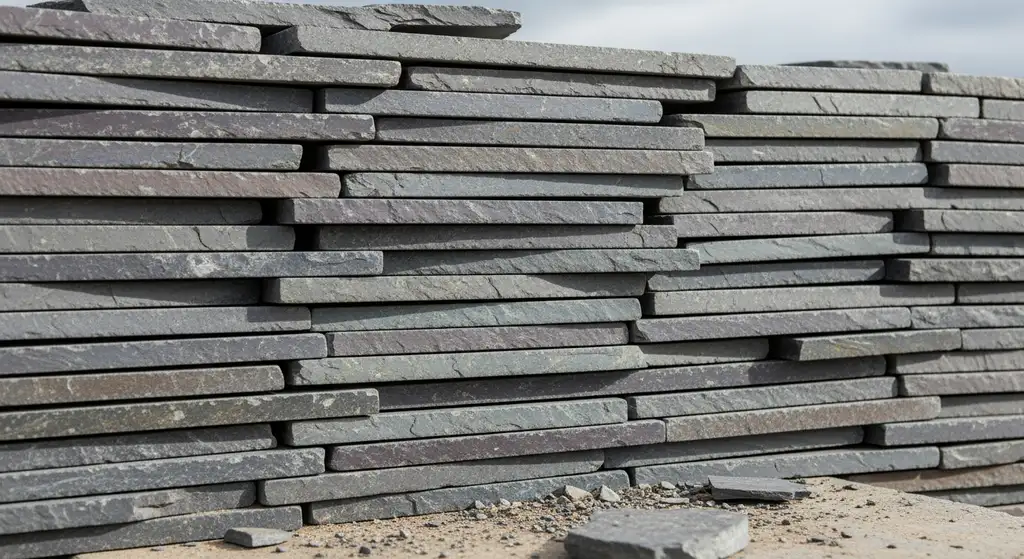
Not all slate is created equal, and in the roofing industry, we rely heavily on ASTM C406 to categorize material quality. This standard breaks slate into three grades: S1, S2, and S3, which predict the service life based on mineral composition. S1 slate is the only grade I recommend for Dallas homes, as it is rated for over 75 years of exposure to our harsh environmental stressors. The geological makeup of slate, primarily consisting of quartz, chlorite, and mica, determines its water absorption rate and modulus of rupture.
Per ASTM C121, S1 slate must have a water absorption rate of less than 0.25%. This is critical in Texas, where rapid temperature swings can cause freeze-thaw cycles that shatter lower-quality, more porous stones.
| ASTM Grade | Expected Service Life | Water Absorption (Max %) |
|---|---|---|
| S1 | 75+ Years | 0.25% |
| S2 | 40-75 Years | 0.36% |
| S3 | 20-40 Years | 0.45% |
| Technical Specs | |
|---|---|
| Weight | 8-15 lbs per sq. ft. |
| Fire Rating | Class A (Non-combustible) |
Performance in the Dallas-Fort Worth Climate
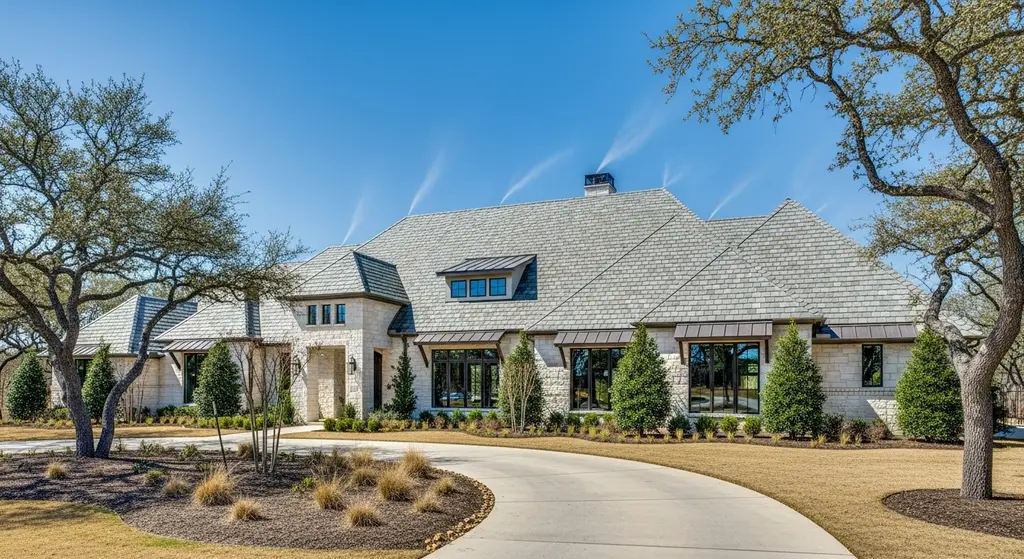
In the DFW Metroplex, roofing materials must survive a unique gauntlet of extreme heat and violent spring storms. Slate is naturally resistant to UV degradation, which destroys asphalt shingles in our 100-degree summers. Unlike synthetic products, natural slate does not off-gas or lose structural integrity when exposed to the intense Texas sun for decades. When it comes to hail, slate is remarkably resilient but not invincible.
Most S1 slates carry a UL 2218 Class 4 impact rating, meaning they can withstand 2-inch hailstones without functional damage. However, the steep-slope nature of slate roofs in neighborhoods like Preston Hollow helps deflect impact energy, further protecting the substrate from North Texas weather events.
Field Note from Experience
During the massive 2026 spring hail storm in North Dallas, I inspected a street where every asphalt roof was totaled. The one slate roof on the block, installed five years prior, had only three cracked slates on the windward side. The repair cost was $1,200 compared to the $45,000 replacements neighbors were facing.
IRC 2021 Code Compliance for Slate
The International Residential Code (IRC) section R905.6 specifically dictates the installation of slate shingles. In Dallas, where we follow strict building permit protocols, you must ensure your contractor adheres to IRC R905.6.3 regarding underlayment. For slopes between 4:12 and 8:12, a double layer of ASTM D226 Type II felt is required to prevent moisture infiltration. Furthermore, fastener requirements under ASTM D1761 are non-negotiable for slate.
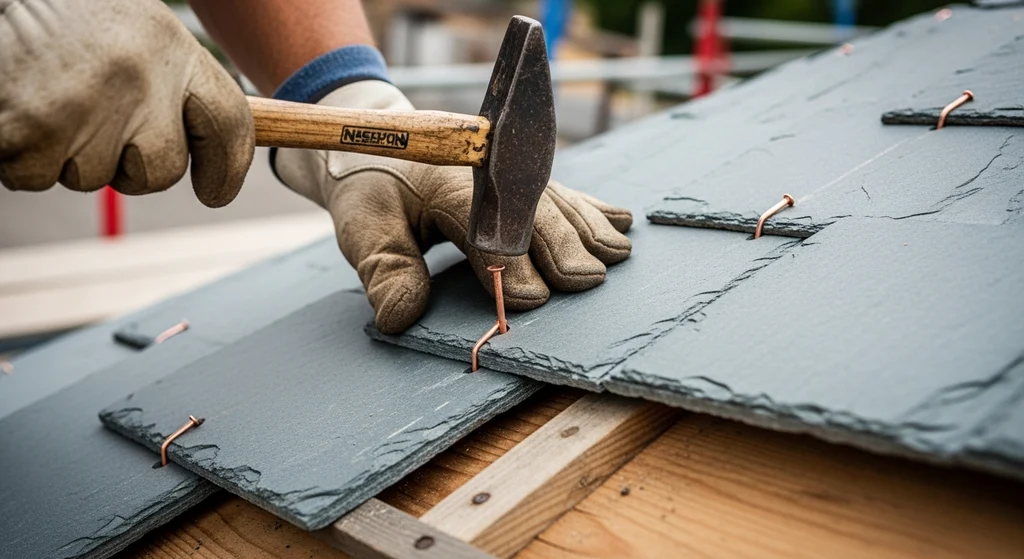
I always specify large-head copper slating nails or stainless steel fasteners. Using standard galvanized nails is a code violation in many high-end Dallas jurisdictions because the nail will rust out long before the slate fails, leading to ‘slid’ slates that can become dangerous projectiles during high wind events.
Reusing old flashing
Consequence: The flashing will fail in 15 years, requiring a full dismantle of the slate.
Slate Roofing Costs in Dallas-Fort Worth
Slate is a significant investment, and the pricing in the DFW market reflects the specialized labor required. Unlike standard roofing crews, slate installers are artisans who command a premium. At present, the 2026 Dallas market rates for a complete slate installation range from $1,800 to $3,500 per square (100 sq. ft.), depending on the slate’s origin and the roof’s complexity.
Factors such as roof pitch, the number of dormers, and the need for structural reinforcement will drive these costs toward the higher end. In Dallas County, permit fees and mandatory third-party engineering inspections for heavy-load roofs can add an additional $2,500 to $5,000 to the total project budget. While the upfront cost is 4-5x higher than architectural shingles, the lifecycle cost is significantly lower.
Dallas Market Pricing
In Dallas-Fort Worth, expect to pay $1,800-$3,500 per square. These are current 2026 Dallas market prices; costs vary by region and can be 15-25% higher in remote Texas areas. Peak pricing occurs spring (March-May) storm season.
| Component | Estimated Cost (Per Square) |
|---|---|
| S1 Slate Material | $800 – $1,400 |
| Specialized Labor | $900 – $1,600 |
| Copper Flashing/Details | $200 – $500 |
What Contractors Won’t Tell You About Slate
Many general contractors in North Texas claim they can ‘do’ slate, but they often cut corners on the substrate. A common tactic is skipping the structural analysis required by the International Code Council (ICC). Slate adds thousands of pounds to your rafters; if your contractor doesn’t mention an engineer, they are putting your home’s structural integrity at risk. Another hidden truth involves the ‘slate’ itself.
I’ve seen contractors source cheap, unbranded imports that don’t meet ASTM C406 standards. These ‘bargain’ slates often contain high levels of iron pyrites, which will rust and cause the stone to bleed orange streaks across your roof within three years. Always demand a certificate of origin and ASTM test results.
What Contractors Hide
Using fake ‘slate’ blends
The Reality: These are often plastic composites that don’t have the fire or life rating of stone.
Skipping ice and water shield
The Reality: In Dallas, high-temp ice and water shield is vital at eaves to prevent leaks during winter ice storms.
Field Note from Experience
I once stopped a project in the Park Cities where the contractor was using standard OSB for a slate install. Per NRCA recommendations, slate should be installed over 3/4-inch CDX plywood or solid wood strips. The OSB would have buckled under the weight within months, costing the owner $120,000 in rework.
External Authoritative Resources
These industry-standard references support the information in this guide:
Building Codes
Frequently Asked Questions
How long does a slate roof really last in Texas?
A properly installed S1 grade slate roof can last 75 to 100 years in the Dallas climate, provided the copper flashing is maintained. This longevity is supported by ASTM C406 standards for low water absorption.
Is slate roofing too heavy for a standard house?
Generally, yes. Standard homes designed for asphalt shingles require structural reinforcement to support the 8-15 lbs per square foot load of slate, as required by IRC 2021 building codes.
Does insurance cover slate roof hail damage?
Yes, most Texas policies cover slate under RCV (Replacement Cost Value), but insurers may require a specialized adjuster to verify functional vs. cosmetic damage per NRCA guidelines.
Can I walk on my slate roof?
No, you should never walk on slate. Professional contractors use roof ladders and ‘chicken ladders’ to distribute weight and prevent cracking the brittle stones.
What is the best underlayment for slate in Dallas?
I recommend a high-temperature synthetic underlayment or a double layer of ASTM D226 Type II felt to withstand the extreme attic heat common in the DFW Metroplex.
Why is copper used with slate roofing?
Copper is used because its 70+ year lifespan matches the slate. Using galvanized steel would result in the flashing failing decades before the stone, according to NRCA standards.
Final Thoughts
Investing in a slate roof is a commitment to quality that transcends generations. In the Dallas-Fort Worth area, where weather can be unforgiving, the natural durability of stone provides a level of security that synthetic materials simply cannot match. However, the success of your roof depends entirely on adhering to IRC 2021 codes and ensuring your contractor doesn’t cut corners on structural support or flashing quality. FIELD NOTE #3: My final piece of advice for Dallas homeowners is to look at the ‘total cost of ownership.’ I recently helped a client compare a 50-year synthetic roof with a 100-year natural slate roof.
While the slate was 40% more expensive initially, the lack of replacement needs and the increase in home appraisal value made it the smarter financial move by 2026 standards. Choose your contractor wisely, verify your ASTM grades, and you will have a roof that truly lasts a lifetime.
