
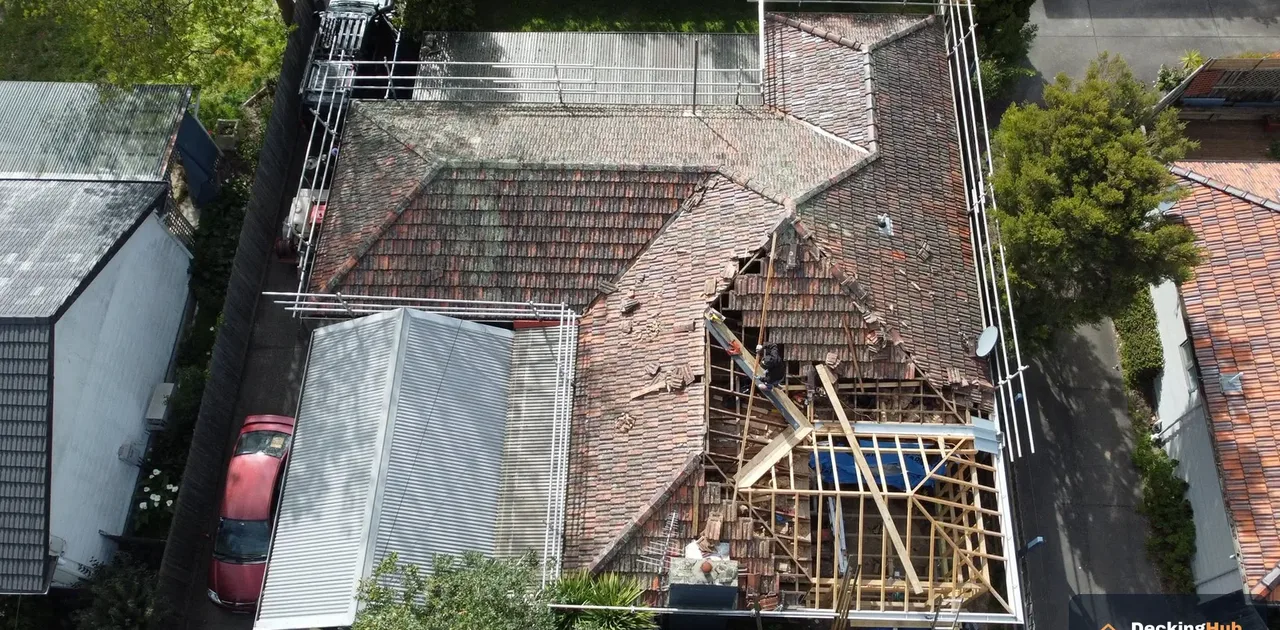
Katy sits in one of the most active hail corridors in Texas. Spring storms roll across 77494 and 77449 and can drop hail on Cinco Ranch, Firethorne, and Elyson in the same night. Some storms leave dents you can see from the street. Most do not.
That is the problem with hail. The damage hides. A bruised shingle can look fine for months, then start to leak long after everyone forgot the storm date. This guide shows you what to check and in what order: the ground clues first, then the nine signs on the roof itself, then what to do if you find them. If you already know your roof took a hit, our page on hail damage repair in Katy covers the fix side.
First, check from the ground
Start in the yard. Hail hits the whole property, not just the roof, and the soft parts of the house tell the story first. You can learn a lot without a ladder.
Dented gutters and downspouts
Run your eyes along the gutters and downspouts on the side that faced the storm. Fresh dents and dings in the metal are a strong sign. Soft gutter metal dents before shingles break, so a dented run means the roof above it took real hits.
Damaged window screens
Hail tears and punctures screens. Walk the storm side of the house and look for holes, rips, and frames bent inward. Screens are thin and weak. If the hail was strong enough to tear them, it was strong enough to bruise shingles.
Dented fins on the AC unit
The outdoor AC unit has soft aluminum fins that dent with ease. Dents on the side that faced the storm are one of the clearest ground clues there is. Roofers and adjusters both look at the AC unit early for this reason.
Chipped paint and dented siding
Look for chips in painted wood, cracks in siding, and dents in metal trim and flashing at ground level. Hail hard enough to chip paint and crack siding did not spare the roof.
Granules piled at the downspout ends
Check where the downspouts empty. After a hail storm you may find piles of dark grit that look like coarse sand. Those are shingle granules knocked loose by the hits and washed down. Heavy granule loss after one storm means the shingles took a beating.
Two or more of these clues means the shingles almost surely took hits too. It is time to look at the roof itself.
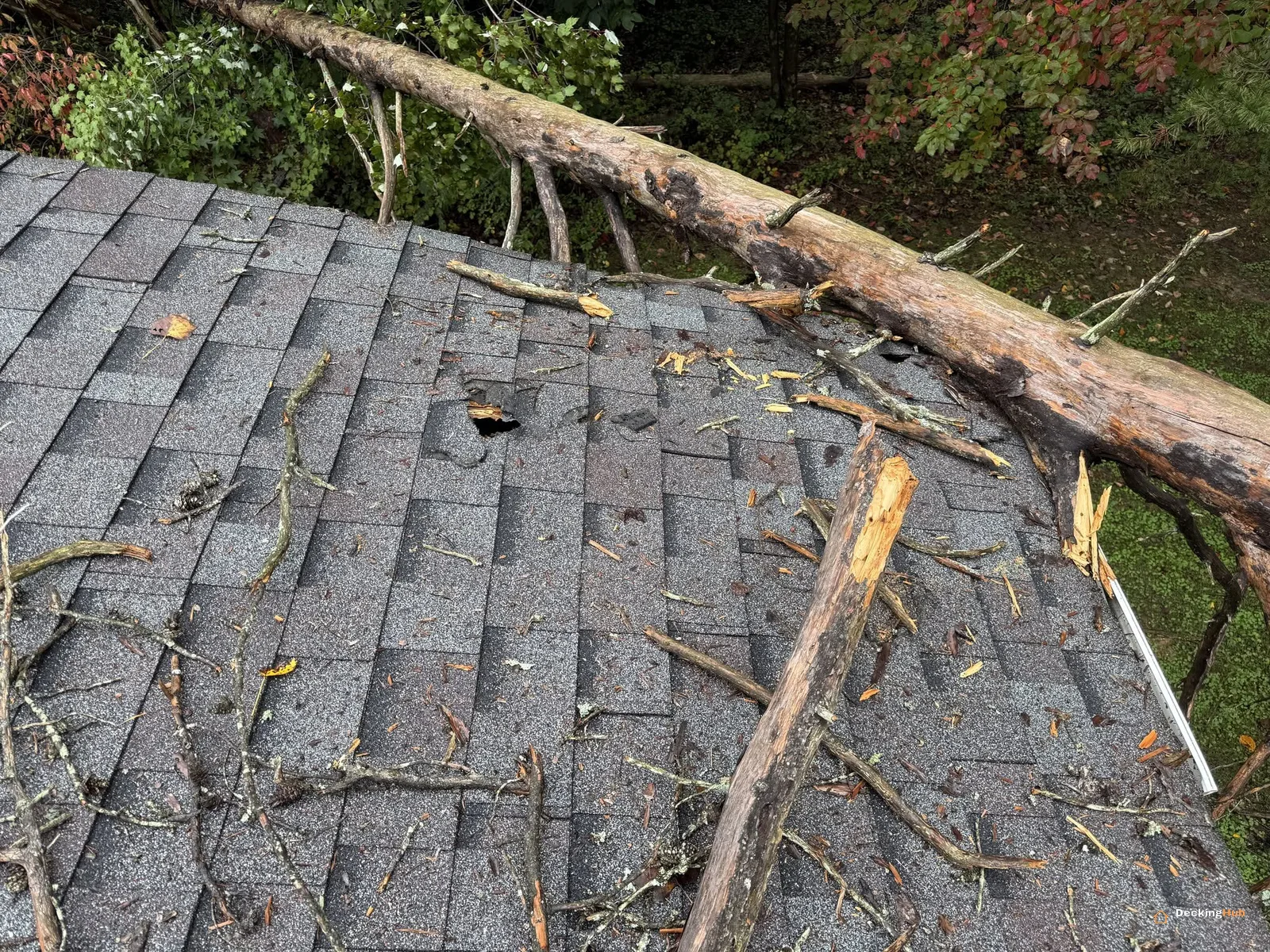
The 9 signs on the roof itself
One sign alone may mean little. A pattern of them across a slope is hail damage. A word of care first: do not climb up there if the roof is wet or steep. This list also works as the list of photos to ask for when a roofer checks the roof for you.
1. Soft bruised spots
Press a shingle with your thumb. A hail bruise feels soft and spongy, like the skin of a dented apple. The hit crushed the mat inside the shingle. From the ground the spot can look like nothing at all, which is why hail damage gets missed for months.
2. Cracked or split shingles
Hard hits crack the shingle itself. Fresh hail cracks have sharp edges and a bright look inside the split, because the break is new. Cracks show up most on the slopes that faced the storm head on.
3. Granule loss and bald patches
Granules are the gritty coat that shields a shingle from the sun. A hail hit knocks them loose. Look for dark patches where the coat is gone and the asphalt layer under it shows through. Bald patches age fast in the Texas heat.
4. Shiny mat showing through
When granules wash off a bruise, the black mat under them can show. It often looks shiny in the sun, and the asphalt can feel smooth where the grit used to be. That spot now takes the full force of the heat with no shield on it.
5. Dented vents and flashing
Soft metal tells the truth on a roof too. Dents in vent caps, exhaust caps, and flashing mean the storm hit hard enough to hurt the shingles around them. When the metal is clean, claims of heavy shingle damage get hard to believe.
6. Damaged ridge cap
The ridge takes hits straight from above, and cap shingles are thin. Cracked, bruised, or split caps along the peak are a clear storm sign. Ridge damage also matters because the ridge is where water loves to enter.
7. Torn or lifted shingles
Hail in Texas rarely falls straight down. Wind drives it in sideways and lifts shingle edges at the same time. Torn corners and lifted tabs on the slope that faced the wind point to one storm event, not slow age.
8. Leaks or stains that show up later
A bruise does not leak on day one. Water works in as the crushed mat breaks down. A ceiling stain that appears weeks after a storm, with no other clear cause, often traces back to hail hits in the roof above it.
9. A pattern that matches the storm
Hail falls in a random scatter. Hits land heavy on the slopes that faced the storm and light on the slopes the house sheltered. Random hits on one or two slopes, with dented metal to match, is the pattern that proves a storm did it.
What size hail does the damage
Storm reports list hail by the object it matches in size. Size drives the damage more than the count does. A short burst of golf ball hail hurts a roof more than an hour of pea size hail.
| Hail size | Called | What it does |
|---|---|---|
| 1 inch | Quarter | Dents metal, may bruise shingles |
| 1.25 inch | Half dollar | Can crack worn shingles |
| 1.75 inch | Golf ball | Real shingle damage likely |
| 2 inches and up | Tennis ball | Expect damage |
Age matters too. A new roof can shrug off hits that crack a worn one. Treat the table as a guide, not a promise, and let the signs on your own roof make the final call.
Hail damage vs wear and tear
Not every mark on a roof is hail. Old shingles blister in the heat. Edges curl as the roof dries out with age. Granules shed a bit more each year. All of that is wear, and insurance does not pay for wear.
The difference is the pattern. Wear spreads in an even way across the whole roof, slope after slope. Hail damage is random. It lands hard where the storm hit and skips the rest. Fresh hits have sharp edges and soft bruises. Old wear looks soft, curled, and tired in the same way everywhere you look.
This is the ground most claims are won and lost on. The adjuster is looking for a storm pattern, not an old roof. Random hits plus dented metal make a strong case. The same worn look on every slope makes a weak one.
What to do if you find signs
Take photos, and date them. Shoot the dented gutters, the torn screens, the AC fins, and the granule piles. Put a coin next to a dent to show scale. If you can see shingle damage from a ladder at the eave, shoot that too. Dated photos are the base of any claim.
Pin down the storm date. Claims tie damage to one storm on one date. Ask the neighbors when their roofs were hit, and check the storm reports for your part of Katy. A clear date makes the rest of the process much easier.
Get the roof checked before you file anything. A claim filed on a roof with no real damage still goes on your record. Book a roof inspection in Katy first and get photos of every hit. If the check finds real damage, our hail damage claim guide for Texas walks through the claim step by step.
Call (281) 677-8586
Hail damage questions
What does a roof look like after hail damage?
From the yard, often just fine. Up close is where it shows: dark bruised spots, bald patches where granules are gone, cracked shingles, and dented vents. The ground clues, like torn screens and dented gutters, usually show up before the roof signs do.
Will insurance pay for hail damage to a roof?
Texas policies usually cover hail as sudden storm damage, minus your wind and hail deductible. Wear and age are not covered. Our Texas storm damage claim guide covers how the claim process runs and what the adjuster looks for.
Can hail damage on a roof be fixed?
Yes. Bruised and cracked shingles can be swapped out, and dented vents can be replaced. Minor hail damage repairs often run $300 to $800 when the hits sit in one area. When hits cover most of a slope, replacing that slope can make more sense than dozens of small fixes.
How long will a roof last after hail damage?
There is no fixed number. A bruise is a weak spot. Granule loss speeds up aging, and a crushed mat can start to leak a season or two later, or hold for years. The safe move is to fix the bad spots rather than gamble on how long they hold.
How much hail damage does it take to replace a roof?
There is no magic count. It turns on how many hits land on each slope, the age of the roof, and how wide the damage spreads. One Texas rule matters here: if damage and repairs pass 25 percent of the roof in a 12 month period, that section must meet current code, which often turns a large repair into a section replacement.
What size hail damages a roof?
Golf ball size hail, 1.75 inches and up, almost always leaves damage. Quarter size hail at 1 inch can bruise older or worn shingles and will dent soft metal. The size table above shows how the risk climbs with each step up.
If the check shows real hits, the next step is a plan, not panic. Our Katy hail damage repair page shows how we fix bruised slopes, swap cracked shingles, and time the work around your claim.
Call (281) 677-8586
Lines open 7 AM to 9 PM.