
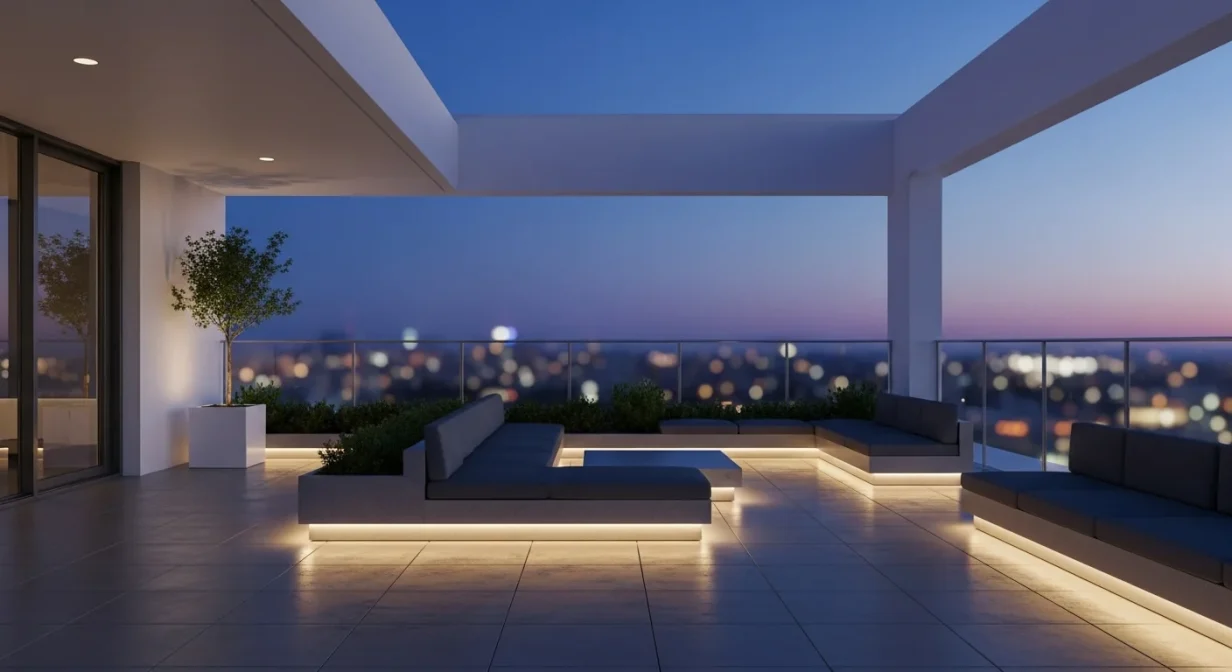
Imagine escaping the hustle and bustle of city life, not by leaving it behind, but by ascending above it. Rooftop terraces offer a unique sanctuary, a personal oasis perched high above the urban landscape, providing unparalleled views and a breath of fresh air. They represent the ultimate fusion of luxury, privacy, and connection to the sky, transforming neglected spaces into coveted outdoor living areas that redefine modern dwelling.
For those who appreciate refined elegance and uncluttered beauty, the contemporary minimalist design approach is an absolute game-changer for rooftop terraces. This style champions clean lines, functional simplicity, and a deliberate focus on essential elements, creating serene and sophisticated environments. Join us as we explore 11 breathtaking contemporary minimalist rooftop terrace designs, each offering unique inspiration to craft your elevated sanctuary where less truly becomes more.
1. Seamless Indoor-Outdoor Flow
One of the hallmarks of contemporary minimalist design is the effortless transition between interior and exterior spaces. This design philosophy on a rooftop terrace often involves expansive, full-height sliding glass doors that completely disappear into walls, effectively blurring the boundaries between your indoor living area and the outdoor sanctuary. By selecting consistent flooring materials, such as polished concrete or large-format porcelain tiles, both inside and out, the visual continuity is further enhanced, creating an illusion of boundless space.
This deliberate integration fosters a sense of openness and allows natural light to flood both environments, making even compact urban apartments feel more expansive and connected to the elements. The result is a truly versatile space that can adapt to various weather conditions while always maintaining its inherent elegance and sophisticated simplicity. It’s about creating one fluid living zone, where the sky is literally your ceiling.
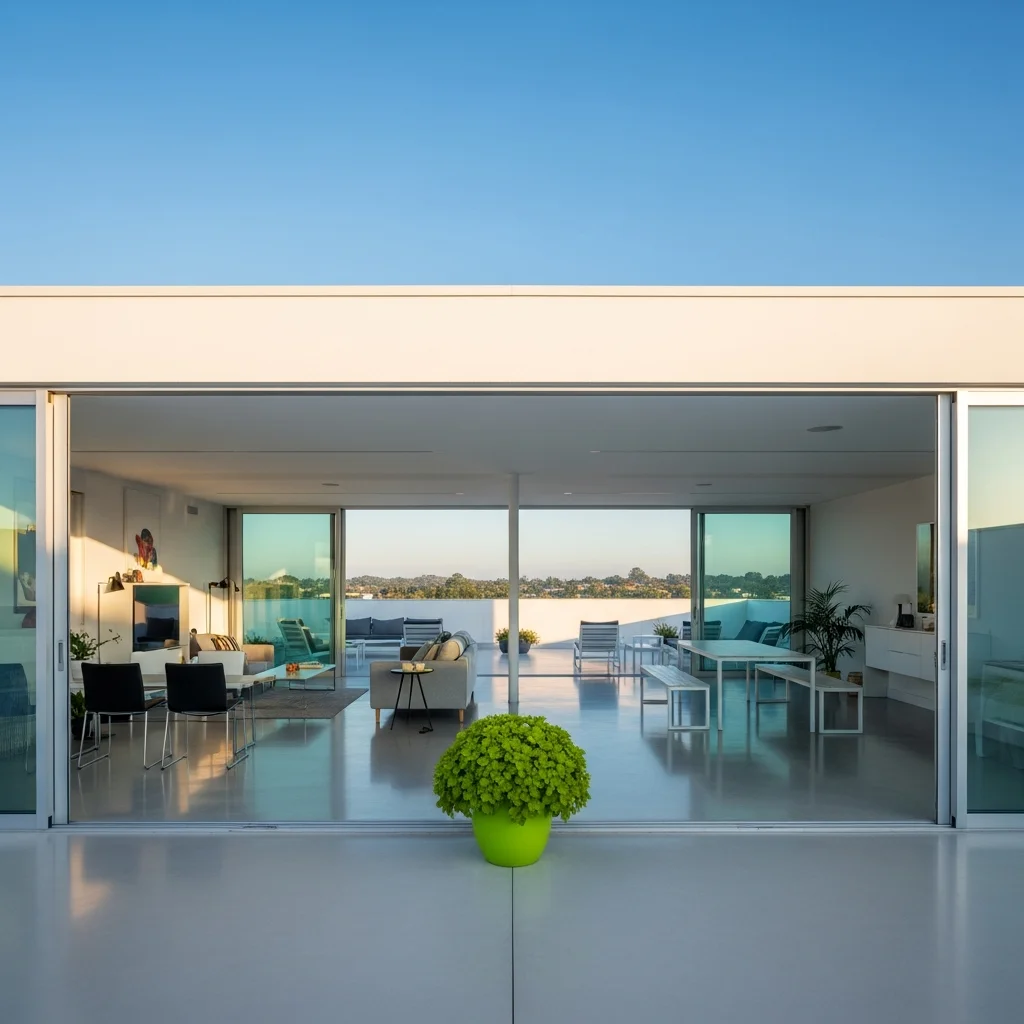
Blurring the lines: expansive glass doors create a unified, flowing living space.
2. Monochromatic Color Palette
The contemporary minimalist aesthetic thrives on a carefully curated monochromatic color palette, typically centered around shades of white, grey, black, and natural wood or stone tones. This deliberate restriction of color allows textures, forms, and the play of light and shadow to become the primary visual interest, rather than competing hues. It fosters a tranquil and sophisticated atmosphere, allowing the urban backdrop or natural views to stand out without distraction.
By employing varying shades of the same color, perhaps a dark grey paving contrasted with lighter grey planters and white minimalist seating, depth and visual interest are introduced without sacrificing the clean, uncluttered feel. This strategy ensures that the space feels cohesive, calming, and eternally stylish, resisting fleeting trends by leaning into timeless elegance. The focus shifts to the quality of materials and the simplicity of design.
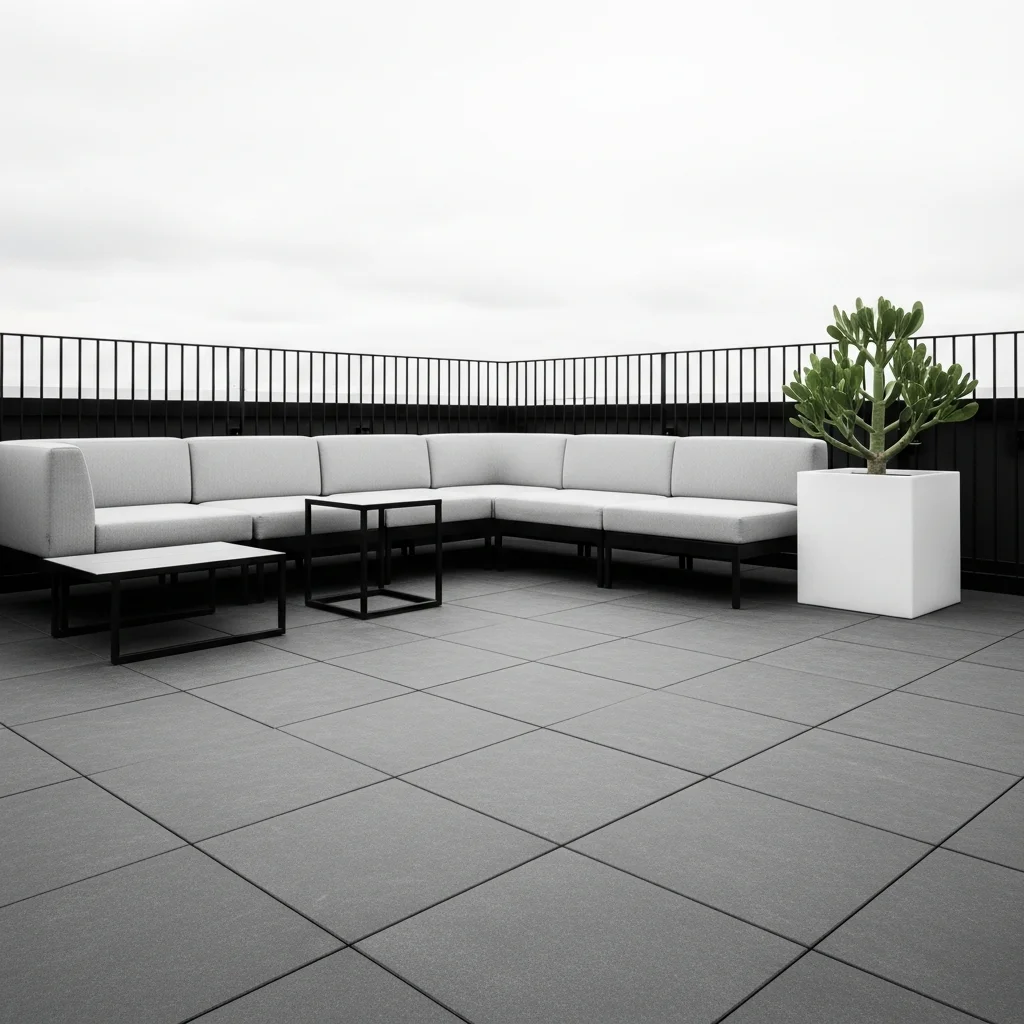
Sophisticated simplicity through a refined monochromatic color scheme.
3. Integrated Planters & Green Walls
Bringing nature into an urban rooftop setting is crucial, and contemporary minimalist design achieves this with built-in, integrated planters that blend seamlessly into the terrace structure. These planters often feature sleek, rectilinear forms, flush with the decking or wall surfaces, creating a clean and uncluttered appearance. Instead of numerous small pots, a few strategically placed, elongated planters filled with architectural plants like tall grasses, succulents, or small trees maintain visual simplicity while adding vital greenery.
Green walls, or living walls, are another excellent way to introduce vertical greenery without occupying valuable floor space, transforming a plain wall into a vibrant, textural focal point. These vertical gardens contribute to a serene ambiance, improve air quality, and offer a dramatic visual statement that perfectly complements the minimalist ethos. The choice of plants typically follows the minimalist principle, opting for species with strong forms and simple textures.
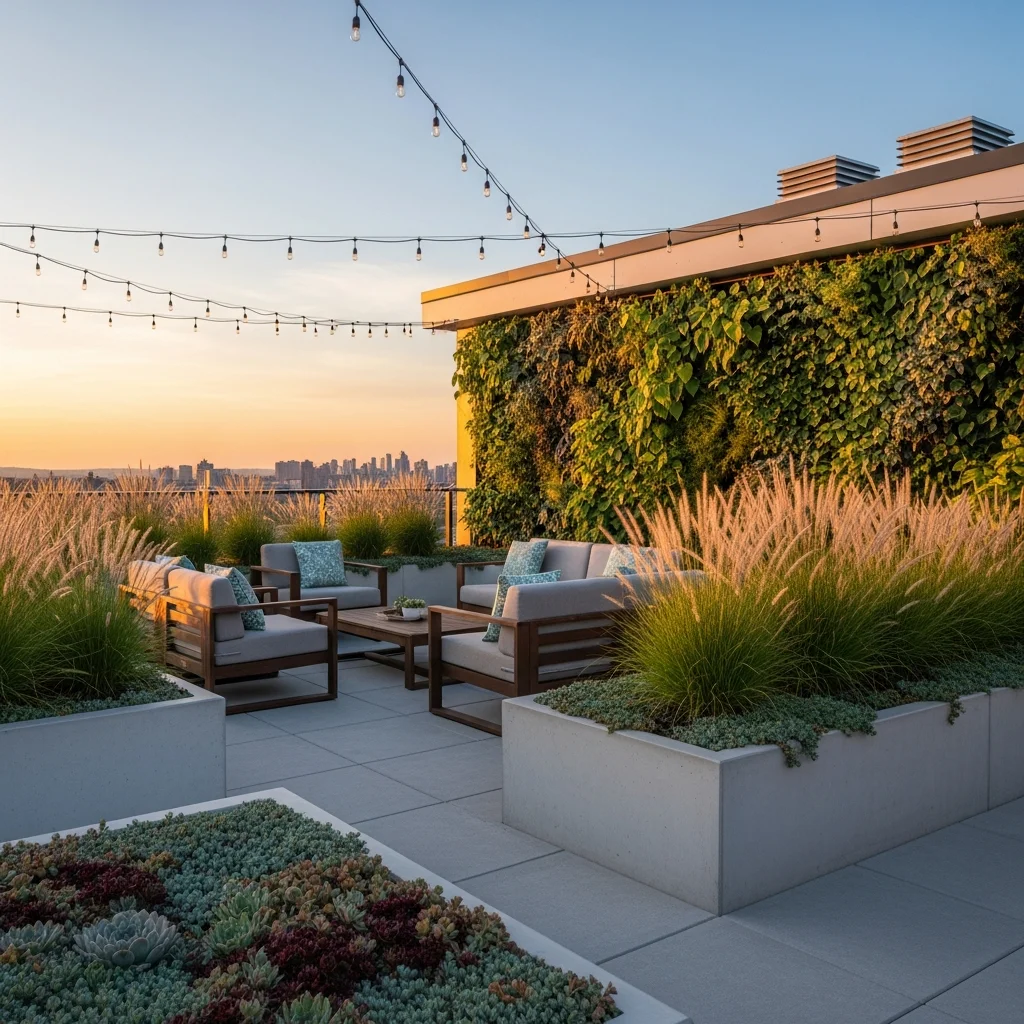
Nature’s embrace: integrated planters and a lush green wall elevate urban living.
4. Floating Deck & Pedestal Pavers
For a truly refined and contemporary look, floating decks constructed with pedestal pavers offer an ideal solution for rooftop terraces. This system involves laying pavers (often large-format porcelain, concrete, or stone) on adjustable pedestals, creating a perfectly level surface while allowing for easy drainage and concealment of utilities beneath. The slight elevation gives the deck a sleek, ‘floating’ appearance, enhancing the sense of lightness and modernity.
Beyond aesthetics, pedestal pavers provide practical benefits, including improved water management and ventilation, which helps protect the underlying roof membrane. The clean lines and uniform surface created by this installation method align perfectly with the minimalist ideal, offering a sophisticated and durable foundation for any rooftop design. It creates a pristine, uninterrupted expanse that feels luxurious and well-engineered.
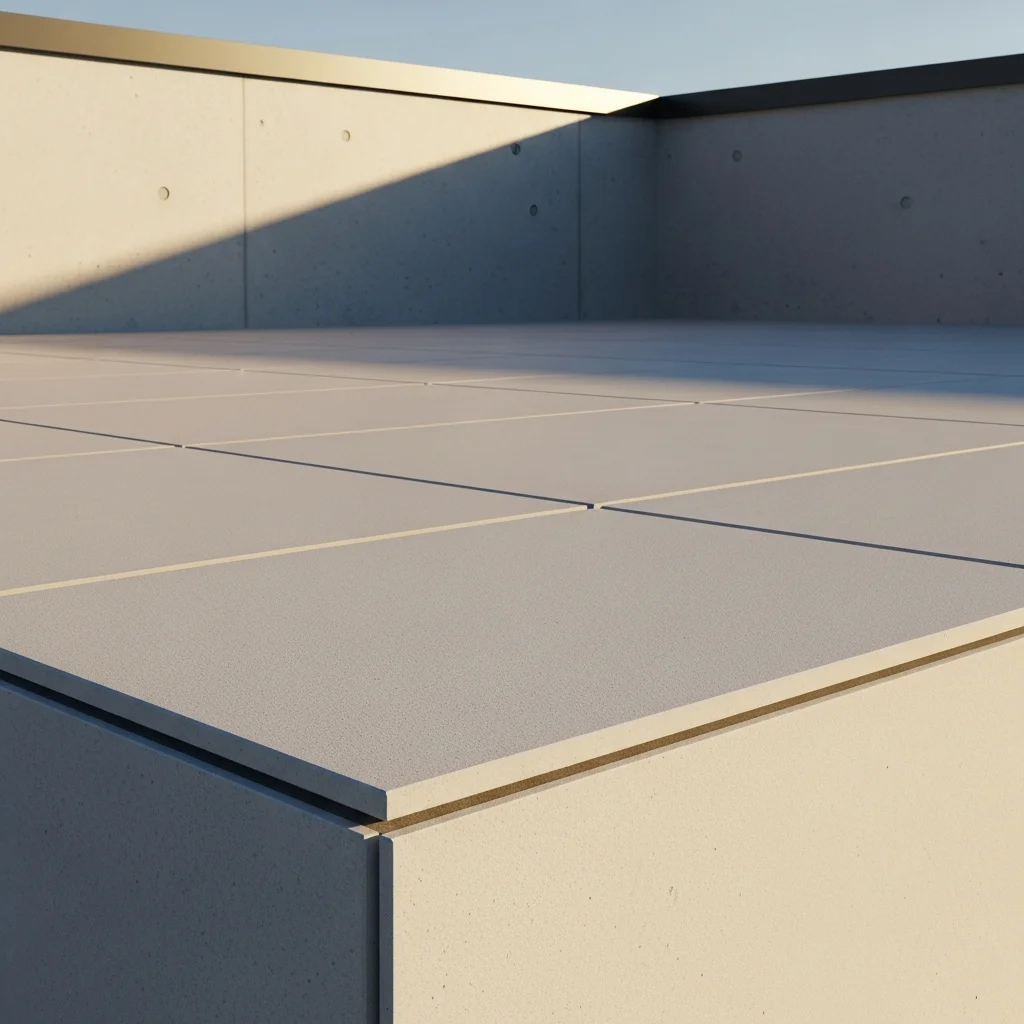
Elevated elegance: the sleek, modern appeal of a floating deck with pedestal pavers.
5. Linear Lighting & Ambient Glow
Lighting in contemporary minimalist design is less about grand fixtures and more about creating an atmospheric, subtle glow that highlights architectural features and defines the space. Linear LED strip lighting, often concealed beneath built-in benches, along stair risers, or under the lip of planters, casts a soft, diffused light that enhances the terrace’s clean lines and geometric forms. This indirect illumination avoids glare and creates a sophisticated, almost ethereal ambiance after dusk.
Strategic uplighting for feature plants or wall textures can add depth and drama without being overtly decorative. The goal is to provide functional visibility while enhancing the aesthetic, allowing the light itself to become a design element. This thoughtful approach to lighting ensures the rooftop terrace remains a welcoming and visually stunning space, long after the sun has set, inviting prolonged enjoyment of the evening sky.
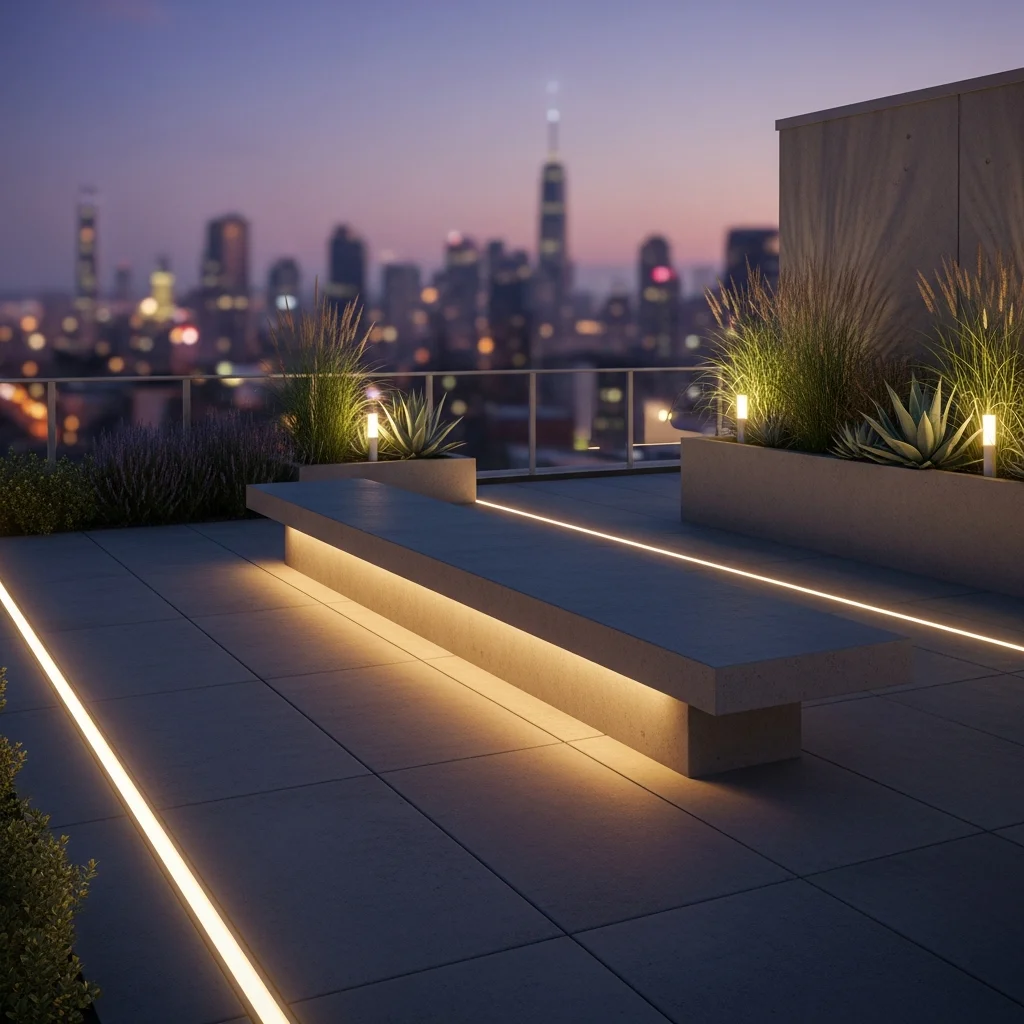
Subtle sophistication: linear lighting defines and illuminates the minimalist terrace.
6. Minimalist Furniture & Clean Lines
Furniture choices on a contemporary minimalist rooftop terrace are paramount, prioritizing form, function, and comfort without excess ornamentation. Low-profile modular sofas, sleek lounge chairs, and simple, geometric coffee tables crafted from weather-resistant materials like powder-coated aluminum, teak, or concrete are ideal. These pieces feature clean lines, often with a modular design that allows for flexible arrangements and a clutter-free aesthetic.
Each piece serves a purpose, contributing to the overall sense of spaciousness and calm rather than overwhelming the area. The absence of elaborate details allows the quality of the materials and the purity of the shapes to shine through, perfectly aligning with the ‘less is more’ philosophy. Opting for a limited number of high-quality, durable pieces ensures lasting style and comfort for your elevated retreat.
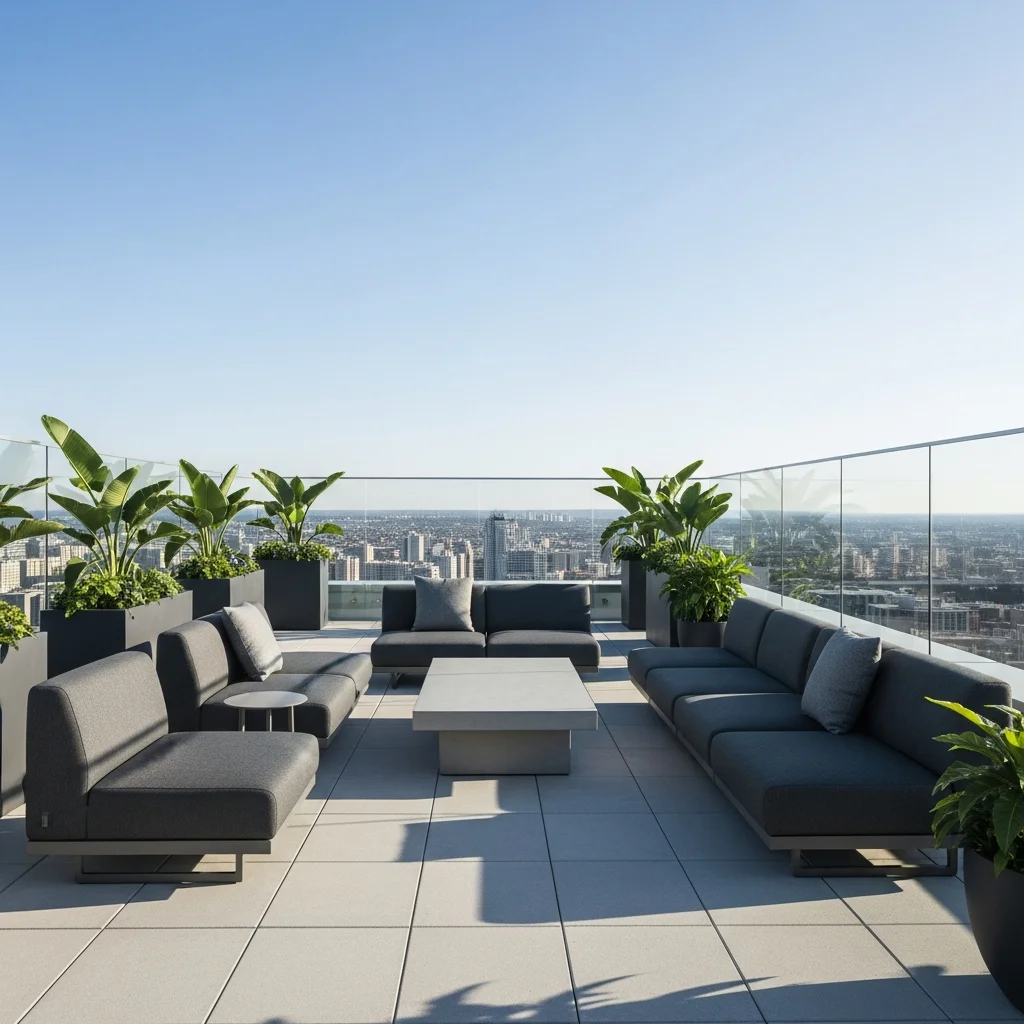
Understated elegance: minimalist furniture with clean lines for maximum impact.
7. Water Features & Reflecting Pools
Introducing water elements into a contemporary minimalist rooftop design adds a layer of sensory richness without compromising the serene aesthetic. Shallow reflecting pools, often integrated flush with the deck surface, create a tranquil visual effect, mirroring the sky and surrounding architecture. The gentle ripple of water provides a soothing ambient sound, enhancing the sense of calm and escape.
Linear water features, such as a narrow, elongated channel of flowing water, can act as a subtle design divider or a focal point. These features are typically designed with precise edges and minimal embellishment, allowing the natural qualities of the water to speak for themselves. The thoughtful incorporation of water introduces a dynamic element that changes with the light, adding movement and life to the minimalist setting.
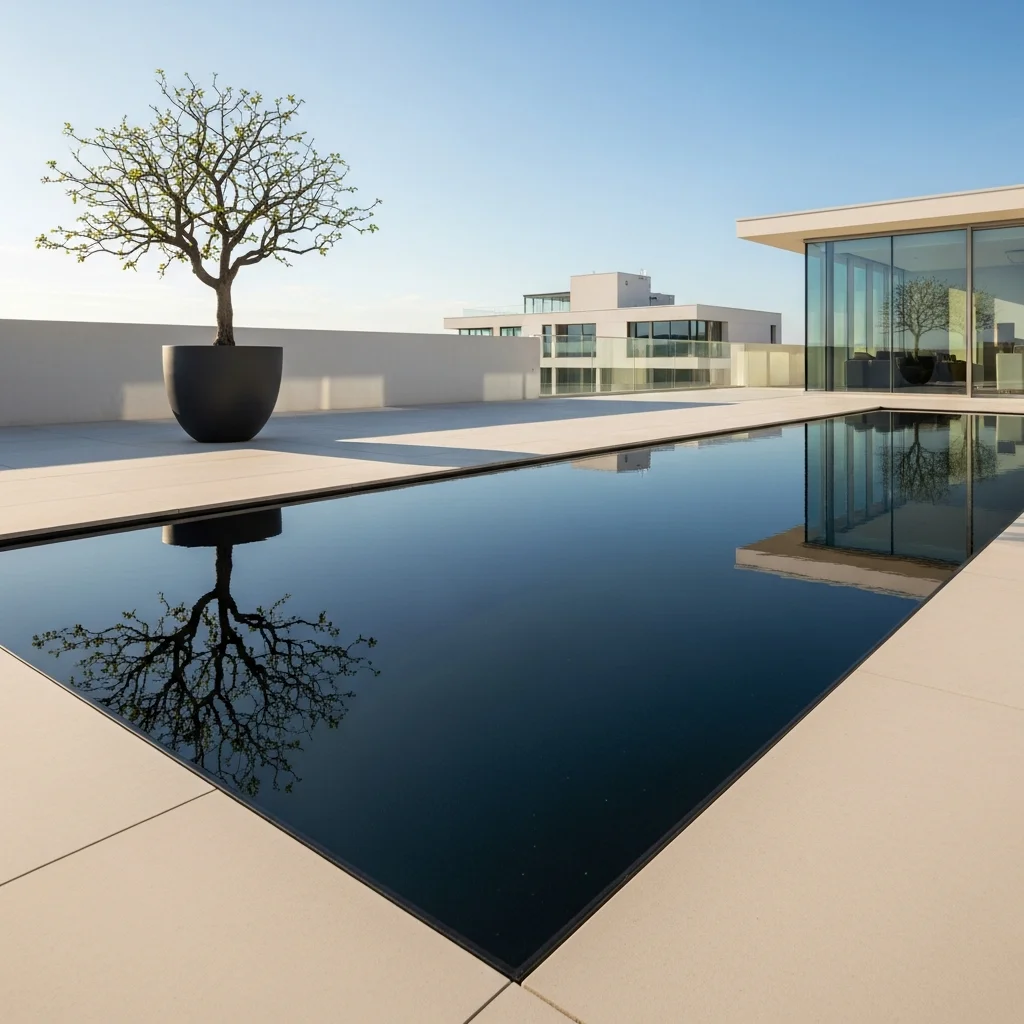
Reflecting serenity: a minimalist water feature adds tranquility and visual depth.
8. Privacy Screens & Architectural Elements
In urban environments, privacy is a luxury, and contemporary minimalist design addresses this with artfully designed screens and architectural elements that maintain aesthetic integrity. Slatted wood or metal screens, often in dark, neutral tones, provide necessary seclusion without blocking too much light or airflow. Their linear nature perfectly complements the minimalist aesthetic, adding texture and architectural interest.
Pergolas with clean, geometric lines, or strategically placed architectural walls, can define zones within the terrace while offering partial shade and a sense of enclosure. These elements are not just functional; they are integral to the design, contributing to the overall composition and creating a dynamic interplay of light and shadow. They sculpt the space, offering both intimacy and grandeur.
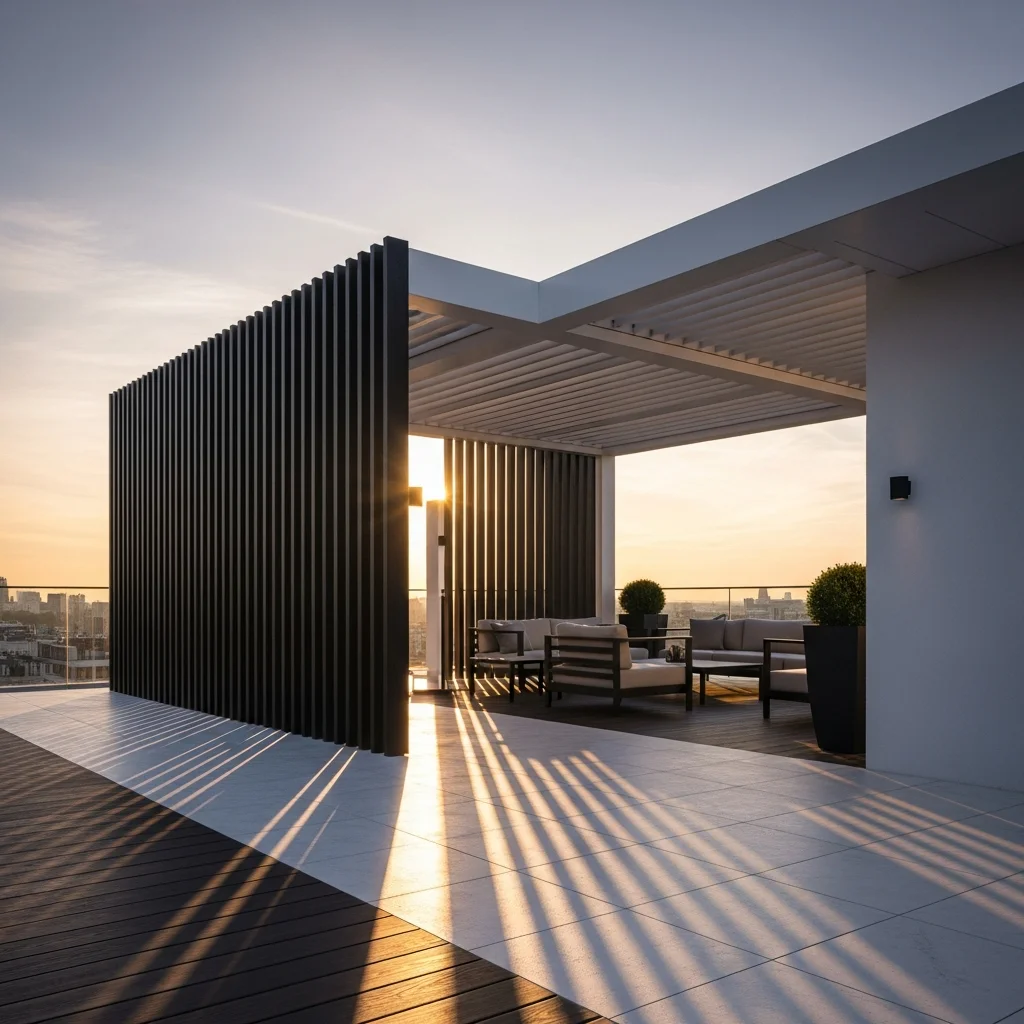
Sculpting space: architectural screens and pergolas offer privacy and definition.
9. Concrete & Industrial Textures
Embracing materials like polished concrete, exposed steel, and industrial textures is a hallmark of contemporary minimalist design, especially for rooftop terraces. Concrete, with its inherent durability and versatility, can be used for flooring, built-in benches, planters, and even custom fire pits, offering a consistent and robust aesthetic. Its raw, unpretentious finish aligns perfectly with the minimalist ethos.
Accents of black or dark grey metal, whether in furniture frames, railings, or structural elements, provide a sophisticated contrast to the softer tones of concrete and natural wood. These industrial textures add a tactile quality and depth to the space, celebrating the honesty of materials rather than concealing them. The combination creates a sense of urban chic that is both enduring and effortlessly cool.
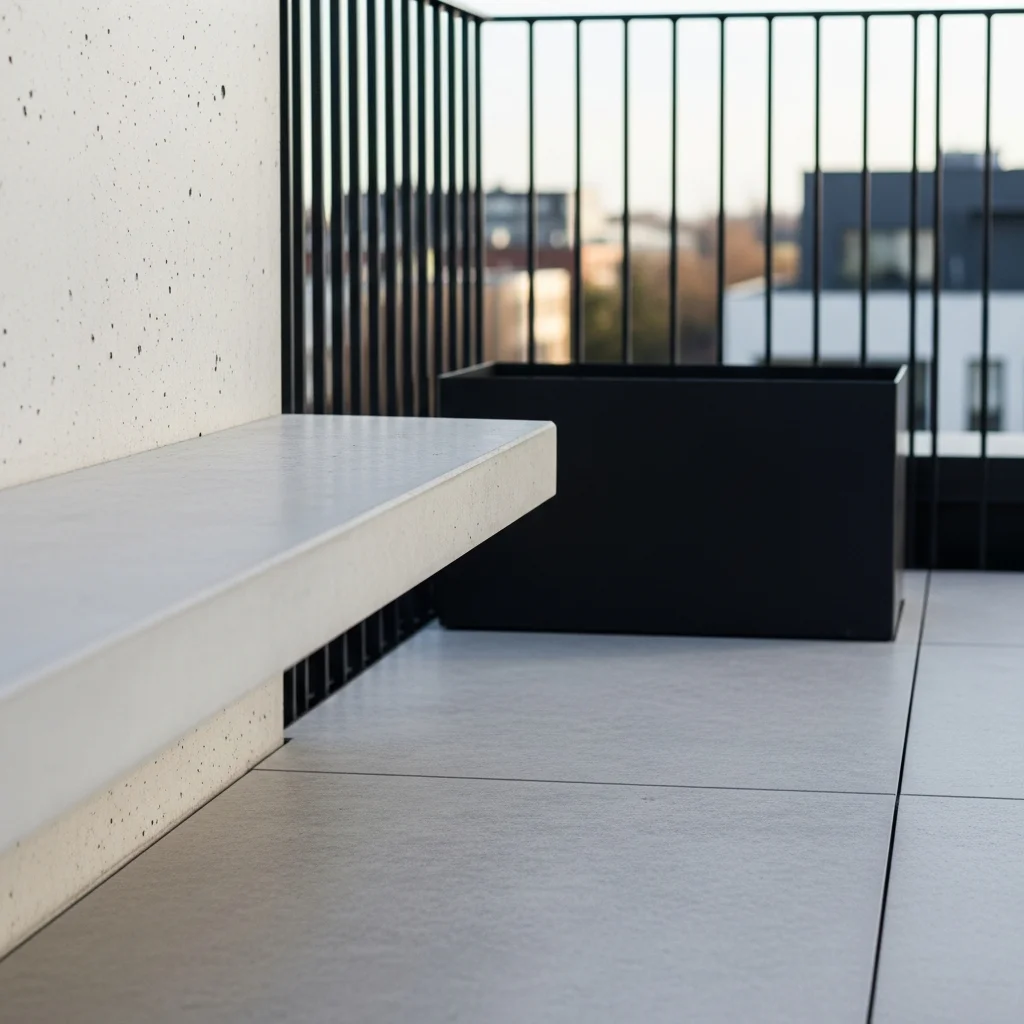
Urban edge: concrete and industrial textures define modern minimalist design.
10. Zen-Inspired Simplicity
Infusing a Zen-inspired simplicity into a contemporary minimalist rooftop terrace creates a profound sense of peace and contemplation. This approach often involves deliberately sparse landscaping, perhaps a carefully raked gravel bed with a single, sculptural focal point such as a bonsai tree or a unique rock formation. The focus is on stillness, balance, and harmony, encouraging a meditative experience.
Elements are chosen for their intrinsic beauty and their ability to evoke calm, rather than for abundance. Low-level, indirect lighting further enhances this serene atmosphere, making the space ideal for quiet reflection or mindful relaxation. The absence of clutter and the emphasis on natural, earthy tones contribute to an environment that soothes the senses and promotes a profound connection to the present moment.
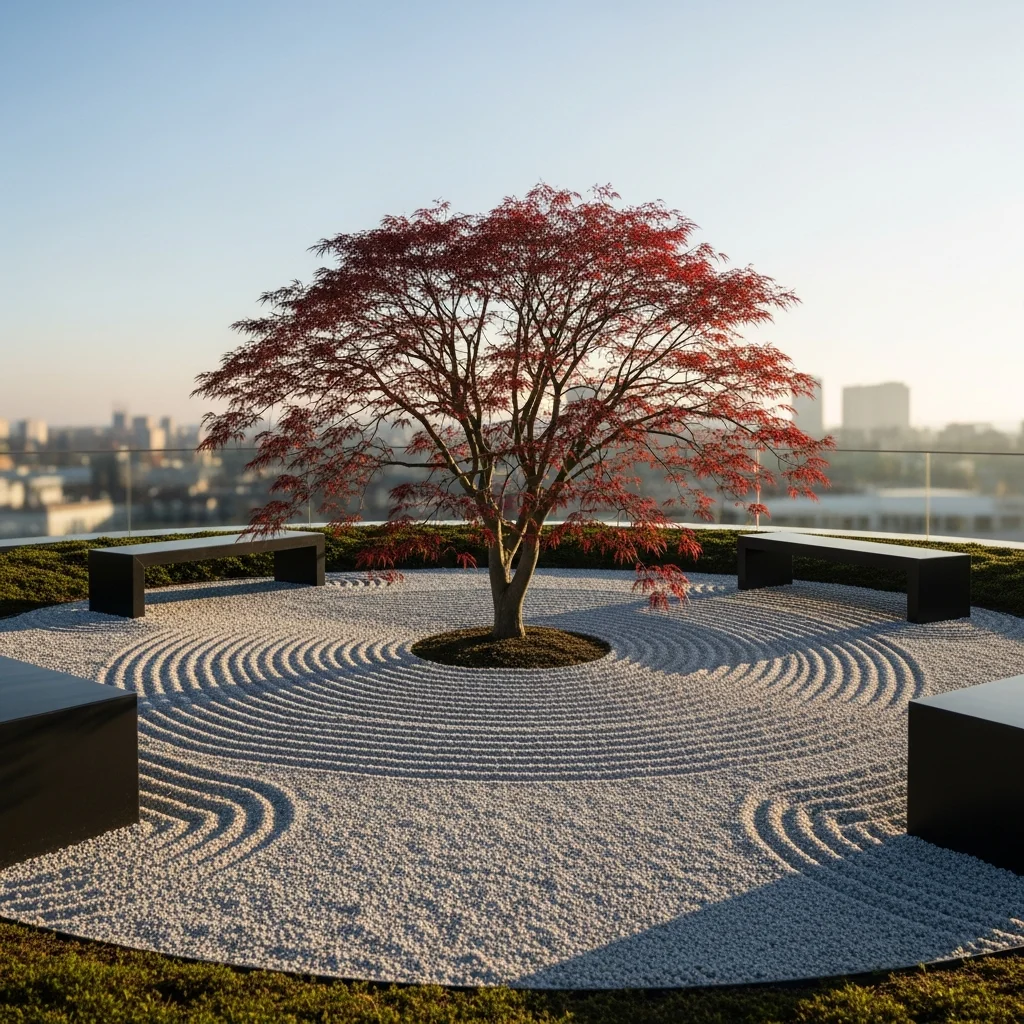
Zen whispers: a tranquil design for contemplative rooftop serenity.
11. Panoramic Views & Framed Vistas
For rooftop terraces blessed with breathtaking panoramic views, the contemporary minimalist design approach masterfully prioritizes and frames these vistas. The entire layout and choice of elements are geared towards maximizing the visual connection to the surrounding landscape, whether it’s an expansive city skyline, rolling hills, or the endless ocean. This often means opting for frameless glass railings that offer unobstructed sightlines, virtually disappearing into the horizon.
Furniture is kept low-profile, ensuring that nothing impedes the view, and any architectural screens or planting are strategically placed to enhance, rather than block, the most compelling outlooks. The terrace itself becomes a stage, with the external environment as the star of the show. This design choice celebrates the unique vantage point of a rooftop, transforming it into an immersive experience where the environment is an integral part of the decor.
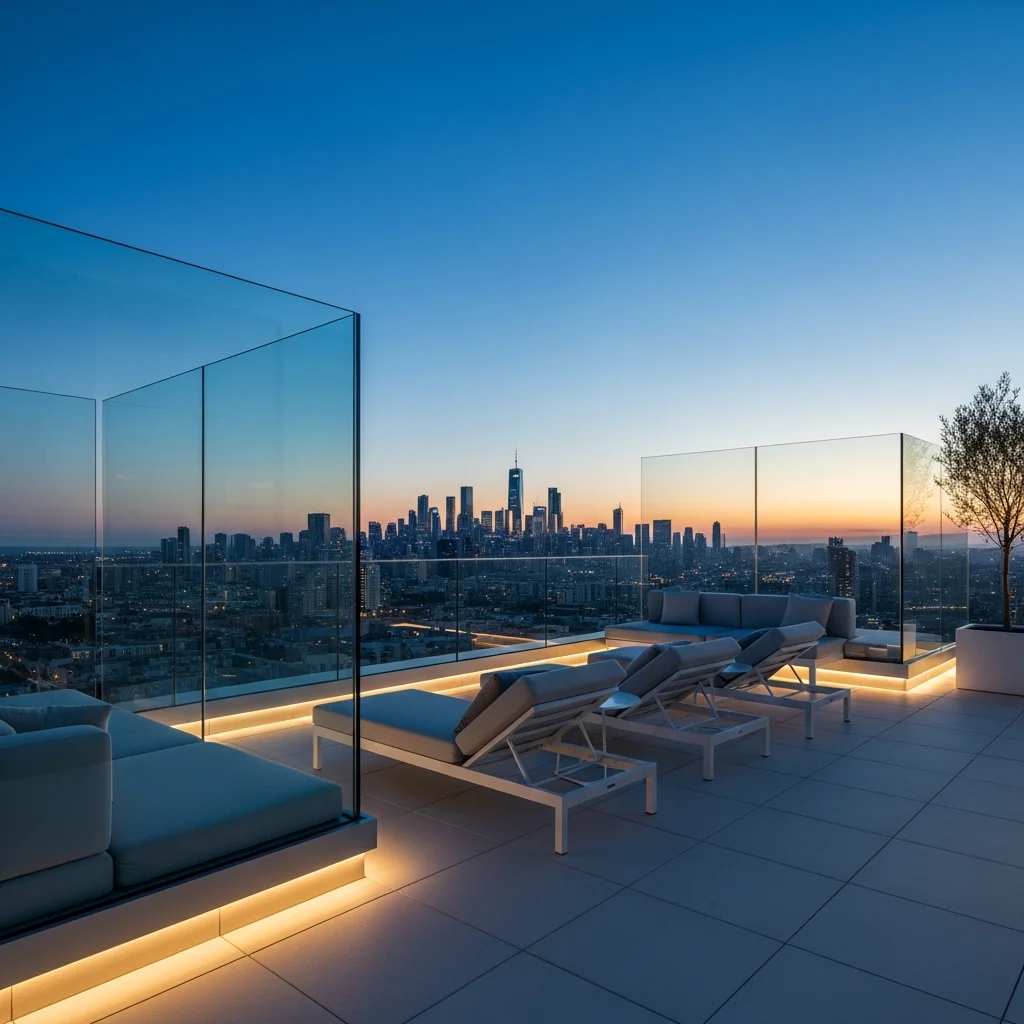
View redefined: an unobstructed panorama crafted by minimalist design.
Conclusion
The allure of a contemporary minimalist rooftop terrace lies in its ability to combine sophisticated aesthetics with unparalleled functionality, creating an urban sanctuary that feels both expansive and intimately personal. By embracing clean lines, a refined color palette, thoughtful integration of nature, and purposeful design elements, these spaces transcend mere decoration to become true extensions of modern living. Each of the 11 design ideas presented offers a unique pathway to crafting an elevated retreat that speaks to serenity, style, and a profound connection with the sky above.
Whether you’re drawn to seamless indoor-outdoor transitions, the calming presence of water features, or the dramatic effect of linear lighting, the principles of contemporary minimalism provide a timeless framework for designing your dream rooftop. So, go ahead and be inspired to transform your own elevated space into a breathtaking haven that perfectly balances urban chic with serene simplicity. Share your favorite design idea in the comments below!
