
Contractor’s Bottom Line
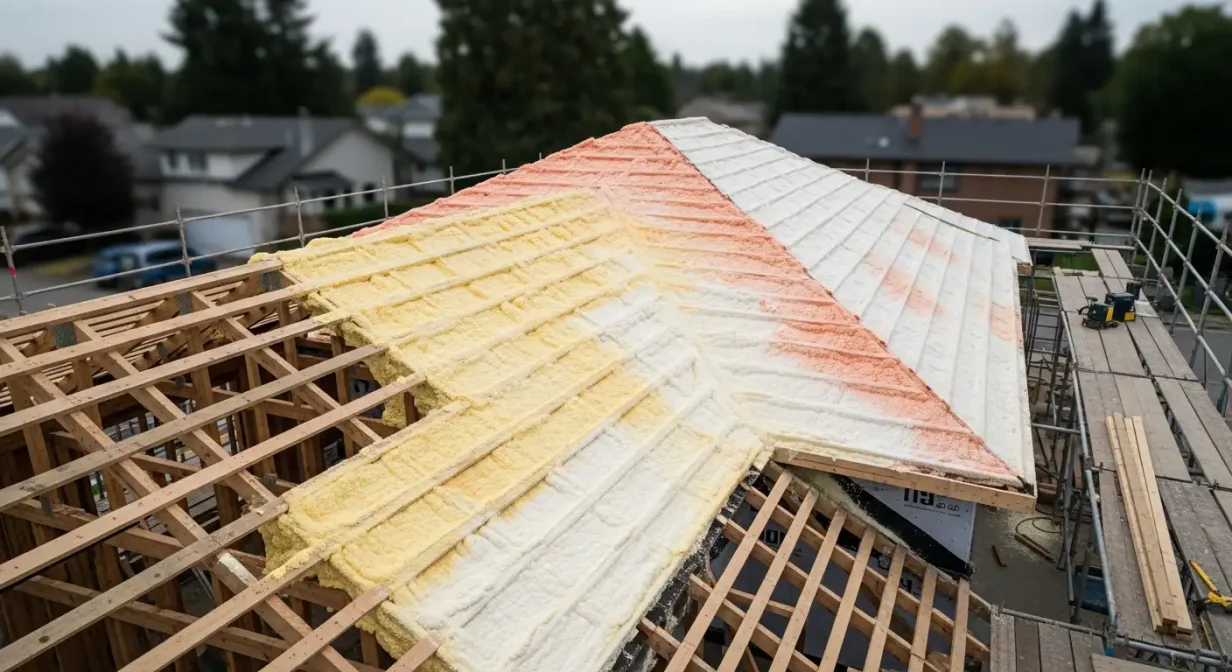
Applying spray foam directly to roof decking can be a viable insulation method, but it demands careful consideration of building codes and proper installation techniques. The International Code Council (ICC) provides guidelines, and compliance with IRC 2021 is crucial. In Dallas, Texas, the climate's extreme heat and humidity necessitate a closed-cell spray foam to prevent moisture buildup. Professional installation is highly recommended to avoid common issues like improper foam density and inadequate ventilation, potentially costing thousands to remediate.
Key Takeaways
- Spray foam insulation can be applied to roof decking, but it must comply with local building codes and the International Residential Code (IRC).
- Closed-cell spray foam is generally preferred in Dallas, Texas, due to its higher R-value and moisture resistance, helping to prevent condensation issues.
- Proper ventilation is crucial when using spray foam on roof decking to avoid moisture accumulation and potential structural damage; NRCA guidelines should be followed.
- Professional installation is recommended to ensure proper application and avoid costly mistakes, saving on average $1,500-$3,000 on rework compared to DIY.
Spray foam insulation has become increasingly popular for its energy efficiency and ability to seal air leaks. A common question I get from homeowners in the Dallas-Fort Worth area is, "Can you spray foam roof decking?" The short answer is yes, but it's not as simple as grabbing a can and going to town. Proper preparation, code compliance, and professional installation are essential. Spray foam, when applied correctly, can significantly improve your home's thermal performance.
However, improper application can lead to moisture problems, structural damage, and costly repairs. The NRCA (National Roofing Contractors Association) provides best practices for ventilation when using spray foam. FIELD NOTE: I once inspected a home in Plano where the homeowner DIY'd spray foam on the roof decking without proper ventilation. The resulting moisture buildup led to mold and rot, costing them over $8,000 to remediate.
It's a costly lesson in the importance of professional expertise.
Code Compliance and Spray Foam Insulation
Using spray foam on roof decking requires strict adherence to building codes. The International Residential Code (IRC) provides guidelines for insulation and ventilation, and local amendments may apply in Dallas, Texas. IRC R803.2.1 addresses roof sheathing requirements, and proper installation is critical to avoid code violations. Spray foam must also meet fire safety standards, requiring a fire-resistant coating in certain applications.
Understanding and complying with these codes is crucial to ensure the safety and longevity of your roof. Failure to comply can result in failed inspections and costly rework. The International Code Council (ICC) publishes the IRC and related standards.
Field Note from Experience
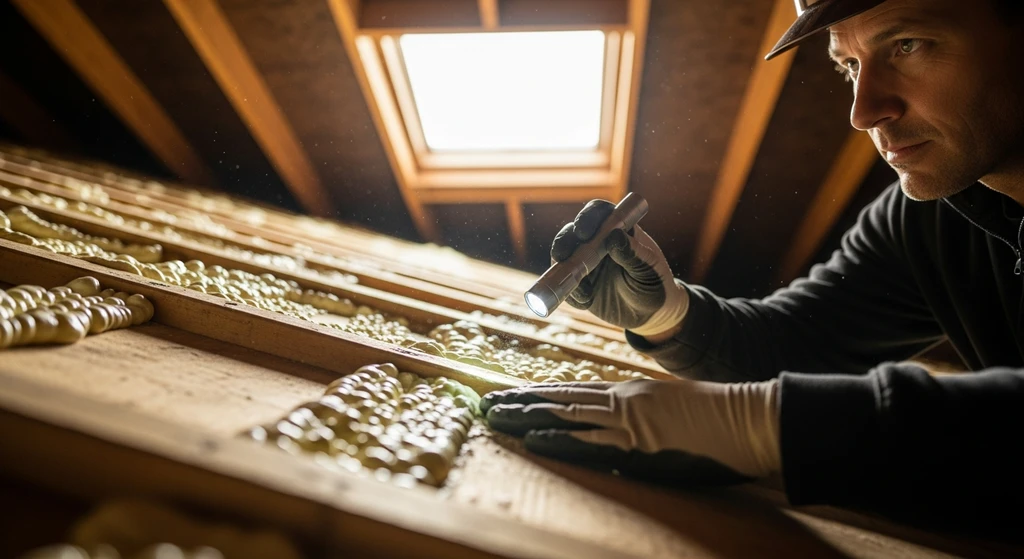
During an inspection in University Park, I found a contractor used an unapproved spray foam that didn't meet fire resistance standards. Correcting this code violation cost the homeowner an additional $3,500, highlighting the importance of verifying materials beforehand.
Preparing the Roof Decking for Spray Foam
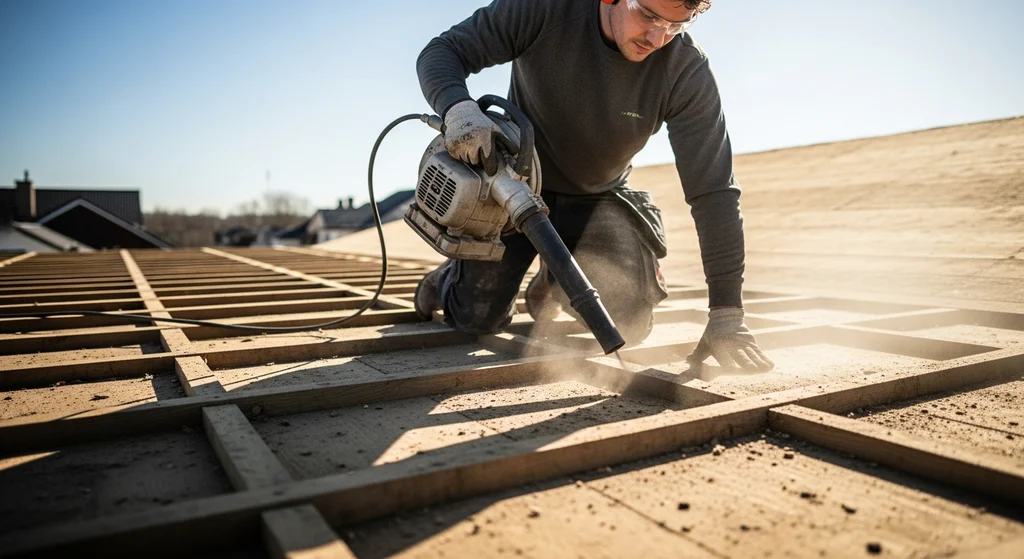
Before applying spray foam, the roof decking must be clean, dry, and structurally sound. Any existing damage, such as rot or decay, must be repaired before proceeding. CDX plywood or oriented strand board (OSB) are common decking materials, and their condition directly affects the foam's adhesion and performance. Ensure proper ventilation is in place before applying spray foam.
This is critical to prevent moisture buildup and potential damage. The NRCA (National Roofing Contractors Association) provides guidelines for roof ventilation. Address any existing leaks or moisture issues before insulating to prevent them from being trapped and causing further damage.
Field Note from Experience
I've seen many homeowners skip the crucial step of cleaning the roof decking before applying spray foam. This can lead to poor adhesion and reduced insulation performance. One homeowner in North Dallas had to completely redo their spray foam insulation, costing them over $2,000 in wasted materials and labor.
Spray Foam Installation Process
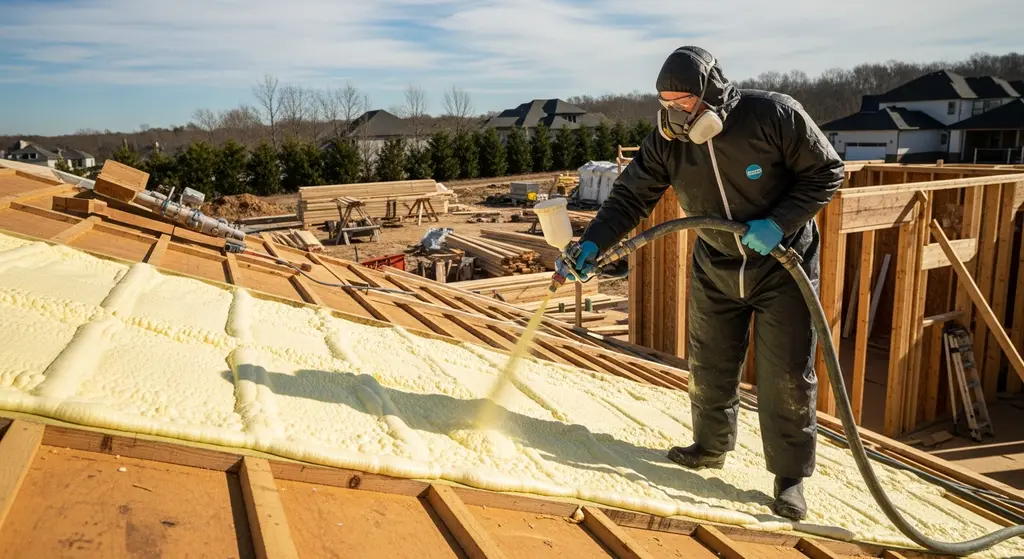
The spray foam installation process involves several key steps. First, protect surrounding areas with plastic sheeting to prevent overspray. Next, apply the spray foam in even layers, ensuring complete coverage of the roof decking. The thickness of the foam will depend on the desired R-value and local code requirements.
Allow the foam to cure completely before proceeding with any additional work. Proper ventilation is essential during the curing process. Closed-cell spray foam is generally preferred in the Dallas, Texas, climate due to its moisture resistance and higher R-value. Ensure the installer follows manufacturer specifications for application rates and curing times.
Field Note from Experience
On a project in Frisco, I noticed the installer was applying the spray foam too thinly, resulting in a lower R-value than required by code. We had to add an additional layer to meet the energy efficiency standards, adding $800 to the project cost.
Common Mistakes to Avoid
Several common mistakes can compromise the performance of spray foam insulation. One frequent error is inadequate ventilation, which can lead to moisture buildup and structural damage. Another is applying the foam too thinly, resulting in insufficient insulation. Using the wrong type of spray foam is also a common issue.
In the Dallas-Fort Worth area, extreme heat and humidity demand a closed-cell spray foam for optimal moisture resistance. Ensure the installer is experienced and knowledgeable about local climate conditions and building codes. Improperly applied spray foam can create more problems than it solves, potentially costing thousands to remediate.
Field Note from Experience
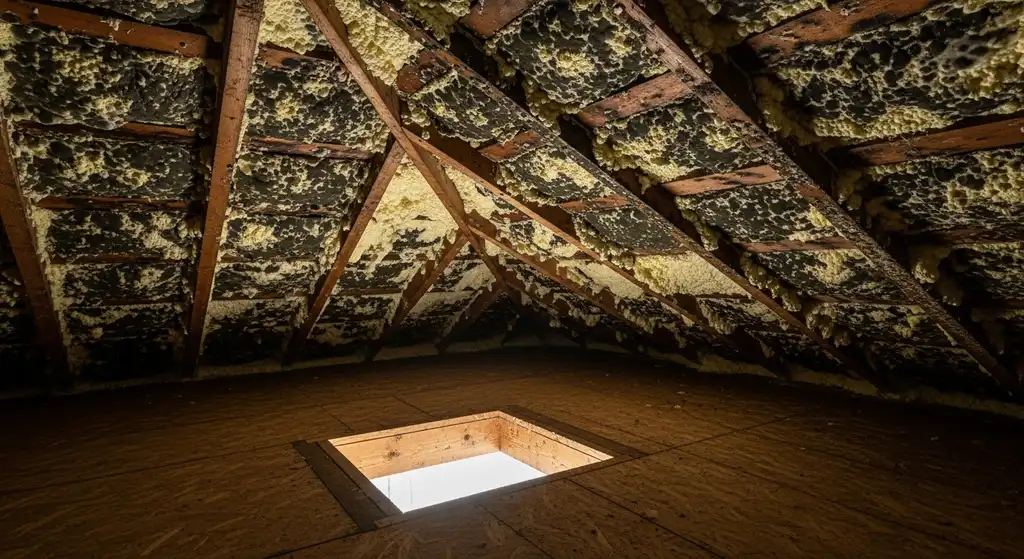
Last month, a Dallas homeowner called me after discovering mold growth in their attic. The previous contractor had failed to properly seal the spray foam, allowing moisture to penetrate. The remediation cost them $5,000 and a lot of headaches.
DIY vs. Professional Installation
While DIY spray foam kits are available, professional installation is generally recommended for roof decking. Professionals have the experience, equipment, and knowledge to ensure proper application and code compliance. They can also identify and address potential issues before they become problems. DIY installations often lack the precision and expertise needed for optimal performance.
Mistakes can be costly and time-consuming to correct. While a professional installation may cost more upfront, it can save you money in the long run by preventing moisture damage, energy loss, and code violations. In Dallas, Texas, professional spray foam installation costs range from $1.50 to $4.00 per square foot, depending on the type of foam and the complexity of the project.
Field Note from Experience
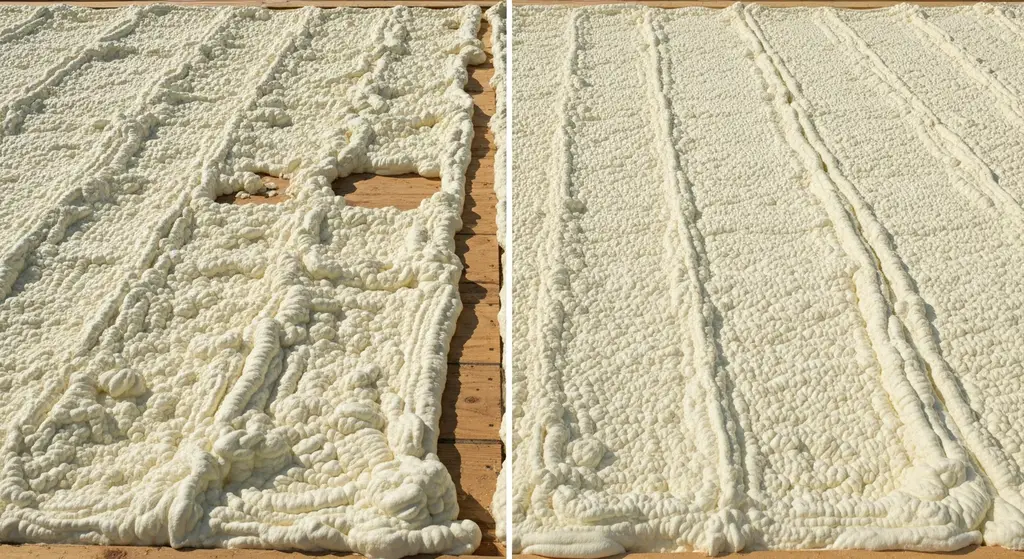
I've seen numerous DIY spray foam projects gone wrong, resulting in uneven coverage, inadequate ventilation, and even structural damage. One homeowner in Richardson tried to save money by doing it themselves, but ended up spending twice as much to fix their mistakes. It's almost always better to hire a professional.
External Authoritative Resources
These industry-standard references support the information in this guide:
Building Codes
International Residential Code (IRC 2021)
Official building code for residential construction
ICC Code Adoption Map
Find which IRC version your state uses
Industry Standards
NRCA Roofing Manual
National Roofing Contractors Association best practices
ASTM International Standards
Material testing standards (ASTM D3043, D1761)
Manufacturer Resources
Frequently Asked Questions
What type of spray foam is best for roof decking in Dallas?
Closed-cell spray foam is generally preferred due to its moisture resistance and higher R-value, essential in the Dallas climate to prevent condensation issues and maximize energy efficiency.
Does spray foam insulation require a fire-resistant coating?
Yes, in many cases, spray foam insulation requires a fire-resistant coating to meet fire safety standards and comply with building codes; check with your local building department.
How thick should spray foam insulation be on roof decking?
The required thickness depends on the desired R-value and local building codes; consult with a professional to determine the appropriate thickness for your specific needs.
Can I install spray foam insulation myself?
While DIY kits are available, professional installation is generally recommended to ensure proper application, code compliance, and optimal performance. Improper installation can lead to costly problems.
How important is ventilation when using spray foam on roof decking?
Proper ventilation is crucial to prevent moisture buildup and potential structural damage; NRCA guidelines should be followed to ensure adequate airflow and prevent condensation.
What are the potential problems with spray foam insulation on roof decking?
Potential problems include moisture buildup, structural damage, code violations, and reduced energy efficiency if the spray foam is not properly installed or if ventilation is inadequate.
Final Thoughts
Spray foam insulation can be a valuable addition to your home, but it's essential to approach it with caution and expertise. Understanding the codes, preparing the decking, and ensuring proper ventilation are crucial steps for a successful installation. FIELD NOTE: I always advise Dallas homeowners to prioritize professional installation and thorough inspections. A little extra investment upfront can save you thousands in the long run.
Don't let a DIY project turn into a costly nightmare; consult with a qualified roofing contractor today.
