
Contractor’s Bottom Line
Whether H clips are required on roof decking depends on local building codes and the specific span ratings of the sheathing material. In Dallas, the International Residential Code (IRC) 2021, as adopted by the city, dictates whether H clips are necessary. IRC R803.2.1 addresses roof sheathing requirements. If the span between rafters exceeds the sheathing's rated capacity, H clips or thicker sheathing are required to prevent deflection and ensure structural integrity. It's crucial to consult with a qualified roofing contractor to ensure compliance and avoid potential code violations, which can cost between $500 and $2000 to rectify.
Key Takeaways
- H clips may be required on roof decking depending on the rafter spacing and sheathing span rating.
- IRC R803.2.1 outlines the requirements for roof sheathing and the use of H clips.
- In Dallas, Texas, compliance with local building codes and proper installation are essential for roof integrity.
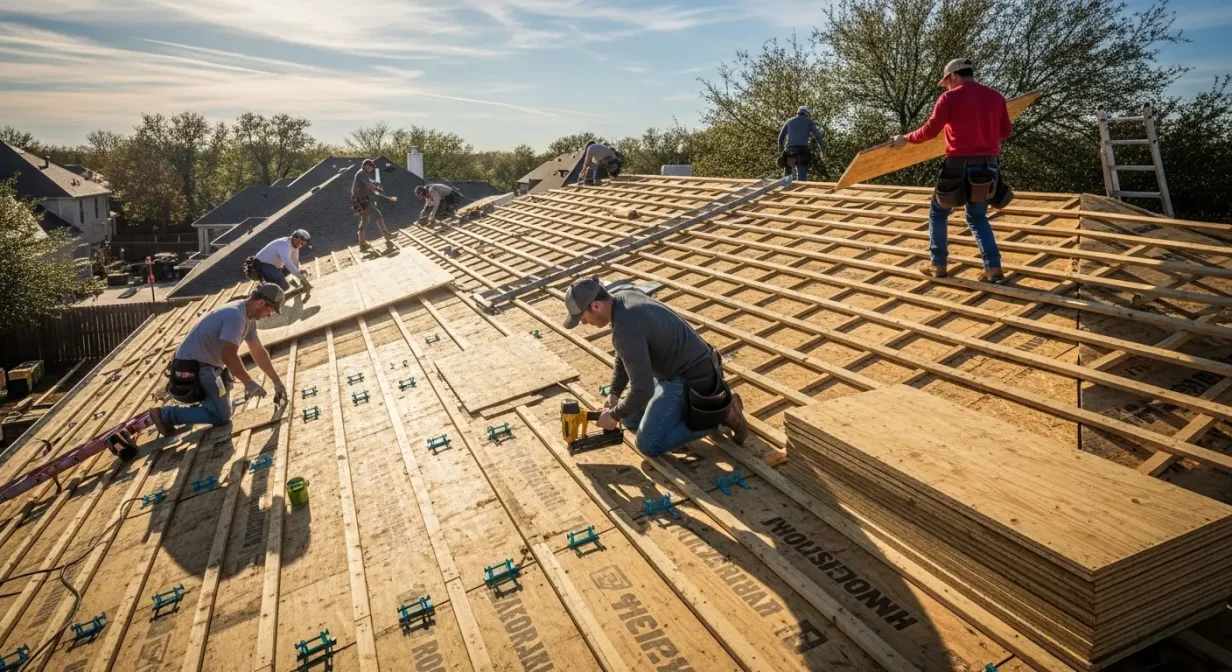
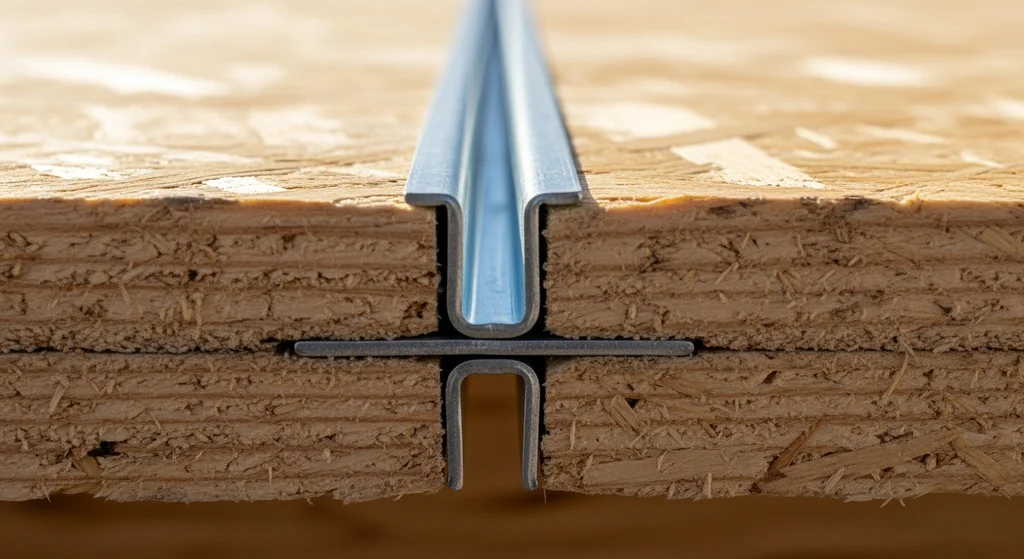
When installing or replacing a roof in the Dallas area, one question that often arises is whether H clips are required on the roof decking. H clips, also known as panel edge clips, are small metal fasteners used to support the edges of roof sheathing panels between rafters or trusses. Their purpose is to prevent sagging and provide additional support, particularly when using thinner sheathing materials. The International Residential Code (IRC) plays a crucial role in determining whether these clips are necessary.
Understanding the specific requirements outlined in the IRC, especially IRC R803.2.1, is essential for ensuring code compliance and the structural integrity of your roof. The NRCA (National Roofing Contractors Association) also provides best practice recommendations that often exceed minimum code requirements. FIELD NOTE: I once inspected a roof in Plano where the contractor skipped the H clips to save on labor costs. The sheathing sagged visibly between the rafters, creating an uneven surface for the asphalt shingles.
It failed the city inspection, costing the homeowner an extra $1,500 to redo the job correctly. Don't let this happen to you.
IRC Requirements for H Clips on Roof Decking
The International Residential Code (IRC) sets the standards for residential construction, including roof sheathing. IRC R803.2.1 specifically addresses the requirements for roof sheathing, including the use of H clips. According to this section, the required thickness and support spacing for roof sheathing depend on the design load and the span rating of the sheathing material. If the span between rafters or trusses exceeds the sheathing's rated capacity, additional support, such as H clips, is required.
The code specifies that if H clips are used, they must be installed per the manufacturer's instructions and at the specified spacing. It's important to note that local amendments to the IRC may exist in Dallas, Texas, potentially altering or adding to these requirements. Always verify the local building codes with the city's building department. The International Code Council (ICC) publishes the IRC, and it's updated regularly to reflect advancements in construction technology and safety standards.
Contractor claims H clips are never needed.
Consequence: Potential code violation and structural weakness.
Field Note from Experience
During an inspection in Frisco, I noticed a contractor using H clips that were too thin for the sheathing. They didn't provide adequate support, and the inspector red-tagged the job. Using the wrong materials can lead to costly delays and rework.
External Authoritative Resources
These industry-standard references support the information in this guide:
Building Codes
Frequently Asked Questions
What are H clips, and what do they do?
H clips are small metal fasteners that provide additional support to roof sheathing panels between rafters or trusses, preventing sagging and increasing structural integrity. They help ensure that the roof deck meets the requirements outlined in IRC R803.2.1.
How do I know if I need H clips on my roof?
The need for H clips depends on the span rating of your roof sheathing and the spacing of your rafters or trusses. Check the local building codes and consult with a qualified roofing contractor to determine if they are required per IRC standards.
What happens if I don't use H clips when they are required?
Failing to use H clips when required can result in roof sheathing sagging, potential code violations, and reduced structural integrity, potentially leading to roof failure. This is especially crucial in Dallas with its extreme weather conditions.
Are H clips required for all types of roof sheathing?
No, the requirement for H clips depends on the span rating of the sheathing material. Thicker sheathing or materials with higher span ratings may not require H clips, as defined by IRC R803.2.1.
Where can I find the span rating for my roof sheathing?
The span rating is typically stamped on the sheathing panel itself. It indicates the maximum allowable span between supports. Check for APA-rated sheathing for reliable performance.
Can I install H clips myself, or do I need a professional?
While DIY installation is possible, it's recommended to hire a professional roofing contractor to ensure proper installation and compliance with local building codes. Incorrect installation can void warranties and compromise roof integrity.
Final Thoughts
Determining whether H clips are required for your roof decking in Dallas, Texas, involves understanding the local building codes, specifically the IRC 2021 and any local amendments. Consulting with a qualified roofing contractor is crucial to ensure compliance and the structural integrity of your roof. Remember, proper installation and material selection are key to a long-lasting and safe roofing system. FIELD NOTE: I recall a situation where a Dallas homeowner attempted to install H clips themselves but failed to space them correctly.
This resulted in uneven support and ultimately required a professional to redo the work, costing them double. Don't risk it; hire a licensed professional to ensure the job is done right the first time.
