
Contractor’s Bottom Line
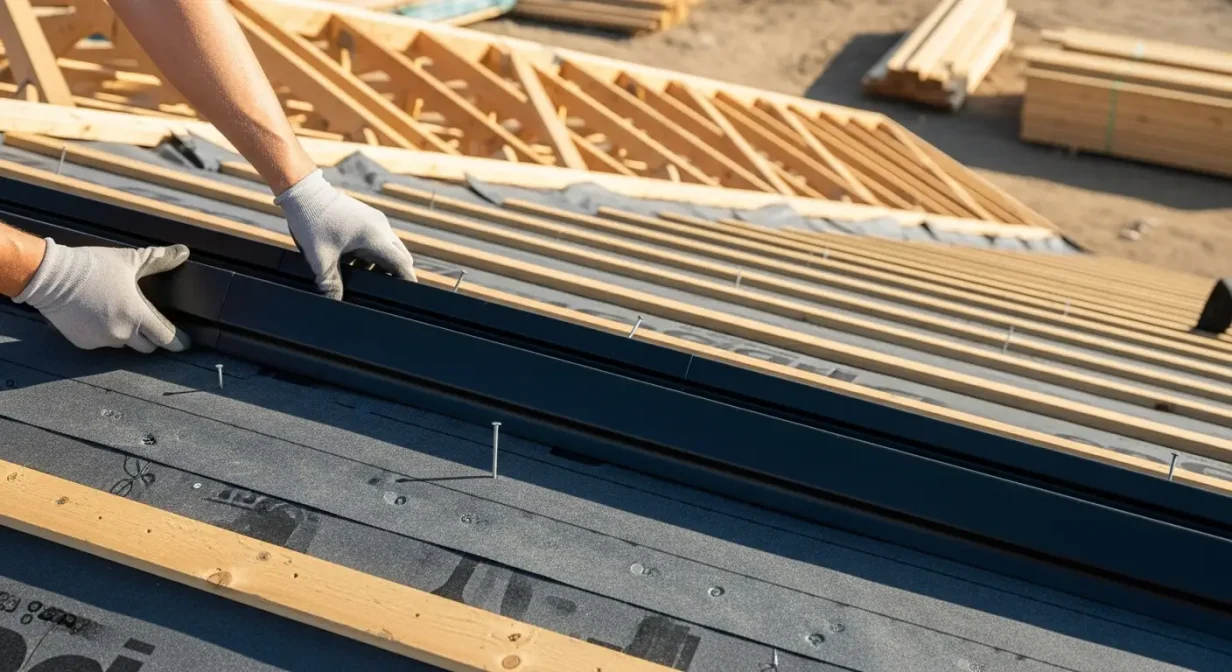
The roof eave is the most critical junction for water management on any Dallas-Fort Worth home. I recommend installing a G-90 galvanized drip edge per IRC R905.2.8.5 and a self-adhering ice and water shield meeting ASTM D1970 standards to prevent rot. In the DFW Metroplex, professional eave flashing and starter installation typically costs between $6 and $14 per linear foot as of 2026. National Roofing Contractors Association (NRCA) guidelines suggest extending underlayment over the drip edge to ensure moisture sheds away from the fascia and prevents expensive structural damage.
Key Takeaways
- IRC R905.2.8.5 requires a drip edge at eaves and rakes for all asphalt shingle roofs.
- Eave underlayment must meet ASTM D226 Type II or ASTM D4869 standards for North Texas durability.
- Professional eave installation in Dallas averages $6-$14 per linear foot depending on material choice.
- Proper eave detailing prevents ‘wicking’ which often leads to $5,000+ rafter tail repairs.
The roof eave serves as the primary drainage point for your entire roofing system, making it vulnerable to moisture intrusion and wind uplift. In my experience across the DFW Metroplex, the eave is where most roofing failures begin because contractors overlook small flashing details. We must ensure every component from the fascia board to the starter shingle aligns with modern building standards. During an inspection in Highland Park, I found a roof eave where the contractor skipped the drip edge entirely.
This oversight led to over $8,500 in rot damage to the rafter tails and fascia boards behind the gutters. It is a common mistake I see in North Texas when crews rush through the ‘invisible’ details of the roof perimeter. To build a resilient roof, you must understand how the International Code Council (ICC) and ASTM International standards govern these edge details. This guide breaks down the technical requirements for eaves to ensure your home withstands the extreme heat and spring storms common in Dallas.
We will look at specific IRC 2021 codes and NRCA recommendations that every homeowner should know.
IRC Code Requirements for Roof Eaves in Dallas
The International Residential Code (IRC) provides strict guidelines for how eaves must be constructed to ensure structural integrity and water shedding. IRC R905.2.8.5 specifically mandates the installation of a drip edge at eaves and gables for asphalt shingles. This drip edge must be made of corrosion-resistant material and extend a minimum of 2 inches onto the roof deck. In the Dallas-Fort Worth area, building inspectors look for a minimum 1/4 inch downward projection beyond the fascia board to prevent water from wicking back into the wood.
IRC R803.2.1 also specifies that the roof sheathing at the eave must be properly supported and fastened to withstand wind uplift. We typically use CDX plywood or Advantech panels to meet these structural requirements in North Texas. Furthermore, the National Roofing Contractors Association (NRCA) recommends that the drip edge be installed under the underlayment at the eaves. This configuration ensures that any water reaching the underlayment flows over the metal edge rather than behind it.
Failure to follow this sequencing is a primary cause of insurance claim denials during Dallas storm seasons.
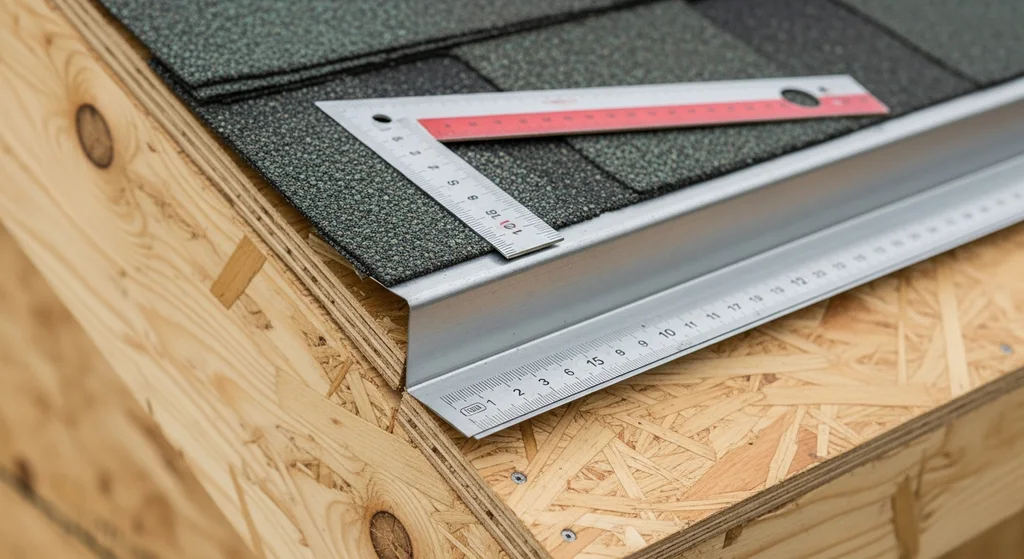
| Code Compliance Checklist | |
|---|---|
| Drip Edge Material | |
| Deck Extension | |
| Fastener Spacing | |
Field Note from Experience
A Dallas client’s insurance claim was recently denied because their roof eave didn’t meet IRC 2021 code standards regarding drip edge gauge. I had to explain that the $12,000 in interior water damage could have been avoided if the original roofer hadn’t used substandard, thin-gauge aluminum.
Essential Materials for High-Performance Eaves
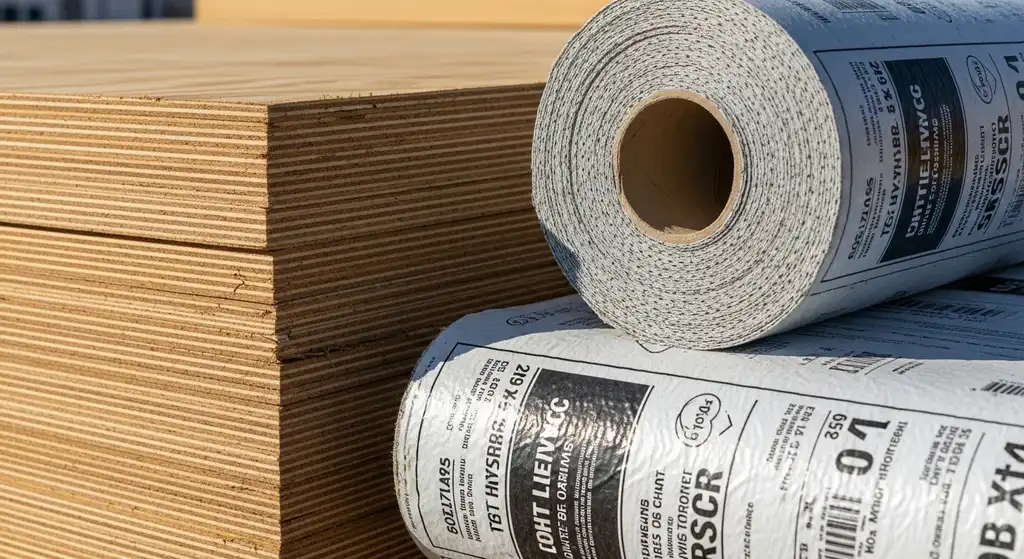
Selecting the right materials for the roof eave is critical in the Texas heat, where attic temperatures can exceed 150°F. We recommend using a high-temperature self-adhering ice and water shield that meets ASTM D1970 standards for the first 36 inches of the eave. This material seals around nail penetrations, providing a secondary barrier against wind-driven rain and ice dams. For the underlayment, synthetic options meeting ASTM D226 Type II are superior to traditional felt in the DFW Metroplex.
Brands like GAF Deck-Armor or CertainTeed RoofRunner offer better tear resistance during high-wind events. These materials are designed to stay flat and not buckle, which is essential for a clean, professional eave appearance. When it comes to the decking at the eave, CDX plywood is often preferred over OSB (oriented strand board) because it handles moisture better without swelling. However, high-end products like Advantech provide even greater moisture resistance for luxury homes in areas like North Dallas.
Using the right architectural shingles with a reinforced starter strip ensures the eave can withstand 130 mph wind gusts.
| Material Type | Standard/Rating | Best Use Case |
|---|---|---|
| Ice & Water Shield | ASTM D1970 | Eave protection in valley/low slope |
| Synthetic Underlayment | ASTM D226 Type II | Standard eave coverage in DFW |
| G-90 Drip Edge | ASTM A653 | Corrosion-resistant edge flashing |
| CDX Plywood | APA Rated | Structural eave decking |
Professional Eave Installation Procedure
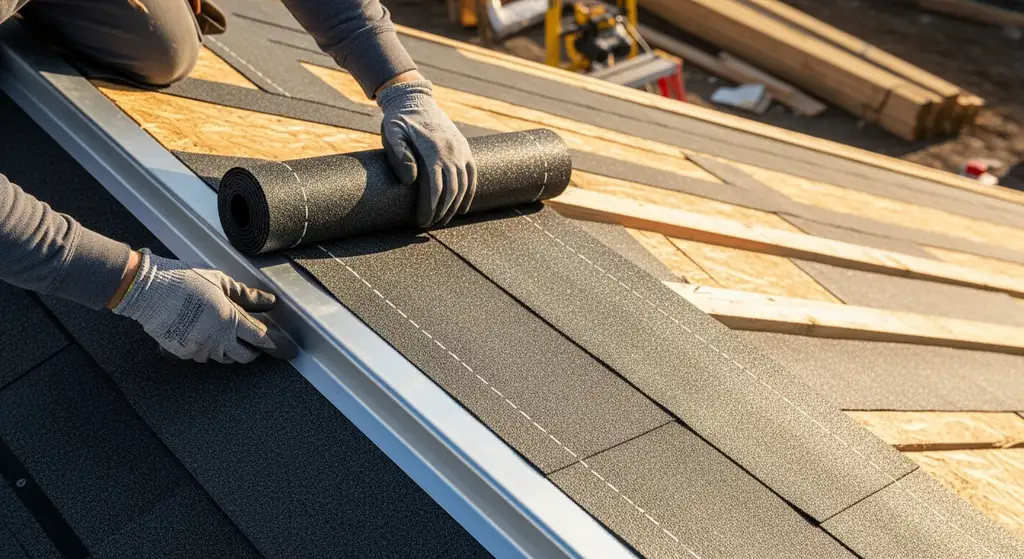
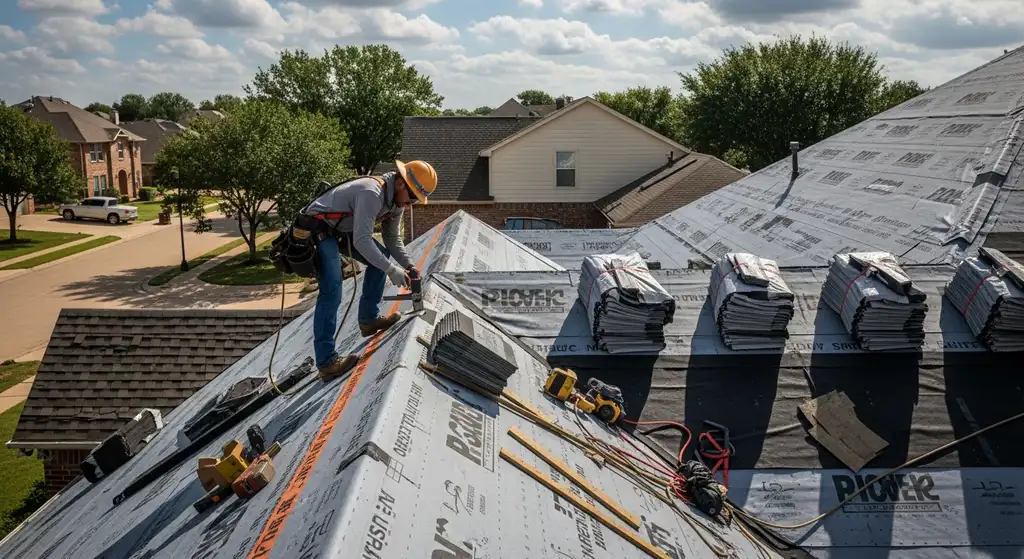
The first step in a professional eave installation is the inspection of the fascia board and the installation of the drip edge. We secure the drip edge directly to the sheathing using 1-1/4 inch galvanized roofing nails spaced 12 inches on center per ASTM D1761. In Dallas, we ensure the metal is tight against the fascia to provide a solid base for the gutter system. Next, we apply the ice and water shield directly over the drip edge at the eave.
This ‘sandwich’ technique, often recommended by the NRCA, ensures that any water that gets under the shingles is directed onto the metal and away from the wood. We then install the synthetic underlayment, overlapping the ice and water shield by at least 4 inches to maintain a continuous water shed. Finally, we install the starter shingles, which are critical for wind resistance. These shingles must be offset from the first course of architectural shingles to prevent water from entering the joints.
Using a GAF Timberline HDZ system with matching starter strips provides a UL 2218 Class 4 impact rating, which is highly valued by insurance companies in North Texas.
Field Note from Experience
In Plano, I found OSB swelling at the eaves because the installer didn’t use ASTM D4869 underlayment and skipped the starter strip. We had to replace 40 linear feet of decking because they didn’t follow the proper ‘sandwich’ technique. It turned a simple shingle swap into a $4,000 structural repair.
Dallas Eave Repair and Installation Costs
The cost of eave work in the Dallas-Fort Worth area is driven by material quality and labor complexity. A standard eave replacement involving new drip edge, underlayment, and starter shingles typically ranges from $6 to $14 per linear foot. If the project requires replacing rotted fascia or rafter tails, costs can quickly escalate due to the structural labor involved. In the DFW Metroplex, labor rates are currently influenced by high demand during the spring storm season.
We see a 20% premium for specialized crews who are certified by manufacturers like CertainTeed or GAF. Investing in higher-grade materials like G-90 galvanized steel instead of standard aluminum adds about $1.50 per foot but provides significantly better longevity against Texas hail and heat. Homeowners should also account for permit fees, which vary by city within the Metroplex. For example, a roofing permit in Dallas might cost differently than one in Frisco or Plano.
Always ensure your contractor includes disposal fees for old materials, as landfill costs in North Texas have risen steadily over the last few years.
Dallas Market Pricing
In Dallas-Fort Worth, expect to pay $35-$55 per linear foot for full eave reconstruction including wood repair. These are current 2026 Dallas market prices; costs vary by region and can be 15-25% higher in remote Texas areas. Peak pricing occurs spring (March-May) storm season.
| Item | Estimated Cost (DFW) | Unit |
|---|---|---|
| Drip Edge Material (G-90) | $1.50 – $3.00 | Per Linear Foot |
| Ice & Water Shield | $2.50 – $4.50 | Per Linear Foot |
| Labor (Installation) | $4.00 – $8.00 | Per Linear Foot |
| Fascia Replacement | $12.00 – $22.00 | Per Linear Foot |
What Contractors Hide
Reusing old drip edge
The Reality: Contractors often reuse bent or corroded metal to save $200, but it voids the manufacturer’s leak-free warranty.
Skipping starter shingles
The Reality: Using regular shingles as starters leads to eave leaks at the seams, yet some crews do it to save on material trips.
External Authoritative Resources
These industry-standard references support the information in this guide:
Building Codes
International Residential Code (IRC 2021)
Official building code for residential construction
ICC Code Adoption Map
Find which IRC version your state uses
Industry Standards
NRCA Roofing Manual
National Roofing Contractors Association best practices
ASTM International Standards
Material testing standards (ASTM D3043, D1761)
Manufacturer Resources
Frequently Asked Questions
Is a drip edge required by code in Dallas?
Yes, IRC R905.2.8.5 requires a drip edge for all asphalt shingle roofs in the DFW Metroplex to ensure proper water shedding and protect the roof deck.
What is the best underlayment for eaves in Texas?
I recommend a self-adhering membrane meeting ASTM D1970 standards, which provides superior protection against wind-driven rain during North Texas spring storms.
How far should shingles overhang the eave?
NRCA standards suggest an overhang of 1/2 to 3/4 of an inch beyond the drip edge to prevent water from wicking into the fascia board.
Can I install a roof eave over old shingles?
No, per IRC R905.1, most North Texas municipalities require a full tear-off to inspect the eave decking for rot before installing new components.
What causes the eave to rot first?
Rot usually occurs due to ‘capillary action’ where water wicks behind the drip edge because it was installed over the underlayment rather than under it.
Does FEMA have recommendations for roof eaves?
Yes, FEMA recommends enhanced fastener spacing at the eaves in high-wind zones like North Texas to prevent shingles from peeling back during storms.
Final Thoughts
Proper roof eave construction is a non-negotiable aspect of a durable roofing system in the Dallas-Fort Worth area. By adhering to IRC 2021 codes and utilizing high-performance materials like GAF or CertainTeed products, you protect your home from the inevitable cycle of Texas heat and heavy rain. Remember that the small details, such as the gauge of your drip edge and the standard of your underlayment, determine the long-term success of your roof. I always tell Dallas homeowners that the eave is the first line of defense against our spring hailstorms.
I recently helped a family in Frisco secure a full replacement after showing their insurance adjuster that the current eave flashing didn’t meet IRC code requirements. Investing in high-quality materials and professional installation now saves thousands in future structural repairs. Reach out to a certified professional to ensure your eaves are up to standard.
