

What to do after a storm damages your roof in Katy TX?
Katy TX homeowners must prioritize safety and documentation within 24 to 48 hours of a storm event. The International Residential Code (IRC 2021) requires immediate mitigation to prevent secondary interior damage. Contacting a licensed professional ensures compliance with National Roofing Contractors Association (NRCA) standards during the recovery process.
Key Takeaways
- Takeaway 1: The International Residential Code (IRC 2021) Section R908 governs all roof replacement and repair activities in Fort Bend County.
- Takeaway 2: ASTM International (ASTM) D3161 Class F wind ratings are mandatory for shingles installed in the Greater Houston high-wind corridor.
- Takeaway 3: Texas law prohibits roofing contractors from waiving insurance deductibles. This practice constitutes insurance fraud and carries significant legal penalties in Katy TX.
Storm damage requires immediate action to protect the structural integrity of your home. The first hour after a severe weather event in Katy TX determines the success of your insurance claim and the longevity of your repair. Homeowners must identify visible failures while adhering to the safety standards set by the Occupational Safety and Health Administration (OSHA), the federal agency governing workplace safety. During a recent spring storm in Cinco Ranch, I inspected a home where delayed mitigation resulted in $14,000 in preventable interior water damage.
The homeowner waited 72 hours to contact a professional, allowing moisture to saturate the fiberglass insulation and CDX plywood decking. This delay complicated the insurance claim and increased the total restoration cost significantly. Proactive response prevents these compounding failures during the volatile Gulf Coast storm season.
How Do You Secure Your Katy TX Home Immediately After Storm Damage?
Homeowners must first confirm the safety of all occupants before conducting a ground-level visual assessment. Documenting exterior damage with high-resolution photos supports the insurance claim process. Contacting a professional for emergency roof repair prevents water infiltration into the attic space.
Immediate safety remains the primary objective following a severe weather event in Fort Bend County. Downed power lines and unstable trees create lethal hazards around the perimeter of the home. Homeowners must stay off the roof surface because storm-damaged shingles lose traction and structural stability. Visual inspections from the ground identify missing asphalt shingles, dented flashing, and displaced ridge vents without risking a fall.
Temporary mitigation stops the progression of moisture damage into the building envelope. The National Roofing Contractors Association (NRCA), the leading authority for roofing professionals, recommends professional tarping to seal breached areas. This action fulfills the homeowner’s policy obligation to prevent further loss. Failure to secure the structure allows humidity to colonize the attic with mold, which complicates the restoration process.
These immediate steps provide the foundation for a comprehensive professional inspection.

Secondary interior saturation
Typical Cost: $3,000 to $15,000
Prevention: Install heavy-duty reinforced tarps within 24 hours of the initial breach.
Insurance Coverage: Excluded if the homeowner fails to take reasonable steps to prevent further damage.
Code Reference: IRC R908.3
Field Note from Experience
After a hail event in Seven Meadows, I found a homeowner attempting to patch a roof with duct tape. This ineffective fix failed during the next rain cycle, causing $5,500 in ceiling repairs that the insurance carrier refused to cover. Professional-grade tarps and fasteners are necessary to withstand Gulf Coast wind speeds.
Does Hail Damage Require a Professional Inspection in Fort Bend County?
Professional inspections identify latent hail damage like bruising and granule displacement that homeowners miss. A certified inspector evaluates the roof’s structural integrity according to ASTM International (ASTM) standards. This assessment provides the necessary evidence for hail damage repair claims in Katy TX.
Latent hail damage remains invisible to the untrained eye but compromises the shingle’s bitumen layer. Hailstones fracturing the fiberglass mat allow UV rays to accelerate shingle degradation. Inspectors use a 10-foot by 10-foot ‘test square’ to count impacts and determine the severity of the loss. This methodology aligns with the standards of the International Code Council (ICC), the organization that develops model building codes.
Structural assessments include an evaluation of the soft metals and peripheral components. Dents in aluminum ridge vents and lead pipe boots confirm the kinetic energy of the hail event. Inspectors also check the attic for daylight through the roof sheathing or moisture stains on the rafters. These findings document the proximate cause of loss required by insurance adjusters.
Accurate documentation of these physical failures facilitates a smoother transition into the insurance claim process.

What Contractors Hide
Surface-only inspections
The Reality: Adjusters ignore the underlayment, yet 60% of leaks originate from compromised synthetic underlayment that met ASTM D226 standards but failed during wind-driven rain.
How Does the Insurance Claim Process Work for Katy TX Storm Damage?
The insurance claim process begins with filing a ‘Notice of Loss’ with your carrier immediately after the storm. Homeowners must provide date-stamped photos and a professional damage assessment to support the claim. Understanding your policy’s Replacement Cost Value (RCV) ensures full funding for storm damage repair.
Filing a claim requires precise documentation of the event and the resulting physical damage. Most Texas policies operate on an RCV basis, which pays the full cost of replacement minus your deductible. Homeowners must verify if their policy includes ‘Law and Ordinance’ coverage. This provision pays for mandatory upgrades required by the International Residential Code (IRC 2021) during the repair process.
Adjusters evaluate the roof to determine if the damage meets the carrier’s threshold for replacement. Disagreements regarding the scope of work arise during this phase. Utilizing the appraisal clause provides a path to resolution when the contractor and adjuster reach an impasse. Documentation from the Federal Emergency Management Agency (FEMA), the federal body administering disaster recovery, sometimes assists in large-scale regional events.
These financial considerations lead directly to the technical requirements of local building codes.

Contractors offering to ‘cover’ your deductible
Consequence: This is a Class A misdemeanor in Texas and can result in the voiding of your entire insurance claim.
Field Note from Experience
In Firethorne, I helped a family whose claim was denied because the adjuster labeled the hail damage as ‘mechanical marring.’ We used a digital microscope to prove the fiberglass mat was fractured, resulting in a $22,000 reversal and full roof replacement.
Does IRC 2021 Require Full Replacement for Katy TX Hail Damage?
The International Residential Code (IRC 2021) requires a full roof replacement if more than 25% of a roof facet is damaged. Fort Bend County building officials enforce these standards to ensure structural safety. Compliance with IRC R908.3 prevents penalties and ensures the roof replacement meets modern safety criteria.
Building codes in Katy TX mandate specific installation methods to combat the Gulf Coast climate. IRC R905 requires shingles to be fastened with a minimum of four nails, but high-wind zones require six. Re-roofing over existing shingles is prohibited if the house already has two layers of roofing. This rule prevents excessive dead loads from compromising the roof rafters and ceiling joists.
Proper attic ventilation is a mandatory component of code compliance. The IRC 2021 requires a balanced system of intake and exhaust vents to prevent heat buildup. Excessive heat in the attic reaches 165°F during Katy TX summers, which cooks shingles from the underside and voids warranties. Inspectors from the Texas Department of Licensing and Regulation (TDLR) verify that these systems function correctly.
These code requirements dictate the specific materials used in the restoration process.
| Fort Bend County Code Highlights | |
|---|---|
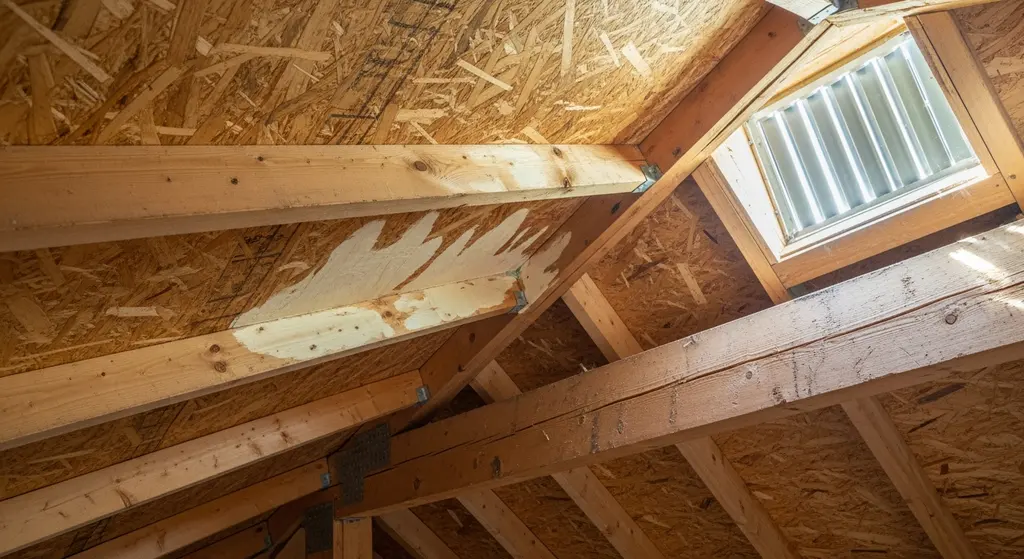
| Sheathing Thickness | Minimum 15/32-inch CDX plywood per IRC R803.2.1 |
| Drip Edge | Required on all eaves and rakes per IRC R905.2.8.5 |
| Wind Speed | 130-150 mph design wind speed in Greater Houston |
Which Hail-Resistant Materials Perform Best in the Katy TX Climate?
Class 4 impact-rated shingles offer the highest level of protection against Katy TX hail events. These materials meet ASTM D2218 standards for impact resistance and qualify for significant insurance premium discounts. Selecting high-performance roof repair in Katy TX materials extends the life of the roof system.
Material selection determines how well a home survives the next spring storm season. Asphalt shingles with Styrene-Butadiene-Styrene (SBS) technology feature a rubberized polymer that absorbs the energy of hail impacts. GAF Timberline HDZ and CertainTeed Landmark shingles provide excellent wind resistance and algae protection. These products include copper-containing granules that prevent the growth of Gloeocapsa magma, the algae responsible for black streaks.
Underlayment serves as the secondary water barrier and must meet ASTM D226 Type II standards. Synthetic underlayment offers superior tear strength and UV resistance compared to traditional organic felt. In the high-humidity environment of West Houston, synthetic options prevent the underlayment from absorbing moisture and wrinkling during installation. High-quality materials reduce the frequency of repairs and improve energy efficiency.
Avoiding common contractor scams ensures these materials are installed correctly.

Advantages
- Class 4 shingles reduce insurance premiums by up to 25% in Fort Bend County.
- Synthetic underlayment provides 180-day UV exposure protection during long projects.
Disadvantages
- Impact-rated materials cost 15-20% more than standard architectural shingles.
- Heavier shingles require verification of the existing roof structure load capacity.
How Do Katy TX Homeowners Avoid Post-Storm Roofing Scams?
Avoid contractors who pressure you to sign a contract before the insurance adjuster has inspected the property. Legitimate companies in Katy TX provide a local physical address and proof of TDLR licensing. Verifying a contractor’s reputation prevents the $10,000 to $20,000 loss associated with roofing fraud.
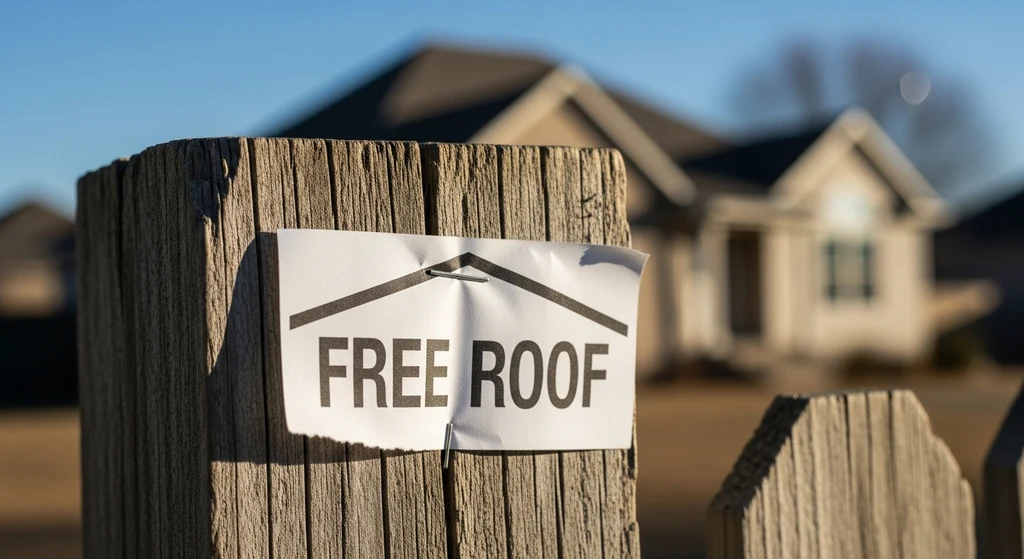
Storm chasers descend on Katy TX neighborhoods like Grand Lakes and Cane Island immediately after a hail event. These individuals use aggressive sales tactics and offer ‘free roofs’ by illegally absorbing the insurance deductible. This practice is a red flag for poor workmanship and the use of sub-standard materials. Always verify the contractor’s credentials through the Texas Department of Licensing and Regulation (TDLR).
A reputable contractor provides a detailed written estimate that includes specific material brands and ASTM standards. They do not ask for a full payment upfront or use high-pressure ‘sign now’ tactics. Homeowners must request references from local projects completed at least two years ago to verify long-term performance. Ensuring the contractor carries adequate general liability and workers’ compensation insurance protects you from legal liability.
This due diligence leads to a final decision on the scope of work.
Unsolicited door-to-door ‘inspectors’
Consequence: These individuals intentionally damage shingles to create fake insurance claims, leading to claim denial and policy cancellation.
Extremely low bids
Consequence: Low bids involve reusing old flashing or skipping the ice and water shield, leading to leaks that cost $4,000 to repair later.
Is Repair or Full Replacement Necessary After a Fort Bend County Storm?
The decision between repair and replacement depends on the age of the roof and the extent of the storm damage. If the damage affects multiple facets or the roof is over 15 years old, a full replacement is the most cost-effective long-term solution. Professional roof replacement ensures the entire system meets IRC 2021 standards.
Targeted repairs remain viable for isolated damage on relatively new roof systems. However, matching the color and texture of aged shingles in the Katy TX sun is nearly impossible. Brittle shingles on older roofs crack when a contractor attempts to lift them for a repair, creating a ‘cascading failure’ effect. This results in a patchwork appearance that violates Homeowners Association (HOA) rules in neighborhoods like Kelliwood.
Full replacement provides a comprehensive warranty and resets the life cycle of the roof system. It allows for the installation of modern components like synthetic underlayment and high-efficiency ventilation. Insurance carriers are more likely to fund a full replacement if the damage exceeds the 25% threshold defined by building codes. Homeowners must weigh the immediate cost of the deductible against the long-term protection of a new roof.
This final evaluation concludes the post-storm recovery process.

What Contractors Hide
Reusing metal flashing
The Reality: Contractors reuse old step flashing to save $800 in labor and materials, but old flashing is the primary cause of leaks in new roof installations.
Field Note from Experience
I recently inspected a roof in Grand Lakes where the previous contractor attempted a repair on 20-year-old shingles. The repair caused the surrounding shingles to delaminate, turning a $1,200 repair into an emergency $18,000 replacement after the next rain event.
External Authoritative Resources
These industry-standard references support the information in this guide:
Building Codes
Frequently Asked Questions
How long do I have to file a roof claim in Texas?
Most Texas insurance policies require homeowners to file a claim within one year of the date of loss. Delaying the claim allows carriers to argue that the damage resulted from neglect rather than a specific storm event. Check your specific policy for ‘Prompt Notice’ requirements to ensure compliance with the National Roofing Contractors Association (NRCA) recommendations.
Can I repair my roof myself after a storm?
DIY roof repairs void manufacturer warranties and fail to meet International Residential Code (IRC 2021) standards. Professional contractors possess the specialized tools and safety equipment required by the Occupational Safety and Health Administration (OSHA). Improperly installed shingles lead to leaks that cost more than the initial professional repair fee.
Will my insurance premium go up if I file a storm claim?
Texas law prohibits insurance companies from raising individual premiums solely due to a ‘weather-related’ claim. However, carriers adjust rates for entire zip codes based on regional storm frequency in Fort Bend County. Filing a legitimate claim for storm damage repair protects your asset without a direct penalty to your individual policy rate.
What is the 25% rule in roofing?
The 25% rule in the International Residential Code (IRC 2021) states that if more than 25% of a roof facet is damaged, the entire facet must be replaced to meet current code. This ensures that the roof system maintains structural integrity and uniform wind resistance. Fort Bend County building inspectors enforce this rule during the permit process.
Does hail damage always cause immediate leaks?
Hail damage rarely causes immediate leaks but creates latent defects that lead to failure within 2 to 5 years. The impact fractures the bitumen layer and displaces granules, exposing the asphalt to UV degradation. ASTM International (ASTM) testing confirms that these impacts significantly shorten the lifespan of the roof system.
What is the best shingle for Katy TX weather?
Class 4 impact-rated shingles provide the best protection against the high-frequency hail and wind events in the Greater Houston area. These shingles meet the UL 2218 standard for impact resistance and the ASTM D3161 Class F standard for wind resistance. Investing in high-quality materials reduces long-term maintenance costs in the humid Gulf Coast climate.
What Should Fort Bend County Homeowners Do After Storm Damage?
Recovering from a storm in Katy TX requires a systematic approach that balances immediate safety with long-term structural integrity. Homeowners must act quickly to document damage and engage with licensed professionals who understand the nuances of the International Residential Code (IRC 2021). Following these steps ensures that your insurance claim is handled fairly and your home remains protected against the volatile Gulf Coast weather. My final recommendation for Fort Bend County residents is to maintain a relationship with a local roofer before the storm hits.
Having a trusted professional on call during the spring storm season prevents the stress of dealing with untrustworthy storm chasers. Schedule a professional inspection today to verify your roof’s current condition and ensure you are prepared for the next weather event.
