
It usually starts at the worst time. Rain hammering the roof at 11 PM, a drip over the bed, a stain spreading across the kitchen ceiling. Katy storms do not check the clock, and Gulf rain can sit over Fort Bend County for hours at a time.
Here is the good news. You do not have to fix the roof tonight. You have to protect the house, protect your insurance claim, and decide if the leak can wait for daylight. We answer emergency roof repair calls in Katy every storm season, and this is the exact order we tell callers to do things in.
What to do in the first hour
Work through these six steps in order. Every one is safe to do from inside the house, in the dark, while the rain is still coming down.
Step 1: Make the room safe
Water and power do not mix. If water drips near a light fixture, a ceiling fan, or an outlet, go to the breaker panel and switch that circuit off. Keep kids and pets out of the room. If the ceiling sags, or the paint on the wall bubbles with water trapped behind it, treat that room as off limits until the water is drained in step 3.
Step 2: Catch the water and move what matters
Put buckets, pots, or a trash can under every drip. Lay towels around the base to catch the splash. Move furniture, rugs, and electronics out of the wet zone, and throw plastic sheeting or trash bags over anything too heavy to move. One cheap trick that works: rest a towel in the bucket so the drips land soft instead of drumming all night.
Step 3: If the ceiling bulges, let the water out
A bulge in the ceiling is a pocket of water sitting on top of the drywall. Left alone, that weight can tear a whole sheet down at once, water, plaster, and all. Put your biggest bucket under the lowest point of the bulge. Poke one small hole in the middle with a screwdriver and let the water drain out in a single stream you control. A hole the size of a pencil costs almost nothing to patch later. A collapsed ceiling costs you a drywall crew.
Step 4: Take photos and video before you clean up
Shoot the stain, the active drip, any damaged furniture or floors, and the roof from the ground if the rain lets up. Note the date, the time, and what the storm did. Insurance covers sudden storm damage, and photos with times attached are the proof. They help even if you never file a claim, because your roofer can read them before the visit. If wind tore shingles off or a limb came down, you are also looking at storm damage repair, where this proof matters even more.
Step 5: Find the general area from the attic, only if it is safe
Water runs along rafters and pipes before it drips, so the spot on your ceiling is often feet away from the hole in the roof. If your attic has boards or a floor to stand on, take a flashlight up and look for wet insulation, dark water trails, and daylight coming through the deck. Step only on joists or boards, never on the ceiling between them. This trip is a look, not a repair. If you cannot spot the source, that is normal. Pinpointing a leak is a daylight job done on the roof itself, and it is the heart of real leak detection work.
Step 6: Slow it from the inside if you safely can
If you can see where the water enters from the attic, you can buy some time. Set a bucket under the entry point, or tack up plastic sheeting so it channels the water into a bucket instead of across the ceiling. That is the full list of safe inside moves. A tarp spread on a wet roof at night is not one of them. That job belongs to a trained crew with the right gear, in better light than a storm gives you.
What not to do
Three mistakes make leak nights worse. We see all three after every big Katy storm.
Do not climb on the roof. Wet shingles are slick as ice. Storm damage can leave decking soft enough to give way under your weight. It is dark, it is raining, and nothing up there is worth a fall. Every real fix can wait for a roof that is safe to stand on.
Do not smear tar or caulk on it and call it fixed. Goop from a tube hides the true entry point, traps water inside the deck, and turns a clean repair into a scrape and redo job. Sealed from inside, it does the same harm in the dark. A patch you cannot see working is not a repair.
Do not ignore a small drip. A slow leak is quiet rot. It soaks insulation, softens decking, and feeds mold for weeks before a stain ever shows. The cheapest leak you will ever fix is the one you handle in its first week, while it is still a small repair and not a ceiling job.
Is it an emergency, or can it wait till morning?
This is the call every homeowner is really making. Here is how we sort it.
Get help as fast as you can if: water is pouring, not dripping. Part of the roof is open to the sky. A tree or a big limb hit the house. The ceiling sags or cracks. Water is running into lights or outlets. If wiring is involved, or you see sparks or smell burning, get everyone out and call 911 first. Roofing can wait. People cannot.
Contain it and call in the morning if: the drip is slow and your buckets are keeping up. The ceiling is stained but flat. The leak shows only in hard rain and stops when the rain stops. Run the six steps, check the buckets once in the night, and call when the lines open.
We will be straight with you about our own hours. Our phone lines run 7 AM to 9 PM. If your leak starts at midnight, do the steps above, keep the buckets under it, and call us at 7 AM sharp. We would rather tell you that plainly than promise a 2 AM answer we cannot give.
Call (281) 677-8586
What a roofer does on an emergency visit
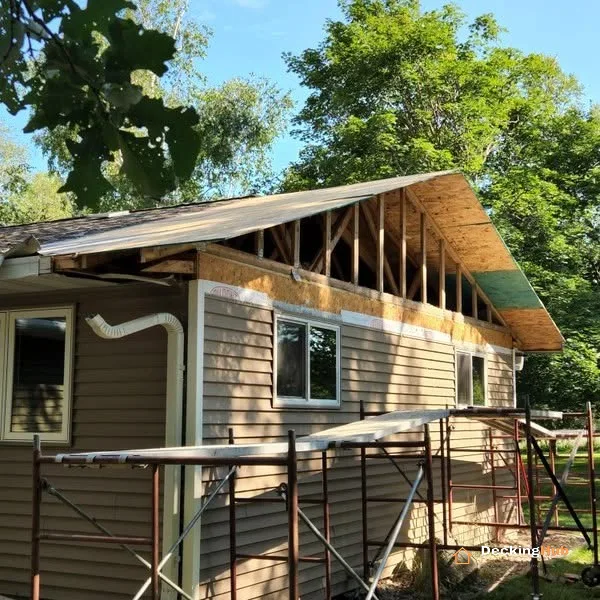
First, we make sure the roof is safe to stand on, and we find the true entry point, which is often not above the stain. Then we stop the water. On most calls that means a tarp fitted and fastened so the wind cannot lift it, or a direct patch on the failed spot once the surface allows it.
Emergency tarping runs $400 to $1,500, and most homeowners pay $600 to $1,200. An emergency repair done on the spot runs $400 to $2,000, based on the damage. The tarp is not the fix. It buys dry days so the real repair can be done right, and most full leak repairs land at $300 to $1,200 once things dry out. We break down what a roof leak repair costs in full in our cost guide.
You also get photos of the damage and a straight read on the full fix before anyone asks you to approve a thing. If a storm did the damage, those same photos double as your insurance record.
Roof leak questions
What to do immediately when your roof is leaking?
Make the room safe, switch off the breaker if water is near power, catch the water in buckets, drain any ceiling bulge into a bucket, and take photos. Then call a roofer. Stay off the roof while it is wet, no matter how small the leak looks.
Is a leak in the roof an emergency?
It is an emergency if water pours in, the roof is open, a tree hit the house, or the ceiling sags. A slow drip you have contained with buckets is urgent, but it can wait for morning as long as you check the buckets during the night.
Will insurance fix a roof leak?
Insurance pays when a sudden event caused it, like hail or wind tearing shingles off. It does not pay for wear, age, or a slow leak left alone for months. Most Texas policies carry a wind and hail deductible of 1% to 2% of the home value, so small leaks fall under the deductible anyway.
What to do if a roof starts leaking during a storm?
Stay inside and run the steps: safety first, buckets out, drain the bulge, photos when you can. Never climb up during the storm. Once the rain passes and the roof can be stood on safely, that is when a crew can tarp or patch it.
Can I fix a roof leak from the inside?
Only as a stopgap. You can channel attic water into a bucket, but the entry point sits on the roof surface, and that is where the fix has to happen. Caulk smeared from inside traps water in the deck and hides the trail your roofer needs to read.
How much does an emergency roof leak repair cost?
Tarping runs $400 to $1,500. An emergency repair runs $400 to $2,000. After the roof dries, the full leak repair most homes need runs $300 to $1,200. The final number turns on the damage, not the clock.
Call (281) 677-8586
Lines open 7 AM to 9 PM.
If the water has stopped and you want the roof checked before the next storm rolls in, our emergency roof repair service page explains how the visit works. The first look is free, and we will tell you plainly if you need a repair or nothing at all.