

Contractor’s Bottom Line
Fixing rust holes in gutters requires removing the oxidation, sealing the void, and addressing the underlying cause of the metal decay. While patching compounds provide a temporary fix, rust indicates that the protective galvanized coating has failed, and more holes will likely form. Clean the rust away, apply a metal patch, and monitor the area closely, planning for a full gutter replacement if the decay spreads.
Key Takeaways
- Rust holes indicate corrosion and compromise the gutter’s ability to divert water effectively.
- Regular gutter inspections, especially after heavy rain or storms, can help identify rust and prevent further damage.
- Ignoring rust holes can lead to water damage to your fascia, soffit, and foundation, potentially resulting in costly repairs in the DFW Metroplex.
Gutters play a crucial role in protecting your home from water damage by channeling rainwater away from the foundation. However, over time, gutters can develop rust holes, especially in areas with high humidity and fluctuating temperatures like Texas. Identifying these rust holes early is essential to prevent further damage to your home’s structure. Ignoring even small rust spots can lead to significant problems.
In my 8+ years as a construction consultant in Dallas, I have seen firsthand the devastating effects of neglected gutter maintenance. One homeowner in Plano delayed gutter repairs for too long, resulting in water damage to the foundation that cost them over $10,000 to fix. According to the NRCA, regular inspections and prompt repairs are crucial for maintaining a healthy roofing system and preventing such costly issues. Remember, the International Residential Code (IRC) requires proper drainage to protect your home’s foundation.
Proper gutter maintenance is a necessity. Gutters are exposed to the elements, and the constant cycle of wetting and drying, especially common in Dallas, can accelerate corrosion. Understanding the warning signs of rust holes and knowing how to inspect your gutters are the first steps in protecting your home from potential water damage. Regular maintenance can prevent costly damage and ensure your home’s structural integrity.
Recognizing the Warning Signs of Rust Holes
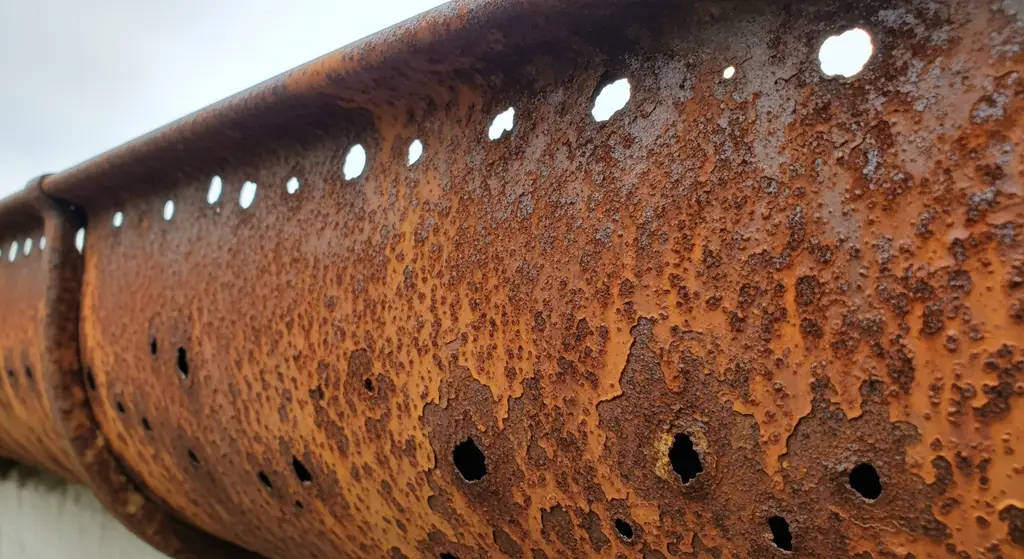
Identifying rust holes in gutters early can save you from expensive repairs down the line. One of the most obvious signs is the presence of visible rust spots or holes on the gutter’s surface. These often appear as small, orange-brown patches that gradually expand over time. You might also notice water dripping from specific points along the gutter, even when it’s not raining heavily.
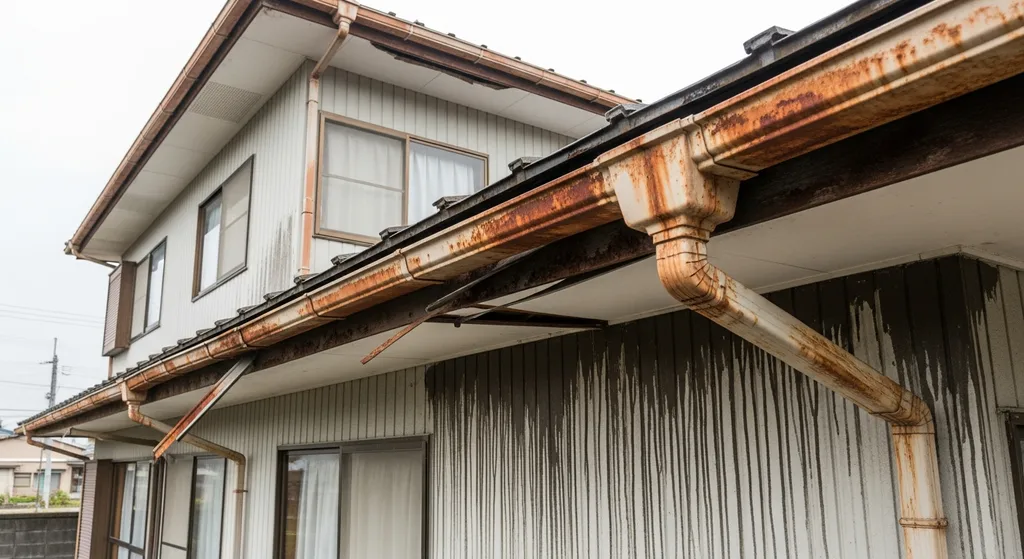
Another telltale sign is the presence of rust stains on your home’s siding or foundation. These stains are caused by water running down the exterior walls, carrying rust particles with it. Sagging gutters or sections that appear to be pulling away from the fascia board can also indicate rust damage, as the weakened metal can no longer support the weight of the water. Always inspect your gutters after heavy rain or storms, as these events can exacerbate existing rust problems.
Addressing these signs promptly can prevent further damage and maintain the integrity of your gutter system.
Field Note from Experience
After inspecting dozens of Dallas-area roofs, I found that homes near heavily trafficked roads tend to have accelerated gutter corrosion due to airborne pollutants.
How to Inspect Your Gutters for Rust
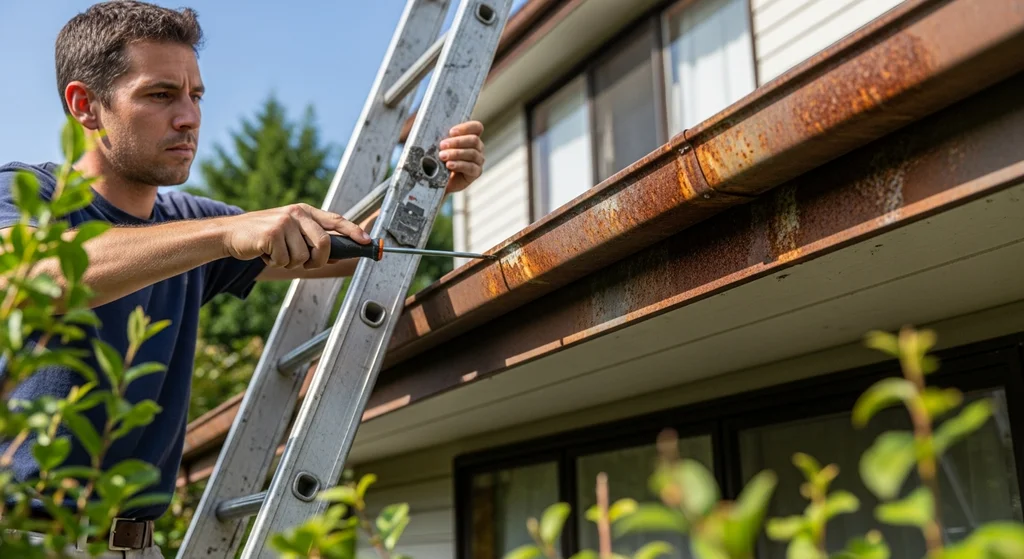
Regular gutter inspections are essential for detecting rust holes before they cause significant damage. Begin by visually inspecting the gutters from the ground, looking for any signs of rust, holes, or sagging. Use binoculars for a closer look, especially for hard-to-reach areas. Next, use a sturdy ladder to safely access the gutters for a more thorough inspection.
Carefully examine the inside and outside of the gutters, paying close attention to seams and joints, which are common areas for rust to develop. Use a screwdriver or similar tool to gently probe any suspicious areas. If the metal is weak or easily penetrated, it’s likely that rust has compromised its integrity. Check the downspouts as well, as they can also develop rust holes.
The NRCA recommends professional inspections every 1-2 years, especially in climates with extreme weather conditions like those in North Texas. Always prioritize safety when working on a ladder and consider hiring a professional if you’re uncomfortable performing the inspection yourself.
Field Note from Experience
Working on Texas roofing projects, I have noticed that gutters facing south tend to deteriorate faster due to increased sun exposure and thermal stress.
Assessing the Severity of Rust Damage
Once you’ve identified rust holes in your gutters, it’s important to assess the severity of the damage to determine the appropriate course of action. Small, isolated rust spots may be treatable with patching or rust converters. However, extensive rust damage, characterized by numerous holes or widespread corrosion, often necessitates full gutter replacement. Consider the age of your gutters; if they’re nearing the end of their lifespan (typically 20-30 years for aluminum gutters), replacement may be the most cost-effective option.
Examine the surrounding areas for signs of water damage, such as rotted fascia boards or water stains on the siding. These indicate that the rust holes have already caused significant problems and that more extensive repairs may be needed. According to the International Code Council (ICC), maintaining proper drainage is crucial for preventing structural damage to your home. Ignoring severe rust damage can lead to costly repairs to your foundation, siding, and landscaping.
Always consult with a qualified roofing contractor to get a professional assessment and determine the best solution for your specific situation.
Field Note from Experience
In my 8+ years as a construction consultant in Dallas, I have seen many homeowners underestimate the severity of rust damage, leading to much larger and more expensive repairs later on.
External Authoritative Resources
These industry-standard references support the information in this guide:
Building Codes
Frequently Asked Questions
How often should I clean my gutters in Dallas, Texas?
In Dallas, cleaning your gutters at least twice a year is essential, typically in the spring and fall. This removes leaves, debris, and other materials that can contribute to rust and corrosion. Homes near trees may require more frequent cleaning to prevent clogs and water damage. Regular cleaning is a preventative measure that helps maintain the integrity of your gutters.
Can I repair rust holes in my gutters myself?
Small, isolated rust holes can often be repaired using patching compounds or rust converters. However, extensive damage or widespread corrosion is best handled by a professional. DIY repairs may not be effective in the long run and could potentially worsen the problem. Professional repairs ensure proper sealing and drainage, preventing further damage to your home.
What are the best materials for gutters in the Dallas climate?
Aluminum gutters are a popular choice in Dallas due to their resistance to rust and corrosion. They are also lightweight, durable, and relatively affordable. Copper gutters are another option, known for their longevity and aesthetic appeal, but they are more expensive. Vinyl gutters are a budget-friendly choice, but they may not be as durable as aluminum or copper in the long run.
According to ASTM D3043, gutter materials must meet certain performance standards to ensure longevity and durability.
How much does it cost to replace gutters in Dallas?
The cost of gutter replacement in Dallas can vary depending on the materials used, the size of your home, and the complexity of the installation. Expect to pay between $6 and $12 per linear foot for seamless aluminum gutter replacement, including labor. Copper gutters can cost significantly more, ranging from $15 to $25 per linear foot. Always get multiple quotes from licensed contractors to ensure you’re getting a fair price.
What are the signs that my gutters need to be replaced?
Signs that your gutters need to be replaced include extensive rust damage, multiple holes, sagging gutters, water damage to your fascia or siding, and frequent clogs. If your gutters are nearing the end of their lifespan (20-30 years for aluminum), replacement may be the most cost-effective option. Ignoring these signs can lead to more serious and expensive problems down the road.
Will my homeowner’s insurance cover gutter replacement due to rust?
Homeowner’s insurance typically covers gutter damage caused by covered perils such as hail, wind, or fire. However, damage caused by neglect, such as rust due to lack of maintenance, is usually not covered. Review your insurance policy carefully to understand what is covered and what is excluded. Document any damage with photos and videos and file a claim promptly if you believe the damage is covered.
Final Thoughts
Rust holes in gutters are a common problem that can lead to significant water damage if left unaddressed. Regular inspections, prompt repairs, and proper maintenance are essential for protecting your home’s foundation and siding. By understanding the warning signs of rust and knowing how to assess the severity of the damage, you can take proactive steps to prevent costly repairs. Many Dallas homeowners do not realize that neglecting gutter maintenance can lead to foundation issues, potentially costing thousands to repair.
Remember, preventative measures are always more cost-effective than reactive repairs. If you suspect that your gutters have rust damage, contact a qualified roofing contractor for a professional assessment and repair plan. Taking action now can save you time, money, and headaches in the long run. Protect your investment and ensure that your gutters are functioning properly to safeguard your home from the elements.
