

Contractor’s Bottom Line
Corrugated decking is a high-performance structural solution that provides superior span capabilities compared to traditional OSB or CDX plywood. In the Dallas-Fort Worth Metroplex, we primarily specify G-90 galvanized steel per ASTM A653 to combat humidity and thermal expansion. For residential applications, IRC 2021 section R803.2.1 governs the thickness and span ratings, while commercial projects must adhere to National Roofing Contractors Association (NRCA) standards for wind uplift. Current 2026 Dallas market rates for installed corrugated steel decking range from $4.50 to $8.25 per square foot depending on the gauge and finish. Always verify the gauge with a micrometer, as sub-standard materials can compromise the entire roofing system’s structural integrity.
Key Takeaways
- Specify minimum G-90 galvanized coating per ASTM A653 to prevent corrosion in the North Texas humidity.
- IRC 2021 compliance requires specific fastener patterns to meet the 115-130 mph wind zones found in the Dallas area.
- Expect to pay a 15-20% premium in Dallas for 22-gauge decking compared to lighter 26-gauge alternatives used in low-slope applications.
I have spent over eight years navigating the unique challenges of the North Texas construction market, where the heat is relentless and the storms are unpredictable. Corrugated decking, particularly steel variants, has become a go-to for many of my commercial and modern residential projects in the DFW Metroplex because of its incredible strength-to-weight ratio. Whether you are looking at a mezzanine floor or a high-performance roof deck, understanding the interplay between material gauge and span is critical for long-term success. FIELD NOTE #1: Last year, a homeowner in the Park Cities area called me after a contractor installed 29-gauge corrugated panels intended for siding as a structural roof deck.
During a standard spring storm, the deck buckled under the weight of saturated synthetic underlayment, resulting in over $45,000 in structural repairs. This is why I always insist on verifying ASTM A653 standards and proper gauge thickness before a single screw is driven. When we talk about corrugated decking today, we aren’t just talking about ‘tin’ roofs; we are discussing sophisticated structural components. Organizations like the National Roofing Contractors Association (NRCA) and the International Code Council (ICC) have set high bars for how these materials must perform.
In this guide, I will break down exactly what you need to look for to ensure your Dallas project meets these rigorous standards.
Anatomy of High-Performance Corrugated Decking
The performance of corrugated decking is defined by its profile height and the metallurgical properties of the steel. In Dallas, we specify cold-formed steel that meets ASTM A653 for galvanized coatings or ASTM A792 for Galvalume finishes. The ‘corrugations’ or ribs provide the moment of inertia necessary to bridge long spans without the need for frequent intermediate supports, which is a major advantage over oriented strand board (OSB). For most structural applications, we utilize G-90 galvanized steel, which contains 0.90 ounces of zinc per square foot.
This level of protection is vital in the DFW Metroplex to prevent the ‘edge creep’ corrosion often seen in cheaper materials. We also look for a minimum yield strength of 33,000 psi to ensure the deck can handle the live loads required by modern engineering standards. I recommend that my clients always verify the material thickness using the Decimal Inch standard rather than just the gauge number. A ’22-gauge’ panel can vary significantly between manufacturers, so we look for a minimum of 0.0295 inches for structural integrity.
This precision ensures that the decking integrates perfectly with architectural shingles or commercial TPO membranes.
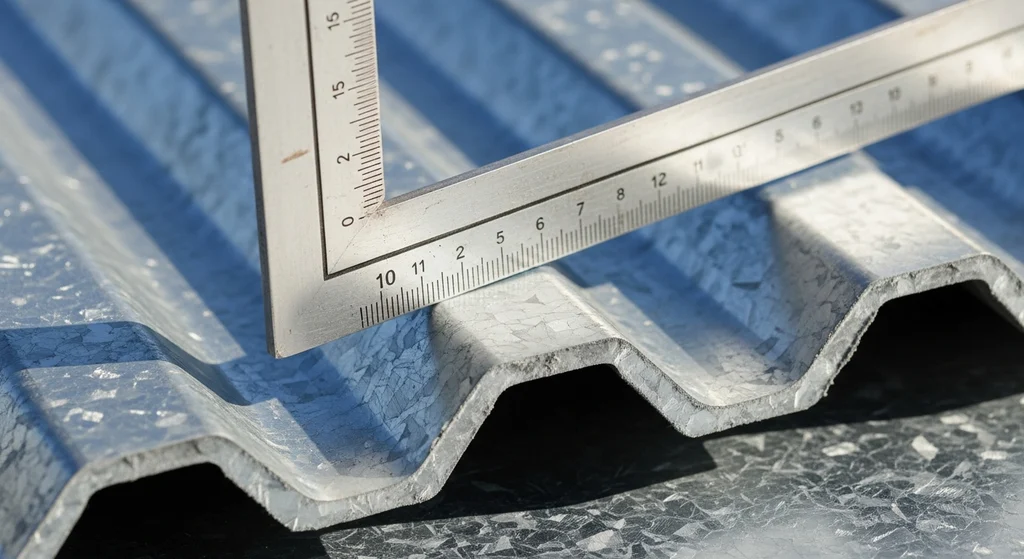
| Material Specifications | |
|---|---|
| Coating Standard | ASTM A653 G-90 |
| Common Gauges | 22, 20, 18 Gauge |
| Yield Strength | 33,000 – 80,000 PSI |
IRC 2021 and Dallas Building Code Compliance
Navigating the building codes in Dallas County requires a strict adherence to the International Residential Code (IRC) 2021 edition. Specifically, IRC R803.2.1 dictates the requirements for roof sheathing, which includes steel decking when used in residential applications. The code mandates that the decking must be able to withstand the specific wind uplift forces of our region, which often exceed 115 mph. In addition to the IRC, the International Code Council (ICC) provides the Evaluation Service (ICC-ES) reports that we use to verify the load-carrying capacity of specific corrugated profiles.
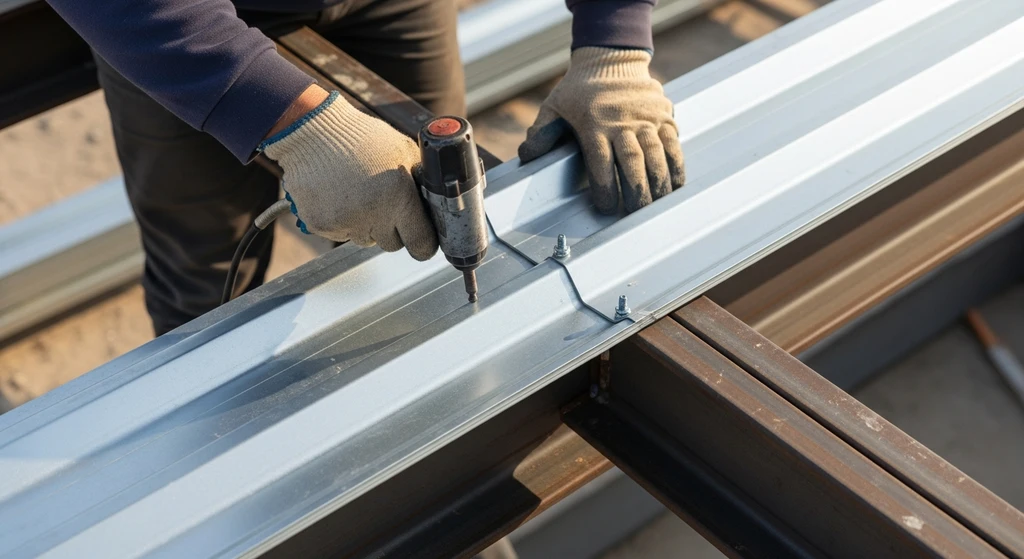
For floor decking, ASTM D3043 methods are often referenced to ensure the assembly can handle residential live loads of 40 psf. Failure to provide these engineering stamps during a Dallas city inspection can lead to immediate project shut-downs. Fastener patterns are where most contractors fail code inspections. The NRCA recommends a ’36/4′ or ’36/7′ pattern depending on the span and wind zone.
This means the fasteners must be placed at specific intervals across the ribs to prevent the panels from ‘zippering’ off the structure during a high-wind event or a North Texas microburst.
Field Note from Experience
During an inspection in North Dallas, I found a contractor using standard drywall screws to secure 22-gauge decking. These have zero shear strength. I forced them to replace all 1,200 fasteners with #12-14 self-drilling TEK screws, which cost the homeowner an additional $2,800 in labor and materials but saved the roof from certain failure.
Performance in the North Texas Environment
The Dallas-Fort Worth climate is particularly harsh on metal components due to the extreme thermal cycling. It is not uncommon to see a 50-degree temperature swing in a single day, which causes significant thermal expansion and contraction in corrugated decking. If the installer does not account for this movement, the fasteners can eventually back out or ‘slot’ the metal, leading to leaks. In the DFW Metroplex, we also have to account for the impact of large-scale hail.
While corrugated decking is incredibly strong, 26-gauge or thinner material can suffer ‘micro-star’ fractures during a major hail event. I always specify a minimum of 22-gauge for any project where the decking serves as the primary substrate for a roof, as it provides the impact resistance needed to protect the interior. Energy efficiency is another major factor. We often combine corrugated decking with high-R-value polyisocyanurate insulation to meet Energy Star requirements.
In the Texas heat, the air gap created by certain corrugated profiles can actually assist in attic ventilation, provided the system is designed with a proper ridge vent and soffit intake strategy.
Using ‘B-Deck’ for residential roofs without a thermal break
Consequence: Massive condensation issues in the attic during winter months.
Dallas-Fort Worth Pricing and Budgeting
Budgeting for corrugated decking in the current 2026 Dallas market requires an understanding of both material volatility and specialized labor. Unlike standard OSB, which any framing crew can install, structural metal decking requires specialized tools and knowledge of welding or heavy-duty mechanical fastening. This expertise comes at a premium in the DFW Metroplex. Material costs currently fluctuate based on global steel indices, but locally, we see 22-gauge G-90 galvanized decking ranging from $2.50 to $4.00 per square foot for the material alone.
When you add in the specialized fasteners, closure strips, and skilled labor, the total installed price typically lands between $5.50 and $9.00 per square foot. This is significantly higher than the $3.00-$4.50 range you might see for traditional wood-based decking. Logistics also play a role in Dallas pricing. Delivery fees to tight neighborhoods like Uptown or the M-Streets can add $500-$1,000 to a project due to the need for specialized boom trucks.
I always advise clients to order a 5-10% waste factor, as field-cutting corrugated steel is labor-intensive and mistakes are costly.
Dallas Market Pricing
In Dallas-Fort Worth, expect to pay $5.50-$9.00 per square foot for installed structural corrugated decking. These are current 2026 Dallas market prices; costs can be 15-20% higher in remote Texas areas due to shipping. Prices typically peak in spring (March-May) during the post-storm reconstruction surge.
| Component | Dallas Price Range (sq ft) |
|---|---|
| 22-Gauge G-90 Material | $2.50 – $4.00 |
| Specialized Labor | $2.00 – $3.50 |
| Fasteners & Accessories | $1.00 – $1.50 |
What Contractors Hide: Decking Shortcuts
In my years as a consultant, I have seen every trick in the book when it comes to cutting corners on corrugated decking. The most common tactic is ‘gauge-swapping.’ A contractor will quote you for 22-gauge decking but install 24-gauge or even 26-gauge. To the untrained eye, they look identical, but the load-bearing capacity is nearly 40% less. Always check the manufacturer’s stamp on the underside of the panels.
Another hidden truth is the reuse of old flashing or closure strips. In the Dallas heat, these components degrade faster than the steel itself. Contractors often skip the expensive foam closure strips that prevent pests and wind-driven rain from entering the corrugations. This ‘saving’ of $300 today can lead to a $5,000 pest remediation or leak repair in three years.
Finally, many crews skip the side-lap fasteners. According to the Steel Deck Institute (SDI), the panels must be fastened to each other at the overlaps, not just to the structural members. Skipping this step reduces the diaphragm shear strength of the roof, making the building more susceptible to damage during the high-wind events common in North Texas.
What Contractors Hide
Substituting ‘Prime’ steel with ‘Secondary’ steel
The Reality: Secondary steel lacks the ASTM certifications and may have inconsistent thickness or coating.
Skipping side-lap screws
The Reality: Reduces the building’s lateral stability and fails most professional engineering inspections.
External Authoritative Resources
These industry-standard references support the information in this guide:
Building Codes
Frequently Asked Questions
Can I install asphalt shingles directly over corrugated decking?
No, you must first install a layer of CDX plywood or OSB over the corrugated steel, or use a specific nailboard insulation. The NRCA requires a solid substrate for shingle nail penetration and wind resistance.
What is the difference between G-60 and G-90 coatings?
G-90 has 50% more zinc protection than G-60. For the humid and volatile Dallas climate, G-90 is the minimum standard I recommend to prevent long-term rust per ASTM A653.
Does corrugated decking require a building permit in Dallas?
Yes, any structural change or replacement of decking requires a permit from the City of Dallas. This ensures the new material meets IRC 2021 load and wind uplift requirements.
Is corrugated decking louder than wood during rain?
If left exposed, yes. However, when installed as part of a complete roofing system with polyiso insulation and underlayment, the decibel difference is negligible for the interior occupants.
How long does a corrugated steel deck last in Texas?
A properly installed G-90 galvanized deck can last 50+ years. The key is ensuring no standing water and using compatible fasteners to prevent galvanic corrosion.
What gauge is best for a residential mezzanine floor?
I typically specify 20-gauge or 18-gauge for floors. This minimizes ‘bounce’ or deflection, ensuring the floor feels solid underfoot and meets ASTM structural standards.
Final Thoughts
Corrugated decking is a superior structural choice for Dallas homeowners and developers who prioritize longevity and strength. By adhering to IRC 2021 codes and insisting on G-90 galvanized steel, you can build a structure that withstands the worst of North Texas weather. Do not let a contractor talk you into thinner gauges or skipped fasteners to save a few hundred dollars today. FIELD NOTE #3: I recently consulted on a commercial-to-residential loft conversion in Deep Ellum where the original corrugated deck was over 60 years old.
Because it was high-quality galvanized steel, it was still in perfect structural condition, saving the developer nearly $80,000 in replacement costs. Do it right the first time, and your roof will outlast your mortgage. Always verify your materials and hire crews who understand the engineering behind the ribs.
