
Ever heard the term “roofing square” and wondered what exactly it means? You’re not alone! For homeowners and even some DIY enthusiasts, the jargon of the roofing world can be a bit confusing. Understanding what is a roofing square is, how it’s measured, and why it’s so important is key to accurately planning your roofing project.
This comprehensive guide will demystify the “roofing square,” explain its significance, and help you confidently navigate roofing estimates and material purchases. Let’s dive in!
Key Takeaways
What is a Roofing Square?
A roofing square is a standard unit of measurement used in the roofing industry. It’s not a physical square shape you hold in your hand, but rather a way to quantify the area of a roof.
Think of it like this: just as you might buy carpet by the square yard, roofing materials are typically sold and estimated by the roofing square.
How Big is a Roofing Square? The 100 Square Foot Standard
So, how many square feet in a roofing square? This is perhaps the most crucial piece of information to grasp:
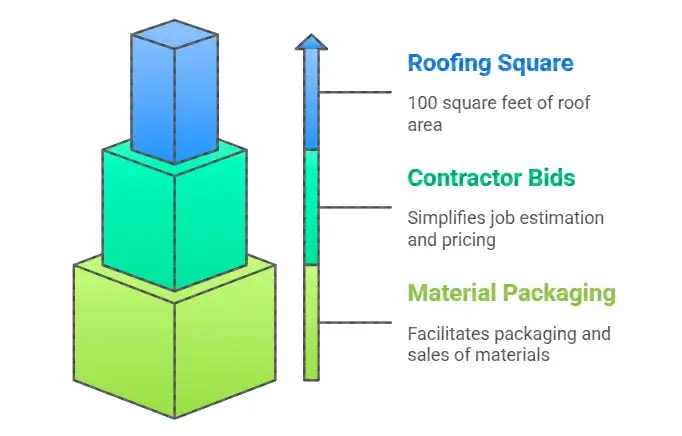
One roofing square is equivalent to 100 square feet (10′ x 10′) of roof area.
This standardized measurement makes it easier for contractors to bid on jobs and for suppliers to package and sell roofing materials like shingles, underlayment, and felt paper.
What Does 1 Square of Roofing Mean?
When a roofer says “1 square of roofing,” they are referring to enough material to cover 100 square feet of your roof. This applies to various roofing components:
Why is the Roofing Square Important?
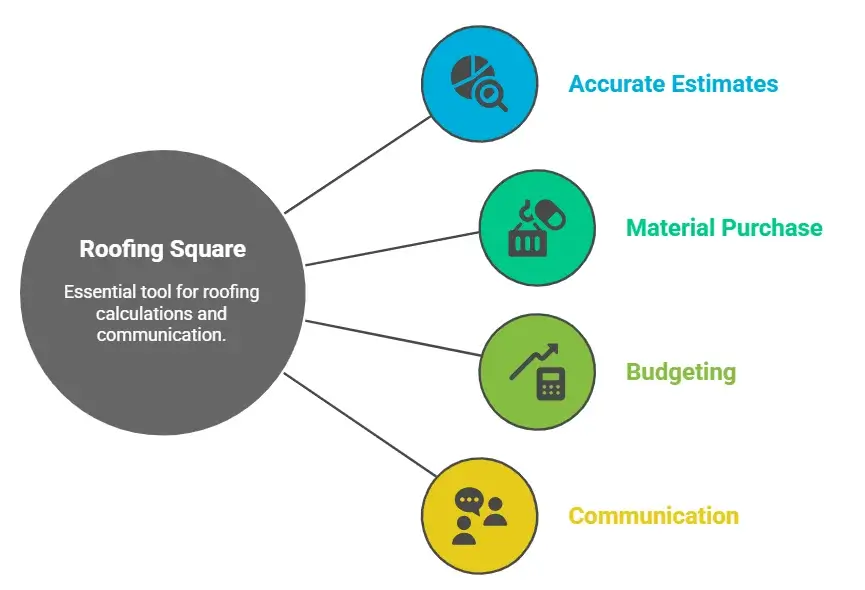
Understanding the roofing square is vital for several reasons:
How Many Shingles in a Square? (It Varies!)
This is a common question, but there isn’t a single, universal answer. The number of shingles in a square depends on the type and style of shingle you choose.
Most asphalt shingles are packaged in bundles, and typically:
Always check the manufacturer’s specifications on the shingle packaging to confirm how many bundles make up one square for the specific product you are buying. This information is crucial for accurate ordering.
How to Measure Roofing Squares
Calculating the number of roofing squares you need involves a few steps. While a professional roofer will provide the most accurate measurement, understanding the process can help you get a rough estimate.
Step 1: Measure Your Roof’s Footprint
First, you need to determine the total square footage of your roof’s surface. This isn’t just the footprint of your house; it includes the slope and any overhangs.
For a simple, flat or low-slope roof, you can measure the length and width of each section and multiply them to get the square footage. For more complex roofs, you’ll need to account for the pitch.
Step 2: Account for Roof Pitch (Slope Factor)
Roof pitch is the steepness of your roof. A steeper roof has more surface area than a flatter roof of the same footprint. You’ll need to apply a “pitch factor” or “slope factor” to your ground-level measurements.
Here’s a simplified table of common pitch factors:
Roof Pitch (Rise in 12″) | Slope Factor (Approx.) |
|---|---|
3/12 | 1.03 |
4/12 | 1.05 |
5/12 | 1.08 |
6/12 | 1.12 |
7/12 | 1.16 |
8/12 | 1.20 |
9/12 | 1.25 |
10/12 | 1.30 |
12/12 | 1.41 |
Calculation:
- Measure the length and width of your house’s footprint (or each section of the roof).
- Multiply length x width to get the ground-level square footage.
- Multiply this ground-level square footage by the appropriate slope factor for your roof’s pitch.
Example: If your house is 40 feet long and 25 feet wide (1000 sq ft footprint) and has a 6/12 pitch:
1000 sq ft (footprint) x 1.12 (slope factor) = 1120 sq ft (actual roof surface area)
Step 3: Add for Waste and Overlap
It’s crucial to factor in waste. Shingles need to be cut around chimneys, vents, valleys, and hips. There’s also overlap in how shingles are installed.
Continuing the example:
1120 sq ft (actual roof area) x 1.10 (10% waste) = 1232 sq ft (total needed)
Step 4: Convert to Roofing Squares
Finally, divide your total calculated square footage by 100 to get the number of roofing squares.
Continuing the example:
1232 sq ft / 100 sq ft per square = 12.32 roofing squares
Since you can’t buy a fraction of a square (or a fraction of a bundle), you would round up to the nearest whole number or purchase enough bundles to cover the next full square. In this case, you’d likely need to purchase enough material for 13 squares.
Important Note: This is a simplified explanation. Professional roofers use specialized tools and software for highly accurate measurements, especially for complex roof designs. Always get multiple professional estimates.
Roof Square vs. Square Foot: Clarifying the Difference
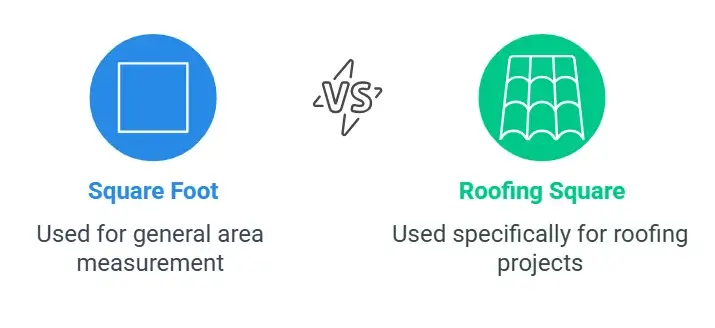
It’s easy to confuse these terms, but they are distinct:
So, while a roofing square contains 100 square feet, they are not interchangeable terms in conversation about roofing projects.
How Many Roofing Squares Do I Need? Getting a Professional Opinion
While the calculations above provide a good understanding, the most reliable way to determine how many roofing squares you need is to consult with experienced roofing contractors.
They will:
Getting at least three quotes from reputable local roofers is always recommended.
Conclusion
Understanding “what is a roofing square” is a fundamental step in becoming a more informed homeowner when it comes to your roof. This knowledge empowers you to better understand estimates, communicate effectively with contractors, and make smarter decisions about your roofing investment.
Whether you’re planning a full roof replacement or just trying to understand a quote, knowing that a “square” means 100 square feet will put you miles ahead. Don’t hesitate to ask your roofing professional any questions you have – a good contractor will always be happy to explain their process and terminology.
