
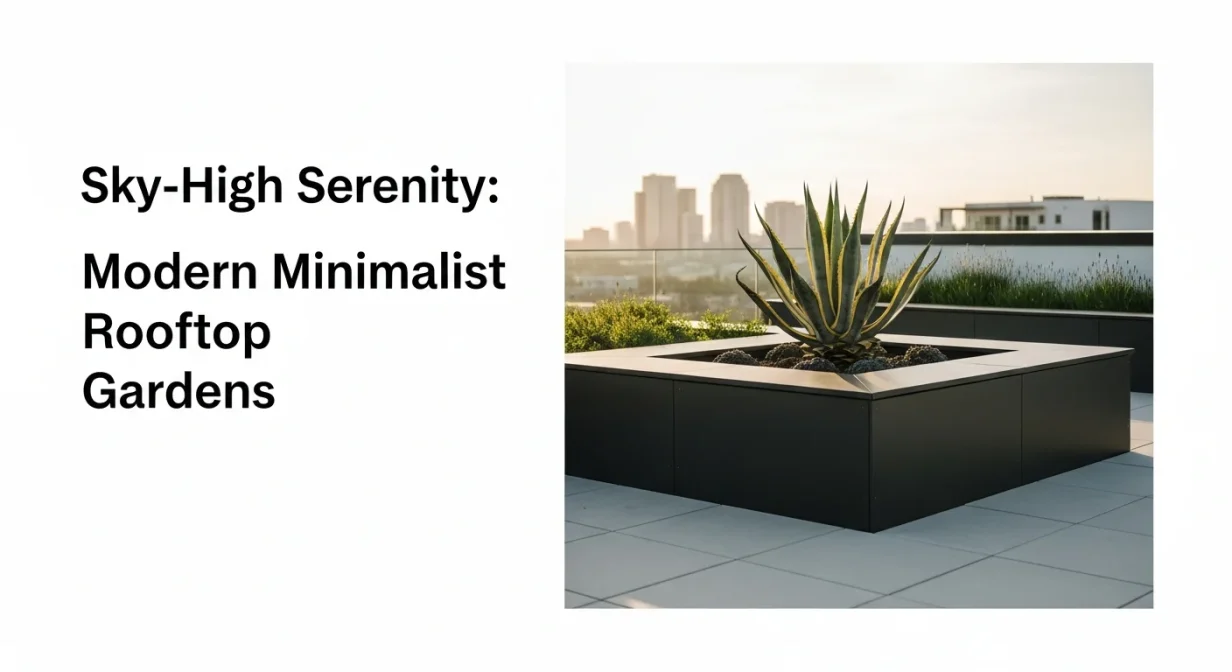
Imagine escaping the city’s hustle without leaving your home, finding a serene sanctuary high above the streets. Modern minimalist rooftop gardens offer exactly that: a private slice of paradise where clean lines, thoughtful design, and carefully selected greenery converge to create an unparalleled urban oasis. These elevated havens are more than just a place for plants; they are extensions of our living spaces, crafted to promote peace, beauty, and functional elegance. They prove that even in the most bustling environments, tranquility and natural beauty can flourish.
This curated list showcases the very best in contemporary rooftop garden design, highlighting innovative approaches to space utilization, material selection, and plant palettes. From sleek concrete planters housing architectural succulents to inviting lounge areas framed by subtle green textures, each example embodies the essence of modern minimalism. Whether you’re dreaming of a quiet breakfast spot with a skyline view or an elegant entertaining area under the stars, prepare to be inspired by these stunning spaces that transform ordinary rooftops into extraordinary escapes.
1. The Urban Zen Escape
This rooftop garden exemplifies tranquility with its harmonious blend of clean lines and subtle natural elements. Polished concrete pavers create a structured pathway, leading to a secluded seating area thoughtfully designed for quiet contemplation. The planting scheme is deliberately sparse, featuring meticulously placed dwarf conifers and ornamental grasses that sway gently in the breeze, providing a sense of calm movement. It’s a true urban retreat, meticulously planned to offer a serene escape from the city’s relentless pace, proving that less truly can be more.
The minimalist approach extends to the material palette, focusing on neutral tones and textures that complement the surrounding cityscape without competing with it. A low, integrated planter box outlines the perimeter, holding a sparse arrangement of drought-tolerant succulents that require minimal upkeep. Strategic, recessed lighting fixtures are subtly integrated into the paving, ensuring the garden transitions seamlessly into an inviting evening sanctuary, perfect for unwinding after a long day.
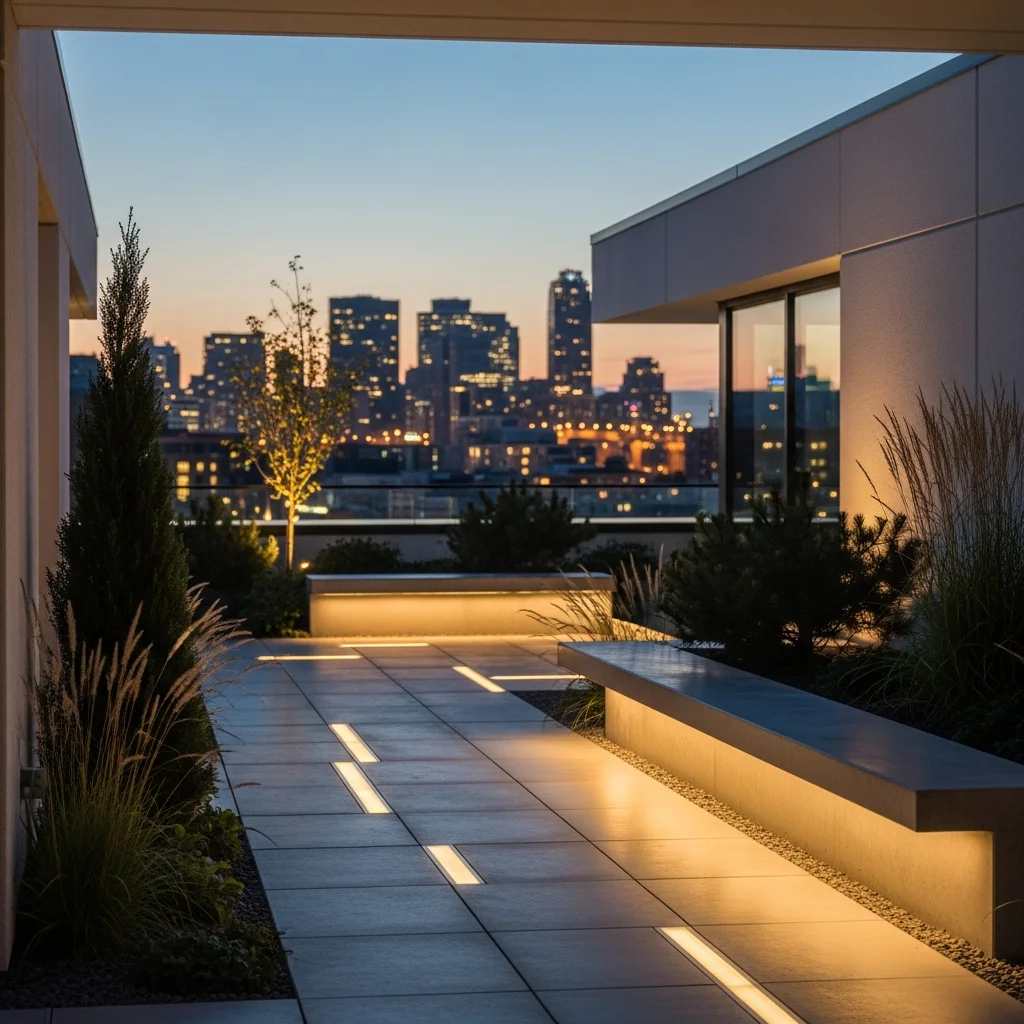
An urban zen escape where clean lines meet subtle greenery for ultimate tranquility.
2. Seamless Indoor-Outdoor Living
Integrating the rooftop garden with the interior living space creates an expansive feel, blurring the lines between inside and out. Large sliding glass doors open directly onto a deck made of ipe wood, extending the home’s contemporary aesthetic seamlessly into the open air. Planters are strategically placed to frame views and provide a sense of enclosure, using a consistent material palette found within the home itself. This design approach maximizes both natural light and the perception of space, making the apartment feel considerably larger.
The minimalist planting here focuses on low-maintenance species that offer year-round interest without demanding excessive care. Architectural succulents, slender bamboo in tall, elegant planters, and a few carefully chosen specimen plants contribute to the refined aesthetic. An outdoor rug and understated furniture complete the scene, creating a comfortable and stylish lounge area that functions as a natural extension of the indoor living room, perfect for entertaining or quiet relaxation.
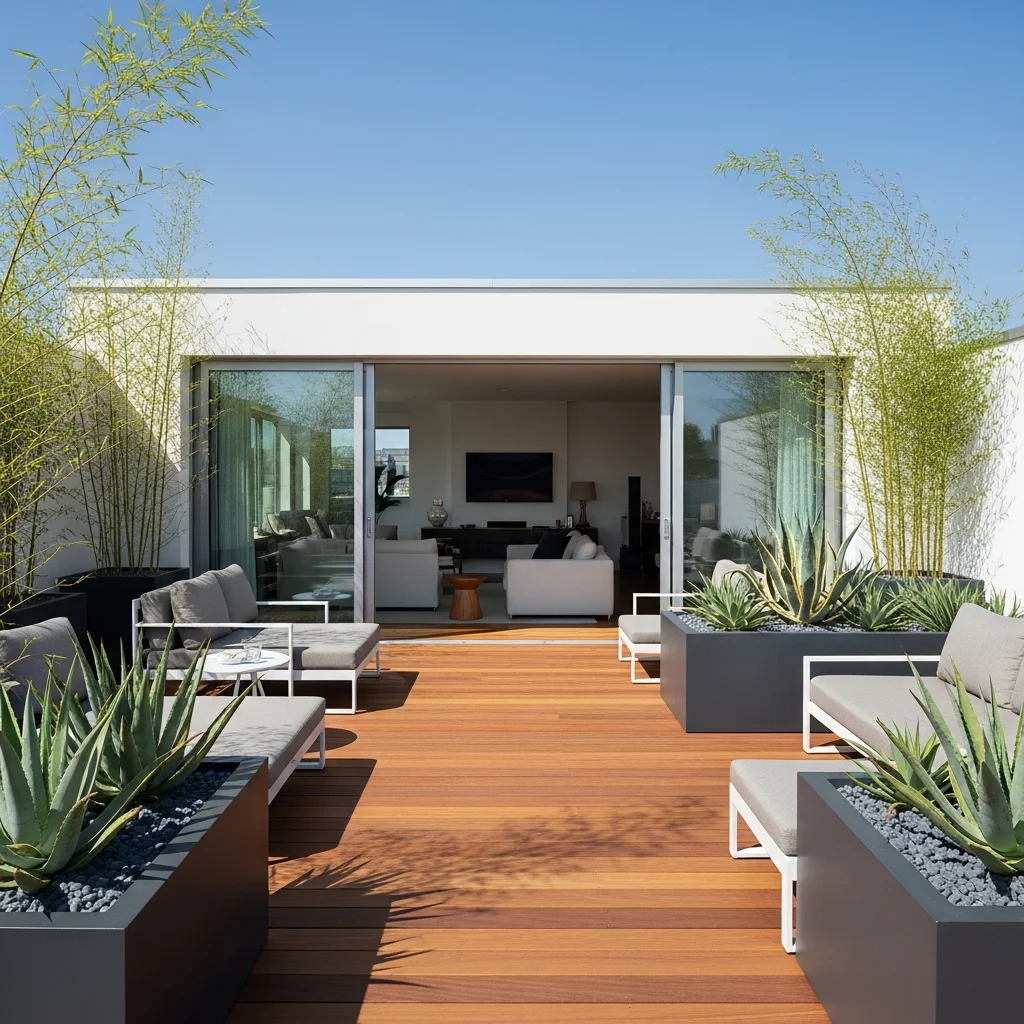
Blurring the lines: seamless indoor-outdoor living with a chic rooftop extension.
3. Architectural Green Haven
This rooftop garden is a masterclass in architectural integration, where the planting itself acts as a structural element. Strong geometric forms dominate, with raised beds and retaining walls crafted from sleek, dark composite materials that echo the building’s facade. The selection of plants is deliberate, chosen for their architectural shape and texture rather than vibrant color, creating a harmonious interplay of form and shadow throughout the day. This design prioritizes visual impact and structural integrity, making the garden feel like a natural extension of the building’s modern design principles.
The layout features distinct zones, defined by changes in elevation and planting style, yet maintains a cohesive minimalist aesthetic. A striking Corten steel planter serves as a focal point, contrasting beautifully with the surrounding greenery and hardscaping. Pathways are kept clear and uncluttered, guiding the eye through the space and emphasizing the carefully curated compositions. It’s a garden that celebrates modern architecture as much as it does natural beauty, offering a sophisticated retreat.
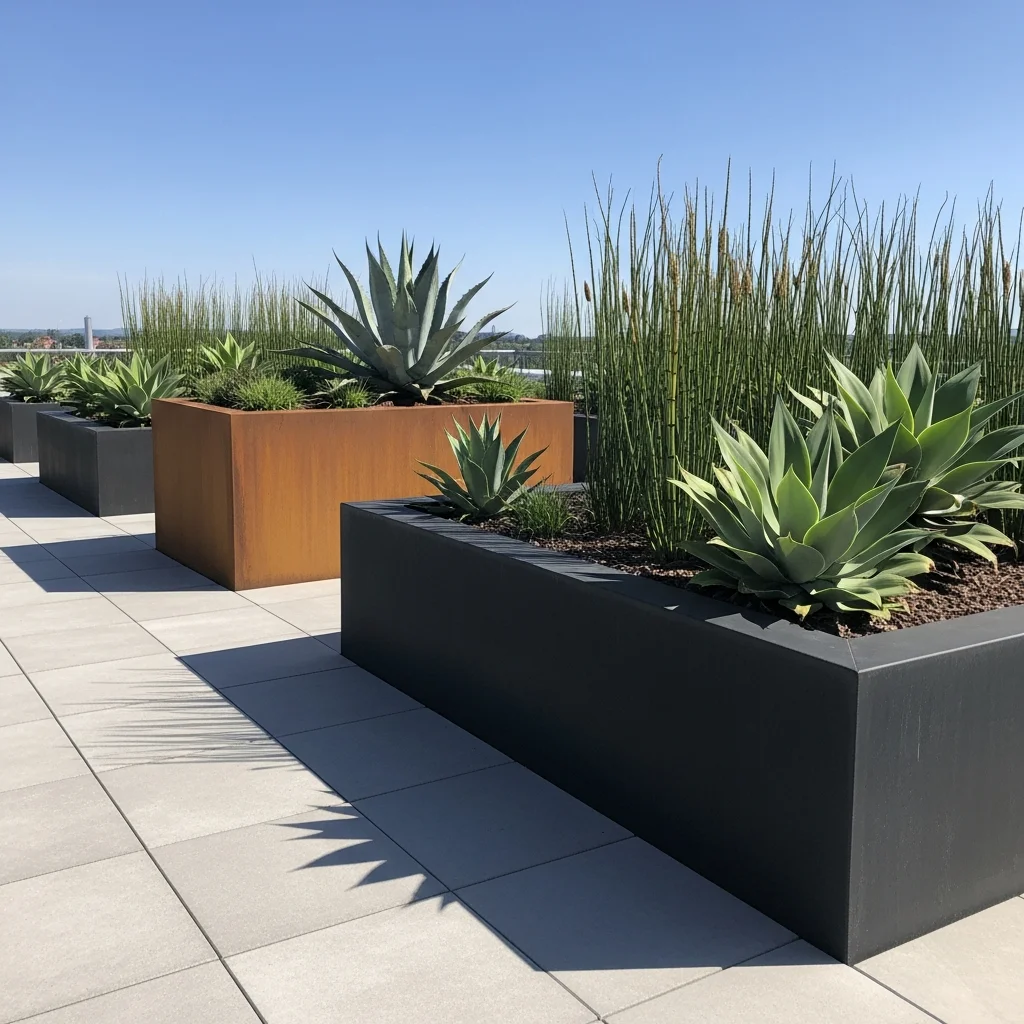
Where architecture meets nature: a geometrically inspired green haven above the city.
4. Skyline Oasis with Water Feature
Perched high above the city, this rooftop oasis combines breathtaking panoramic views with the soothing sound of water. A sleek, linear water feature runs along one edge of the garden, its gentle ripple reflecting the distant skyline and adding a dynamic, yet tranquil, element. The water feature is integrated into a polished concrete surface, maintaining the minimalist aesthetic and creating a sense of sophisticated calm. This design is all about enhancing the inherent drama of the location while providing a peaceful escape.
The planting scheme is understated, utilizing low-growing, resilient plants that don’t obstruct the views but instead frame them beautifully. Drought-tolerant grasses and sedums fill minimalist planters, requiring minimal maintenance. A designated lounge area with simple, low-profile furniture invites residents to relax and soak in the expansive vistas, making this rooftop a truly special place for reflection and enjoyment of the urban landscape, complete with the calming presence of water.
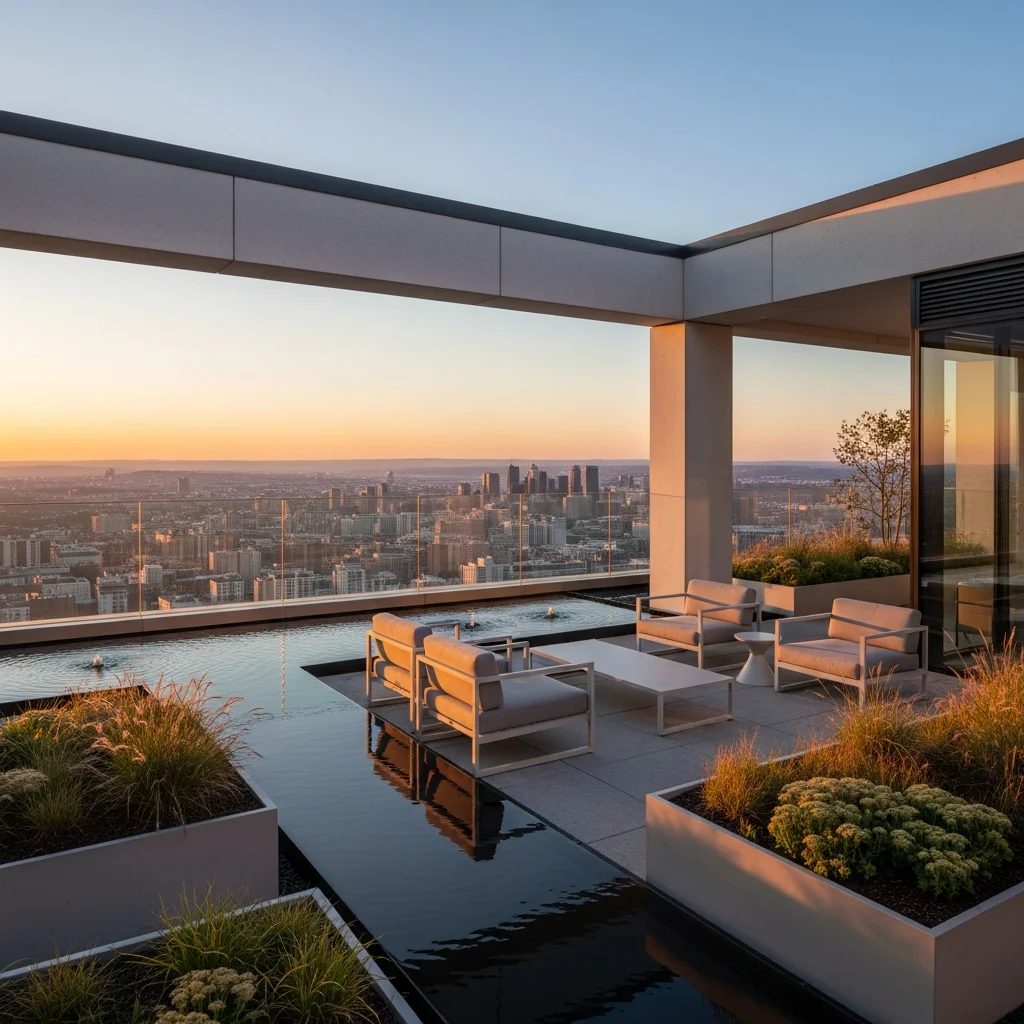
A skyline oasis: tranquil water features and breathtaking views define this modern retreat.
5. Subtle Green Textures
This minimalist rooftop garden masterfully uses varying shades and textures of green to create depth and visual interest without relying on colorful blooms. Different species of grasses, ferns, and low-growing shrubs are arranged to showcase their unique forms and leaf structures, creating a rich tapestry of verdant tones. The absence of vibrant flowers forces the eye to appreciate the subtle nuances of nature, from the delicate fronds of a fern to the robust blades of an ornamental grass. It’s a celebration of greenery in its purest form.
The hardscaping is kept deliberately neutral, with light-colored pavers or decking providing a clean backdrop that allows the plants to truly shine. Planters are simple and unadorned, often integrated into the flooring or railing design. The overall effect is one of serene sophistication, where the varying textures invite closer inspection and create a peaceful atmosphere. This approach demonstrates how a limited palette can yield incredibly rich and engaging results, perfectly suiting a minimalist ethos.
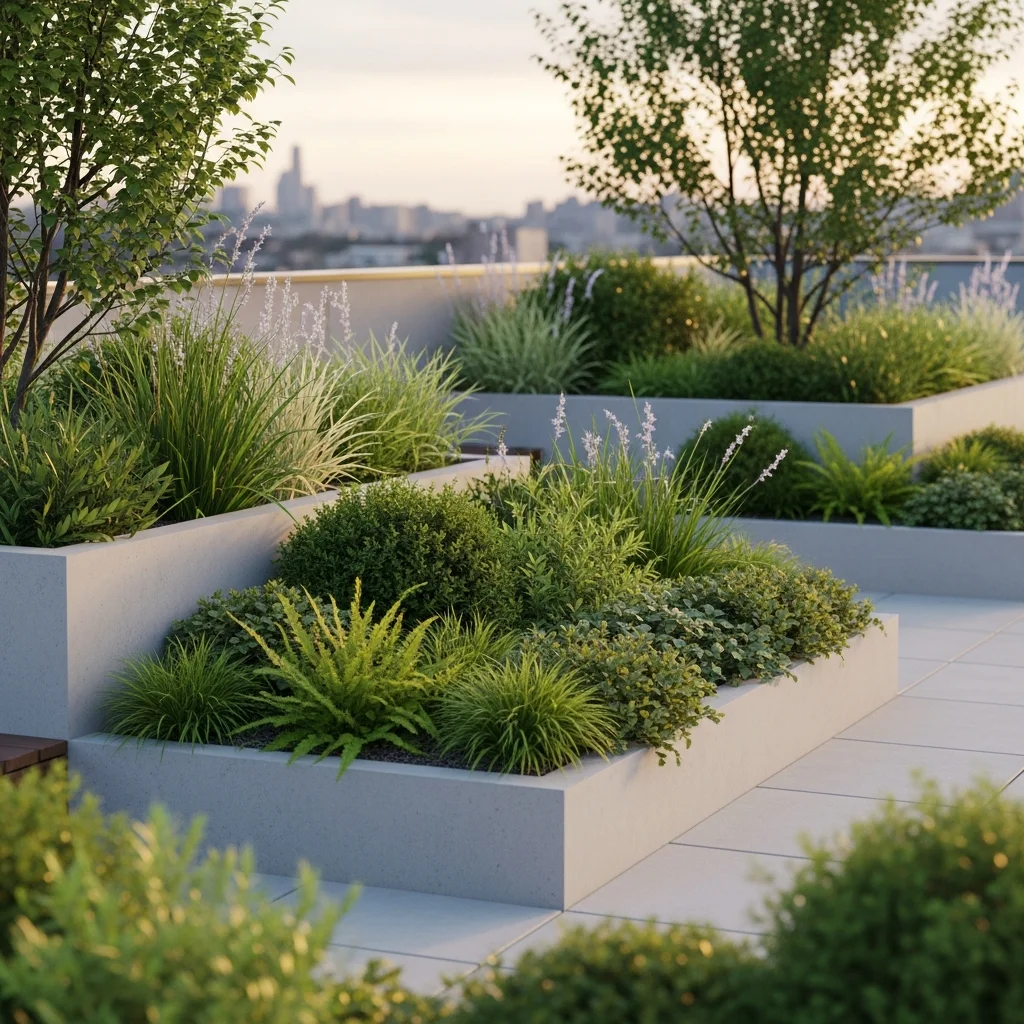
Subtle green textures transform this minimalist rooftop into a harmonious, verdant sanctuary.
6. Concrete & Planter Harmony
Raw concrete is often associated with industrial aesthetics, but in this rooftop garden, it finds harmony with carefully chosen plant life. Large format concrete pavers create a robust and durable base, while custom-fabricated concrete planters house sculptural plants that soften the material’s inherent hardness. The interplay between the cool, grey tones of the concrete and the organic forms of the greenery creates a striking contrast that is both modern and inviting. This design embraces the brutalist influence while infusing it with natural warmth.
The planters are designed with clean, geometric lines, some acting as built-in seating or low walls, further integrating them into the overall hardscape. The planting within these concrete vessels is focused on bold, architectural species such as agave, yucca, or olive trees, chosen for their resilience and strong visual presence. This deliberate combination ensures a low-maintenance garden that maintains its sharp, contemporary edge throughout the seasons, offering a unique blend of urban grit and natural beauty.
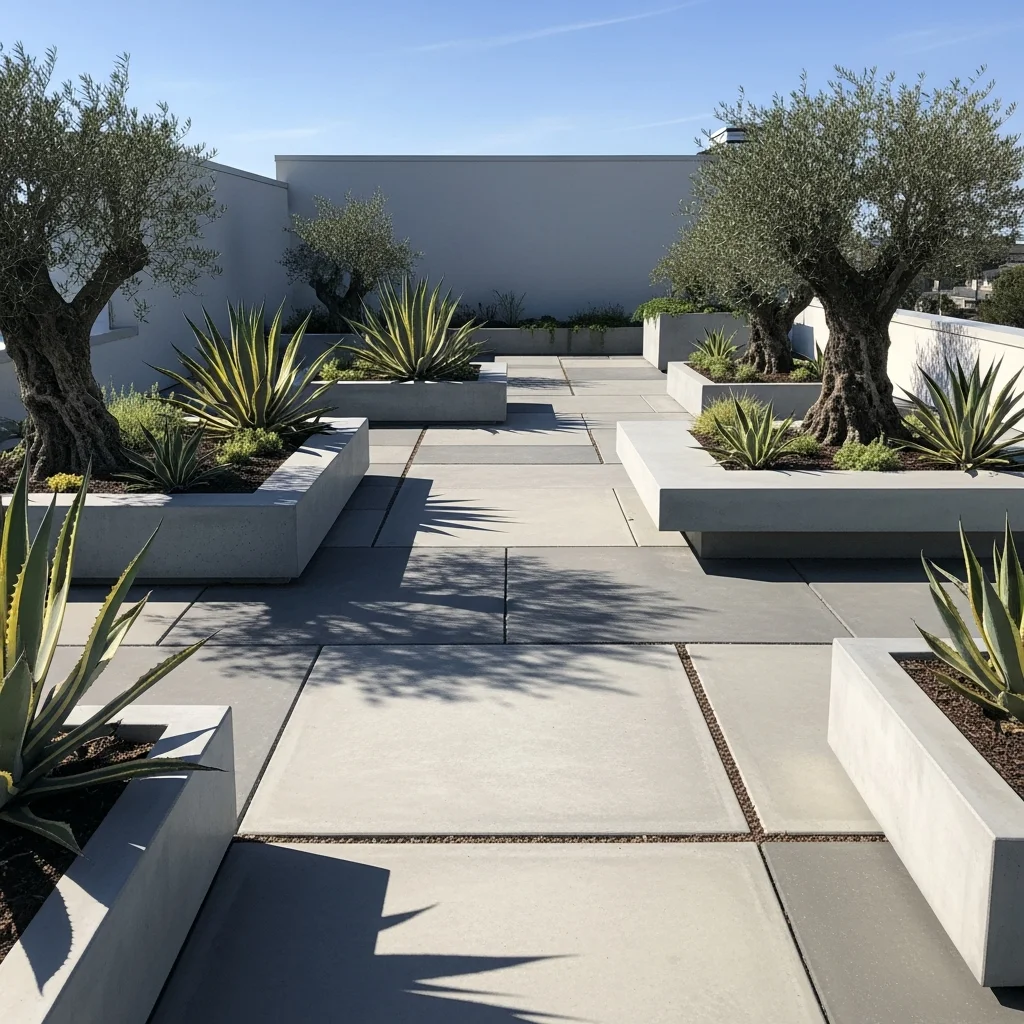
Concrete harmony: industrial chic softened by sculptural greenery on a modern rooftop.
7. Sleek Seating & Succulents
This rooftop garden excels in its commitment to low-maintenance beauty, largely thanks to its extensive use of succulents. A collection of diverse succulents, ranging in size and form, fills minimalist, low-profile planters that are either built-in or freestanding. Their striking shapes and vibrant hues of green, red, and purple provide visual interest without demanding constant care. This approach is perfect for busy urban dwellers who desire a beautiful outdoor space without the intensive upkeep typically associated with gardening.
Accompanying these resilient plants is sleek, minimalist outdoor furniture that complements the modern aesthetic. Low-slung chairs or a sectional sofa crafted from weather-resistant materials offer comfortable lounging, encouraging relaxation. The entire design prioritizes comfort and simplicity, creating an inviting space where one can effortlessly unwind amidst an ever-changing display of drought-tolerant flora. It’s a testament to how practical choices can still result in a supremely stylish and inviting outdoor environment.
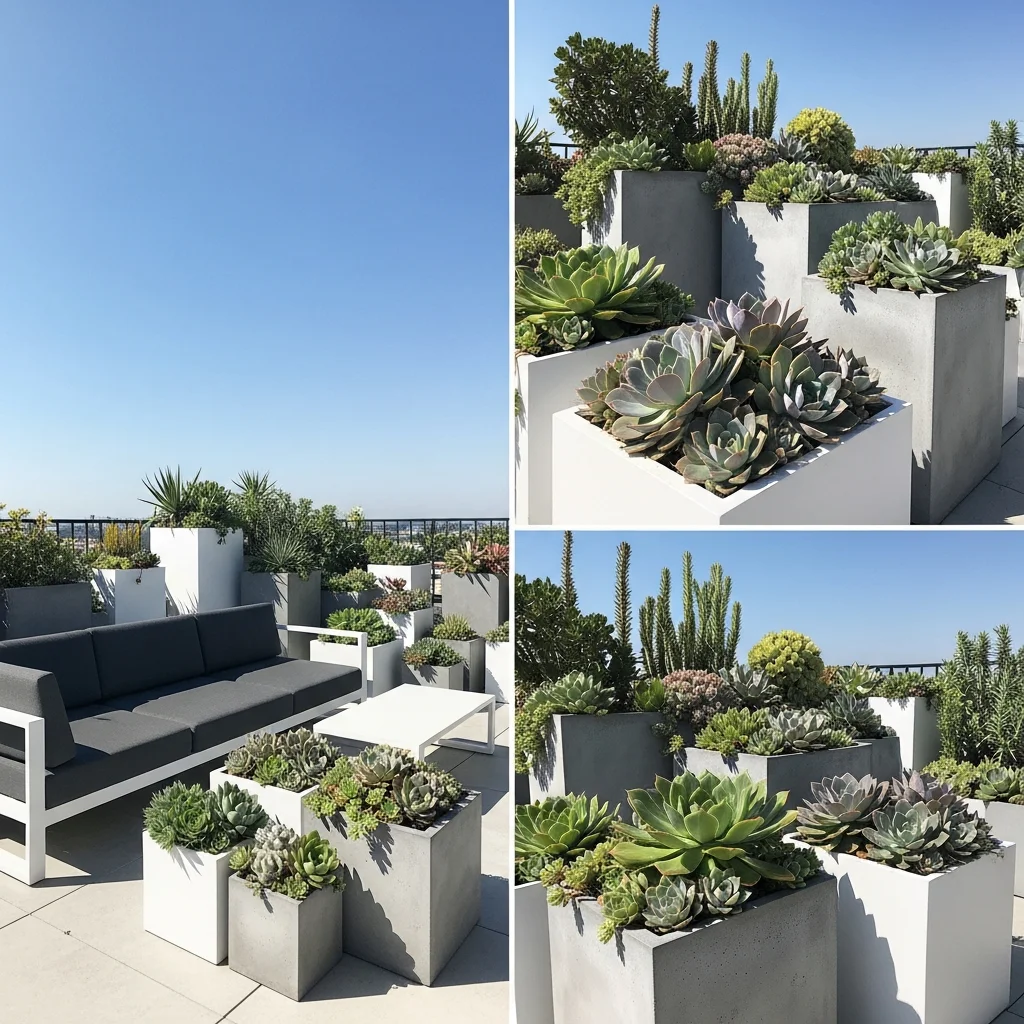
Sleek seating meets resilient succulents: a low-maintenance, high-style rooftop retreat.
8. Japanese-Inspired Serenity
Drawing inspiration from traditional Japanese gardens, this rooftop space cultivates a profound sense of serenity through its meticulous design. A raked gravel bed, a hallmark of Zen gardens, creates abstract patterns that evoke calm ripples in water, encouraging meditative contemplation. Carefully placed boulders or large, smooth stones act as sculptural elements, providing visual anchors within the serene landscape. The selection of plants is sparse and highly symbolic, often featuring dwarf Japanese maples or carefully pruned pines, contributing to a tranquil and disciplined aesthetic.
The hardscaping materials are natural and understated, favoring stone, wood, and gravel to maintain an earthy, organic feel. A small, simple water basin or bamboo fountain might be incorporated, adding a subtle auditory element to the visual peace. Every element is deliberately chosen and positioned to evoke a sense of balance and harmony, transforming the urban rooftop into a private sanctuary reminiscent of ancient gardens, yet perfectly suited for a modern minimalist sensibility.
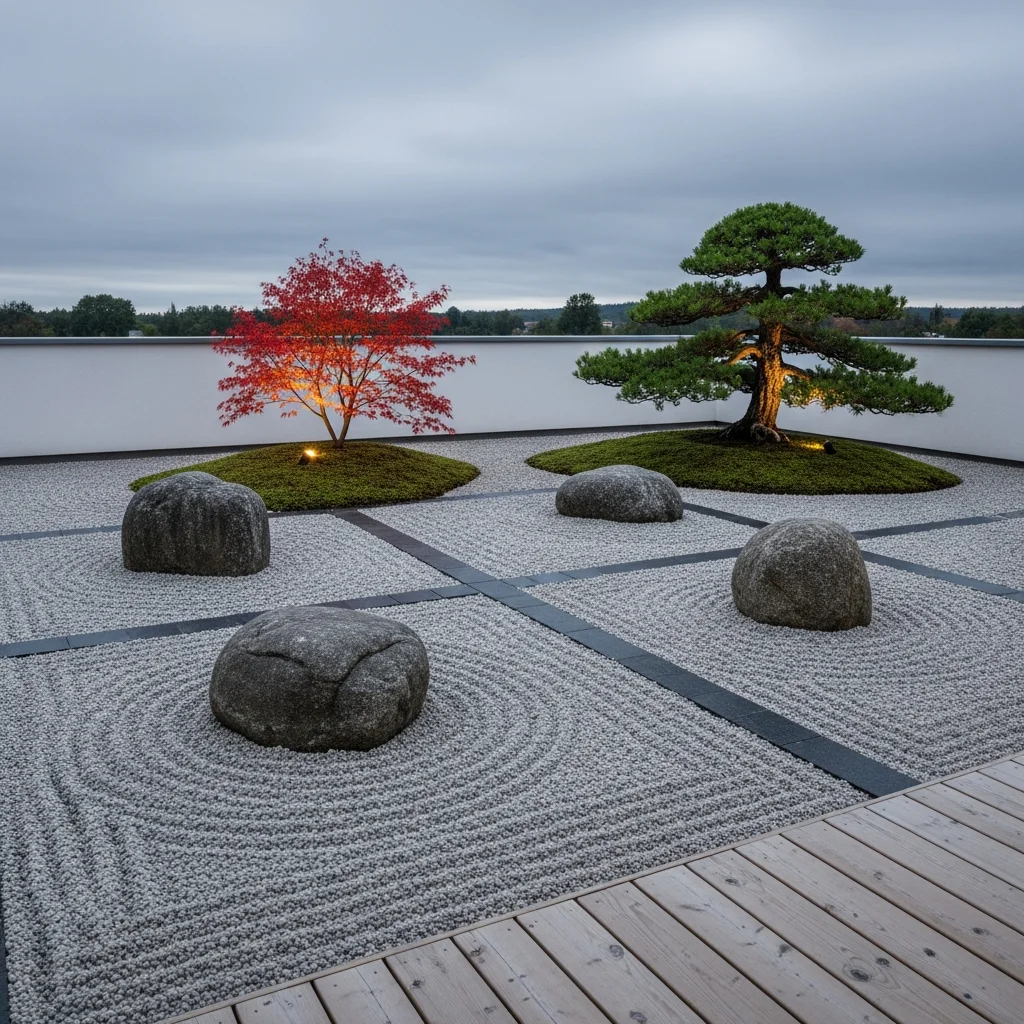
Japanese-inspired serenity: a minimalist rooftop designed for calm and contemplation.
9. Vertical Green Walls
When horizontal space is at a premium, vertical green walls offer an ingenious solution to infuse a rooftop garden with lush greenery. These living walls transform otherwise blank architectural surfaces into vibrant tapestries of plants, maximizing the garden’s green footprint and enhancing air quality. The selection of plants for a vertical garden is often focused on compact, resilient species that thrive in a vertical orientation, creating a striking visual statement that evolves with the seasons. It’s an innovative way to bring nature into tight urban spaces.
The framework for these green walls is typically a sleek, integrated system that complements the modern aesthetic, often incorporating automated irrigation. Below the vertical wall, minimalist seating or a small dining area might be placed, allowing users to fully immerse themselves in the verdant ambiance. This approach is not only visually stunning but also incredibly efficient, demonstrating how even the most constrained rooftops can become vibrant, living spaces through smart, vertical design.
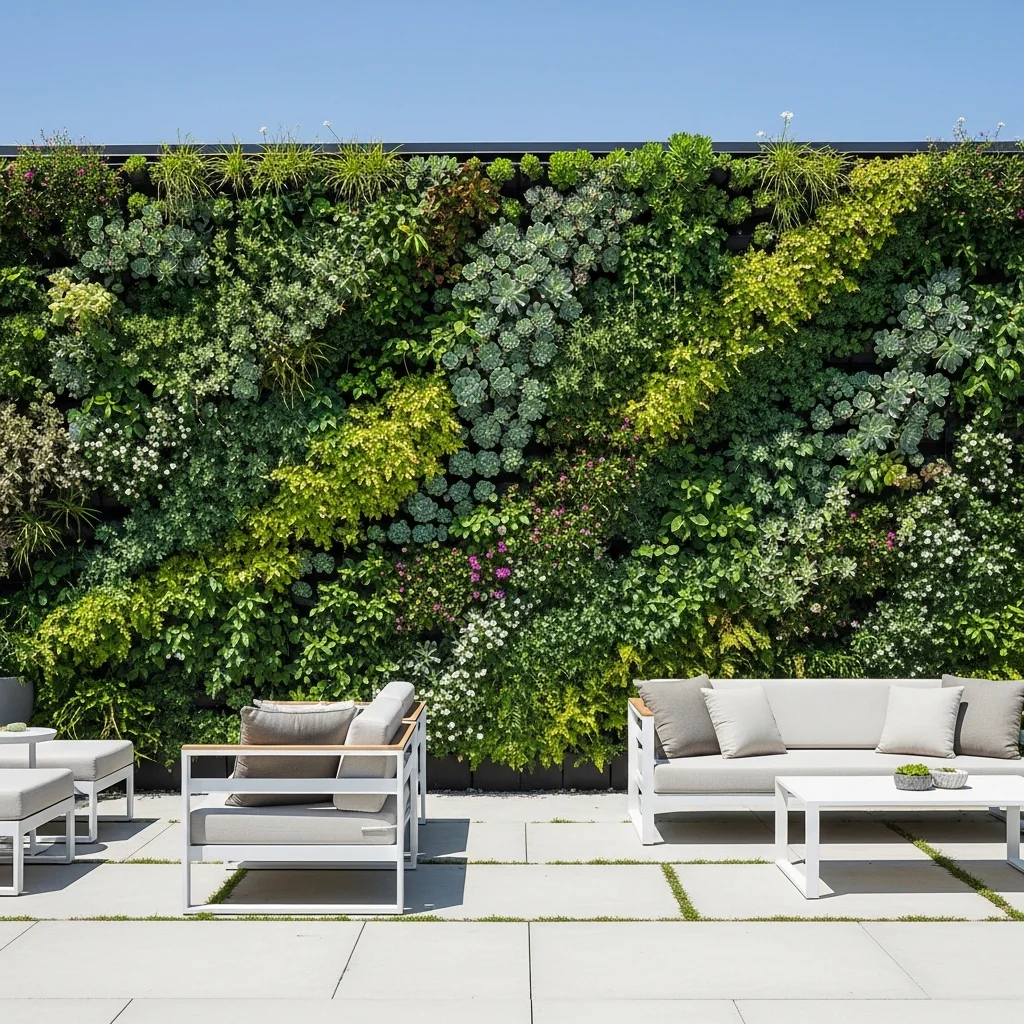
Vertical green walls: maximizing urban greenery with stunning, space-saving design.
10. Illuminated Evening Retreat
As dusk falls, this rooftop garden transforms into an enchanting illuminated retreat, thanks to a thoughtful lighting scheme. Strategic placement of low-voltage LED strip lights along planter edges, recessed path lights, and subtle up-lighting on key plants creates a magical ambiance. The lighting is designed to highlight architectural features and plant textures, casting intriguing shadows and defining pathways without being overly bright or distracting. This careful illumination extends the garden’s usability well into the night, making it perfect for evening gatherings or quiet stargazing.
The minimalist design truly shines in the evening, as the focus shifts to the interplay of light and shadow, enhancing the sense of intimacy and seclusion. The hardscaping, often dark stone or composite decking, absorbs the ambient light, allowing the illuminated features to stand out prominently. A cozy fire pit or an outdoor fireplace might serve as a central gathering point, further enhancing the warmth and inviting atmosphere. It’s a space designed to be equally beautiful and functional both day and night.
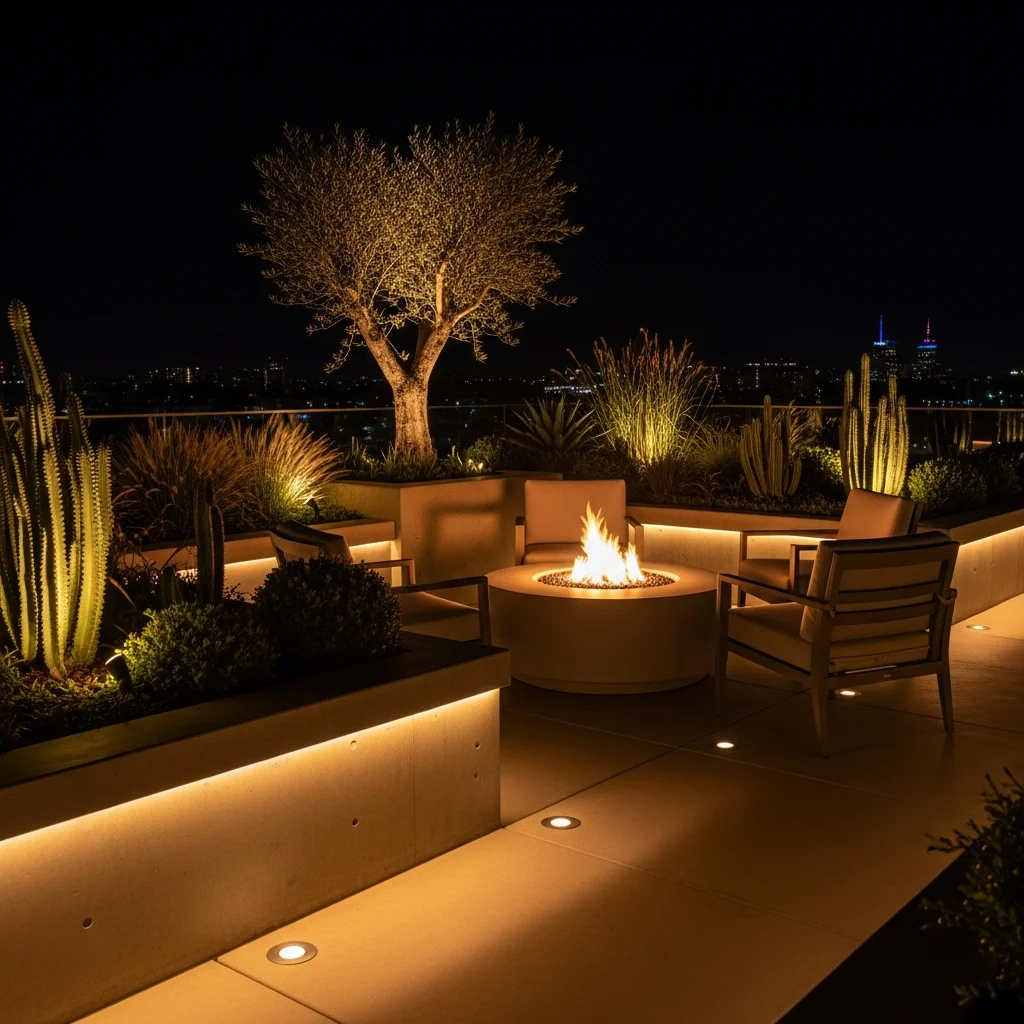
An illuminated evening retreat: strategic lighting transforms this rooftop into a magical nighttime oasis.
11. Wood Decking & Edible Herbs
Combining functionality with minimalist aesthetics, this rooftop garden features warm wood decking contrasted with dedicated areas for edible herbs. The decking provides a soft, inviting surface underfoot, often in a rich, natural tone that adds warmth to the urban environment. Integrated planters, perhaps in a matching wood finish or sleek dark metal, are specifically designated for a variety of culinary herbs like basil, rosemary, thyme, and mint. This approach merges beauty with practicality, allowing for fresh ingredients right at your fingertips.
The design maintains its minimalist integrity by keeping the herb planters organized and visually cohesive, often in neat rows or distinct sections. Beyond the edible plants, larger, low-maintenance ornamental grasses or a small citrus tree might add height and visual interest without cluttering the space. This garden is a testament to how even practical elements can be beautifully incorporated into a modern design, providing both aesthetic pleasure and tangible utility for the home chef or anyone who appreciates fresh produce.
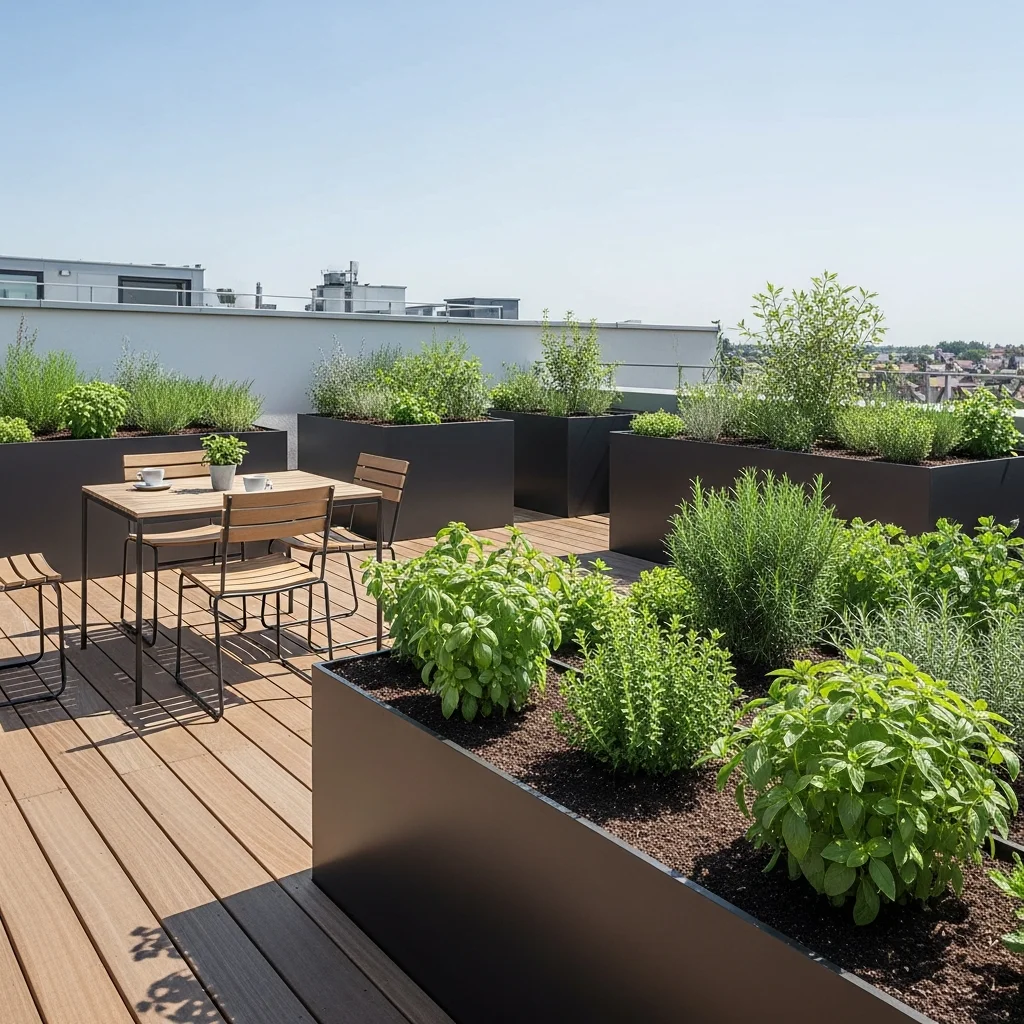
Function meets design: warm wood decking and fresh edible herbs create a practical minimalist rooftop.
12. Monochromatic Plant Palette
This rooftop garden embraces a monochromatic plant palette, primarily using various shades of green, gray, and silver foliage to create a sophisticated and cohesive look. By removing the distraction of colorful blooms, the design draws attention to the diverse forms, textures, and heights of the plants themselves. Succulents, ornamental grasses, and silvery-leafed shrubs are carefully selected and arranged to provide visual depth and interest, proving that a limited color scheme can be incredibly rich and dynamic. This approach highlights the inherent beauty of plant structure.
The hardscaping is typically neutral, often utilizing light grey concrete or dark composite decking, which allows the subtle variations in plant foliage to truly stand out. Planters are kept simple and understated, ensuring that the focus remains on the botanical elements. The overall effect is one of refined elegance and tranquility, creating a calming oasis where the nuances of nature are celebrated without overwhelming the senses. It’s a prime example of minimalist design’s power to create impact through restraint.
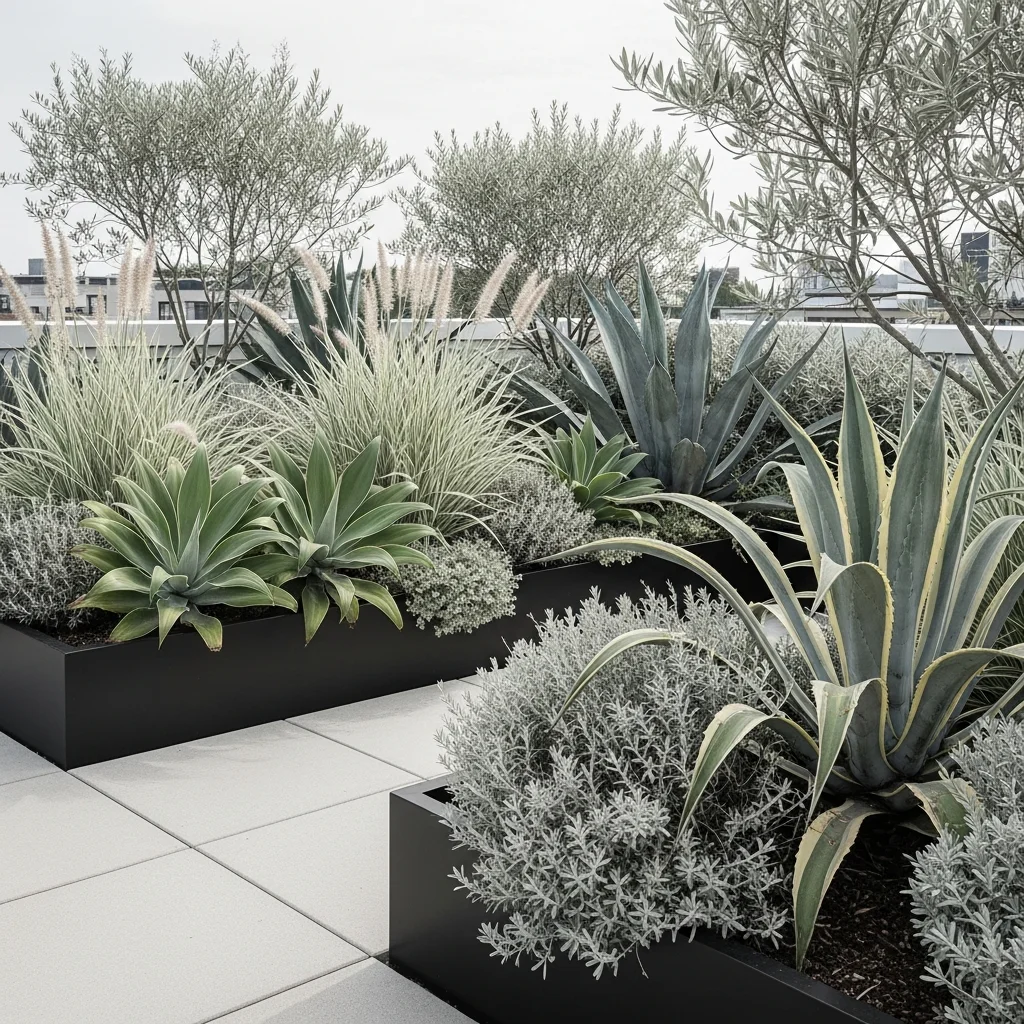
Monochromatic magic: a sophisticated rooftop garden where form and texture reign supreme.
13. Floating Planters & Pergola
This rooftop garden creates an airy and modern aesthetic through the innovative use of ‘floating’ planters and a sleek pergola. The planters are often custom-designed to appear suspended or cantilevered, adding a sense of lightness and defying gravity, creating a unique visual appeal. These elevated planters allow for interesting eye-level plantings and can also serve to define pathways or zones within the garden. The design plays with perception and verticality, enhancing the feeling of spaciousness.
Above, a minimalist pergola, constructed from slim metal beams or natural wood, provides essential shade and adds architectural interest. The pergola can support climbing plants, further integrating greenery, or simply stand as a sculptural element. Together, the floating planters and pergola create a dynamic and elegant rooftop space that feels both grounded and ethereal. It’s a sophisticated solution for adding structure, shade, and greenery without making the space feel heavy or cluttered, perfect for modern urban living.
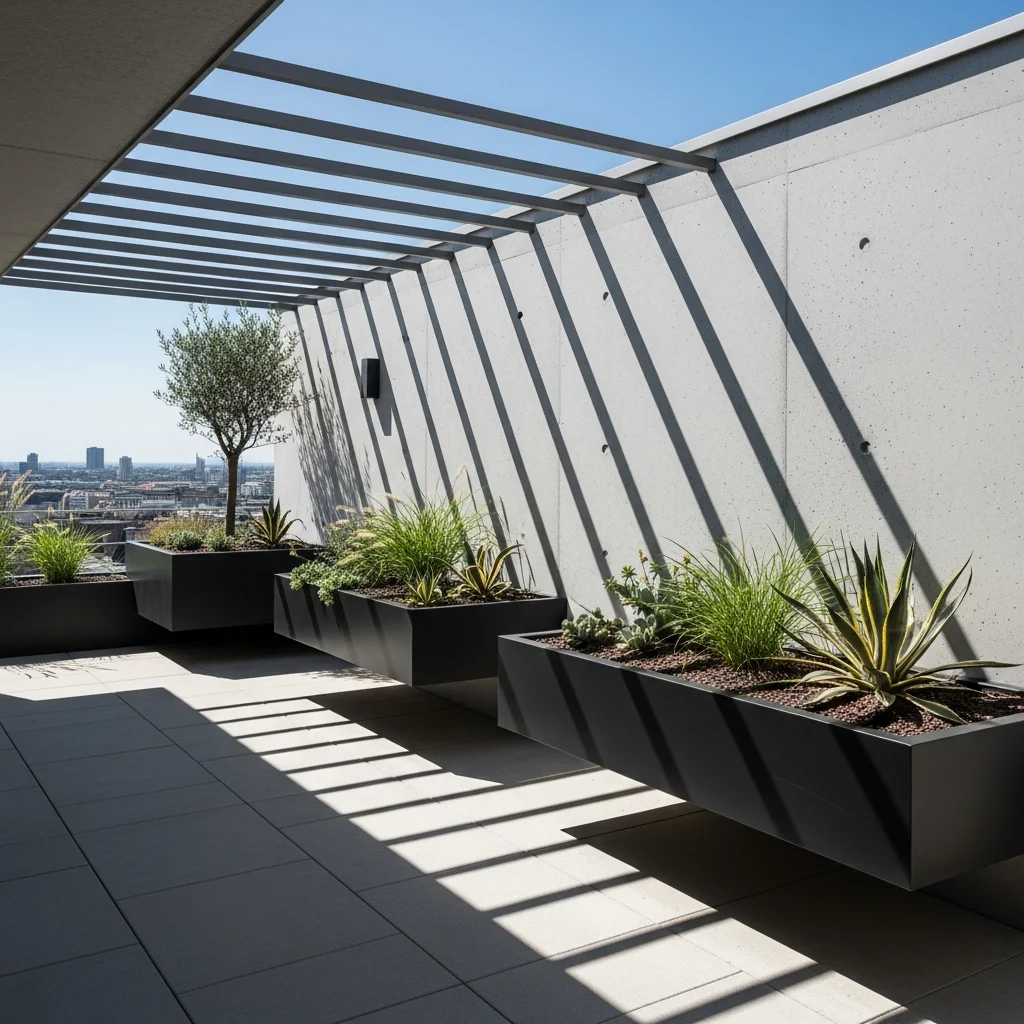
Floating planters and a sleek pergola combine for an airy, modern rooftop aesthetic.
14. Sculptural Plantings
In this minimalist rooftop garden, certain plants are treated as living sculptures, carefully selected for their unique forms and prominent visual presence. A single, magnificent specimen such as a multi-stemmed olive tree, a towering agave, or a dramatically shaped succulent becomes the focal point of the entire space. These sculptural plants are often set within unadorned, oversized planters, allowing their natural beauty and striking silhouette to command attention without competition. The surrounding elements are kept simple to emphasize these botanical masterpieces.
The hardscaping provides a clean, neutral backdrop, often using large format tiles or a seamless resin surface, ensuring that all eyes are drawn to the living art. Lighting is frequently incorporated to dramatically highlight these sculptural forms after dark, extending their impact into the evening hours. This design approach is about celebrating the inherent artistry of nature, creating a powerful and refined statement that is both minimalist in its restraint and maximalist in its visual impact. It’s a garden that values quality over quantity.
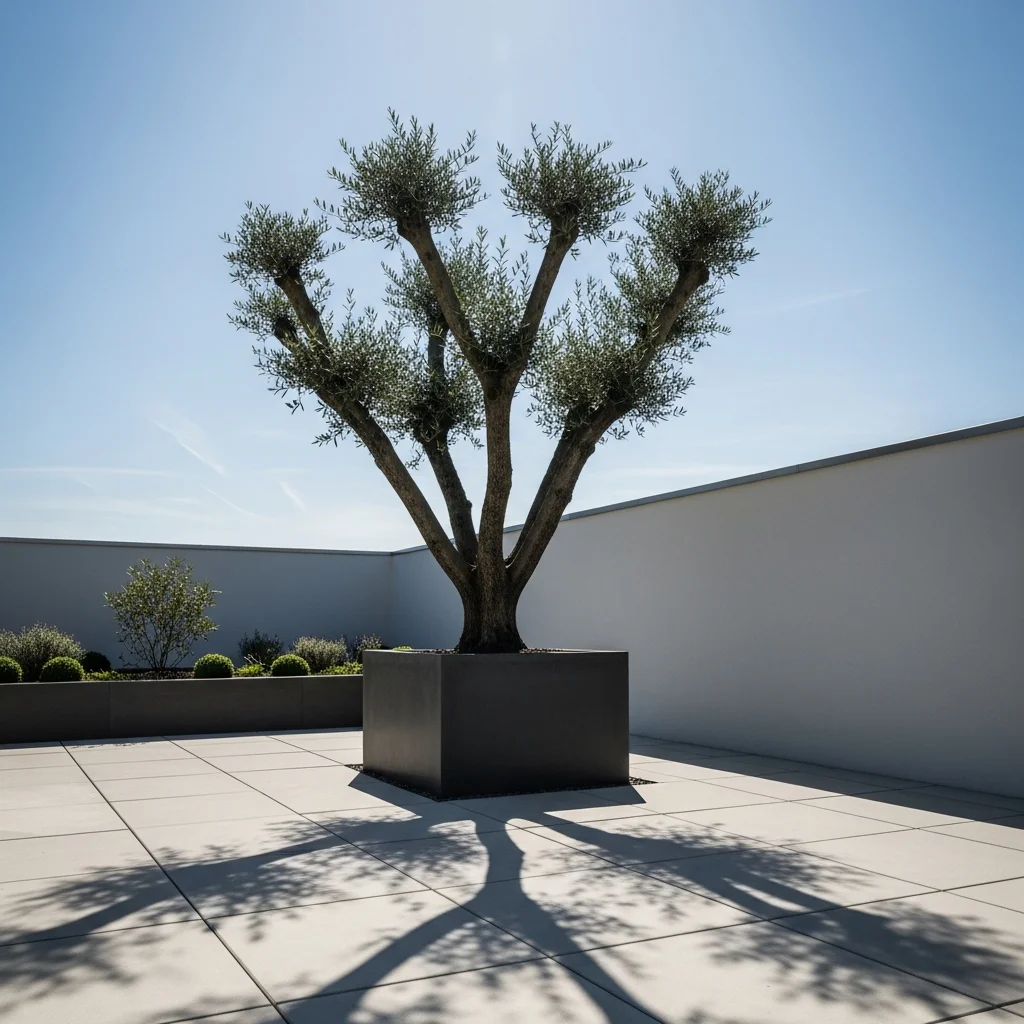
Living art: sculptural plantings become the dramatic focal point of this minimalist rooftop.
15. Geometric Design Elements
This rooftop garden is a celebration of geometry, where every element—from the layout of the pavers to the shape of the planters—adheres to a precise and harmonious mathematical order. Rectangular planters, square stepping stones, and linear water features create a sense of structure and balance that is inherently modern and visually appealing. The overall design emphasizes clean lines, sharp angles, and a logical flow, guiding the eye through the space with intentional precision. This approach transforms the garden into a living architectural composition.
The planting within these geometric frameworks is often restrained, using plants with strong forms or those that can be neatly pruned to maintain the desired shapes. Think rows of neatly clipped hedging, clusters of cylindrical succulents, or linear beds of ornamental grasses. The consistency in geometric forms across both hardscape and softscape elements creates a cohesive and sophisticated aesthetic, reflecting a disciplined design philosophy. It’s a minimalist garden that uses order and pattern to create a powerful visual statement.
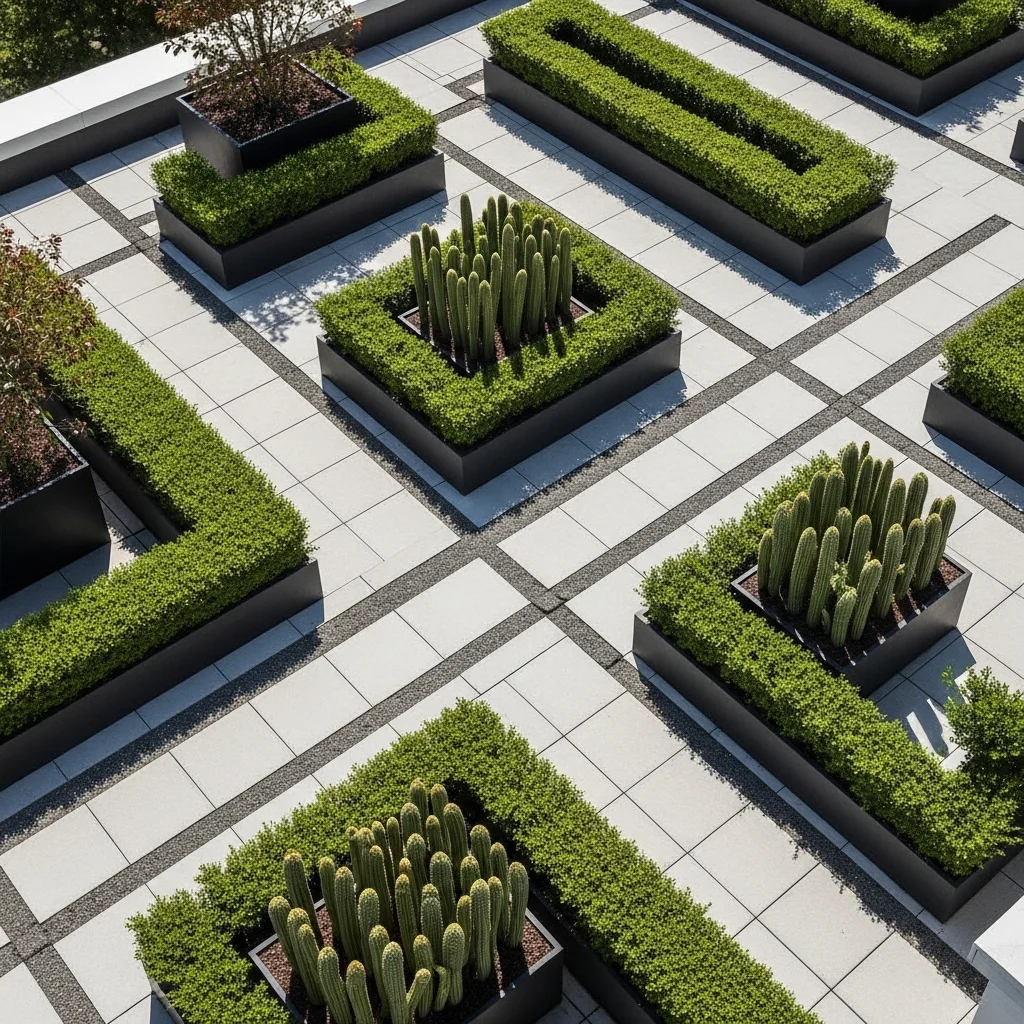
Geometric precision: a modern minimalist rooftop garden where structure and form create harmony.
16. Privacy Screens with Purpose
In densely populated urban areas, privacy is a luxury, and this rooftop garden integrates sleek privacy screens that are both functional and aesthetically pleasing. These screens are often made from modern materials like slatted wood, perforated metal, or frosted glass, providing seclusion without completely blocking light or air circulation. They are designed as seamless extensions of the garden’s overall minimalist aesthetic, acting as architectural elements rather than mere barriers. The screens are positioned to shield specific areas from neighboring views, creating intimate zones within the larger space.
Integrated planters at the base of these screens often hold tall, slender plants like bamboo or certain ornamental grasses, further enhancing the sense of enclosure and adding a natural, soft layer to the hardscaping. This thoughtful combination creates a comfortable and private oasis, allowing residents to fully relax and enjoy their outdoor space without feeling exposed. It demonstrates how practical needs can be met with elegant design solutions, perfectly aligning with minimalist principles.
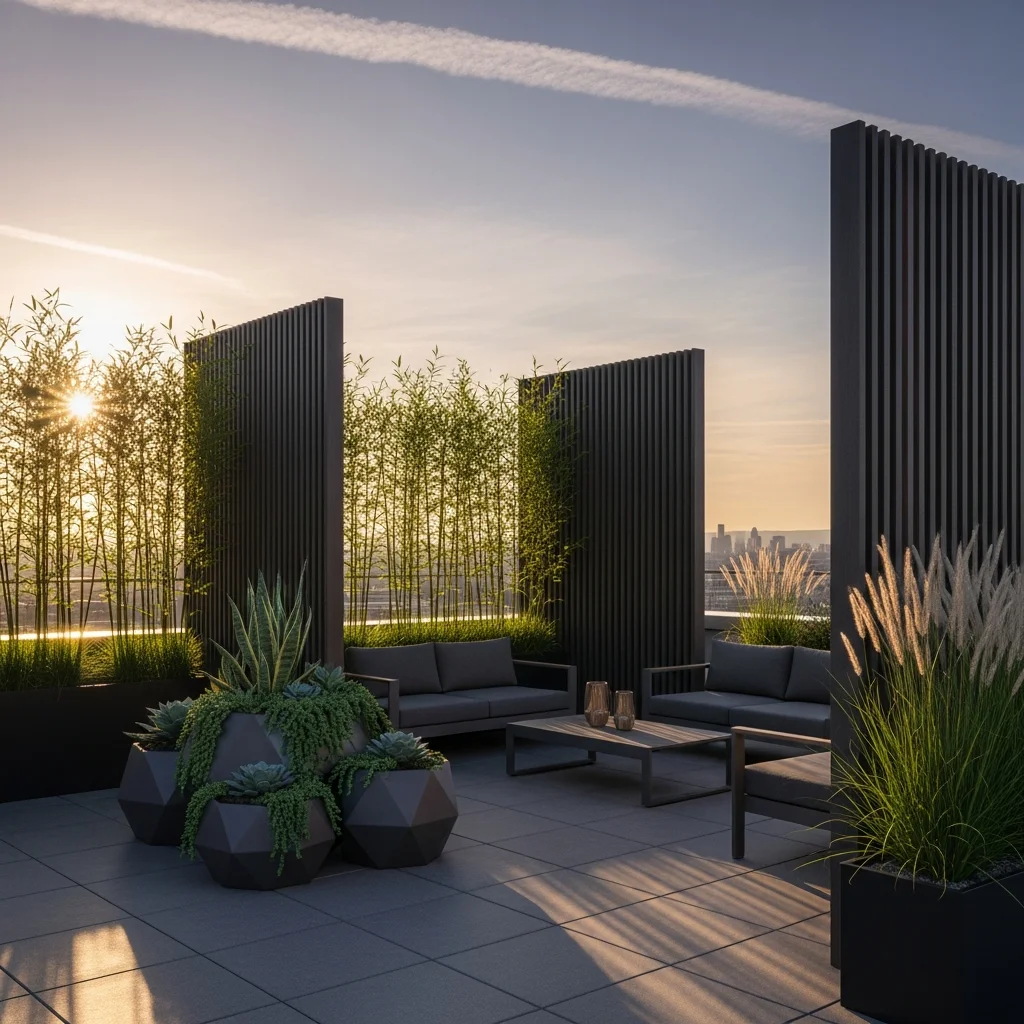
Privacy with purpose: sleek screens and integrated plants define a secluded rooftop retreat.
17. Reflective Surfaces & Mirrors
This innovative rooftop garden utilizes reflective surfaces and strategically placed outdoor mirrors to create an illusion of greater space and amplify natural light. Large, weather-resistant mirrors are positioned to reflect key elements of the garden or the stunning city views, effectively doubling the perceived area and bringing in more light. The reflective quality adds a dynamic element, as the reflections change throughout the day and with the seasons, making the garden feel alive and ever-evolving. This technique is especially effective in smaller rooftop spaces.
Beyond mirrors, glossy black or white paving materials, polished metal accents, or even a still, shallow water feature contribute to the reflective theme. The planting is kept minimal to avoid cluttering the visual field, allowing the reflections to take center stage. This intelligent use of surfaces not only expands the visual boundaries of the garden but also enhances its brightness and creates intriguing visual interplay, embodying a clever minimalist approach to spatial design.
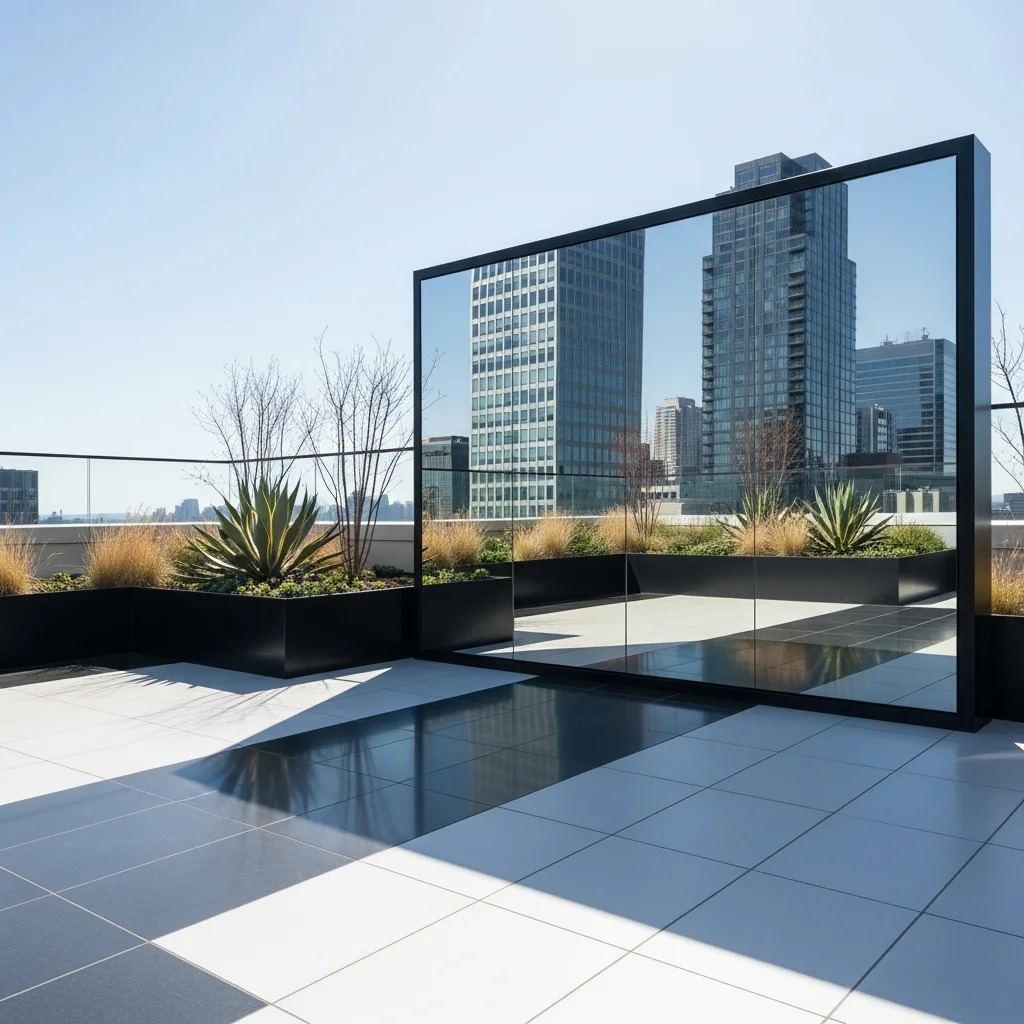
Reflective surfaces and mirrors ingeniously expand and brighten this minimalist rooftop garden.
18. Corten Steel Planters
Corten steel, with its distinctive rusted patina, is a favored material in modern minimalist design for its industrial charm and durability. In this rooftop garden, sleek Corten steel planters define planting areas, adding a rich, earthy tone that contrasts beautifully with green foliage and urban grey hardscaping. The natural weathering process of Corten steel creates a unique and ever-changing surface, requiring no painting or maintenance, which perfectly aligns with a low-maintenance minimalist philosophy. Its robust appearance adds a sculptural quality to the garden.
These planters are often custom-fabricated into clean, geometric shapes – long rectangles, squares, or even L-shapes – to integrate seamlessly into the overall layout. They house resilient, architectural plants such as ornamental grasses, succulents, or small trees, chosen to complement the steel’s warm, oxidized hue. The combination of the raw, industrial material and the soft, organic plant forms creates a compelling visual dialogue, offering a sophisticated and effortlessly stylish aesthetic that endures through all seasons.
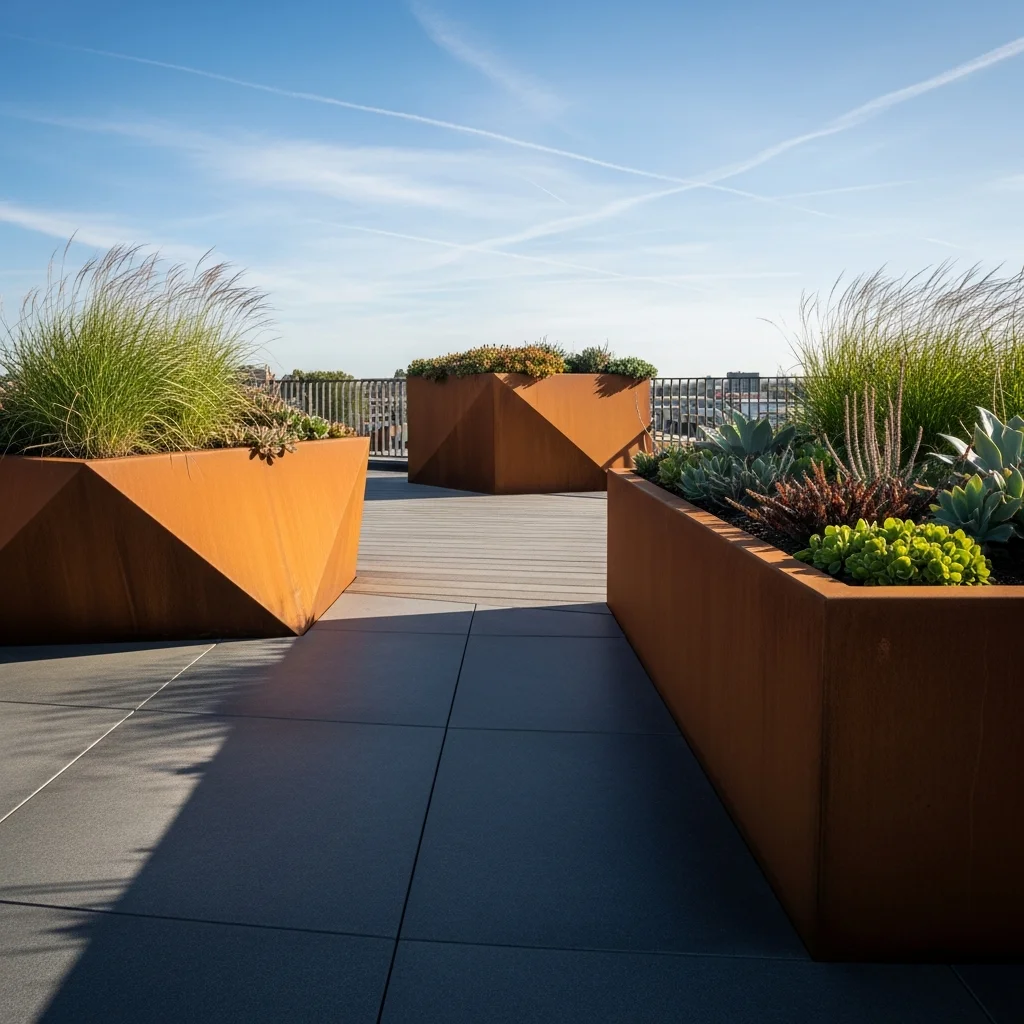
Corten steel planters: industrial elegance meets lush greenery on this modern minimalist rooftop.
19. Low-Profile Furniture & Fire Pit
Creating a cozy yet sleek gathering space, this rooftop garden integrates low-profile, minimalist furniture with a contemporary fire pit. The furniture, often a modular sectional or lounge chairs in weather-resistant materials, sits close to the ground, enhancing the sense of spaciousness and promoting relaxed interaction. Its clean lines and neutral colors blend seamlessly into the minimalist aesthetic. This low-slung design not only looks chic but also allows for unobstructed views of the city or sky, making the most of the elevated position.
A modern, built-in fire pit, perhaps fueled by natural gas or propane, serves as the central focal point, inviting warmth and conversation on cooler evenings. The fire pit is often designed with a simple concrete or metal surround, maintaining the garden’s refined simplicity. Around this inviting feature, comfortable seating is arranged, encouraging intimate gatherings and making the rooftop an ideal spot for year-round enjoyment. It’s a perfect blend of comfort, style, and urban functionality.
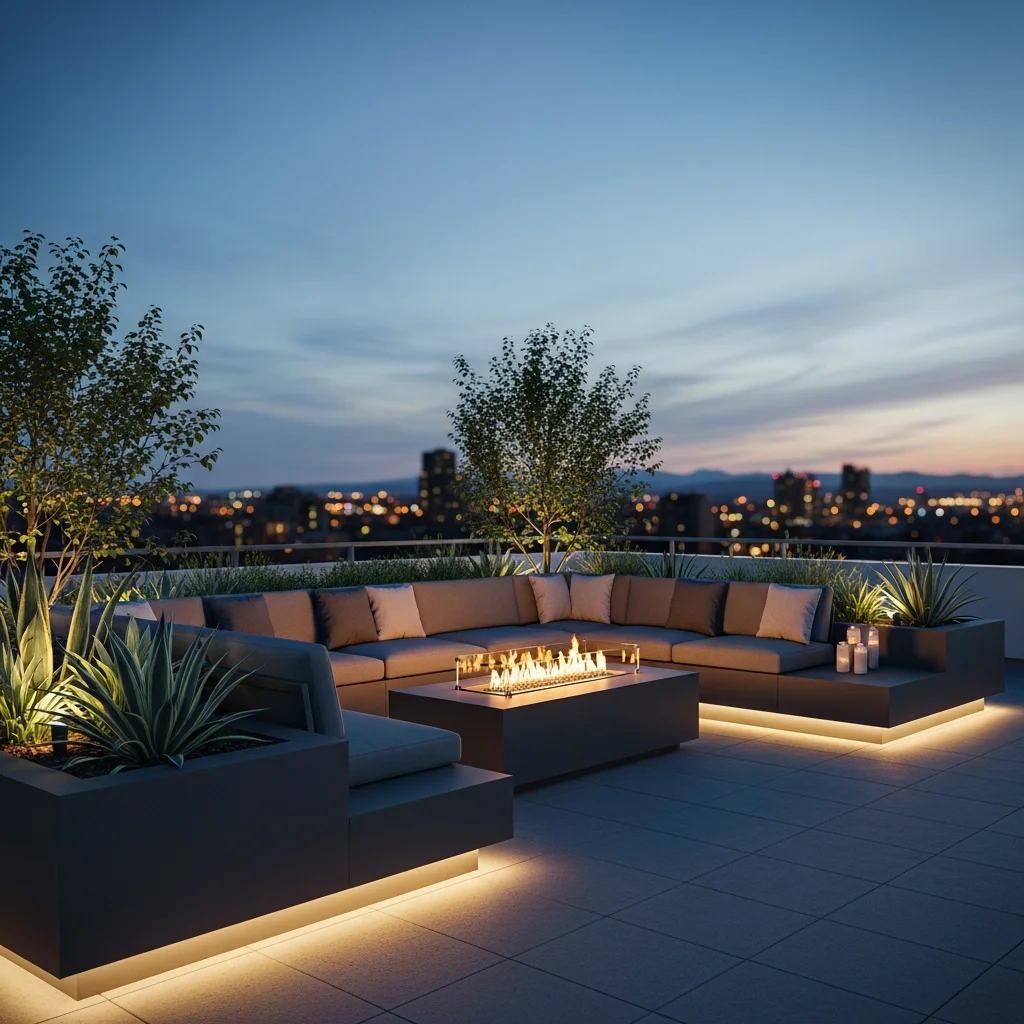
Low-profile furniture and a modern fire pit define this cozy yet sleek minimalist rooftop gathering space.
20. Drought-Tolerant Beauty
Sustainability is a core tenet of modern minimalist design, and this rooftop garden champions drought-tolerant plants to create a beautiful, low-water landscape. A carefully selected palette of succulents, cacti, ornamental grasses, and Mediterranean shrubs thrives with minimal irrigation, reducing water consumption and maintenance efforts. These resilient species are not only practical but also offer a striking array of textures, forms, and subtle colors that contribute to a uniquely sophisticated aesthetic. This choice reflects a conscious effort towards ecological responsibility.
The garden’s hardscaping often incorporates permeable materials like gravel or decomposed granite, further aiding in water conservation and drainage. Planters are designed to be efficient, sometimes featuring integrated drip irrigation systems, though the primary focus remains on plant selection. The overall effect is one of rugged beauty and understated elegance, proving that an environmentally conscious garden can be just as, if not more, visually compelling than traditional, high-water alternatives. It’s a smart and stylish solution for urban environments.
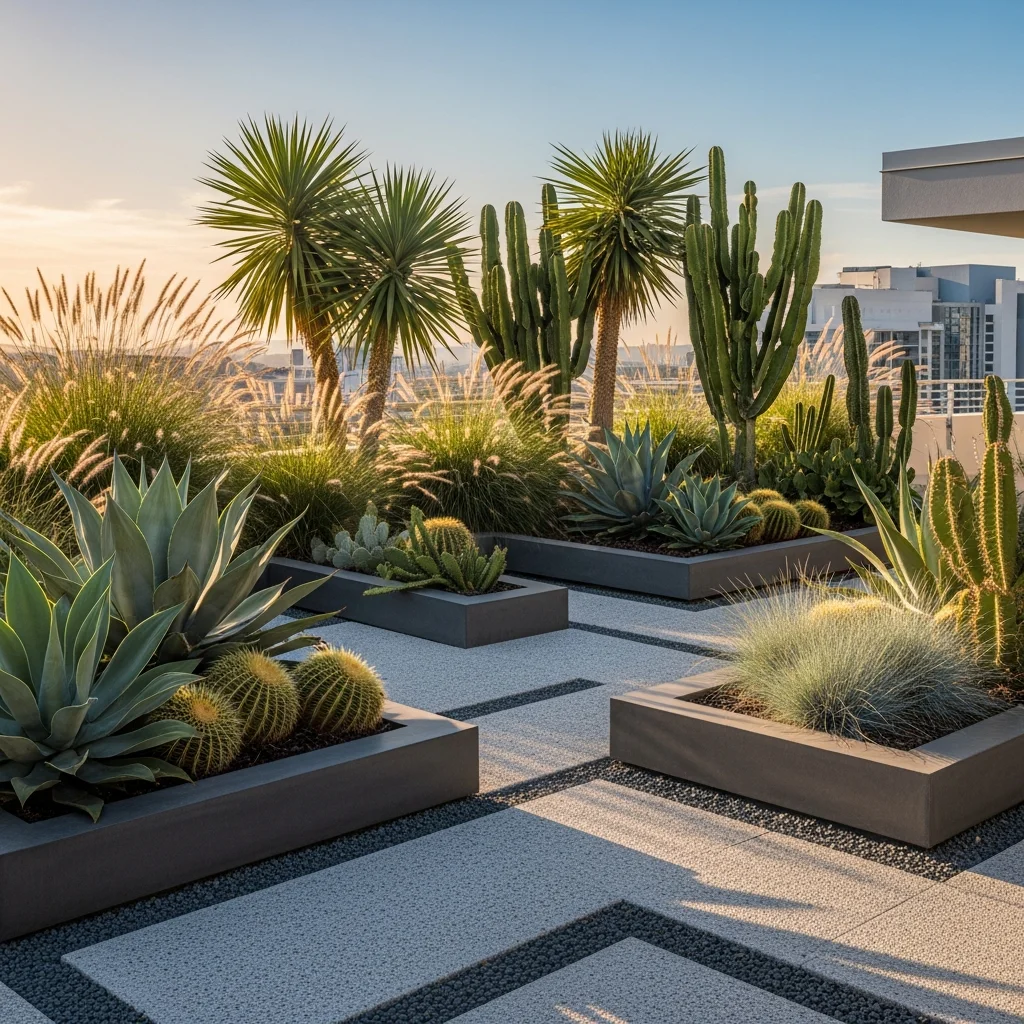
Drought-tolerant beauty: a sustainable and striking minimalist rooftop garden that conserves water.
21. Water Feature as Art
Elevating a water feature from mere function to a piece of modern art, this rooftop garden integrates a sculptural element that provides both visual and auditory pleasure. Instead of elaborate waterfalls, the design favors a simple, geometric basin with a single, controlled stream or a reflective pool that acts like a liquid mirror. The material of the water feature—often polished stone, dark metal, or sleek concrete—is chosen to complement the minimalist aesthetic, making it a focal point without being ostentatious. The sound of gentle trickling water adds a calming sensory layer.
The surrounding planting is kept extremely minimal, ensuring that the water feature maintains its prominence as a sculptural centerpiece. Perhaps a single, well-placed small tree or a few architectural plants frame the water, enhancing its visual impact without distracting from it. This approach emphasizes the beauty of simplicity and the power of a single, well-executed design element to transform an entire space, creating a serene and sophisticated urban retreat where art and nature coalesce.
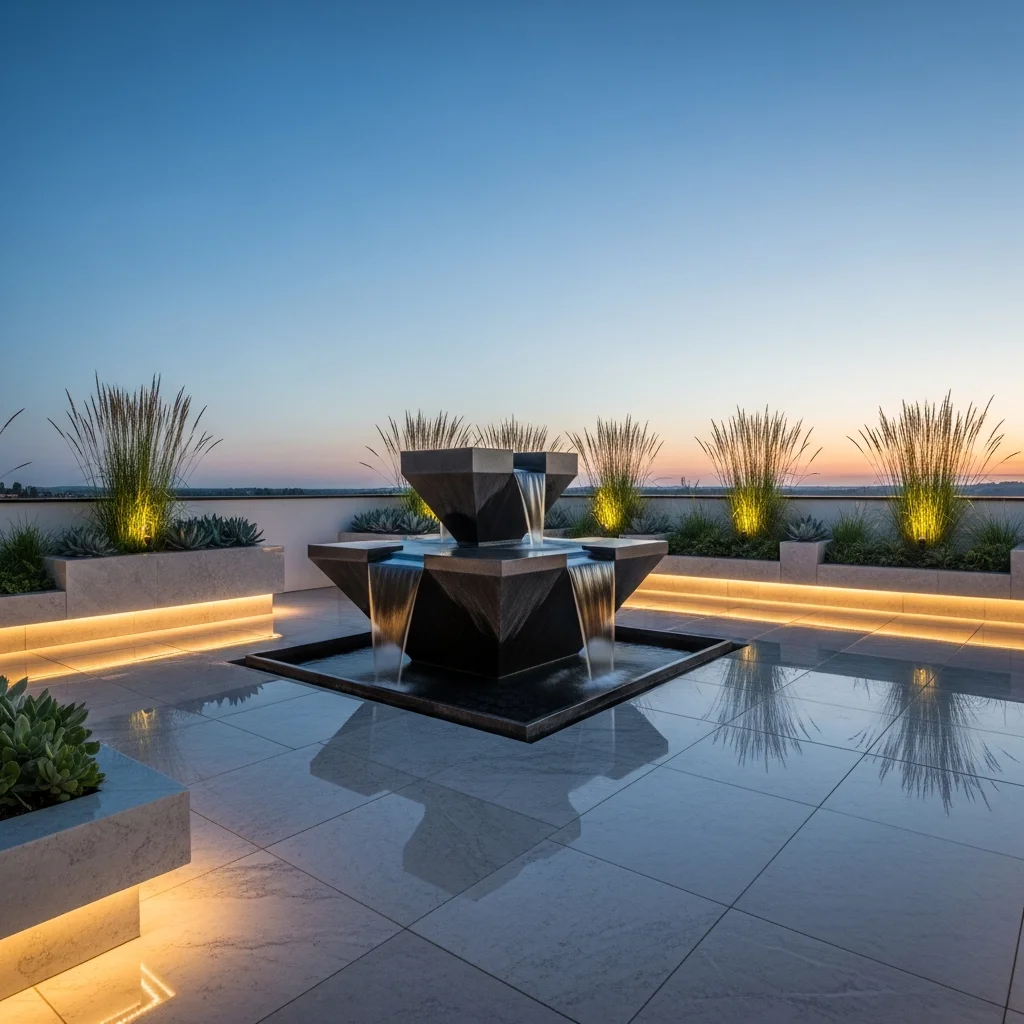
Water feature as art: a sculptural element brings serene beauty to this minimalist rooftop.
22. Pathways to Tranquility
The design of this minimalist rooftop garden emphasizes deliberate pathways that guide visitors through the space, fostering a sense of journey and tranquility. These pathways are crafted from large format pavers, sleek composite decking, or even smooth river stones set in concrete, creating clean, unambiguous routes. The choice of material adds texture and definition, while the clear design minimizes visual clutter, ensuring a calm and uncluttered experience. Each path leads to a specific focal point or seating area, inviting exploration and discovery.
Along these tranquil pathways, low-level lighting is often integrated to ensure safe passage and create a magical ambiance after dark. The planting adjacent to the paths is usually low-growing and uniform, preventing encroachment and maintaining the crisp lines of the design. This structured approach to movement within the garden creates a meditative quality, allowing for a purposeful and peaceful stroll high above the bustling city, enhancing the sense of escape and serenity inherent in a minimalist rooftop oasis.
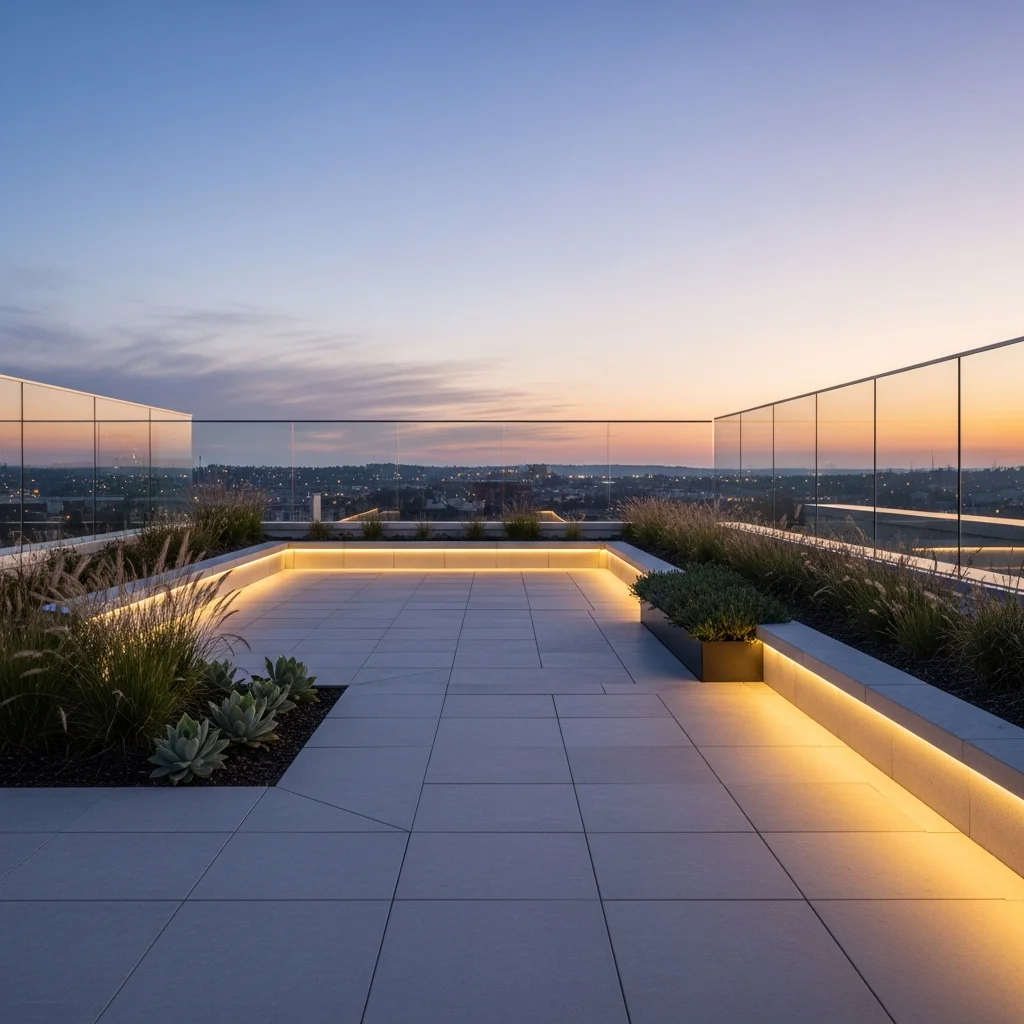
Pathways to tranquility: clear, minimalist routes guide a serene journey through the rooftop garden.
23. Integrated Storage Solutions
Maintaining a minimalist aesthetic often requires clever integration of functional elements, and this rooftop garden excels with its hidden storage solutions. Built-in benches might double as storage chests for outdoor cushions or gardening tools, while planters could feature hidden compartments beneath their surface. These ingenious solutions ensure that the garden remains pristine and uncluttered, with everyday necessities neatly tucked away out of sight. The design prioritizes seamlessness, where practicality is cleverly masked by sophisticated design.
The materials used for these integrated storage units match the rest of the hardscaping—whether it’s composite wood, powder-coated metal, or concrete—maintaining a cohesive and streamlined appearance. This thoughtful approach to organization not only enhances the garden’s visual appeal but also improves its functionality, making it easier to maintain and enjoy. It’s a testament to how intelligent design can perfectly marry form and function in even the most compact urban spaces, supporting a truly minimalist lifestyle.
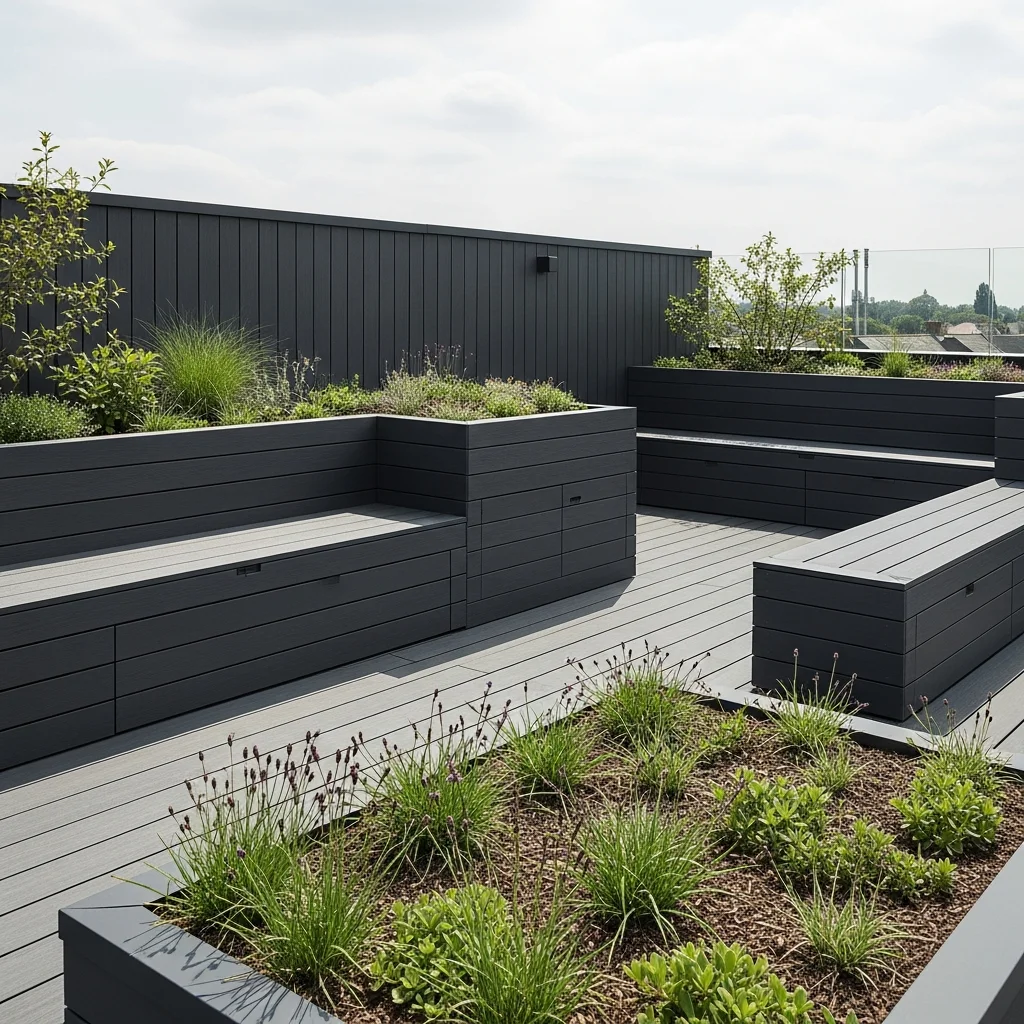
Integrated storage solutions keep this minimalist rooftop garden pristine and functional.
24. Multi-Level Minimalism
This rooftop garden introduces subtle changes in elevation to create distinct zones and add dynamic interest, all while maintaining a minimalist aesthetic. Terraced sections, low retaining walls, or a raised platform for a lounge area break up the flat expanse, adding architectural depth and varied perspectives. These changes in level are executed with clean lines and understated materials, ensuring that the design remains sleek and uncluttered, rather than appearing busy or overly complex. The varying heights create intimate pockets within the larger space.
The different levels might be connected by a few wide, low steps, emphasizing a gradual transition. Each level could host a different type of planting or a specific function, such as a dining area on one tier and a quiet reading nook on another. The use of consistent materials across all levels—such as polished concrete or matching composite decking—ties the entire multi-level design together. This intelligent use of vertical space maximizes both functionality and visual appeal, offering a sophisticated and engaging rooftop experience.
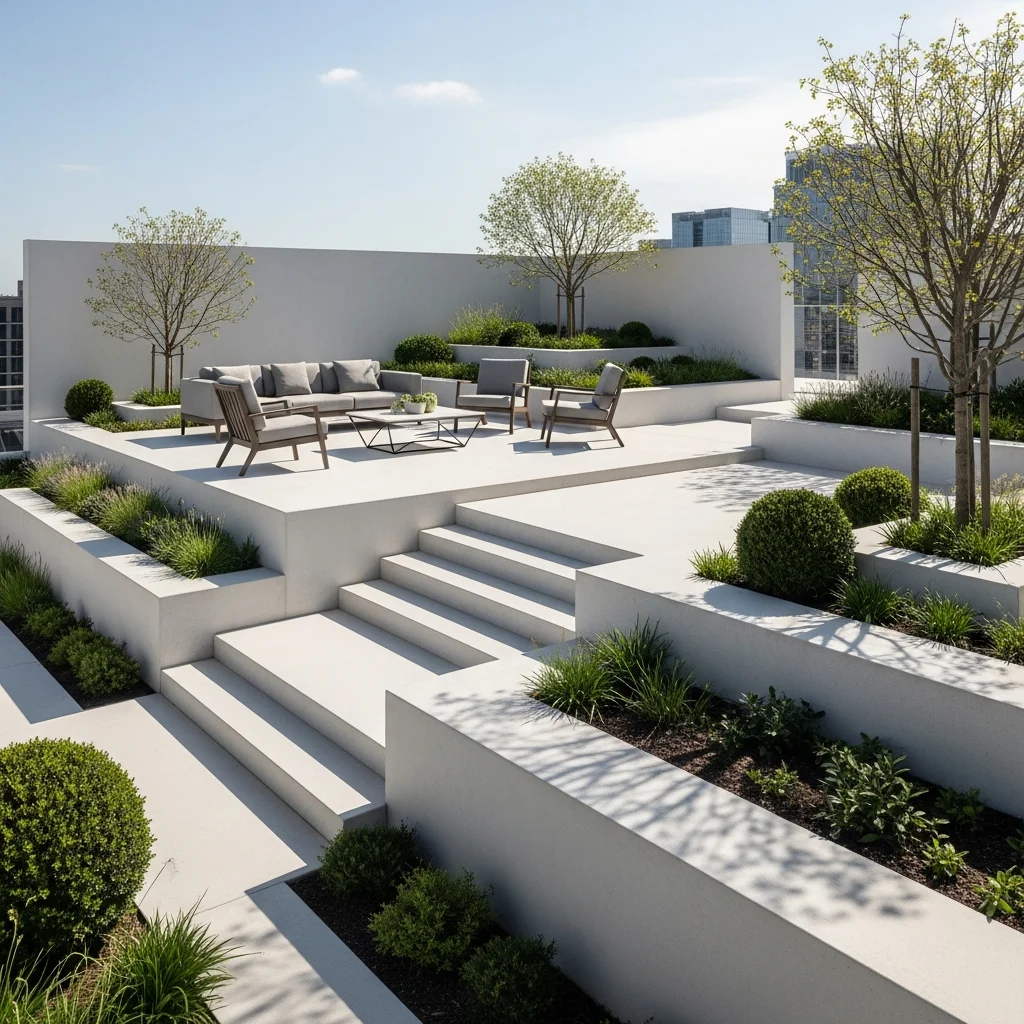
Multi-level minimalism: varied elevations create dynamic zones in this sophisticated rooftop garden.
25. All-Weather Resilience
Designing a rooftop garden for all-weather resilience is paramount in urban environments, ensuring year-round enjoyment and minimal fuss. This minimalist garden prioritizes durable, low-maintenance materials that can withstand harsh sun, strong winds, and freezing temperatures without compromising aesthetic appeal. Think weather-resistant composite decking, robust porcelain pavers, powder-coated aluminum planters, and Corten steel elements. The materials are chosen not just for looks, but for their ability to endure the elements gracefully, maintaining their integrity season after season.
The plant selection also reflects this resilience, favoring hardy, native, or drought-tolerant species that can adapt to extreme weather fluctuations. Evergreens, certain ornamental grasses, and robust succulents are excellent choices that provide consistent greenery regardless of the season. This practical approach ensures the garden remains a beautiful and functional extension of the home throughout the year, requiring minimal upkeep and providing enduring beauty, perfectly encapsulating the smart design principles of modern minimalism.
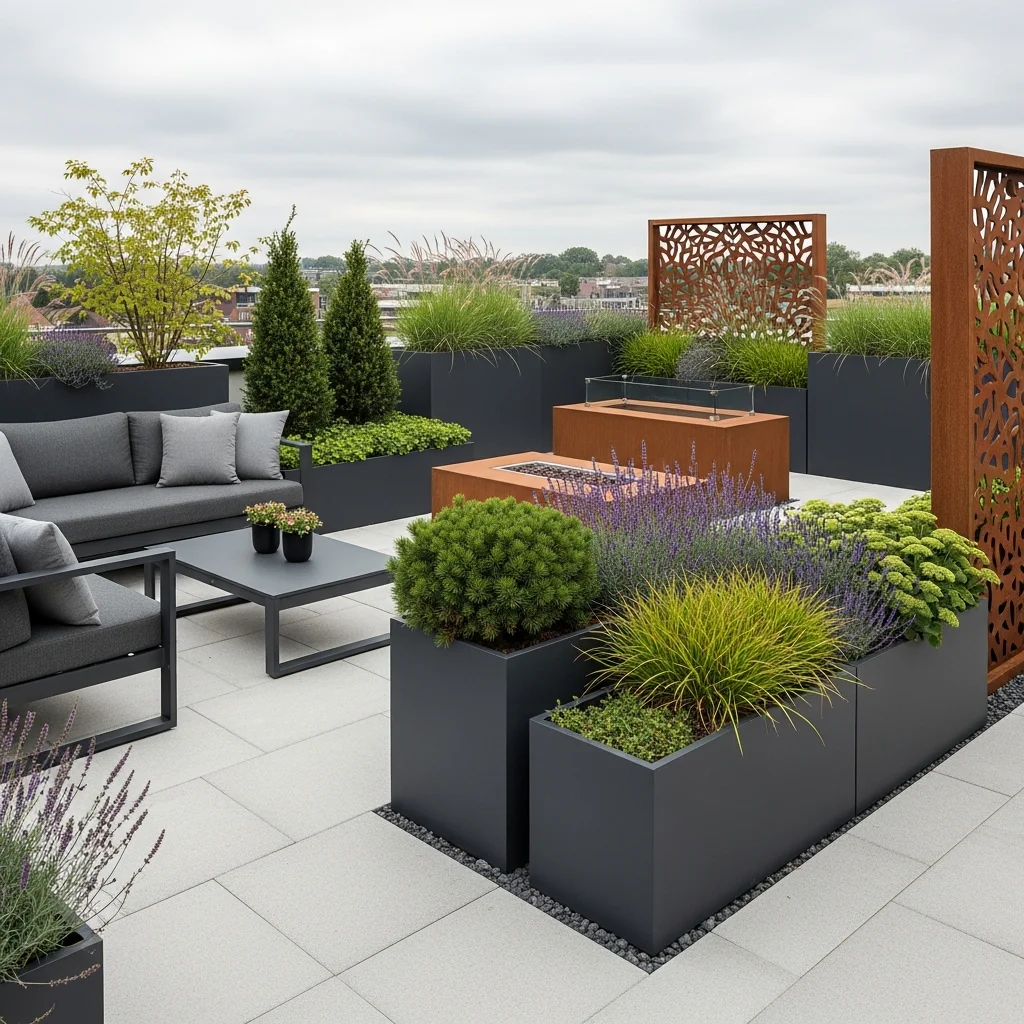
All-weather resilience: a minimalist rooftop garden built to withstand the elements gracefully, year-round.
Conclusion
As we’ve explored these 25 exemplary modern minimalist rooftop gardens, it becomes clear that these elevated sanctuaries offer far more than just green spaces; they provide a profound connection to nature, even amidst the urban sprawl. Each design principle, from clean lines and thoughtful material selection to strategic lighting and resilient planting, contributes to creating spaces that are both breathtakingly beautiful and remarkably functional. Whether your aspiration is a serene spot for morning coffee, an elegant setting for entertaining, or simply a verdant escape from the everyday, the possibilities for transforming your rooftop are limitless. Embrace the power of minimalism to craft your own sky-high haven, where simplicity reigns and tranquility blossoms, proving that a well-designed outdoor space can truly elevate your quality of life.
